
Yes, our national parks are grappling with the loss of millions of dollars due to the failure of Congress and the Obama administration to treat the country's ailing fiscal condition.
But they're still open, and they remain spectacular places to explore.
I say that having recently visited Canyonlands and Capitol Reef national parks, where rangers were available for leading hikes into the past, campgrounds were full of laughing children darting about on bikes, and budget cuts were carefully tucked out of sight.
Indeed, around the National Park System parks seem to be making do.
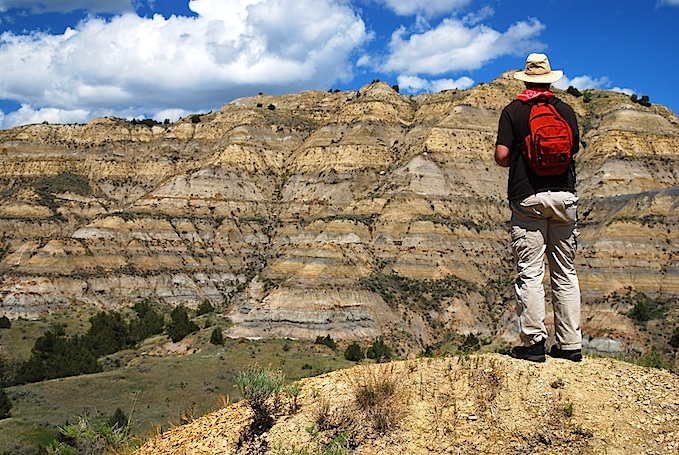
The sequestration hasn't dimmed the magnificence of Theodore Roosevelt National Park. Kurt Repanshek photo.
At Yellowstone National Park in Wyoming, the budget situation pulled communities together to help the park crews clear the interior roads of snow in time for the normal spring opening. Farther north at Glacier National Park in Montana, the Glacier National Park Conservancy contributed $10,000 to the efforts to plow the 50-mile Going-to-the-Sun Road so it can open on schedule as well.
At Acadia National Park in Maine, the spring opening is being pushed back a month to save money and avoid impacting the bulk of the vacation season later this summer. Along the Natchez Trace Parkway that rolls from Nashville, Tennessee, to Natchez, Mississippi, officials are juggling as best they can hours of visitor centers and comfort stations, along with grass cutting operations, to maintain a semblance of normalcy this summer. In short, park managers are trying to make do.
No doubt, as the high season begins to swing into gear we'll notice things when we visit the parks. Not as many ranger-led programs. Locked doors and shorter hours at some visitor centers. Closed campgrounds that make the ones remaining open more of a challenge to land a site in. Some tours at Mammoth Cave National Park won't be conducted this summer, campfire programs at other parks are being canceled, there will be no rangers to interpret the Cape Lookout Lighthouse at that national seashore.
But, by and large, the simple fact is that the parks are not closed, the views remain spectacular, and the access is largely up to you. That, actually, is pretty much the model the Park Service long has operated under -- come to the parks, enjoy yourself, and appreciate these natural, historic, and cultural treasures.
Since boyhood in New Jersey to my current grounding in Utah, I’ve had wonderful opportunities to explore the parks quite literally from A -- Acadia -- to Z -- Zion -- and never come away disappointed.
Even if there are fewer ranger-led programs this summer, you won’t want for enjoyment.
When my wife and I hit the road on Easter weekend to visit the Horseshoe Canyon unit of Canyonlands National Park in Utah, we happened upon a ranger ready to lead a tour into the canyon to view the Great Gallery rock art. This magnificent open air gallery, created thousands of years ago by Archaic nomads, rises solemnly above the wash. Painted, as well as chiseled, into the sandstone cliff, the images are mysterious as well as baffling. What thought spawned the Holy Ghost? How did the artists manage to create an 8-foot-tall figure so high on the sandstone wall? What messages were travelers supposed to take away from these images?
We had planned to do the hike ourselves, but we couldn't pass up a chance to share the experience with the ranger. It turned into a private tour, as no one else showed up. She added to the richness of our hike with a geology primer, details on the efforts decades ago to find oil that led to the trail down into Horseshoe Canyon, and in discussing both the rock art and the ecology within the canyon.
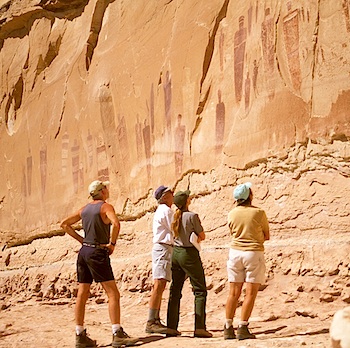
The Great Gallery is incredible, with or without a ranger. Kurt Repanshek photo.
While these ranger-led hikes to the Great Gallery have been reduced from both Saturdays and Sundays to just Saturdays, and will end May 25, the canyon won't be locked, you'll still be able to hike down yourself and stand in awe before the rock art that has endured for thousands of years.
From Horseshoe Canyon we headed down the road to Capitol Reef, which was doing a booming business that weekend. The campgrounds were full, the visitor center busy with folks looking for guidebooks and souvenirs, and the parking lot nearing capacity at times as visitors stopped to pick up some guides, fill their water bottles, get directions to the nearest trail, or check out the pictographs on the sandstone cliffs across Utah 24 from the visitor center.
We can gripe and complain about how the politicians in Washington are managing our fiscal affairs. But we can't say we're shut out of the parks or that there's nothing to do or see in them since the ranks of rangers have been trimmed by some 1,000 seasonal positions and 900 permanent ones.
Both the Skyline Drive through Shenandoah National Park and the Blue Ridge Parkway that roams farther south down to Great Smoky Mountains National Park remain open to motorists, as do their surrounding landscapes for hiking, birding, and picnicking. The surf continues to pound the cobbled shores of Acadia, Cape Cod National Seashore's beaches will still be available for cooling off this summer, as will those at Fire Island National Seashore and the other national seashores and lakeshores in the park system.
You still can stand alongside the towering sequoias in Kings Canyon and Sequoia national parks in California, explore the tide pools of Olympic National Park in Washington state, and vanish into the mountains of North Cascades National Park, also in the Evergreen state.
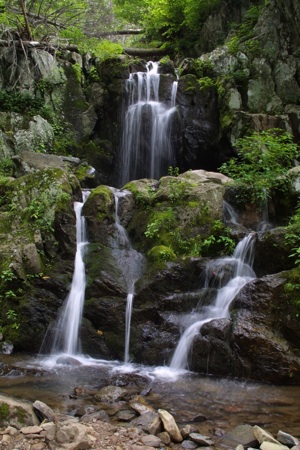
The waterfalls are still falling at Shenandoah National Park. NPS photo by John Mitchell.
Going forward, what will be interesting to see is whether this turns into a long-term scenario, and if so, how will park managers cope, and how will visitors react? What will the on-the-ground impact be?
Can the national parks somehow absorb these cuts and welcome the public with reduced services long-term? And how will the public react? Will they read stories of diminished ranger ranks, fewer interpretive programs, and harder to find campsites, and stay away?
Or will they turn out regardless to enjoy these pleasuring grounds, to take advantage of programs offered by national park friends groups and cooperating associations, and to even pause to lend a hand with collecting litter or maintaining a trail?
These are our national parks, and they’re waiting for us.
Story Categories:
A copy of National Parks Traveler's financial statements may be obtained by sending a stamped, self-addressed envelope to: National Parks Traveler, P.O. Box 980452, Park City, Utah 84098. National Parks Traveler was formed in the state of Utah for the purpose of informing and educating about national parks and protected areas.
Residents of the following states may obtain a copy of our financial and additional information as stated below:
- Florida: A COPY OF THE OFFICIAL REGISTRATION AND FINANCIAL INFORMATION FOR NATIONAL PARKS TRAVELER, (REGISTRATION NO. CH 51659), MAY BE OBTAINED FROM THE DIVISION OF CONSUMER SERVICES BY CALLING 800-435-7352 OR VISITING THEIR WEBSITE. REGISTRATION DOES NOT IMPLY ENDORSEMENT, APPROVAL, OR RECOMMENDATION BY THE STATE.
- Georgia: A full and fair description of the programs and financial statement summary of National Parks Traveler is available upon request at the office and phone number indicated above.
- Maryland: Documents and information submitted under the Maryland Solicitations Act are also available, for the cost of postage and copies, from the Secretary of State, State House, Annapolis, MD 21401 (410-974-5534).
- North Carolina: Financial information about this organization and a copy of its license are available from the State Solicitation Licensing Branch at 888-830-4989 or 919-807-2214. The license is not an endorsement by the State.
- Pennsylvania: The official registration and financial information of National Parks Traveler may be obtained from the Pennsylvania Department of State by calling 800-732-0999. Registration does not imply endorsement.
- Virginia: Financial statements are available from the Virginia Department of Agriculture and Consumer Services, 102 Governor Street, Richmond, Virginia 23219.
- Washington: National Parks Traveler is registered with Washington State’s Charities Program as required by law and additional information is available by calling 800-332-4483 or visiting www.sos.wa.gov/charities, or on file at Charities Division, Office of the Secretary of State, State of Washington, Olympia, WA 98504.

Comments
So the parks are open, and spending less money. Win-Win
Sorry, ed, it's not win-win, it's lose-lose. The public is going to lose--less trash pick up, less bathroom cleaning, fewer road patrols, fewer trail and backcountry patrols, less interpretation, less law enforcement, less resources management, slower emergency response, fewer campgrounds open and the like. The country also loses--less revenue for gateway communities, fewer foreign visitors, mounting maintenance issues that will be more expensive to fix the longer they are ignored, loss of our reputation for what some have called America's greatest gift to the world, the national park idea. Previous generations are also going to lose. When they decided that these places deserved protection in perpituity, they trusted future generations to give them the highest level of stewardship. We are breaking that trust and betraying the idea of generational equity. It's not a pretty picture.
Rick
Well-put, Rick. As always.
It is good to see the NPS have to adjust like the rest of us commoners.
So Rick, who is going to pick up the trash, clean the bathrooms, patrol the roads and trails, enforce the laws, manage our resources......... when our country goes bankrupt? What is going to happen to our parks when the US can no longer borrow money? When the economy collapses what will happen to the revenue of the gateway communities?
I don't like cutting funds to the parks any more than you do. But if that is what it takes to wake up America that we need to cut our spending and return the government to the role that it was given in our Constitution, then so be it. I am willing to make the short term sacrifice to insure that all those things you fear losing will actually be there down the road.
ecbuck, I think I just became a statistic of the sequester. In any case was fortunate to find a another part time job but in the private sector, 1/2 the pay, no benefits, but it is a fun job, going to try it out for awhile.
carpe diem
ec, we can afford the parks. We have the money. We just need politicians and accountants in Washington making the right decisions and carefully monitoring spending. As we pointed out a month ago:
Kurt, you brought back great memories my wife and I had walking that trail at Capital Reef Natl Park some years back along with an early morning hike to Hickmans bridge as the sun was coming up.Simple an awesome experience.
Thanks for the article.
And yes I agree the National Parks will still be enjoyable to visit.Life is what you make of it. It's not behind the key board of a computer where if you turned it on for the first time one would think the world is coming to an end.
The National Park Service is a mere sliver of the budget, compared to fairly massive elephants in the room.
At least the military and defense of our country are enumerated powers (even if poorly excercised) unlike the $2 Trillion in entitlement spending.
Kurt,I came upon the Traveler some years back because of my love of the National Parks and the great articles found on this web site.
Yes,I got into the political game yesterday,and was angry with myself after because it solves nothing except our personal ego's.
Any way that the Traveler can restrict some of this nitpicking on each other.
I stay away from facebook and twitter for these reasons. As a nation we face important issues but why all the ranting on this wonderful website.
Quiet please, the simple answer is, "If you wouldn't say something to somebody's face, don't write it here."
Nine times out of 10 there is a constructive, less offensive, way to write the same thing that comes out in a rant.
We're also looking into some features that let you tune out folks you don't want to listen to. That should help cope with the rants.
Yes, they are open and spectacular but a shame the way many are being managed. Friends groups, volunteers and cooperating associations are critical to park operations and Thank You to each of you. Yet, parks still need the dedicated core of rangers and resource managers to protect and reveal it to visitors. The magnificent natural areas may be able to sustain their beauty and treasures a longer while without ranger stewardship (in service to the citizens of course); however, many of the historic and cultural sites are the more vulnerable and the heaviest hit during squeezing financial times. It only takes a vandal a short while to observe that the operating routine has changed, the lights go out at a certain time and the resources are vulnerable. Historic fields grow up, structures fall down, and public artifacts are lost to individual collections and their story is not told. Reviewing the President's budget for 2014 has increases for programs and initiatives, but operations keeps taking the hits. Many of the operations can take care of some these intiatives if there are rangers there to work with the local communities. Thank you.
Some great comments here from loyalconserve, Kurt, Rick, justin, and quiet, too.
One really great challenge we face is that it's not only parks that are suffering, but much of our infrastructure, too. How many bridges on our major highways are in terrible states of repair; or water and sewer systems; and a huge host of other vital things we all depend on? It's going to be a lot of fun watching and listening to some people who have been screaming for cuts screaming even louder when their sewers back up.
What we have is a public that demands services of all kinds but is unwilling to pay for it all and a Congress that has buried its head in the mud for far too long as they've tried to keep all the special pressure groups happy enough to keep the campaign funds flowing.
Our parks are only a very tiny portion of a HUGE problem. It's going to take good sense and a lot of plain ol' COURAGE to address it all. Do we, as a nation, have what it will take?
In 2012, federal deficits were 40% of federal revenues, a truly staggering number. Regardless of political affiliation, we are looking at painful cuts in all kinds of beloved programs (military if you're a Republican, social security if you're a Democrat, National Parks if you read the NPT) if we want to give a working economy to our kids.
Here in the Smokies I can report that the hiking trails are as beautiful as they've ever been. Someone forgot to tell Mother Nature about the sequester.
In my experience while traveling thru our national parks all over the U.S., the most memorable and enjoyable activities were those where I was not part of any type of managed, ranger-led activity. I'm often amazed by how many people daily depend upon activities that require some type of human-fabricated gizmo to get their entertainment; TV, video games, wireless communicators, movies and organized sports seem to dominate our culture. I wonder about people who'll spend 2 or 3 hours in a theatre yet hesitate to devote the same amount of time to walking along a nature trail. Those of us who frequently get out there to enjoy the natural beauty so easily found in our parks know that it doesn't require a park ranger, a picnic ground or a 30 minute film presentation to have fun.
We can do just fine with 5%-10% less refinement and maintenance in our national parks. Perhaps our park managers will learn to focus on essential items and curtail some of the "foo-foo" details that really don't further our ability to enjoy the natural beauty of our parks.
Kurt is right on target with his headline: The parks are still open and still spectacular.
TnHiker I agree with you when you state:
"We can do just fine with 5%-10% less refinement and maintenance in our national parks. Perhaps our park managers will learn to focus on essential items and curtail some of the "foo-foo" details that really don't further our ability to enjoy the natural beauty of our parks."
Enjoying the national parks (or state parks or state forests) doesn't depend on fancy programming IMHO. To me, its the serenity of nature we go there to experience. And Mother Nature maintains herself quite nicely.
TriHiker is correct that we shouldn't depend upon gizmos -- but on the other hand, even for some of us who are pretty darned familiar with nature, there are always details, facts, or tips found in ranger presentations and orientation movies that can add a lot to our enjoyment and understanding of what we will see along the trails.
I don't think I've ever failed to gain something from attending such things -- even in parks in which I once worked and where some folks might consider me to be an "expert."
Visitors who are not familiar with a park will never know how much they miss when they skip opportunities to learn from someone who is part of the scenery.
My point was to remind visitors they shouldn't dismiss opportunities to truly enjoy what our parks have to offer just because the administrators decided to cut back or eliminate the hand-holders or to close the gates to one or more locations. Here in the Smokies we have way too many hand-holders and gatekeepers masquerading as essential workers for the NPS.
Yeah TriHiker - remember - the government knows whats best for you. No possible way you can discover that on your own.
Sorry, rmackie. And hopefully you'll get more compassionate comments than 'carpe diem' from those close to you.
Rick,
Which is more compansionate - fawning sympathy and making him a victim or congratulating him for his new position and encouraging him to make the best of it?
I think that really defines the difference of our outlooks on life and personal responsibility.
As a related aside, the average civilian Federal employee makes twice as much as the average private sector employee (taking into account all benefits). Maybe, it's time we address the disparity. That would take care of all problems: we'd have enough money to provide an acceptable level of services.
http://www.downsizinggovernment.org/overpaid-federal-workers (google at will for more stats)
That Cato study over simplifies ( and over states the comparison) using overall averages. The best study I have seen takes actually workers amd monitors the change in compensation moving between sectors. Generally salaries went up when tsomeone moved into a government job and moved down when they moved into a private job. The deltas were signficant but far less then the Cato differences. The analysis did not include benefits which obviosly favors government workers. If i find the study I will link.
edit. found it http://www.weeklystandard.com/blogs/another-exclusive-party-wh-taxpayer-...
Zeb...
If you really feel for the run of the mill private sector employee, how about fixing the disparity between their wages and their CEO's? Per this study, the CEO's take home 231 times as much as their employees.
Rick,
Good point, but not really relevant to the sequester.
So what Rick? Apparently the shareholders i.e. the owners and risk takers believe the CEOs make 231 times the contribution. Its a voluntary relationship between the shareholder, the CEOs and the employees.
The same relationship applies, of course, to Federal employees.
Hardly
Is no one going to respond to this NPS whistleblower?
http://video.foxnews.com/v/2213209993001/obama-resists-simple-fixes-in-sequester/
Yes this is Fox News, biased as heck. Address the claims, not the source.
Why did Obama cancel White House Tours but not cancel trips to Hawaii for shave ice?
Truth is most years the NPS buget has increased.
Why doesn't the NPS management cut funding to national and regional offices rather than visitor services?
Correct me if I'm wrong, but wasn't it pointed out somewhere recently on Traveler that the sequester law that was written and passed by Congress mandates that all cuts come equally from all parts of the budget and that nothing could be left untouched?
That's why the FAA had to lay off controllers rather than selecting cuts that would not compromise safety or cause traffic delays. Just yesterday, Congress passed a special exemption that will allow them to put controllers back on duty.
Can anyone out there find the actual memos that are referenced in this Fox News piece? I think I saw them here in another Traveler article, but don't have time to go searching right now. Rather than accepting any claims made by Faux News, someone needs to go to the original source.
Here is an article about the FAA exemption from this morning's newsletter from the Experimental Aircraft Association. Note that it explains that the FAA is being given special dispensation to transfer funds. I find myself wondering if it was the NPS that wanted to make all this as painful as possible or if it was actually Congress? Politicians are slippery and rather slimy, but that's intentional -- makes it harder to pin any of them down.
House, Senate Pass ATC Funding Bill
April 26, 2013 - The U.S. House of Representatives on Friday passed a bill earlier approved by the Senate that would fund air traffic operations throughout the country for the rest of the FAA's fiscal year and end the furloughs that had delayed significant numbers of flights over the past week.
The measure passed 361-41 in the House and moved to the White House for President Obama's expected signature today. The bill permits the FAA to transfer $253 million to air traffic controller salaries and expenses. It pays for this by reducing Airport Improvement Program grants by the same amount. While the bill is neutral in terms of budget authority, the 10-year bill score will show a slight $4 million increase in outlays due to the fact that salaries spend out at a significantly faster rate than construction grant programs.
"We hope this measure gives the FAA the flexibility to make operational decisions based on priorities of safety rather than hard budget mandates," said Sean Elliott, EAA's vice president of advocacy and safety.
The bill also contains language permitting Secretary of Transportation Ray LaHood to do additional transfers within FAA accounts. This may allow him to restore the FAA contract towers that were cut as part of the effort to reduce controller furloughs.
While the measure did not specifically detail any other air traffic operations, EAA continues to note that AirVenture air traffic operations will not be affected in any manner.
"We are confident that AirVenture will continue to have full air traffic operations and other essential safety support," Elliott said. "This measure solidifies the ability for FAA to provide its air traffic services on a daily basis as well as for unique air traffic environments such as those at AirVenture each year."
Lee - My understanding, based on limited research, is that agencies have little or no flexibility to shift money between accounts - except when Congress makes an exception, such as the one to deal with the FAA and air traffic controllers.
I'd blame both Congress and the White House for failing to give all agencies similar authority. Among other things, agencies might trim some pet program favored by a politician and use the money for something that's more practical.
It appears the politicians intended the whole process of budget cuts to be as mindless as possible - no allowance made for analysis and decisions about where the cuts might do the least harm in the big scheme of things. But, considering that politicians came up with this idea, "mindless" should not be a surprise.
For one answer to your question above about whether the NPS has similar flexibility as the FAA but has chosen not to use it, here's an excerpt from a previous comment posted on the Traveler:
Submitted by viewmtn on March 29, 2013 - 8:37am.
Regarding comments made about lack of flexibility in taking the cuts:
Excerpted from the OMB memo (M-13-06) issued March 1, 2013 implementing the sequester.“…Agencies shall apply the same percentage reduction to all programs, projects, and activities within a budget account, as required by section 256(k)(2) of BBEDCA, 2 U.S.C. 906(k)(2). …”
The OMB memo can be found here.
In the NPS, park operations are funded by the account “Operation of the National Park System.” Within this account, each individual park (or park complex - where there is shared administration), is classified as an individual “program” so each park must be hit by sequester and each project and activity inside that park must also be impacted.
There is no ability to shift funds between accounts.For example, NPS cannot shift funding from another account, for example, the Construction (and Major Maintenance) account to the Operations account.
The OMB report on sequestration can be found at this link (the NPS table is found on page 32 of 70).
The complete comment from which I extraced the above information is found on this thread,, which I'll mention at some risk of getting mired back in that same swamp again :-)
Thanks, Jim. My understanding matches yours. Politicians are very similar to third graders. "He did it first!" "No, she did it first!" "I didn't do it, he did!" "I did not!" "Did too!"
Ah, well . . . . . .
Now, I do have to get out and get busy on some chores.
Just keep in mind, the President was offered the opportunity to have full flexibility in how to apply the cuts. He didn't have the courage to take on that responsibility and instead took his normal path, hide and blame everyone else.
ec - Based on news reports, you are correct. Obama failed to seize the opportunity.
However, once it was clear the President wasn't going to get that job done, Congress certainly could take steps on its own, similar to what was done yesterday for the FAA.
Bottom line: both the President and the Congress are still playing politics with the issue, and neither wants to be seen as taking the blame for specific cuts as opposed to the "general" cuts we have now.
Jim, I share your frustration. However it is kind of ironic to blame politicians for "playing politics".
ec - good point! Guess I'm guilty of holding out hope that a few of our "leaders" might occasionally err on the side of common sense vs. self-interest, but I couldn't find anybody in Vegas who would give me decent odds on that one.
Jim - its not self interest, its conflicting visions.
How about conflicting visions of personal power and wealth? Their visions (isn't that another word for hallucinations?) certainly don't seem to extend to other Americans.
"...it's not self interest, its conflicting visions."
Perhaps some of each. In terms of self-interest, two examples come immediately to mind: (1) Consider how many important decisions are postponed in Congress (and by the White House) until after an upcoming election, because politicians simply don't want to have to take a position on a multitude of issues too close to election day. One of our problems is the length of time for such inaction seems to get longer and longer. (2) The gerrymandering of voting districts to protect the power of the party in control of the legislature in a state.
Point number one helps explain in part how we found ourselves in the situation that was the original subject of this story: "sequestration."
The reason congress acted so fast on the air traffic controllers was that it was affecting them from getting home each week.Self serving people.
Life is simple it's us humans that mess it up.
??????????????
What is conflicting about either power or wealth? Are you "conflicted" because you have neither?
In some people, power and great wealth can become visions or obsessions that conflict with honesty, humility, integrity, compassion, and a genuine interest in the goodness and welfare of their neighbors. Some of us realize that we can have -- or at least try to have -- all those virtues and that they can be far more valuable than all the gold or percieved power available anywhere.
Maybe it's some of those old fashioned values that drive many people to volunteer as members of search and rescue organizations, or volunteer to work with poverty stricken children or the mentally ill, or who take their medical skills to undeveloped parts of the world -- or even parts of our own nation. Or those who choose jobs that don't pay much in dollars but provide an incredibly valuable feeling of satisfaction for the soul -- such as teachers, firefighters, or even park rangers. Those are the kind of people of whom we need more in the world. And, I would suggest, among our political leaders.
I believe you are correct, Lee. A great humbling that these places provide, if the effort is made, would be invaluable. Have often thought I'd like to lead political leaders on serious backcountry and river adventures because I've seen how transformational these trips are to folks. Like your post, Lee.
What does wealth have to do about anything in life.If wealth was all that great why do the wealthy have so may problems in life just like us poor folk.
I'm fine just the way I'am,other than I wish I had better health but nobody can make a call on that one rich or poor.
And no I didn't smoke,over drink,eat junk food.
Life is about setting personal goals and working toward them.Too many people are worried about the next guy.
Lee, I am inclined to agree. A truly excellent book on the subject is "To Big to Fail" by Andrew Sorkin. Mr. Sorkin was a Wall Street Journal investigative reporter, just an excellent read on the melt down of 2008. Also Lee, thank you for the heads up on "The Soul of Yosemite" by Barbara Moritsch, also Rick Smiths book review. Barbara's book is excellent and is a must read for those that are interested in the last 15 years of litigation history in Yosemite National Park. .