

Editor's note: Harry Butowsky spent more than three decades working for the National Park Service as an historian. He's worked for a handful of directors and seen much change in the agency. Understandably, he has an interesting perspective on the upcoming centennial of the National Park Service.
The National Park Service reminds me of a proud old ship sailing confidently across the North Atlantic. The captain is beaming and the passengers seem contented, at least, those traveling first class on the upper decks. It's below decks that the problems lurk. The crew is perhaps too easy going, believing the ship will always reach New York. However, the engines are old, the iron plating is thin, and the rivets are working loose. Granted, the Titanic is not a good analogy, since that ship was perfectly new. Otherwise, the analogy fits. The older things get'including institutions'the more they are in need of major repairs.
In the case of the National Park Service, the overhaul is long overdue. I spent my entire career in the History Division, which operates out of Washington, D.C. Some directors listened to the Division and others did not. Those that listened, I do believe, enjoyed smoother sailing in every division.
So, you will understand where I am coming from. I base my call for new backbone in the Park Service on good history. Only if the Park Service wants to tell a credible story can its centennial rise above mediocrity. My recommendations start with coming to grips with reality, and end with a call to historical arms.
This is my manual, if you will, for a great centennial, after which I invite you to offer your own. Just don't tell me that history is unimportant. In the Park Service, there is already enough of that myth going around.
Priority One: Address the Backlog
First, put this figure solidly in your mind'$11.5 billion. That's the backlog'the true funding shortage crippling all of our national parks. What is more, we can be sure that Congress is not likely to free up even a fraction of those needed funds. How can we be sure? Because the nation is $18 trillion in debt, with another $100 trillion in unfunded liabilities. At $4 trillion annually, the entire annual budget of the United States cannot possibly meet those backlogs. We have to address the Park Service backlog as part of that greater problem, or else nothing we suggest will make sense.
Instead, Park Service administrators have opted to act as if nothing is amiss. Committees have been formed; deals are being struck. It's as if the backlog did not exist.
Consider the blizzard of news releases announcing new directions for the agency. That's not an iceberg up ahead, folks. That's an opportunity to 'reach out.' Fine, but how will the reaching out be funded? If these new initiatives cannot be paid for, how can any of them be considered sincere?
Here's just one example: http://citiesspeak.org/2015/04/20/national-park-service-launches-nps-urban-agenda/ So it's an urban agenda now. But again, where is the funding? Urban, rural, or wilderness, how will these 'initiatives' be paid for? If the problem holding everything back is money, what good does it do to keep making promises that no one can possibly keep?
Priority Two: Make the Size of the National Park System Fit the Budget
Face it. There are just too many units in the National Park System for the money the Park Service has on hand. The country may want 407 units, but the agency cannot afford half that many. The proof again is all those news releases. That is what bureaucrats do when they lack solutions. They keep conjuring up new initiatives and programs, hoping that one will prove a 'hit.'
They hope then to take the 'hit' to Congress and ask for the money they don't have. Fine, but $11.5 billion? That will require more than an urban initiative, or a youth initiative, or a science initiative, or a deal with Budweiser. It will rather require convincing the United States Congress that 'eventually' will be too late. Preservation cannot run on 'eventually.' Those dollars are needed now.
Will the parks get those dollars? History says no. In Congress, waiting for money can turn into an eternity. Just ask Yellowstone in 1872. In 2016 and beyond, we need to face the reality of our current budgetary and staffing limitations. I say that means cutting parks.
What would be the magic number to cut? Actually, I would not cut a one. I would simply put those parks back where they belong'with the states, or even cities and counties, that should have been given the responsibility in the first place.
Before we do that, I hear some people screaming, we should raise the fees at the gate. That will work somewhat for the bigger parks, but not every park is as popular as Yellowstone or Grand Canyon. In the end, it still comes down to Congress and that $11.5 billion backlog. There is only so much money to go around.
Certainly, not every park needs to be a federal entity just because the states refuse to act. In the 1920s, the preservation of many desirable landscapes was confidently left to the states. To name just a few, look at the wonderful state-park systems in New York, Pennsylvania, Wisconsin, and California. Why is that not happening now? Because many states'and many environmentalists'think of the federal government as a bottomless pit. Just shake the money tree and write another news release. Park created and problem solved!
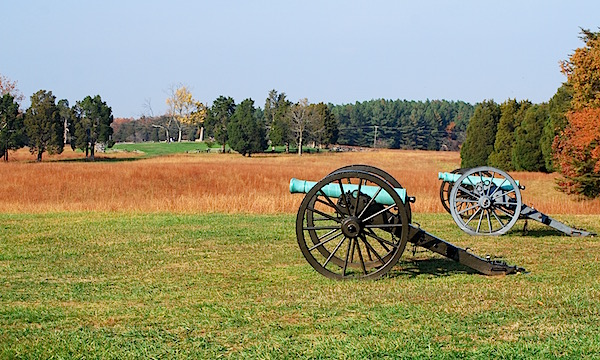
National battlefields and military parks such as Manassas (above) and Fredericksburg and Spotsylvania are prominent in the National Park System, but how many battlefields does the Park Service need?/Kurt Repanshek
Unfortunately, the problem only keeps worsening. How many battlefields do we need to interpret the Civil War, for example? There were 5,000 separate actions. Cannot some of the 'action' revert to the states? And parkways, How many of those do we need? While I personally use the George Washington Parkway, I am not convinced it needs to remain a national park.
Mount Vernon is not a national park. Does that in any way lessen its significance? Is not George Washington still a national figure? Then there is Steamtown, in Scranton, Pennsylvania. Sure, let's have a great park acknowledging railroad history, but why can't it managed by a state? Steamtown was blatantly intended to boost Scranton's local economy. Why should Uncle Sam be doing that?
And the urban parks. We all love open space. But why must the federal government be expected to fund them all?
Granted, it seems that government always has another pot of money. The problem is: It is always someone else's pot. No doubt, decommissioning just one aircraft carrier would fix the backlog, but that will never happen. American culture just doesn't work that way. That aircraft carrier employs people, too. We have to fix the number of parks within what Congress is willing to give the National Park Service, or Congress will not hear a word.
Priority Three: Establish Zero-Based Budgeting
Toward that end, the National Park Service needs to implement a zero-based budgeting system that will look at all of the regional and Washington, D.C., offices and programs. Does calling redundancy 'regional' make it right? Why can't every superintendent report to a leaner agency? But no, the staffing adjustments always come at the bottom, followed by a cry for more volunteers. Somewhere in that pile of news releases, I believe I saw that one. How can young people be expected take any 'initiative' on a salary of $10 a day? You want more 'minorities' to believe in the parks'and work in them? Then pay them an honest wage.
Priority Four: Put History Back in the Parks
None of this is of any surprise to historians. In various forms and guises, they have seen all of these problems before. This is to explain my pet peeve. It's actually misleading to create a 'historical' park. After all, every park comes with a history. Then let's see that visitors learn it, whether the park be Gettysburg or Yellowstone. The Park Service should start with every employee, including everyone working for the concessionaires. It's not just a job, folks. It's a calling. If you just want a job, McDonalds is hiring, and there should be plenty of openings at Burger King. In the parks, you work for generations yet unborn, and their legacy begins with your knowing that.
Start with your park's administrative history. You say your park doesn't have one? Then get an M.A. and write it as a thesis, or perhaps the dissertation for your Ph.D. Every park should have an up-to-date administrative history. How did we get this park? What is its mission? Where have we failed the public in the past? And believe me, we are always failing the public. That is what an administrative history is meant to correct for the future.
Nor should administrative histories be limited to individual parks. The system itself needs many such histories, broadly targeted to system issues. Can anyone doubt the importance of the role of concessionaires in park history? They have power. They have money. How does that influence the parks for good or ill? Where is the comprehensive history of the relationship between the National Park Service and the concessionaires? Here again, there is no such history, and some employee'with proper incentive from the agency'just might take the initiative to write it.
And fee policy. The last time the Service completed a history of that was in 1982. An update is long overdue. After all, fees now stay with the parks. Consider the 'backlog' again. Can it truly be erased just by changing the fee structure? We simply don't have enough history to guide us. We are still blindly looking forward without honestly looking back.
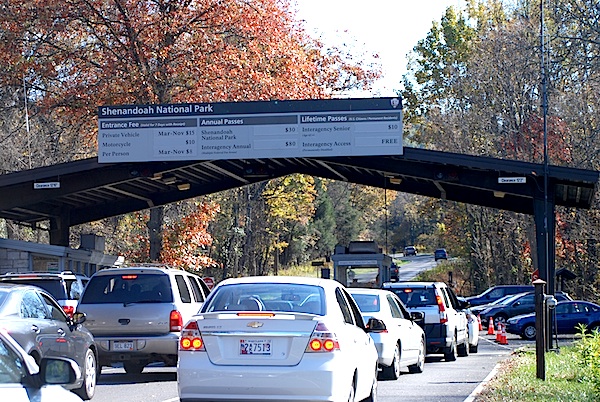
How far can higher fees go towards erasing the Park Service's maintenance backlog?/Kurt Repanshek
Nor does it end with fees and parks. Key documents such as the organizational charts and lists of all National Park Service Management personnel have not been updated since the late 1980s. See Organizational Structure of the National Park Service 1917 to 1985. Another key document, Historic Listing of National Park Service Officials.
And let us not forget the directors. At one time they were inclined to write useful and important books, or extensively shared their career findings with professional historians. The lessons a director learns are invaluable. The last to detail his experiences in a book was James Ridenour. The Service should commission a history of the management decisions and operational successes/failures of every director that ever served.
So, too, the National Park Service Thematic outline was last updated in 1987. Perhaps it is time for a new update. I am not referring to the 1994 thematic outline, but to the original thematic outline that dated back to 1929 when it was first conceived, History and Prehistory in the National Park System and the National Historic Landmarks Program.
If there is ever a commission charged with recommending the total number of parks which should be kept'and which should be transferred to state, local, or private authorities'this document will be needed. Better said, it will be essential.
Priority Five: An Educated Workforce
It is no wonder that rank-and-file members of the Park Service are drifting, too. An educated workforce is a confident workforce, but where are the materials supporting that education? Fortunately, there the future is somewhat brighter, thanks to historians from outside the agency. But again, employees must be given incentives to read their books.
Did I say books? You bet I did. Now that would be an 'initiative' capable of making a difference tomorrow morning'and without asking Congress for additional support.
Every employee needs to read those books. Of the six or seven books I would assign, one tops my list. That would be Alfred Runte's National Parks: The American Experience, the best book written on the national parks of all time. Think, then, of the thousands of employees in the Park Service who have never read it, including the current director of the National Park Service himself.
At least, if Director Jarvis has read it, he has never told me, or acted as if he did. A director who reads for effect would never be making the mistakes we see today. As one reviewer said of National Parks: The American Experience in an article for The Washington Post, 'At Interior, on Capitol Hill, and in the White House, National Parks is a must.'
A must does not mean a choice. Of course, some employees choose to read; my point is that all should made to read as a prerequisite for employment. My other titles would include:
1. The relevant administrative history'or its equivalent'of the employee's current park.
2. Alfred Runte, Yosemite: The Embattled Wilderness (Lincoln: University of Nebraska Press, 1990).
3. Lary M. Dilsaver, editor. America's National Park System: The Critical Documents. Lanham, MD: Rowman & Littlefield Publishers, 1997
4. Polly Welts Kaufman, National Parks and the Woman's Voice: A History. Albuquerque, NM: University of New Mexico Press, updated ed., 2006.
5. Horace M. Albright as told to Robert Cahn. The Birth of the National Park Service: The Founding Years, 1913-33. Salt Lake City: Howe Publications, 1985).
6. Richard West Sellars, Preserving Nature in the National Parks: A History New Haven: Yale University Press, 1997).
The Park Service should make it simple and provide these books on employment, with the appropriate 'testing' as each employee advances. A test? Yes again, a test. These are government jobs subject to Civil Service approval. And even the Director should not escape. The public deserves to know that the Service knows what it is managing. That backlog did not emerge just out of the blue.
Even without any ' new' history, we have a rich mother lode of information about our parks in both print and electronic format. This information represents the accumulated wealth and experience of generations of national park employees. I would like to see nothing better for 2016 than to make this heritage of information easily available to all. Much of it can be found now on the web but no one knows where to look or what to look for. Many capable and hardworking people are trying to correct the issue. Let us support them and get the job done.
Information that cannot be found is useless. So yes, add the National Parks Traveler to my list of must-have sources that every employee should know'and want'to follow.

The National Park Service needs to revive its commitment to history/Kurt Repanshek
Allow me to close by reminding everyone what a scholar does. In the National Park Service, we in the History Division kept our agency 'out of trouble' by keeping the director'and many others'fully informed. Our job was to make them 'look good' in the eyes of Congress, the president, and the public. I did that job with pride.
As proof of my comments above, look no further than what happened to the History e-library site after I retired. There has not been a single update in three years. Most of the existing links to online studies are broken and the site still claims 397 parks. Really, now?
The immense collection of National Park Service studies, reports, and information on this web site just collapsed due to lack of any support or attention. Why was a decade of taxpayer-supported effort not fully lost? Because, once I realized what was happening, I transferred all of the existing 3,500 studies to my personal web site and added a few thousand more. The material is still available, but not because the Park Service wanted it available. I did it as my personal contribution to history, and it didn't cost the taxpayers a dime.
You wonder why I get frustrated'and even angry? Because that is not how government'your National Park Service and mine'is supposed to work. The History Division is not some localized group of history buffs. Sure, we all get behind, but three years and a busted website? Now what? More things like 'Washington Slept Here?' History is what Washington and the country did. The National Park Service is America's face to the world, and all the History Division is allowed to do now is put lipstick on another news release.
How could anyone possibly blow the history of the National Park Service during its centennial, of all things? A good question, and here is how they are blowing it. Upper management has thrown history in the trashcan and still expects the nation to be inspired. Trading on the prestige of the agency, they then expect the public to go along.
In the past, that would not have happened. Even the crippling backlog, if not entirely erased, would certainly have been addressed. Nor would the cost-savings have come at the price of history. Here again, anyone can trot out the Organization of American Historians and say that the profession 'approves.' Well, the professional historians that matter do not approve, and I have talked to every one of them.
History is not a toy. The national parks deserve our very best, both in terms of management and professional history. Now, start making friends with the history of your favorite park. And do urge its managers to do the same.
Story Categories:
A copy of National Parks Traveler's financial statements may be obtained by sending a stamped, self-addressed envelope to: National Parks Traveler, P.O. Box 980452, Park City, Utah 84098. National Parks Traveler was formed in the state of Utah for the purpose of informing and educating about national parks and protected areas.
Residents of the following states may obtain a copy of our financial and additional information as stated below:
- Florida: A COPY OF THE OFFICIAL REGISTRATION AND FINANCIAL INFORMATION FOR NATIONAL PARKS TRAVELER, (REGISTRATION NO. CH 51659), MAY BE OBTAINED FROM THE DIVISION OF CONSUMER SERVICES BY CALLING 800-435-7352 OR VISITING THEIR WEBSITE. REGISTRATION DOES NOT IMPLY ENDORSEMENT, APPROVAL, OR RECOMMENDATION BY THE STATE.
- Georgia: A full and fair description of the programs and financial statement summary of National Parks Traveler is available upon request at the office and phone number indicated above.
- Maryland: Documents and information submitted under the Maryland Solicitations Act are also available, for the cost of postage and copies, from the Secretary of State, State House, Annapolis, MD 21401 (410-974-5534).
- North Carolina: Financial information about this organization and a copy of its license are available from the State Solicitation Licensing Branch at 888-830-4989 or 919-807-2214. The license is not an endorsement by the State.
- Pennsylvania: The official registration and financial information of National Parks Traveler may be obtained from the Pennsylvania Department of State by calling 800-732-0999. Registration does not imply endorsement.
- Virginia: Financial statements are available from the Virginia Department of Agriculture and Consumer Services, 102 Governor Street, Richmond, Virginia 23219.
- Washington: National Parks Traveler is registered with Washington State’s Charities Program as required by law and additional information is available by calling 800-332-4483 or visiting www.sos.wa.gov/charities, or on file at Charities Division, Office of the Secretary of State, State of Washington, Olympia, WA 98504.


Comments
Thank you, Harry Butowski, for a thoughtful and important essay on how NPS can continue to be a vital and relevant part of the nation for 100 more years. Your suggestions are good -- very good -- and can contribute to a dialogue about just what the Centennial can do to foster broad support of national parks and the important stories they hold for a changing nation that needs to recall and understand its journey.
Harry Butowsky should be the next NPS Director!
Thanks for the interesting perspective Harry (and for the list of books). I think you are right on target with most, if not all of your points. While not opposed to transferring some units to the states I am not sure that solves the backlog problem. Assuming the states want (or have a choice) to keep them operating doesn’t it only shift the financial burden to fewer people? I can see where this could become another unfunded mandate by the federal government with other federal funds held hostage unless the states agree to take and maintain them. While I tend to be on the side of states being able to better manage their resources I’m undecided on this one. I do think it is time the NPS puts a moratorium on adding units or even shedding some until it finds a way to address not only the backlog but future maintenance needs.
Being completely ignorant on this I am also curious as to your insight on how you view or value the historical importance of places and events and does that process differ than other countries given our short history? I assume at some point in time it is inevitable that a review takes place and places would be removed or added? Use China for an example. I imagine they would have valued many things early in their first few hundred years that a few thousand years later become less (or more) significant. What is the process for that?
Those interested in another, longer analysis of what's wrong with history in the NPS might also be interested in the 2011 Organization of American Historians study for which I was the lead author, Imperiled Promise: The State of History in the National Park Service. As you can gather from the title, my colleagues and I concur with Harry's general analysis of the poor state of support for history in the NPS. Things have not improved much since our report was released.
Amen and thank you. This was an excellent report and I regret it was forgotten.
Thanks for some very thought-provoking ideas. One key question about the idea to make the size of the NPS system "fit the budget:" I have to wonder if the number of units was reduced if Congress would simply use that as an excuse to cut the NPS budget - or based on pressure from states and cities, simply transfer the dollars from the NPS along with the units to the states or cities in the form of "grants" or some other handout.
Under either scenario, the maintenance backlog for the NPS would be reduced by eliminating the amount needed for the areas that were "shed" from the system, but there might be little or no net gain in the NPS budget to "fix" the problem in the remaining areas.
An outstand Op-Ed with what should be a mandatory reading list! I would only change the priorities within his list. I would place his # 2 priority "make the park system fit the budget" the last priority, instead of #2. Honest zero-based budgeting, especially with a leaner agency would allow the NPS to address whatever the realistic "backlog" really is and the other priorities listed here. I believe if we had that political will within the agency, we may never reach that final option of turning properties back to anyone.
When we previously went through the "zero-based budgeting" process, we had to assume that if funds were not there, the first step we would take is purely protect the resources including if necessary closing the gates to the public. If we were sincere in fulfilling the mission given the NPS, i.e., preserve the resources for future generations, we would take such actions in order to meet the other priorities outlined in this article. This step along with his comments about a leaner agency - especially in central offices - would free up more than sufficient funds to handle what is needed. I also applaud his emphasis on history. How many of the issues of today would be solved by looking to the past and "mining" the knowledge of past NPS employees. For me it is truly sad that the National Park Service hasn't the will or the support to do more than what we are seeing for our 100th anniversary.
The "shrink the park system" is an objectively terrible idea and has always been so.
For one, who decides what parks are no longer "worthy" of being managed by the National Park Service? Is it a popularity contest, and if so, whose popularity are we measuring? You have just said that 200+ national park system units should be closed — please name them. If you aren't willing to come up with that list and defend your choices, then this is nothing more than empty speechifying.
For two, if you haven't noticed, almost every state is suffering even greater budget issues than the federal government, and funding for state and local parks has been slashed around the country. Dumping 200+ national park system units on local communities is completely infeasible and would result in vast selloffs and closures of public lands and facilities.
For three, the idea that Congress would consent to massively shrink the park system without simultaneously massively shrinking the agency's budget is purely fantasy.
Similarly, many of these other arguments and demands are simply nonsensical "sound-bite" ideas that are either useless or counterproductive. Creating a "mandatory reading list" is a good example of this. Force-feeding a personally-chosen and rather arbitrary set of books (I see you're in love with Alfred Runte, but what about Ethan Carr or Amy Meyer?) seems like A Very Bad Idea. As for administrative histories, some NPS administrative histories are great. Many others are, at best, poorly-written, and at worst, utterly misleading and outdated. Your idea would force employees to read these often-pretty-useless documents, to what end? Moreover, you'd subject *every* employee to this? Why does the staff electrician need to take a test on Alfred Runte? What is gained by this?
I could go on picking this thing apart, but it's clear that this editorial just doesn't bear any resemblance to an actual plan for improving our national parks and public lands. It's rather dismaying to see it appear in the pages of this publication, actually.
So, Travis, what's your plan? Write it up and present it to us. And one more thing. Tell us where you will find the money.
Meanwhile, I agree that Ethan Carr and Amy Meyer have written wonderful books. And is that not Dr. Butowsky's point? Who in the Park Service has even read those? Pick your seven books; pick your seventeen books. The point about being an educated man or woman is to know what you're talking about. And too many in Park Service management (yes, I will give the electrician a pass) haven't a clue.
In the 1920s, many leaders--including Stephen T. Mather as director--referred to the national parks as the University of the Wilderness. Mather was a reader, and so was his successor, Horace Albright. And both were writers, too. One of the letters I cherish in my files is from Horace Albright praising my work as a historian. I have no other such letter from anyone else in Park Service management, although Fran Mainella has generously endorsed my work.
In managing a great public institution, ignorance is no excuse. You have to manage from a position of strength and consistency. And good history is the prerequisite for both. You are right that some administrative histories are awful. Well, think again who gets to write those histories. And consider what they are paid.
Each of my major books has required 10 years to research and write--full-time. In years past, the Park Service was famous for offering just $18,000 per history. Did I say that right? I did. Eighteen thousand dollars, with a deadline of six months. I helped change that, but again paid the price for it. My gosh! You mean that historians want to be paid?
The backlog persists because we are cheap. As Americans, we want our national parks on the cheap. So, if you have a plan for how to fund 407 individual parks, let's hear it and see your reading list. We're all for it. We want solutions. Just don't tell us to "volunteer" while the big whigs still get paid.
I can tell you where my solution starts: Building a broad constituency in support of a strengthened, representative and relevant National Park System.
The "solution" pitched here would pit communities of interest - geographical, social, cultural and ecological - against each other in a frightful and wholly-counterproductive bout of internecine warfare destined to fragment and nullify that constituency.
Do you want to spend the next 10 years building a stronger national park system, or do you want to spend the next 10 years fighting each other over who gets to keep their national park? I know which one is going to strengthen us and which will weaken us.
While I admired Harry's professionalism as a NPS historian, I think he is forgetting one point when he starts talking about reducing the System or giving park areas to states. One of the enduring virtures of the National Park System is that each generation of Americans, speaking through their elected representatives, gets to add the to the System those areas that they believe merit protection in perpetuity. As a matter of generational equity, we owe it to those who have come before us to take the best care of those places we can.
I wish Mr. Smith could please point out where this "rule" about each generation is written? Maybe we should think about about the future generations that a have to pay for and administer these parks. Past generations can and have made mistakes and put places under NPS management that don't belong there. And as we've mentioned before sites have been removed from the system.
As we all know, the NPS backlog is exaggerated and untrustworthy. That's how we operate; we tend to blame everthing on a lack of funds, so we embelish. Those that have been around awhile know that our budget has increased nearly every year, and for decades, often coming at the expense of other Interior agency's. Its not our lack of funding or being overextended that's the problem, its our leadership, managment and supervison; and lack of sound priority setting. It is not enough to just pour more money on a miss-managed agency and expect new, different and improved results. You must improve our leadership, establish mission based priorities / high standards and hold employees accountable for poor performance. From a history perspective, I agree that understanding our history is a key component for creating and maintaining agency culture / values, which supports high performance and ethical leadership. This is especially true regarding sharing our amazing early history, which created enertia and a pattern of agency success. Our modern-day pattern is fractured and our failing proud agency lies at the feet of our very poor leadership. Improve our leadership and everything else will follow. This leadership issue should have been number one on the listing, especially when the listing was created by a historian. Leadership builds values / agency culture, establishes high standards, clarifies priorities and this drive high performance. It is job number one. Otherwise, we could spend our time throwing a big expensive party and allow our leadership to creat a giant self-promotion campaign as our overarching priority. Oh, wait, that is exactly what we are doing!
Sorry, Travis, this is not a plan. It is your opinion of what would happen "if" someone else's plan were followed. Your "solution," as you call it, is undefined. The national parks already have "a broad constituency." Are you saying that the constituency is too "white" and affluent? Then say so. Stop beating around the bush with the PC jargon of a more "representative and relevant National Park System."
Just for the record, I disagree with that news release. Thirty-five years ago in Yosemite, fifty percent of my Park Service colleagues were female, Native American, Hispanic American, and African-American. But yes, interpreation had already fallen from a staff of 75 to a staff of 36. I believe now it is just 18. How do you make the parks more relevant by cutting job holders off at the knees?
In Zion, another wonderful couple just left the park, knowing they would never achieve permanent status. Again, you aren't going to make the national parks relevant to anyone if all you do is keep adding parks. Every park needs a staff, and if the staff is asked to "volunteer," well, that is Dr. Butowsky's point. It just doesn't work that way.
Who gets to keep "their" national park? Those who are willing to staff it properly and pay for it. Will some fight the process? But of course. They don't want to pay for it; they want someone else to pay for it. I am not agreeing with Dr. Butowsky about any numbers, but I know that limitless numbers are not in the cards. As it stands, we keep bargaining with the Devil (now Budweiser) to pay for the parks we have, and consequently no park has what it really needs.
No family can run a household on its credit card forever. "Fighting each other?" The fight is over. Uncle Sam is flat out broke. "Weaken us?" We are already weakened by refusing to acknowledge that. What Dr. Butowsky said today took guts. I don't agree with all of it; in the end, I may not agree with most of it. I will have to think about it for several days.
But I know truth when I see it. When I see Dr. Butowsky cite our national debt, I know he is struggling to deal with uncomfortable truths. As should we struggle before denouncing his plan simply because our plan is innately flawed. Certainly, all of my plans also end up by saying we need "more money." In other words, I am also forced to go back to the drawing board. The money just isn't there.
The money is certainly there. We spend uncounted billions and trillions on unnecessary jet fighters and pointless foreign wars. For the price of a single F-35, we would pay for the entire Tongass National Forest operating budget for a decade. Spending on land management agencies is barely a rounding error on the federal budget as a whole. The United States is not poor, let alone broke. What is needed is the political will to reprioritize our spending on parks rather than drones, historic sites rather than tax cuts for the wealthy.
If you are suggesting that this will be difficult, I do not deny it. But which is the future you wish for this country's public lands movement: fighting each other over scraps and calling each other's national parks worthless and deserving of being shut down, or standing together to defend, preserve and expand our world-class system of protected landscapes and cultural heritage sites? Which is your vision for the future, Alfred? What do you want the legacy of your generation to be?
Sorry, Ghost, but I instinctively distrust any comment that begins with the sweeping "as we all know". It is a mathematical certainty that that statement will always be a self-serving and inaccurate generalization. Next time you might want to check with some of us before including us in your generalization used to support your position.
In my experience the NPS has always been underfunded, and generally used as a political pawn in any budgeting process. The parks are treated at the national level similar to how, at the local levels, budgeting threats are leveled at schools, libraries, police and fire services.
What do I want for my country, Travis? I would start my wish list with common sense. In the 1960s, my student colleagues trashed the State University of New York at Binghamton to make their statement about "The War." Trouble was: Those jets you mention were their future paycheck, too. When they started work for General Electric and IBM, the love beads came off and the suits went on. Hypocrites? Yes, and Americans. Here in Seattle, that military budget still supports 85,000 workers at Boeing--not to mention another 65,000 at Microsoft, et al. How many can we possibly "retrain" for something else, that is, something that will support a family? Not many, and so again, the article this morning by Dr. Butowsky rests.
As you say, change is never easy. Nor has it been easy these past 50 years. The lack of jobs, rather than the abundance of them, explains Ferguson, Chicago, and Baltimore. And Binghamton, New York, my hometown. 25,000 jobs making shoes. Gone. 1500 jobs making furniture. Gone. 4,000 jobs making film and chemicals. Gone. 25,000 jobs building main frame computers. Gone. 5,000 jobs working for three railroads. Gone. What's left? The welfare line and a few hamburger joints. And the Little Venice, the best Italian restaurant in the world. Unfortunately, the sauce and meatballs don't make up for all of the losses, recently described as the Detroitification of upstate New York.
If you can find me 93,000,000 good-paying jobs (the number of adult Americans NOT working), then yes, you can talk about the military, and military spending, and all the rest. I will agree with you. Turn those weapons into plowshares, and yes, properly fund the national parks. However, that statistic is also misleading. It's us old folks--now 65 plus--eating up all that Social Security and Medicare. One day in the next 20 years, I'll go to the boneyard. Meanwhile, I am gobbling up the budget and contributing more than my fair share to the national debt. What is the legacy of my generation? Debt! Do I want it to be that? No, but no one listened when Paul Ehrlich published THE POPULATION BOMB way back in the year of Our Lord 1968.
How did all of this happen? While America was asleep--and yes--growing ever more politically correct as it outstripped its resources. Consequently, the deeper issues were never aired. Where are all those jobs I mentioned? In China. Is that bad? Not for China, but what does it do for us? A cheaper television set? A cheaper video game? Sure, and no interest paid to savers for the past six years.
National parks first flourished in that other society--the one that started disappearing in the 1960s. It was still the society of "America First." Tax the wealthy? Put all their booty in a pile, and they still could not run the country for a year. Repeat after me. Middle-class jobs, and middle class wages, and middle-class retirements--that's America. And the minute you say that these days, someone will accuse you of being a protectionist and an opponent of "free trade."
I've watched it unfold my entire life, and taught it, in the 1970s, as the inevitable conumdrum of population growth. "But Dr. Runte. The Green Revolution is feeding more people than ever before!" Yes, and now all of them want and need a job in an economy destroying jobs left and right. What did I read the other day? In 25 years, computers will be doing everything? In the movie Sleeper, Woody Allen got that right. The only thing left is the orgasmitron. Just don't turn it up to high.
Unfortunately, none of this is funny. Good people predicted it and wrote about it daily, but all of them were ignored. Now it's here. The world they predicted--5 billion more people, and 4 billion of them still out of work and hope.
Even if Congress would address it, the problem is now out of control. So I don't expect Congress to say: You're right! We'll cut the military and fund the parks. Why didn't we see it earlier? Gosh, that makes so much sense!
This century, nothing will be making sense. And if the next 5 billion people predicted should in fact materialize, we'll be lucky to keep the parks at all.
Who gets to keep "their" national park? Those who are willing to staff it properly and pay for it. Will some fight the process? But of course. They don't want to pay for it; they want someone else to pay for it.
As best I can parse this sentence, you are saying that national parks should be established and maintained not on the basis of any standard of national ecological, cultural or recreational significance, but on the basis of whether they have a community of interest willing to pay for that park to exist. Is that correct?
The national parks already have "a broad constituency." Are you saying that the constituency is too "white" and affluent? Then say so. Stop beating around the bush with the PC jargon of a more "representative and relevant National Park System."
It's not "PC jargon" to note that visitation at "traditional" nature-based national parks has been trending downward for some time, or that there is significant writing and research to suggest that my generation is not as connected with, or attracted to, natural and cultural resources-based experiences as much as ones have in the past (c.f. Richard Louv). If you wish to stick your head in the sand with regard to that trend, you are welcome to do so. As a professional in the field, a land management agency employee and as a person who believes in the ideals of public lands, I am interested in reversing that trend. If we are to enjoy our national parks, forests and conservation lands for another 100 years, it must be so.
Travis Mason Rushman, thank you for your posts. I enjoy both Harry's and Alfred Runte's posts and usually find I am in agreement with them, but on this issue, I am with you. I understand Mr. Runte's concern about the "population bomb' and in the larger context he maybe right. But I did find Harry's suggestions on this issue not to my own way of thinking. You are right about delisting NPS areas, An excellent book on the subject is Dwight Rettie, "Our National Parks". As both Alfred and Harry know, much administrative history written at the park level is farmed out to an educated staff person, who may or may not be an historian (or knowledgeable of the area), with strict time frames and the unwritten code on not being critical on past or present decisions made by management. It is not career enhancing to find fault with the public/private entity you are working for. That has been my own experience and is quite human.
Turning these areas that represent the national ecological, historic and cultural heritage over to 50 states is, in my own view, not a good idea. . That the states could find the funding, resources, unity of purpose, etc. for them is highly doubtful, California State Parks a good example. The money is there Alfred, but the perpetual war machine is taking up over 50% of the discretionary budget, our 30 plus year war (longer really) in the middle east is a drain on the nations wealth, creating many problems nationally and internationally and well documented in such books as a recent New York Times best seller, "Dirty Wars" by Jeremy Scahill.
I understand Alfred's basic premise, population is a very big issue, however many people are seeking solutions. Cultural and deep seated religious values, other considerations, make it a tough nut to crack. Most politicians do not want to touch the subject, it is "we will talk about it after the election". I understand the historian's frustration, but we might also want to consider how difficult it is to get the scientific expertise plugged in. Then of course there are the boots on the ground that are often ignored completely. I really enjoy history, but its the science that we are not paying attention to that is my major concern. It is difficult sometimes to find the line between the two fields, as history does delve into the decision process. Thank you Alfred, others, including a very recent jewel of a little book on willdlife management "Speaking of Bears" by Rachel Mazur.
Finally, and please excuse this lengthly post, I think we must contiune to work for solutions, difficult as they maybe. In my over 50 years of working for the NPS, I have found the vast majority of employees at all levels to be competent, well trained, working hard to pass on the legacy, Todd Bruno (Worth Fighting For), Paul Berkowitz, (The Case of the Indian Trader), Barbara Moritsch (The Soul of Yosemite), just some recent examples and the list is endless of those persons making the effort (and include most on this websit. By the way Alfred, I ran into one of your old supervisors today during your tenure at Yosemite, Mr. Len McKenzie. He said to say hello.
What do you mean by a national standard, Travis? Do you have one? All too often, the "standard" is what local interests make of it. After that, should their congressional delegation have the power, they get it pushed through Congress. The same applies to the truly NATIONAL parks. From snowmobiling to overflights, the locals get far more say than they deserve. Or am I wrong?
As for parks that are "trending down," sorry, but all of the parks I know are trending up. Once again, the Park Service has nothing to offer but a news release suggesting that the parks are "deficient" because some group or class has found them "wanting." That is bunk. My "minority" friends and colleagues do not need to be patronized as if they were freshmen in a university. They do not need to be "led" by the hand, as it were, to appreciate nature. 187 countries in the world out of 240 have significant national parks. When "those" people come here, too, they will know to appreciate nature, that is, if first they can land a job.
Worry about that and the rest will take care of itself. Now, "professional in the field." Do you think we are not professionals, too? Stick my head in the sand? Why, because I disagree with you? You are no professional if you cannot handle that. I spent much of my afternoon going back and forth with you to see what you have to say. I am not asking you to agree with me, but yes, I will hold you to the facts. And the fact is: With current generations it is not so much about "disinterest" as it is about paying off their student loans--at last count, $1.2 trillion. Just how many parks can you see with that debt load? Among the many recent college graduates that I know, the answer trends to few or none.
I generally agree with Mr Butowsky. My one addition would be to examine if we really have a 11.5 billion backlog or a 10 billion wish list and 1.5mil of actual necessary repairs.
But yes, interpreation had already fallen from a staff of 75 to a staff of 36. I believe now it is just 18. How do you make the parks more relevant by cutting job holders off at the knees? In Zion, another wonderful couple just left the park, knowing they would never achieve permanent status. Again, you aren't going to make the national parks relevant to anyone if all you do is keep adding parks. Every park needs a staff, and if the staff is asked to "volunteer," well, that is Dr. Butowsky's point. It just doesn't work that way.
I know all too well the challenges in this sphere, Alfred. The Forest Service doesn't even have a BLI for interpretation/education, and we're working to find the dollars (appropriated, fee or otherwise) to keep our two visitor centers and interpretive programming alive on the Tongass. I'm wearing three hats and doing five jobs right now, from training/supervising interpreters to managing YCC programs, all as a GS-9 Step 1. And believe me, I feel lucky just to have a PFT 9.
I just don't believe the answer to this problem is "close some of the national parks." For one, if you do that, there is no way Congress will simply say "OK, you can close 25 (50, 100, whatever) parks and keep your budget the same." The budget would almost certainly be reduced by about the same amount as those parks cost.
Most of the parks you could conceive of "closing" aren't big, expensive parks anyway. So let's say you get rid of Nicodemus NHS... congratulations, you've saved $461,000, according to the FY16 Greenbook. Even if you're lucky enough for Congress to let the NPS keep half of that... you've gotten rid of an entire park system unit in exchange for enough funding for maybe three PFT 9s elsewhere. I have to ask you, is that really worth it?
Are we so bereft of ideas and so destitute of rationale for our cause that we're willing to tear apart our own movement and pit park against park in a desperate search for the last small scraps of funding to be had? Because that sort of cannibalistic paroxysm signifies fatal weakness and terminal instability. It would firmly and publicly depict the national park idea — and the idea of public lands as a whole — as one in its flailing death throes. That is not the vision I believe we need for the future of public land management.
Yep, there is reality out there to truly cope with. The fantasy is what it is. The sooner it's recognized as such, the better. Only getting worse and in a hurry!
I agree with you trail advocate. The reality of our maintenance backlog, lack of staffing, poor quality or outdated administrative histories is there and if we continue on our present course I see disaster looming. There is no perfect or ideal solution but we do need a plan. I do not see a plan by the NPS to deal with our looming problems. I have offered my plan and it may not be perfect but it is a plan. What I hope to accomplish with my Op Ed is to start a discussion. To say that we can not build one F-35 to pay for 10 years expense for one park is not a plan. It will never happen so I invite eveyone reading this Op Ed to give me your plan. Let's see if we can get something positive going here and move the NPS in the right direction.
Nice post Harry, and it has led to an interesting discussion. I do not have the answers. When I first started working in Yosemite on a trail crew in 1960, park visitation was roughly 500,000. Upon my retirement in 1997, it was in excess of 4 million, all rough figures. In 1960, visitation to Tuolumne Meadows via the old Tioga Road was 25,000. Now it exceeds a million and half. The NPS has a really tough job not only keeping up with the facilities and maintenance of said, but constructing the additional infrastructure to handle this almost 8 fold increase in visitation at Yosemite. One approach is to encourage the development of new infrastructure outside the parks, but then the issue of day use access becomes contentious. Railroads, mono rails, shuttle trams have issues also. As Mr. Runte points out, population increase places demands on park infrastructure needs that persons in my age group see changing the parks as we knew them so many years ago. Many propose visitor use capacities, etc. to limit the visitation and the need for more development. This is a very tough sell politically and is currently unacceptable to many citizens.
I don not know Harry, but I think the reality is that after the best history, science, public input is gathered and reviewed, the manager then must take into account the political realities existing at the time. That is out system. Hopefully, as has been pointed out, the constituency for our parks and public lands will continue to grow, changing the political equation to some extent. Tahoma, you make a good point, I have seen it myself. We do like to build things but much of the pressure to do so is an effort to meet the increasing demand. I could go on and on,, but had better stop here. I have found this topic quite interesting
Travis - thank you for taking the time to provide solid responses to this incredibly weak article and incoherent stream of comments.
"I say that means cutting parks." followed by "I would not cut a one". Huh? "simply put those parks back where they belong". Really.....it's just that simple....the states have so much money I am sure they will be lined up to take this one on. The use of the term "environmentalists" here.....c'mon lose the 60's baggage. Not all "environmentalists" agree on everything you know. Quite a few don't even like parks anyway, for a number of reasons (some of them valid).
Look folks, this is a complex problem. Some points in the article are worthy and should be considered. But it is exceptionally far from complete or accurate. No one has a clear path here so everyone needs to settle down. There is nothing "PC" in Travis's comments. Again....so much baggage; so much anger.
Harry - thank you for bringing some worthy points to the NP management discussion. Your article is horrible overall, but I do appreciate some of your points. I can agree there MAY be some parks that should be cut from the system, but that had better be handled carefully and any sweeping measure to cut 50% is a terrible idea in my opinion. I do like the idea of an educated workforce, but then I like education. Not everybody else does though, and I think Travis makes a worthy argument to your sweeping reform. I would certainly like to see more rangers that know their parks better. Overall, some ok thoughts. Not exactly a scholarly approach though. :-)
During my career in the Maintenance Division, I would say about a third of the work we did was not maintenance, but new construction and elaborate upgrades. This development work was always a higher priority and the most certain path to managerial promotion. This practice had a double effect on the maintenance backlog, first by diverting staff from existing maintenance, and secondly, by adding to the overall long-term maintenance load.
That's a good question, ec. I believe the national backlog is real, but that it is well-padded with development (look for the buzz word 'enhance') masquarading as maintenance. Given the pitiful lack of NPS fiscal transparency, my best guess is probably about 50-50 for the modern list.
What bureaucrat ever thinks they have enough money? Here at Mount Rainier, there have been at least $200 million in infrastructure improvements over the past decade and the staff has expanded from 125 FTE to 172 FTE during the past three years, but the tired old press releases claiming poverty and insufficent staff just keep coming.
To sum up so far:
If the Park Service saves money, Congress will just reduce the budget again. A+ fpr that insight. That's exactly what Congress will do. Then will we let them?
Leadership is the problem, and always has been. Again, A+ for that insight. Or would you rather I make the point by drinking 10 Buds? Come to think of it, that is a marvelous idea. On a scale of one to 10 Buds, how are we doing so far? One Bud--awful. 10 Buds--exceptional!
The national parks are losing their relevance. Sorry, that's just one Bud. It's convenient doublespeak to mask the greater problem that the whole country is losing economic stability. Here in Seattle, a half dozen recent college graduates I know have student loans beginning at $40,000. The highest (undergraduate and M.A.) just told me hers totalled $150,000. Those $1,000 payments every month really inspire you to visit your national parks.
The Park Service always seems to have money for the bureaucracy it wants. Yes, 10 Buds! And it's especially true of universities these days. Professors? What are those?
Harry wrote a horrible article. 0 Buds, and a dunce cap in the corner. Oh, that's so un-PC! Everyone gets a Bud for trying! No, Scott gets a dunce cap for daring to suggest that a great piece of writing is anything but. I may disagree with Harry's conclusions, too, but I know sweat when I see it. So yes, I will now treat myself to 10 Buds, and sign off for the rest of the day!
Perhaps we should see about creating a National Parks Lend - Lease Act. We can loan Yellowstone, Yosemite, Glacier and Grand Canyon to their respective states or counties or other interested organizations and let them manage them. Over a course of say 20 years, the NPS can evaluate what's left of them and decide if they want them back since they apparently have the resources to manage these four sites. In the meantine, the funding and staff currently allocated to these parks can be redistributed to the remaining 403 NPS sites to help out the "real" parks.
OK JEMiculka lets cut the sarcasm. We need some positive suggestions here. Do you have one? If so I would like to hear it. You do not like what I have to say then tell me what you think would be a better solution. The future of our great system of National Parks is at stake so give me some ideas to work with that will be positive. We are waiting to hear from you.
Thank you for your thoughtful reply rmackie. I agree with what you have to say and you have given us all material to consider.
The park service now has an "Office of Relevancy, Diversity and Inclusion." It is busy issuing memos, training and goals for, well, relevancy. I'm not sure what relevancy is. Probably something like relevance but squishier. As in "No, it's not actually relevant, but it has the aroma of relevancy."
Inclusion and diversity are, of course, redundant. If an organization were inclusive the results would be diverse and vice versa. But never mind.
The Office of Relevancy. Does this imply that the park service can not identify its relevancy? Or do recalcitrant taxpayers need convincing of its relevancy?
Does Apple have an office of relevancy? FedEx? Disney? I suspect not. They spend their money efficiently making products people want.
What other government agencies have an Office of Relevancy? Immigration? Nuclear Regulatory Commission?
I am not convinced that an organization that reduces it's customer service staff from 75 to 16 while larding headquarters with relevancy czars needs more money.
Ok I will accept the dunce cap. So now that I have it on, I am going back through the article carefully. I can't respond to it all at once, so in pieces:
Part 1 is an introduction using an analogy. Analogies are cute but I don't really buy them for serious consideration anymore. They are extremely fun when used in John Oliver's show on HBO, but kind of a waste in serious discussion. So enough said about part 1...
Part 2 is the Priorty 1 Backlog. Indeed a very real issue. My question at this point is regarding the NPS Urban Agenda example. If I am understanding Harry' point clearly, it's that there is no funding for new projects, so trotting them out as "getting something done" is really just a dog and pony show. OK I am paying attention because that seems pretty legit. I could use some help and clarification though. First, the link Harry provided says exactly where the funding would come from for the NPS Urban Agenda:
"Importantly, the NPS Urban Agenda is supported by the President’s 21st Century Conservation agenda that calls for full funding of the Land and Water Conservation Fund and a $326 million NPS Centennial Fund. If enacted by Congress, this would provide an additional $107 million for federal land acquisition, $47 million for state grants, and $25 million for the Urban Parks and Recreation Fund....."
So is the point that such funding will never happen? Or is there some other point being made here?
Second, I live in the St. Louis area so see firsthand what is going on with the arch. The project is in full swing. It will make for a much better experience for visitors. The Arch, whatever your personal opinion of it is, has a very real economic impact on the city. So using one of the specific examples from the article, is Harry's point that the Arch grounds improvement is not funded? Or that it will never happen due to budget constraints? Or that it is money that should be spent elsewhere on the NPS system? A combination of all of the above? Something else?
thanks
I have been in communication concerning Harry Butowsky's recent op-ed article in National Parks Traveler with a few NPS'ers who are still in the field. In general, most agree with Harry's point of view. The major point of contention has to do with whether or not the NPS maintenance backlog would be better addressed if the number of park units within the NPS system of parks were increased, kept the same at present, or somehow decreased as recommended in the main article by by Harry.
However, here is one comment that I received today that I found worthy of forwarding (with permission of the commenter, but withholding both the name of the commenter and the park ):
<< I agree with Butowsky's assessment and recommendations, especially the one that Directors need to read Runte's book. I have not been impressed with our current director. He should be spending the year on the road visiting all the parks and meeting with frontline staff to get a grip on the realities they experience today in preparation for the real Centennial next year. Interestingly, my park is having problems getting staff involved in the Centennial. There's little interest. Here's my assessment of this problem: no one is in a celebratory mood! Everyone is overworked an not getting what they need on many levels to get their jobs done effectively. The reality at my park is that the Emperor has no clothes.>>
CHNSRA used to be a state park, no one with a grasp of reality is happy with the way it is being managed recently. Many are calling for it to be returned to state control, I can only hope that it does.
Owen, your anonymous post mirrors what I've heard from the NPS at CHNSRA. They don't enjoy the job because they are so disliked, banned from local businesses, called names, flipped off, ignored, and afraid to approach visitors for fear of negative confrontation.
The enviromental extremist left have poisoned the parks and its leadership. You guys have made your bed, enjoy it.
To quote E.O. Wilson, the eminent biologist and membert of the National Parks Second Century Commission:
We a much bigger National Park System, not a smaller one. Dozens of areas of national park quality across the country are being damaged or destroyed by logging, grazing, fracking, mining, ORV abuse, or commercial development. Those who want to freeze or shrink our National Park System are relegating those areas to being ruined because of short-term budget priorities. I don't think future generations will consider that to be an acceptable reason.
The new national parks movement is thriving around the world, but it has been stalled here in the United States since the Reagan era. Political leaders and conservationists have all but abandoned advocacy for new national parks and support for the existing National Park System. We are seeing the results of three decades of neglect.
We need to shift from a losing and endless defensive position and to go on the offensive to protect America's greatest natural and cultural treasures. The National Park System is the gold standard for such protection. We need a positive and inspiring vision for expanding the system and funding the parks we now have. We need to create the same kind of broad conservation coalition that resulted saved millions of acres through the Alaskan Lands Act. When we do, the American people will be behind us.
An oxymoron in the first sentence.
Michael - what is your solution for reversing these "short-term" budget issues? Can you justify the inclusion of such units as the GW, BW Parkways? Sure, there may be some areas that would qualify to be added but there are many that don't warrant or don't require NPS status for protection.
Thank you Michael Kellett and thanks for E.O. Lewis quote.
Thanks, Michael Kellett. Be warned there are a handful of climate change deniers here that make a lot of noise, and try to make it look like they're the only ones in the room.
Most of us have just decided not to wrestle in the mud with them any more.
EC,
1. Regarding your denial of climate change, It is ironic that you made it the day after this announcement.
2. Regarding my solution for reversing short-term budget issues, the reality is that federal funds flow toward political influence. In recent years, overwhelming influence over government revenue and spending has been captured by anti-government Republicans, Wall Street and other special corporate interests, and the military-industrial complex. They have power, but they represent a tiny fraction of the American population. In contrast, the National Park System receives almost 300 million visitors a year. If only a small percentage of them are mobilized to demand adequate funding of existing parks and expansion of the system, they will shift the balance of power in that direction. What has been missing is the leadership needed to catalyze that mobilization.
3. Regarding justification for keeping existing units of the National Park System, I have — thus far — visited 248 of these units in 45 states, DC, Puerto Rico, and Virgin Islands. That includes the George Washington and Blue Ridge Parkways, Steamtown, and most other areas often cited as unworthy of national park status. To date, I have not been to a park that I believe should be removed from the National Park System. I think most Americans would agree with me.
4. Regarding additions to the National Park System, I am glad that you would support some additions. But, it should be noted that we cannot depend on other land designations to ensure the same level of protection or permanence as National Park System designation. BLM and U.S. Forest Service special management areas offer considerably weaker protection and much smaller management budgets. Some state parks provide robust safeguards and excellent programs, yet most allow damaging uses that would not be allowed in national parks and they suffer from far more limited budgets. Private landowners and nonprofit organizations have preserved many important places, but they cannot offer the permanency of public ownership. For places of national significance, National Park System designation is unsurpassed.
And despite that the temperatures haven't risen for nearly two decades. Thanks for the evidence breaking the link.
We don't have much disagreement there except I am not as concerned about resource extraction. You should read Runte's book about Yosemite. It notes how the Park had its boarders reduced because of its demands for purity. If it had been more willing to accept resource exploitation, more of the lands around the park would have been under its control. Instead, these lands were removed and the NPS lost total control. Thats not the point Runte made in telling the story but it is the reality of what happened.
And so far there is zero evidence that this has caused any change in the environment. All prediction models have been completely incorrect when correlating the rise of CO2 to temperature change. The facts are that while there has been a steady rise of CO2, global temperatures have been flat for two decades. If rise of CO2 has some effect, no one has shown it yet.
EC and beachdumb,
No use in arguing about climate change. Reality will prevail, regardless of what we say.
EC,
I think the National Park Service's obsession with "purity" in the past was an egregious mistake. For example, turning down proposals to add Mount Baker, Mount St. Helens, Mount Adams, Mount Hood, and Mount Shasta to the National Park System because we already had a Cascade volcano in Mount Rainier National Park has proven to be extremely short-sighted, in light of the damage done to all of them by industrial exploitation.
I agree that limiting Yosemite National Park's boundaries was another example of a lack of vision. Adjacent lands have been degraded by Forest Service mismanagement since 1890. For example, the recent Rim Fire burned in both Yosemite and the Stanislaus National Forest. The National Park Service's post-fire restoration program for Yosemite has been mainly to stabilize erosion, repair roads and trails, and cut a few hazard trees. The estimated cost: $386 million. In jarring contrast, the U.S. Forest Service's post-fire "restoration" program for adjacent Stanislaus lands has included massive "salvage" logging and roadbuilding, estimated to cost taxpayers $15 million or more. Furthermore, there is serious concern about the harm this industrial logging will cause to native ecosystems and wildife, such as the imperiled spotted owl.
However, it is not too late to add these lands to Yosemite National Park. Under National Park Service management, damage from past industrial uses can be allowed to heal. Some of our most beloved existing existing national parks, such as Great Smoky Mountains, Mammoth Cave, Big Bend, and Redwood are such restoration parks. There are many other significant places already under public ownership that are damaged, but needing National Park System protection to allow them to recover their natural integrity.
One urgent example is the need to expand Theodore Roosevelt National Park to include the surrounding 1-million-acre Little Missouri National Grasslands. U.S. Forest Service "multiple-use" management has allowed this irreplaceable ecosystem to be harmed by a host of industrial uses. This exploitation has gotten so extreme that fracking is now a severe threat to much of the national park and even TR's beloved Elkhorn Ranch is threatened by road building and gravel mining. Some would say we cannot afford to expand Theodore Roosevelt National Park to include these already-public lands. I say we cannot afford not to do so.
Some really good comments here, some of them even worthy of an article or two. First, about Yosemite. Once the federal government had completed the surveys of the high country, the handwriting was on the wall. Settlement claims under the Homestead Act, etc., then proliferated, culminating in the late 1880s. The park of 1890 was already hamstrung by 65,000 acres of private inholdings--or more. The sugar pine stands were the real prize, and indeed the target of the boundary reductions of 1905. As for "accepting" those private inholdings--and resource extraction--there was little leadership around TO accept it. No Park Service for another 11 years, certainly, and Interior still ruled by the General Land Office, still rapidly giving the public lands away. And of course, that was the law of the time. Gifford Pinchot's U.S. Forest Service was meant to halt the giveaways by including huge swaths of the public domain in forest reserves. Theodore Roosevelt complied by adding enormously to those reserves, but himself left office in 1909.
This is to reemphasize the battle of today. It's over the public lands, not just the national parks. How much of the public lands do we want to keep--as in should keep? Right now, there is a fire sale on public lands in the desert for wind and solar installations. The lands are "leased," not sold, but the lessors scrape them bare. They won't be desert again for centuries, whether as carbon sinks or habitat. How much of the rise in CO2 is due to the millions of acres either deforested or paved every year? Ah, but your government isn't telling you that, is it? It is only talking about emissions needing technology-based controls, i.e., corporate "solutions" again.
Our national parks are caught in the middle, and yes, this is to explain Owen Hoffman's point. How can we feel like "celebrating" when we don't even know what will be left to celebrate? That again is where history comes in. We've been on the decks of this ship before, even if some people don't like that analogy. Our only advantage in the past was to have a smaller country with still enough open space to feel "open." That said, we were tearing it apart even then, only now to see its actual limits.
I disagree with E. O. Wilson that expanding parks will solve the problem. Only limiting population will solve the problem, but you dare not say that at Harvard and Berkeley, lest you rattle the windows of political correctness. And so you say climate change, whose PC code is "acceptable." We can do something. . . We are not bound by limits. . . With human ingenuity, we can make the desert bloom and the problem "go away." You have to give them an A for trying, but seriously, does anyone believe that is how Mother Nature works?
Good thoughts, people. Keep them coming. This is the only site I know asking through history how to make 2016 both meaningful and "relevant." Yes, a new word from our friends in the Park Service! Are we relevant? Just last week wasn't the word diverse? History, good people. All of this is meaningless unless you know the real forces from whence you came.
Michael -
Two big differences between us. First, I don't share your pessimism. I think man can exploit the earth for his own good without long term negative impacts. As you yourself noted several of today's parks are "restoration" parks. Parks that in a hundred years or less have erased the "scars" of man.
Second, I understand how small man is in the scheme of things. Over billions of years massive changes have occured to the climate, the soils, the geography et al. None of that had anything to do with man. Man is but a flea on the butt of the elephant. If we end a species is that earth shattering? Over time, billions of species have come and gone and we had nothing to do with that. Were those changes "bad"? Is change necessarily "bad"? As "man" should we work to stop naturally occuring die offs of a species?
You are absolutely right "reality will prevail" and in the grand scheme of things, we won't have a single thing to do with it.
I feel like I just read a diatribe written by Grampa Simpson while he shook his fist and yelled at those durn kids to get off his lawn. Required reading with tests? States taking over NPS sites? Accusations of the agency not teaching administrative history and mission? Seriously, you totally sound like someone who spent their entire career isolated in Washington, and have gained, what you think is a deep understanding of what it means to work in the present day National Park Service. Sir, with all due respect, while I find some of your ideas semi-interesting, most are wrong and ill-informed. I have worked for the NPS for close to 15 years, and I have never drank the kool-aid. The Park Service is flawed, it has a history of poor management, and is and will always be in need of improvement. However, you seem to have a poor grasp on what actually ills the agency and how to make improvements.
Every park I have ever worked at (8 different parks now) has made me, usually on day 1 or 2 of my new job, learn about the administrative history of that particualr park. Usually this is done by handing me the foundation documents, learning the purpose and significance of why the park is a park. How it came to be. The mission is drilled into every park service employee. Seriously, do you honestly not know that this is happening across the NPS? That employees are taught this when they onboard. Perhaps I have just been lucky and have worked at 8 special NPS sites and they are the only 8 sites that require employees to learn this...but I think not.
Secondly, you are exactly what is currently wrong with the NPS. Backwards thinking, and a stuck in the past mentality, will not lead us into the future. Your list of demands reads like a to do list from a 1960s NPS onboarding document.
I have seen lots of positve changes in the Park Service. We still have many things that need improvement, but nothing I have read here will make a change for the better.
Mundsy -
With respect, your note and your pointed comments would be more meaningful if you clarified who the 'you' is you are addressing it to. Author of the original article? Author of the last previous comment? Etc?