

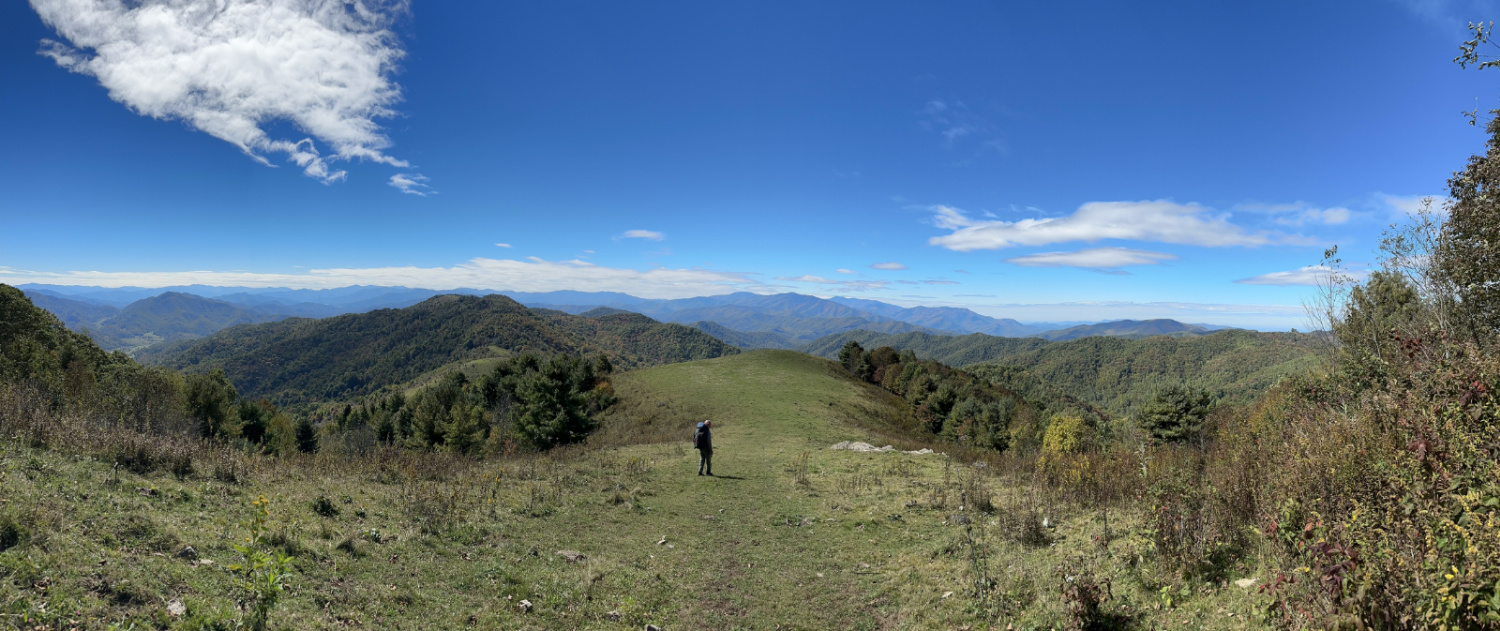
It’s a challenging time for national park research. One dedicated atmospheric scientist is soldiering on anyway.
Dr. Doug Miller knows weather. When it happens, how it happens, what it affects, and what it might do over time. A longtime professor in the atmospheric science department at the University of North Carolina Asheville, Miller has been studying weather patterns in Great Smoky Mountains National Park for more than 20 years.
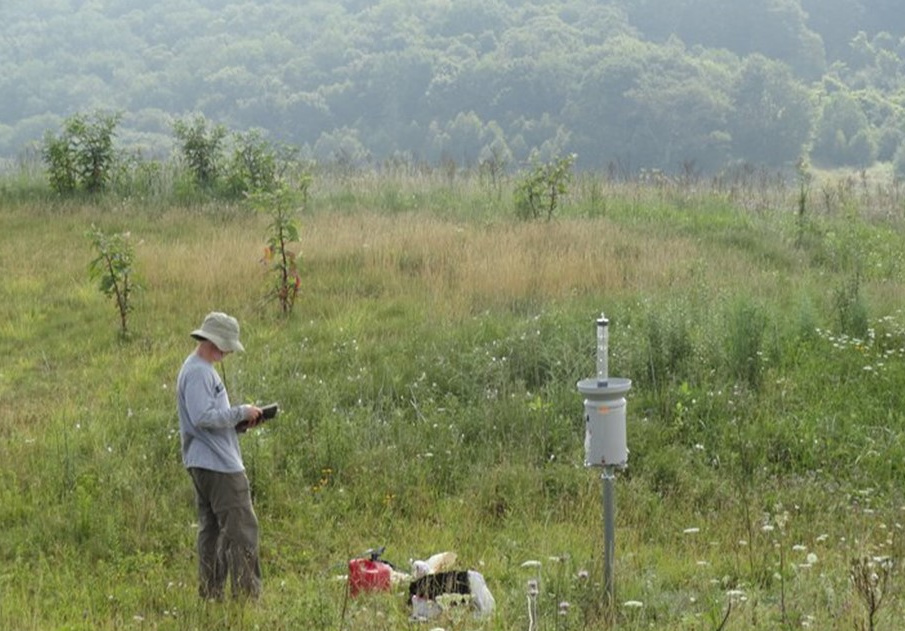
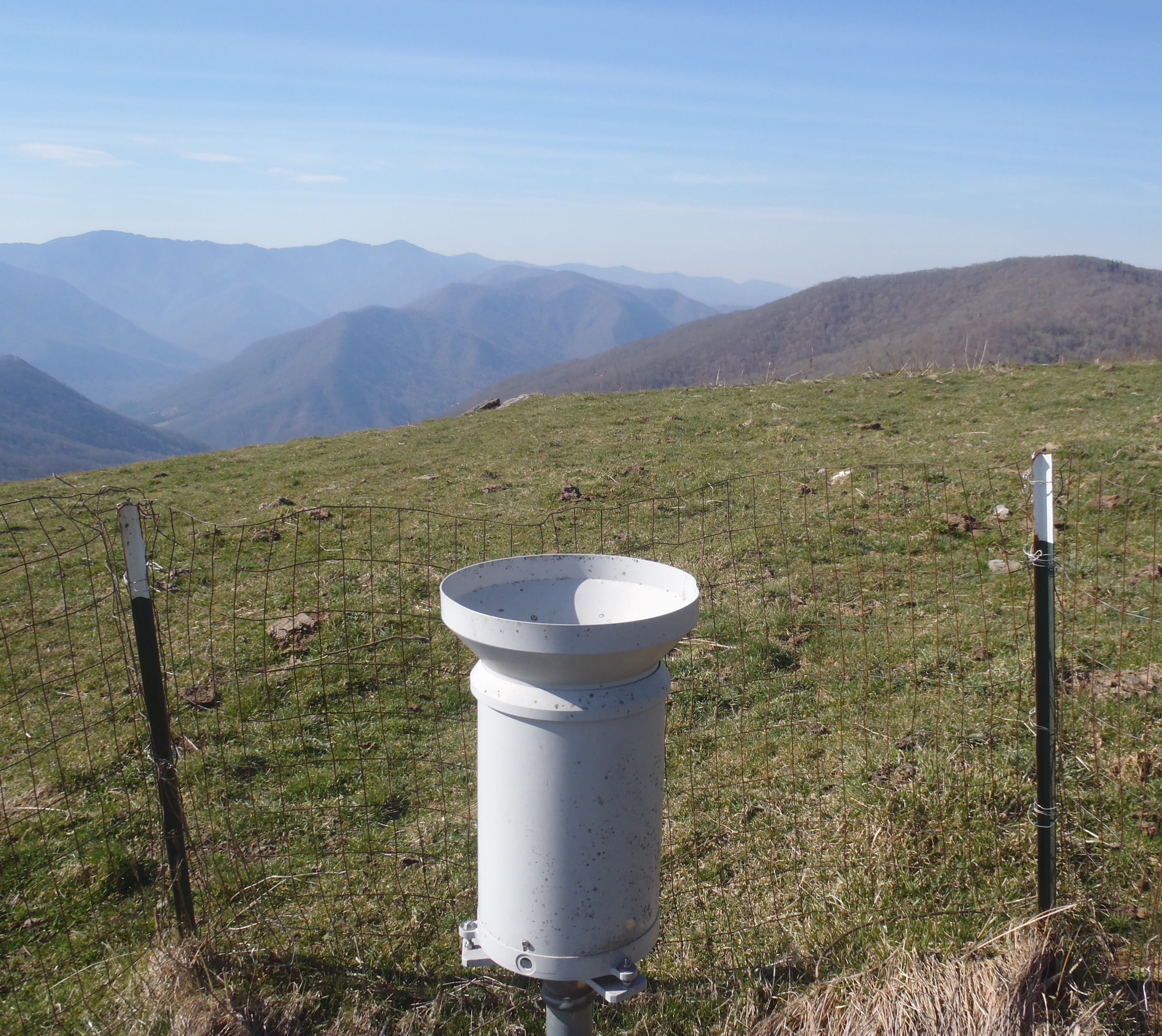
As part of a larger project to record rainfall levels at various elevations in the Southern Appalachians, Miller and his students placed and monitor a series of 12 rain gauges within the park—a subset of a 32-gauge network in the Pigeon River basin. Although they are relatively simple devices for collecting and measuring rainfall, the gauges allow Miller and his team to better understand how water moves through the mountains, which can help park managers to predict landslides and flooding—work that became acutely important last year when the park took a direct hit from Hurricane Helene. The storm caused widespread flooding and fallen trees, particularly on the park's North Carolina side, ripping out trails and damaging roadways and park facilities. Even months later, the park is still asking visitors to exercise caution or avoid about a dozen trails in the Cataloochee and Big Creek areas of the park that remain partially or completely closed or have known hazards.
Trekking to these remote locations to collect data has never been easy, but Miller is now facing an unprecedented challenge of a different sort: major cuts to the federal workforce and the national parks. The Trump administration’s widely publicized cuts have frozen or eliminated research projects in a broad spectrum of fields including public health, education, and the environment. This includes a proposed $1 billion cut to the National Park Service, which would eliminate ongoing park research related to climate change, history, and other topics, as well as freeze on hiring for its “Scientists in Parks” program. National Parks Conservation Association President Theresa Pierno called the budget proposal “extreme” and “catastrophic.”
Although Miller is not a federal employee himself, he has already noted some significant changes that have affected his work. “There have been impacts to colleagues,” Miller told me over Zoom recently. “Scientists that I've worked with on research papers are no longer there. I sent out an update on our rain gauge network [recently] to everyone on my email list, and I got the instant response that [a NOAA colleague]’s email is no longer active. He took the offer to retire [Elon Musk’s “Fork in the Road” email to federal workers]. So that's a lot of knowledge and experience that's gone.”
Miller tells me about how one of his former students became so enamored with working in the national park that she applied for a ranger job after graduation and was subsequently hired. Even with her NPS hat on (literally and figuratively), her superiors allowed her to go out with her former professor to do field work.
“This spring, because of the loss of the [probationary] employees [targeted in the federal government cuts] they could not spare her now in the field,” he says. “The people who are still in the Park Service are experiencing a much narrower job description than before, because they just don't have enough people to do everything that needs to be done.” Miller's rain gauge work has been funded for another year, and at press time, he was awaiting final approval to start his summer fieldwork. But what happens after a year remains uncertain.
"Our funding threat comes from the NOAA cuts," Miller explains. "We did receive a budget reduction, but not to the level that would make the project unsustainable. We're counting on a reversion to a previous budget to make it sustainable. If we continue experiencing cuts, then the project will have to be shut down."

Difficult Conditions
Miller didn’t expect to end up in the mountains. After earning a bachelor’s degree in atmospheric science from Purdue University in Indiana, he got his master’s degree from the University of Washington before returning to Purdue to earn his doctorate in atmospheric science in 1996. After that, Miller worked as a professor and researcher at the Naval Research Institute in Monterey, California, for nearly the next two decades—a place about as culturally and climatically different from the Great Smoky Mountains as one could get. But when Miller and his wife were ready to make a change, a colleague suggested western North Carolina, and they made the leap in 2004.
Since then, Miller has focused his research on the interaction of the southern Appalachians with weather events at various scales, using a variety of techniques including radiosonde devices with weather balloons, satellite imagery, and surface observations. Placing and accessing his rain gauge network requires hiking miles into the backcountry of the Great Smoky Mountains, often over rough terrain. Miller and his team use what are known as tipping bucket rain gauges, which allow for accurate readings over time. Just leaving a measurement container in the backcountry would collect rain, for example, but unless they could reach them every day, researchers would have no way of determining when the rain fell or at what rate.
"We release water at a known rate and it fills a bucket that tips once it is completely filled," Miller explains. "The number of tips during a period of time can be converted to a rainfall accumulation based on calibration trials. We run three different trials simulating a light, a moderate and an intense [e.g., thunderstorm] rain rate and then use these calibration trials to convert bucket tips from the rain gauge into accumulated rainfall. We have to run these trials every year to account for the aging of the rain gauge hardware." (Watch a rain gauge in action here during a calibration trial, and listen for the bucket tipping.)
Since Helene, however, this work has become even more logistically difficult. Last fall, the park sent out a ranger, Paul Super, to accompany Miller on one of the trails because it hadn’t yet been cleared of damage and debris from Helene. “Figuring out what is safe or unsafe after Helene has been a slow process,” Miller says. “And then this winter was particularly difficult. My hypothesis is that Helene weakened a whole lot of trees out there in the park. It didn’t quite drop them, but weakened them, so when the winter windstorms came through, there was just all kinds of new windthrow,” referring to trees uprooted by wind. (A request for comment from Paul Super was not answered.)
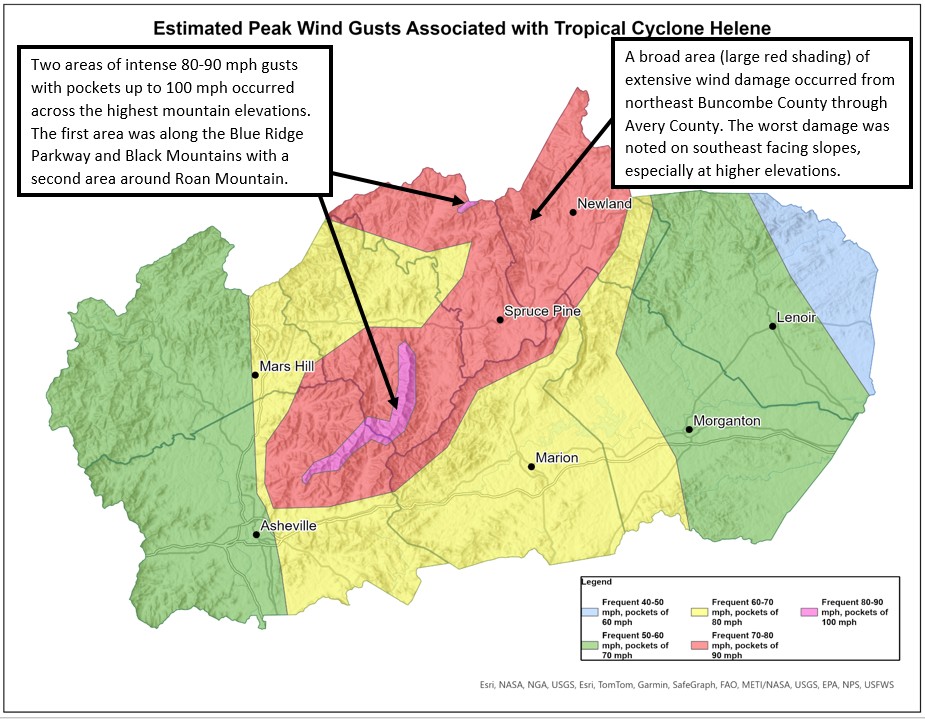
According to the National Weather Service, Helene brought up to 90-mile-per-hour winds to the western North Carolina peaks, with the region’s highest wind gust of 106 mph observed on Mount Mitchell, northeast of the park.
“Usually, when we go out in the early springtime to visit our rain gauges, because we're some of the first people on the trails, we expect we're gonna have to crawl over a tree or two to get to where we want to go,” Miller says. “But this winter was the worst that I can remember in terms of new windthrow across the trails.”
Dealing with storm damage and reduced park capacity at once, Miller says, “is a double whammy.”
Forecasting Flooding
It’s not lost on Miller that we are now in another hurricane season. With NOAA predicting a 60% chance of an above-normal season, with between 13 and 19 named storms and three to five major hurricanes, the chances of the Southeast bearing the brunt of another storm like Helene, even before many areas are fully recovered, are uncomfortably high.
Among other projects, Miller hopes to convert the data from the rain gauge network into a warning system that would provide some notice when a flash flood is likely to happen—an action that could save lives and property. With record-breaking flooding in western North Carolina, NOAA estimates that total costs from Helene are more than $78 billion.
“One of the new projects that I tried to get NOAA interested in a few years ago was making nowcasts [short-term forecasts] of flash flooding,” he says. “With the most visited park in the entire country here in my backyard, our rain gauge network could help us to understand under what conditions might we expect a flash flood.” Miller says he has gained some support from the park to create a pilot project for a mobile lightning detection system that would harness this data, which would lay the groundwork to seek further funding for a larger program.
“With Helene the big thing was flash flooding, really,” Miller says. “You know, theoretically, with these detection networks, you could maybe buy yourself 30 minutes of time between when this thing is observed with the lightning, and then the water starts heading down the creek or the gully. And so, that's something that I’d have to work closely with the Park Service to see how we could get the word out to people in remote areas within that 30 minutes. That's a really big logistical challenge.”
In the meantime, Miller is focusing ongoing research on the phenomenon of atmospheric rivers, which are channels of water vapor that move from the warmer tropics or subtropics and cause heavy rainfall over land, leading to flooding, landslides, and other destruction. Researchers have noted that atmospheric rivers are increasing with warming oceans, and that they are far harder to predict than typical rainstorms.
“The idea that what happened back [with weather] in 1980 should be comparable to what happens today is gone, when you look at the conditions of rising ocean temperatures,” he says. “What we have today is not at all what it was like back in the 1980s or 1990s, or I would even say 10 years ago.”
But when it comes to uncertainty, scientists may be the best equipped to deal with it. On any given day, Doug Miller might be somewhere in the Smokies with his rain gauges, finding answers in the data.

Stories about:
Story Categories:
A copy of National Parks Traveler's financial statements may be obtained by sending a stamped, self-addressed envelope to: National Parks Traveler, P.O. Box 980452, Park City, Utah 84098. National Parks Traveler was formed in the state of Utah for the purpose of informing and educating about national parks and protected areas.
Residents of the following states may obtain a copy of our financial and additional information as stated below:
- Florida: A COPY OF THE OFFICIAL REGISTRATION AND FINANCIAL INFORMATION FOR NATIONAL PARKS TRAVELER, (REGISTRATION NO. CH 51659), MAY BE OBTAINED FROM THE DIVISION OF CONSUMER SERVICES BY CALLING 800-435-7352 OR VISITING THEIR WEBSITE. REGISTRATION DOES NOT IMPLY ENDORSEMENT, APPROVAL, OR RECOMMENDATION BY THE STATE.
- Georgia: A full and fair description of the programs and financial statement summary of National Parks Traveler is available upon request at the office and phone number indicated above.
- Maryland: Documents and information submitted under the Maryland Solicitations Act are also available, for the cost of postage and copies, from the Secretary of State, State House, Annapolis, MD 21401 (410-974-5534).
- North Carolina: Financial information about this organization and a copy of its license are available from the State Solicitation Licensing Branch at 888-830-4989 or 919-807-2214. The license is not an endorsement by the State.
- Pennsylvania: The official registration and financial information of National Parks Traveler may be obtained from the Pennsylvania Department of State by calling 800-732-0999. Registration does not imply endorsement.
- Virginia: Financial statements are available from the Virginia Department of Agriculture and Consumer Services, 102 Governor Street, Richmond, Virginia 23219.
- Washington: National Parks Traveler is registered with Washington State’s Charities Program as required by law and additional information is available by calling 800-332-4483 or visiting www.sos.wa.gov/charities, or on file at Charities Division, Office of the Secretary of State, State of Washington, Olympia, WA 98504.


