
Editor's note: Harry Butowsky spent more than three decades working for the National Park Service as an historian. With the NPS facing a maintenance backlog of billions of dollars, and a budget that struggles to keep up with needs, he questions not only whether a hold should be placed on additions to the National Park System, but whether some culling of the system needs to be done.
It is time to rethink the direction and management of the National Park System. It is time to ask if the system has grown so large that it is unmanageable and not fundable.
In the 99 years since the founding of the National Park Service, the National Park System has grown from less than 20 parks to an enormous bureaucracy far beyond what Stephen Mather and Horace Albright envisioned; it has become much more complex than preserving and managing park sites.
The Park Service now has responsibility for managing a broad range of programs; its legislative mandate has grown to include clean air and water, protection of archaeological resources, historic preservation, endangered species, wild and scenic rivers, 40 national heritage areas, large cooperative landscape projects, and environmental protection. The National Park System has expanded from a collection of the great scenic parks to hundreds of diverse sites and programs.
The list of new responsibilities is endless. As the Park Service's mission has grown in complexity, so too has the enormousness of the issues the agency faces - along with the cost of maintaining these programs.
We now have 407 National Parks and $11.5 billion in a maintenance and budget short fall. Not enough you say? Then just wait for the President or Congress to create another 20 or 30 national park units.
If you do not think this will happen then think again. A quick search of the web will uncover many potential new national monuments and parks under consideration.
So how many parks are enough? Why stop at 450 units? Why not go to 500 units? After all, what is a little maintenance and staff shortage when there are so many potential sites for national parks?
For some supporters of the National Park Service, growth is good and not a problem. In his recent essay, Preserved and Enlarged Forever (The George Wright Forum, Vol. 32 No. 1, 2015), Rolf Diamant offered his opinion that new parks will not degrade the system and that growth is not only inevitable but good. The money may not be there today, but it will follow.
Well, let me offer another opinion and let us face the facts. We have too many national parks now and cannot afford them all. As an agency the National Park Service needs to make the dollars fit the number of parks we have. The obvious answer is to start divesting ourselves of some marginal units. Yes, we need to get rid of parks and not add to the total. There is nothing new or radical about this. It has been done in the past and it can and must be done now.
The Case for Delisting Units
Anyone wanting to understand this statement should read, Gone, But Not Forgotten: the Delisted units of the National Park System by Alan Hogenauer, and Former National Park Service Units: An Analysis by Barry Mackintosh.
In his article, Mr. Mackintosh states that, "Between 1930 and 1994, 23 units of the National Park System were transferred from National Park Service administration to other custody." (Not included in this number are areas authorized but never established as park system units, such as Georgia O'Keeffe National Historic Site and Zuni-Cibola National Historical Park).
So, let us accept the fact that the National Park Service has delisted parks in the past for many reasons.
Why should we do this now? I will give you're an overriding reason. We have a maintenance backlog of $11.5 billion that is growing and not likely to get better in the future.
The National Park Service is not the only government agency with a large maintenance backlog. One has only to look at the recent tragedy in Philadelphia with the derailment of the Amtrak express to New York and the failure of Congress to vote additional funds to repair the Amtrak system to see the larger government-wide dimension of this problem. While the ultimate cause of this train derailment has not yet been determined, a mandated braking system for the curve in Philadelphia was not in place.
Along with the maintenance backlog, we have a staffing crisis. There are not enough people to staff the front desks, do interpretive tours, and provide for critical maintenance and visitor protection services in the parks. Money and people simply do not match the need of the agency.
If we are going to delist parks then, let's take presidential units as one example. We have no fewer than 27 units commemorating presidents. The question to be answered is: why do we need each of these units? The next question is, why do some presidents have parks commemorating their presidency but not all presidents (for example, why Kennedy, Johnson, Carter and Clinton but not the Bushes, Reagan, Nixon, or Ford? In 2017, will we need to establish an Obama Birthplace NHS?)
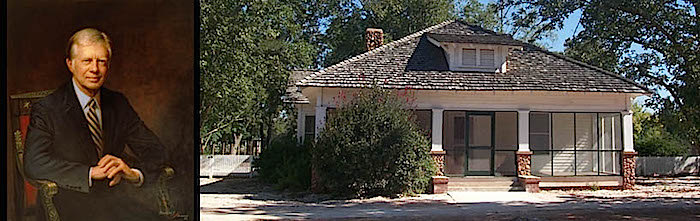
We should examine the Jimmy Carter National Historic Site and ask why can't it be turned over and managed by the Carter Foundation? The same can be said for President William Jefferson Clinton Birthplace Home National Historic Site being managed by the Clinton Foundation. The Reagan Ranch is not a National Historic Site, yet it is being managed by the Young America's Foundation. Both Mount Vernon and Monticello are managed by private entities (Mount Vernon Ladies' Association and Thomas Jefferson Foundation, Inc., respectively). Both are no less nationally significant than other presidential sites, yet neither have a National Historic Site designation, nor are they NPS managed, and yet they are well-maintained, ably interpreted, and highly regarded.
The same can be said for Civil War parks and battlefields. Brices Cross Roads National Battlefield Site is just one acre in size, yet adjacent to this site is a 1,330-acre property managed by the Brice's Crossroads National Battlefield Commission, Inc.
Why can't the one-acre National Park Service site simply be turned over to the Commission to have them manage?
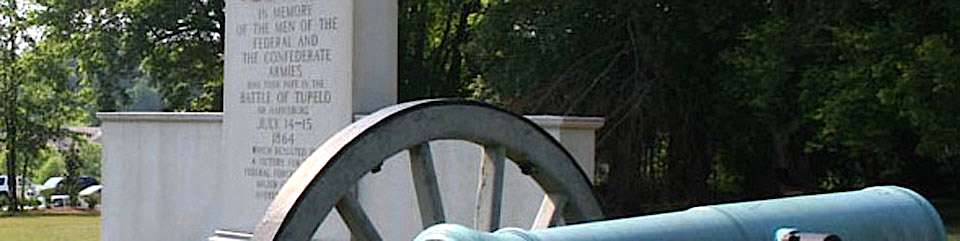
Tupelo National Battlefield is one-acre in downtown Tupelo. Again, why can't this unit be turned over to the city of Tupelo? We have more than 70 units of the National Park System that commemorate the Civil War. I would suggest that in this era of declining revenue, the Park Service is managing too many parks dedicated to this history - let's have state or private entities manage some of these units.
Let's consider the issue of the growing number of parks that interpret the Internment of Japanese Americans in World War II. Do we need four Japanese-American Internment units (Manzanar, Minidoka, Tule Lake and Honouliuli)?
What is the true value of having four units and possibly another unit at Heart Mountain in Wyoming. (The National Park Service has given the Heart Mountain Wyoming Foundation some grant money to help them in their goal to manage the site.) Minidoka and Tule Lake lack interpretive integrity (most especially Tule Lake, since the small site is surrounded by the rather run-down town of Newell). Minidoka has no extant buildings, with a few original structures now located on adjacent farming properties, but they've all been radically altered from the original.
I don't see why scarce NPS funds should be spread out so thin to so many sites pertaining to this theme instead of focusing funding on making Manzanar the premier site to interpret this theme.
The real and only viable option in my opinion is for Congress to set up a park "closing" commission similar to the base closing commission established several years ago to get rid of substandard and excess military facilities. Closing in this case could include either delisting units or transferring ownership. In essence, the principal focus of this commission would be to evaluate what our current National Park System should comprise and provide recommendations to the Park Service director for future designations to 'round out' the system.
While I'm advocating a leaner National Park System, this commission should also evaluate the merits of transferring ownership of non-NPS managed National Monuments (BLM, USFS, etc.) to National Park Service jurisdiction, if such a transfer would help to improve site integrity (Tule Springs Fossil Beds National Monument is a recent example of a transfer from BLM to NPS jurisdiction).
The Case for Transferring Ownership
Perhaps the National Park Service can adopt a Parks Canada approach - have units declared national historic sites/parks (future and existing designations alike) and yet have other entities simply manage those sites. In Canada, there are 972 National Historic Sites, but only 168 are administered by Parks Canada - private and provincial entities manage the vast bulk of the designated National Historic Sites in Canada - why couldn't the same approach be taken here in the U.S.?
The important fact to keep in mind here is that all monies and personnel savings should remain with the National Park Service and be distributed to the remaining parks. There is no reason to close facilities if we lose the money saved.
Of course, one possible political risk of divesting NPS units would be some folks wanting to turn money-making parks over to the states - Grand Canyon National Park certainly comes to mind. Such a move would weaken the remaining parks by the loss of this asset (beyond the fiscal perspective, the knowledge gained by staff managing this park would preclude employees transferring that knowledge to other park units when they are relocated), so there are indeed risks of such a process being hijacked for political purposes.
Does that mean we should not have this discussion and take a comprehensive look at the system and see if our current system adheres to the ideals that Mather and Albright envisioned? I think we owe it to them to have that discussion.
Stories about:
Story Categories:
A copy of National Parks Traveler's financial statements may be obtained by sending a stamped, self-addressed envelope to: National Parks Traveler, P.O. Box 980452, Park City, Utah 84098. National Parks Traveler was formed in the state of Utah for the purpose of informing and educating about national parks and protected areas.
Residents of the following states may obtain a copy of our financial and additional information as stated below:
- Florida: A COPY OF THE OFFICIAL REGISTRATION AND FINANCIAL INFORMATION FOR NATIONAL PARKS TRAVELER, (REGISTRATION NO. CH 51659), MAY BE OBTAINED FROM THE DIVISION OF CONSUMER SERVICES BY CALLING 800-435-7352 OR VISITING THEIR WEBSITE. REGISTRATION DOES NOT IMPLY ENDORSEMENT, APPROVAL, OR RECOMMENDATION BY THE STATE.
- Georgia: A full and fair description of the programs and financial statement summary of National Parks Traveler is available upon request at the office and phone number indicated above.
- Maryland: Documents and information submitted under the Maryland Solicitations Act are also available, for the cost of postage and copies, from the Secretary of State, State House, Annapolis, MD 21401 (410-974-5534).
- North Carolina: Financial information about this organization and a copy of its license are available from the State Solicitation Licensing Branch at 888-830-4989 or 919-807-2214. The license is not an endorsement by the State.
- Pennsylvania: The official registration and financial information of National Parks Traveler may be obtained from the Pennsylvania Department of State by calling 800-732-0999. Registration does not imply endorsement.
- Virginia: Financial statements are available from the Virginia Department of Agriculture and Consumer Services, 102 Governor Street, Richmond, Virginia 23219.
- Washington: National Parks Traveler is registered with Washington State’s Charities Program as required by law and additional information is available by calling 800-332-4483 or visiting www.sos.wa.gov/charities, or on file at Charities Division, Office of the Secretary of State, State of Washington, Olympia, WA 98504.


Comments
Definitely a discussion worth having. Perhaps the 100th anniversary would be a good time to revisit the scope of the NPS. A great combo would be reduced units and expanded funding. Meanwhile, I'm on my way to my favorite, Yellowstone, today.
Thanks for a thought-provoking article. I certainly agree about the role of other organizations in running presidential homes, especially those of recent, current and future presidents, where there are other organizations capable of running them.
A good example is the "George W. Bush Childhood Home." The suburban house in Midland, Texas, is already operated as a "historical site" by an n.g.o, yet in 2013 a local congressman started efforts to get the NPS to study it for addition to the national park system. As to the Clinton Birthplace in Hope, Arkansas, there's no question the Clinton Foundation has more than enough cash flow to run that one.
Great article, Mr. B. I would like to see new administration that values visitation and the wishes of stakeholding communities instead of increasing their fiefdom and ruling like Kings and Queens. A guy I know cornered Jarvis the other day to express concerns and Jarvis couldn't answer any of the guys' questions. This is the same NPS director that refuses to answer emails from the proletariat. Huge disconnect with these bureaucrats and the public they are supposed to serve.
A serious and thought-provoking article. I've often wondered at presidential sites. How many are there for Clinton alone? Three?
How many of our current parks (using the term very broadly) are direct results of some Congress critter seeking a load of bacon to haul home to impress the folks?
Harry's idea of establishing a commission similar to BRAC sounds good. But how do we keep PolyTicks out of it?
I run the website you linked about new National Park proposals, undiscoveredamerica.org/proposed-national-parks/. I'm a pragmatist above all things, and while I hope for a large expansion of the NPS in the future, I'd also be very happy to see some lands transferred to different agencies, as well as some NPS sites decommissioned. I think this is a reasoned approach.
Still, let's not forget that many people/companies/politicians want the parks to have smaller budgets every year. That way they won't be properly maintained and they can be sold off for private interests. It makes the most sense to fight for greater funding for current and future parks, while also decommissioning areas that could be taken care of with other means. It wouldn't hurt to make some of the places you mentioned into affiliated areas, but allow them to keep their designations.
There are a number of worthwhile solutions to the budget, visitation, and historical significance, so let's not throw all out weight behind decommissioning while there are other options.
zrf brings up some excellent points -- and once again greed rears its ugly head. There are a lot of developers in this state who are constantly drooling in hopes that they might someday be able to get their paws on some choice land so they slap up a few mega-mansion vacation homes for those who can afford them. One such parcel sits just outside the Needles Unit of Canyonlands.
Even though it may be necessary and even desirable to divest the NPS of some areas, it really needs to be done with extreme caution.
As someone familiar with the several efforts to delist Saguaro National Monument (which each seemed like good ideas at the time), I'm cautious about blanket recommendations for reducing the number of parks. Also, I don't think history stopped at some date in the past: I support continually adding new units that preserve and interpret cold war and civil rights sites now before they disappear, as well as filling in lacuna in our historical coverage such as Reconstruction. That said, I don't think we need quite as many childhood homes or units about single individuals (especially about their childhood or non-important parts of their lives). However, those small units tend to have very small operating costs, and few enough facilities that they don't add up to a rounding error in the deferred maintenance number.
But, perhaps the NPT community can use this as a spur to concrete thinking about what we value in parks?
What criteria _should_ such Park Closing Commission use?
Cost-effectiveness? Visitors per year? Visitors per acre? Visitors per appropriated dollar? Economic impact on the surrounding communities?
Or something about span (in the mathematical sense) of diversity/uniqueness of resources or interpretation, implicit in the example of 4 being too many WW2 internment sites? How many sites should we preserve for the Revolutionary War? The Civil War? How many western forts? What about natural resource parks? Do we only need 1 or 2 examples protected and interpreted as parks per ecosystem, biome, or geologic feature? Should there be separate criteria and lists for cultural/historic v natural resource parks?
Should there be a national recreation area within a 2 hour drive of the majority of the population? Should NRAs be run by other agencies instead? Should battlefields & military cemeteries be run by other agencies instead?
What questions/criteria should I have mentioned that I am blind to?
If these comments aren't the appropriate venue, perhaps Kurt could set it up as a reader participation day?
"have that discussion?" These articles by Dr. Butowsky are so depressing. Partly because they are never "a discussion." Factual refutations that remove the substance to these articles make no difference to him, they are just repeated over and over. But the most depressing is that such a wonderful site with such wonderful features as "National Parks Traveler" these things that are so damaging to the Parks and to preservation. Just last week, "Property Rights" lobbyists who's job it is to undermine parks and land preservation follow Dr. Bukowsky's stuff point by point. Just as before the last election a Senator hostile to parks used them. The National Park Traveler thus became the major support for the effort being cranked up to kill the Land and Water Conservation Fund. Why, Traveler, would you do this?
Presenting Dr. Bukowsky as qualified because of his years in the parks is also another error. He did not work in Park Studies, because if he did he would give a fair explanation of why the Congress and, thus, the Park Service, must begin with the assumption that the future may require this historical representation. He would tell us, and does not, that the reason Reagan did not want the NPS to manage the site is because they wanted to control the message, and did not want the values of the Nation reflected at the site, but their own spin. He would have explained that at Mount Vernon the Park Service had serious doubts about the preservation decisions made when air conditioning was installed, done not for preservation but to maximize paying customers. He, if he knew, would have explained how long it took for Monticello to even begin to tell the whole story about Jefferson.
Or, why not get someone qualified in park partnerships to explain why connect a small park site with an adjacent but larger partnership area? A qualified or honest professional would have explained that the highly honored former Deputy Director of the NPS through both Republican and Democratic administrations, Denis Galvin, has given talks all over the country about the reasons this is such an effective conservation strategy, or that the Second Century Commission made a special trip to the national historical park in Salem, a site of only a few acres that is surrounded by the Essex National Heritage Corridor the size of an entire county. Because, as any qualified professional in park planning and partnership knows, because the park site is what leverages the outside funding and support while the presence of the national park ranger and park administration brings national recognition to the entire site. The Conservation Study Institute in Woodstock VT has conducted many examinations of how to leverage federal funding effectively and this is one of the best ways. Why did not Dr. Bukowsky, with his 30 years experience, note that the Second Century Commission in its deliberations determined that the very best heritage partnerships often are this paring of park with surrounding land managed by partners?
Dr. Bukowsky continues to ignore the fact, pointed out in the past, that the NPS has repeatedly in the past looked into the sites claimed not to be qualified, site by site, and found the charge overwhelming untrue. Each park study, ignored by Dr. Bukowsky from previous criticisms, examines each new park proposal to determine if -- assuming it is in the national interest to protect it -- the site can be managed by States or others. Dr. Bukowsky ignores points made in the past that the sort of sites he lists as disposable are not the sites that cost a significant part of the park budget. So his 'solutions' would not save the Parks money. He ignores the points made in prior criticism that many of these sites bring in congressional interest and budget increases. He ignores the points of the past that the current budget problem for parks is not about the parks, but a larger fight over taxes vs medicare, and parks are only being used as a political football, not because they are unaffordable, but because they matter to Americans and give vacuous politicians and lobbyists a chance to get an audience for their anti-government rhetoric. Dr. Bukowsky ignores previous exceptions that several times in the past there were temporary problems funding park facilities, but the money eventually is appropriated. There were examples in the 1950s, examples in 1980. Dr. Bukowsky, in ignoring that his rationalization is a fig leaf that the parks could be managed by someone else, avoids answering the question about the failure to preserve these sites is a loss to America. Dr. Bukowsky ignores the earlier criticism that land set aside as park, even when maintenance monies are scarce, are protected from destruction, or mining or inappropriate development. Dr. Bukowsky ignores these and several other fatal flaws, yet National Park Traveler has now printed three of these damaging, inaccurate and unresearched pieces.
On the site of homes of Presidents, I think it would be useful -- not for the phony reason of saving money but for the point of national significance -- for the national park service special resource park study to look harder at the question of whether the "home" site embodies the special significance of the President involved. Some Presidential houses obviously do. Harry Truman home, for one, clearly captures what makes Truman distinctive. True, the study team would say, it is hard before the judgment of history is in to decide what makes a President distinct, but they can identify the site before it loses its original features (for example the T.Roosevelt birthplace had been destroyed before the park service was able to get it). The Lincoln home in Springfield: would you say Lincoln as a successful local lawyer and active local politician is the (or "a") key thing that would convey to future generations something that would measurably deepen their sense of Lincoln's? Do you think Mount Vernon, demonstrating that Washington married a woman with money and had slaves, do you think that home is the best way to say why Washington is important? Congress would have to let the park service know to change direction, and possibly risk the loss of places like Harry Truman's home that looks like the man just walked out of it, with his own hat and coat still on the hat rack, and his books he read himself still on the shelves. Dr. Bukowsky has the brimming confidence of the total amateur in partnership to think that, beyond the inevitable historical bias, you can count on groups like the Carter or Clinton foundations for preservation in perpetuity.
The most irresponsible thing in the National Parks Traveler putting its name above these apparently substantial but ultimately empty bits of magical thinking, is a point that just begins to tease in this piece at Dr. Bukowsky's brain: the idea that once started, dismantling parks systematically as proposed would quickly get out of control. This is not like the Mar-a-largo site, park for little more than a year of Marjorie Merriweather Post's ownership; notwithstanding that Dr. Bukowsky and the Traveler somehow fail to tell us just how much actual money could have been saved by those previous de-authorizations, eccentric as they were; eccentric exceptions that only the most frightfully politically inexperienced would want to use as the foundation of a new national policy for parks. We just saw at the end of the last Congress just how little finesse Congress showed in the Defense Authorization Bill in just turning over land to state or development plans with no protections for the future AT ALL. The lands that get taken are the ones with commodity value, like mining, oil, gas, shopping centers, ski lodges, suburban McMansions. People with perhaps even less concern about Japanese internment camps than Dr. Bukowsky, and perhaps even less concern of the dangers of constantly hammering away at the idea that parks are not for perpetuity.
So if the National Parks Traveler is myopic enough to believe that the funding problem for parks is either permanent, caused by or about the parks, (and I am sure that other than these three pieces no one at the National Parks Traveler is so myopic), then why not use the time and space to think about strategies to generate the missing appropriations? Why not explain to the Dr. Bukowsky's of the world how the budget works, so that they can actually tell us in dollar how much different bizarre alternatives would actually save, and where the real cost are, and how to generate money where it actually is needed?
Instead of killing off what the parks are about, killing off the preservation of places of national significance that studies show are feasible and suitable to qualify as parks, instead of unimaginatively throwing up our hands in despair, why not do something brilliant about preservation?
Thank you d-2, I agree. I do not think Dr. Butowsky has this right, you pointed it out very well. There are some excellent books on these issues, Dwight Rettie, "Our National Parks" has an excellent discussion on why we do not want to decommission units of our park system. A book coming out on July 15th, "Your Yosemite", by Bob Binnewies is just excellent, addresses Dr. Butowsky's concerns very well. Both Dwight Rettie and Bob Binnewies were distinguished managers for the NPS, I am afraid Dr. Butowsky is speaking mainly from his point of view, I respect that, But I must disagree with him.
d-2, you may have your disagreements with Harry (most of which seem to be based on self-preservation of the sources) but I for one appreciate the discussion. As is typically the case the "science" isn't settled and shutting down dissent is not the way to get to the solution. I thank Kurt presenting diverse views.
I can't help but to think that if responsible budgeting by Congress was to be ripped from the claws of the parsimonious tea partiers and their ilk, and restored to the true needs of the mandate of the parks, then this debate would fade. The parks have an intangible value, and I believe they should not be put into a profit-making dollarization. Once it was not a budget decision, but one based on a reasoned evaluation of management and mandate, some of these recommendations may be made. No one likes to live under the dictates of Mrs. Grundy.
"I can't help but to think that if responsible budgeting by Congress was to be ripped from the claws of the parsimonious tea partiers and their ilk, and restored to the true needs of the mandate of the parks, then this debate would fade"
Rick, what happened when the dems were in full control? Massive increases in the park budget? No. In other words, despite your attempts to politicize everything, this issue has nothing to do with "tea partiers and their ilk. If you actually paid attention to HB's op-ed you would understand that much of the fiscal burden placed on the NPS has nothing to do with "the mandate of the parks".
Fair enough, D-2. I am a discredit to the parks. But at least I sign my name. Why have you not done so? I’ll tell you why, and it’s what I have been driving at. Park Service management does not want this debate. It rather wants to assure Congress and the American people that the only debate needed is from within. I am not saying that I am “right,” but yes, I am saying that this debate is necessary. As for your insinuations, you tip your hand. You want the National Park Service to be PC—telling the “whole story” about our founding fathers. Trigger warning. Freed African-Americans owned slaves, too—lots of them. I will be happy to tell the whole story about Washington and Jefferson, just so long as you don’t forget that, either. Meanwhile, I suggest we stick to the point. We still have far more parks than we can afford.
Veritas (Harry Butowsky)
Eric..
I understand your attempt to defend your extremist politics, including transference or saying that only I politicize the conversation and also the patronizing manner you attempt to ever so gently correct me.
That said, I'll go ahead and stand by my opinions. Your disagreement does nothing to invalidate them, but it does remind me why I try not to interact with you. Bye.
'Your disagreement does nothing to invalidate them"
But the facts do. When dems where in control, the funding for the Parks did not grow materially. It isn't a political issue as you try to make it. But it is no wonder that budgets and fiscal discipline are alien to you.
This is indeed a thought-provoking article worthy of a serious discussion. Thanks to Kurt and NPT and the author for having the courage to publish it! D-2's angry, semi-coherent reply is a good example of why NPS senior management will probably never take such a discussion seriously. They are too obsessed with More, at any price, to care about sustainability. This attitude that the NPS is somehow above reform or even criticism will ultimately cause far more harm than the criticism itself.
Human caused climate change, our war-machine economy, and the unchecked population explosion will put the entire national park system under tremendous pressure in coming decades. Recent NPT stories about capitulation to special interests at Katmai and Big Cypress tell me the current NPS leadership is not up to the challenges ahead.
The past few years' Best Paces To Work surveys suggest the NPS is one of the most poorly-managed federal agencies. Note especially all the pink (lowest quartile) scores in management categories and the accelerating downward trend in 'Effective Leadership: Senior Leaders':
http://bestplacestowork.org/BPTW/rankings/detail/IN10
Even in the very unlikely event that NPS funding was increased dramatically, I doubt much would trickle down to the actual parks or be applied to the largely self-inflicted maintenance backlog. The majority of any increase would probably be spent as it has for decades, on more top-heavy, crony-riddled, non-transparent, whistleblower-crucifying, special interest-appeasing, development-oriented bureaucracy at the Regional and DC offices.
It's time for triage to stop the bleeding; transferring management of the presidential homes and minor historical sites would be a good start, but I would also include most of the NRA powerboat playgrounds and urban parks in any NPS downsizing. IMO, a "closing commission" would be futile if it's not part of a broader management reform commission.
D2 is obviously an NPS King and the arrows have hit into his lair. Or should I say liar. How do we know this? Because discrediting individuals instead of addressing issues is the Jarvis model. You folks bring it on yourselves.
A point of order is necessary in light of D-2's comment. The above article is clearly marked as an Op-Ed, not a position taken by the Traveler.
As we point out in our "About" section (found under Departments), "The articles that appear on the Traveler are intended to educate, inform, and entertain readers, as well as to stimulate discussion and debate about how the National Park System is managed. (emphasis added)
Additionally, we accept guest columns that touch on any and all aspects of the national parks. As long as submissions are worded constructively they will be considered for publication on the Traveler."
With the centennial of the National Park Service soon upon us, a discussion revolving around the viability of the park system certainly seems apropos.
-- Dr. Butowsky you say again we have parks we cannot afford. But: you explain nothing, you counter nothing in just repeating this untrue statement.
You owe it to us and to the integrity of National Parks Traveler to explain how much money all the proposed cuts you list would save.
Go ahead. List your savings in each thing you propose, each park you cut or spin off.
Subtract the assistance you would give to the parks in spinning them off. Because if you use ‘lack of money’ as your justification to break the promise of America to preserve these parks forever, you should be able to support that your drastic recommendation will do something major for the budget (“SOS” indeed !) other than the whim of opposing parks you don’t like. Even you admit it risks destabilization.
This is the most crucial, most fundamental of all the flaws of your papers. Please explain how much saving will result. I think, next to nothing.
-- Sorry, bad guess Dr. Butowsky, it isn’t so that I use the name D-2 because of not wanting this debate or because of you. I have always used it. The site permits it, and for me it was actually a way to avoid conflicts with park leaders, or for friends I know who do work for the park service. I did many years ago. To Anonymous: I did not, do not work NOT as a park service leader – more mid-level about the same as Dr. Butowsky. I did work in parks, and central offices, and in Washington also like he did but not as a manager or a leader. Mid-level is the best way to describe the core of my work.
As I will explain later in answers to some of the better criticisms here, most of the leaders controlling the park service legislative and budget including OMB are closer to your position than to the pro-preservation view I support, and I have fought the "zero-sum" types most of my life.
But I must say their points deal more knowledgably with appropriations accounts, park studies, budget busting issues, etc. than these. Or at least were willing in public or in private to have this debate. Park service has repeatedly testified on such issues before Congress, has often called for moratoria, and has opposed many things only for the money. Mostly, I thought they were wrong whenever they called for sweeping, across-the-board "no to new parks" policies.
-- TO ecbuck: ecbuck is right that neither Democrats nor Republicans have stepped up very well recently.
Although, to generalize, Republicans a little worse, occasional a lot worse, but once in a while Republicans are much better than Democrats. Obviously McCain had a much stronger “National Park Platform” when he ran than Obama did.
Obviously the main thing hurting the parks now is the stupid trap Boehner and Obama created with the Sequestration, although you can argue that both men originally intended to solve the whole problem of taxes and entitlements and military in one stroke.
But it turned out Obama was naïve about what chaos in the government and in the military the Members of Congress were willing to accept -- rather than solve a problem together. (and the Republican McCain said the whole thing was ruinous and a bad idea.) Whereas Boehner clearly could not even control his own membership, usually a fatal flaw for a House Leader. So that is the reason why the current budget caps are so severe. Not what Dr. Butowsky says at all.
-- TO ANONYMOUS: I’ve already said, pls see my answer to Dr. Bukowsky, I’m not a ‘king,’ but-- regarding your other point saying my attacks are personal:
I do not understand why asking Butowsky to address what he is missing or disguised in his piece about how the park study program actually works is an individual attack on him, or why confronting him with the truth that many of the places people try to make into parks – far and away the very large majority – NEVER become parks -- I think Dr. Butowsky owes us that, don't you? Or, why it is a personal attack to ask him how he confuses the different funding sources and appropriations? And, to ask him to acknowledge that basic flaw of different pots of money these new parks don't threaten really undercuts his argument? Or, why it is a personal attack to state, most of all, how the places he talks about shutting down or not establishing have very little to do with the real costs of the park service?
He doesn't but needs to answer these things.
Because he and the National Park Traveler have become the go-to source for the opponents of the National Parks or the Land and Water Conservation Fund, and they should back up their statements with just some actual numbers.
I asked this same question of him on the publication of a previous article, when he made some of the same mistakes before, and other than saying he disagrees, he never actually explains, he just repeats it. Is calling him on that 'personal?' Really? But if he is holding himself out for his 30 professional years, doesn't he owe us that? Or is it only Kurt who cites this as a qualification for running this with no corrections to the most obvious things? I have read many articles in Traveler. Once in a while, whatever the topic, you will see a little mistake, but not an entire piece wallpapered with them. What is the point of citing this as authoritative if there is not some effort to make the comments professional, and the logic consecutive?
Simply to keep saying that we can't afford to keep these places is disingenuous, isn’t it, unless you acknowledge the actual costs of the places he cites for cutting, isn't it? And disingenuous, isn't it, unless you deal with the fact that the enormous road budget needs he cites within the backlog are, in fact, funded by an entire different, non-park service, transportation fund? This is significant, because NONE OF THE PARKS Dr. Butowsky mentions would affect that huge part of the 'backlog' either way. Which means his "solution" wouldn't solve it either way, right?
And isn't it an issue, if you do not acknowledge, as Dr. Butowsky does not, that park costs are not even a rounding error in the US Budget and the larger fight has nothing to do with parks?
-- But, Anonymous, the park service leadership, unlike me, are not asking for “more.”
It is Congress in each and every case that has initiated each and every recent park. The last time the National Park Service had its own legislative program and new park initiative was with the new parks in Alaska, in 1980. So "more" does not in fact come from the NPS leadership. Wish that it did !
Sometimes some of the NPS people are more enthusiastic about some of these congressional proposals. But some people in the leadership are (as someone else said here) looking at what they've got, their fiefdom rather than their responsibility to also be preservationists as the law clearly expects.
OMB, in the Office of the White House, almost always instinctively opposes everything.
Some Secretaries of the Interior are far more able and willing to roll OMB and push them out of the way, than others.
We briefly until last year had a very strong White House chief of staff who helped, as did both Senate and House last year, to make sure that the Park Service actually got everything it asked for.
Asked for officially, that is, but that was an accomplishment after a few years of cuts.
Unfortunately he left to work on a political campaign so we will have to see how the NPS comes out of the Fiscal Year 2016 issue.
The Congress has supported releasing the military from the Sequester, thanks largely to John McCain.
The White House says the President would veto the military authorization bill if domestic programs (presumably including the NPS) are not ALSO released from those across-the-board-cuts.
The Republican Senator Murkowsky has shown more imagination than many in the Congress over the NPS Budget. She might be helpful, and has been in the past.
But a few months ago she said she had a confrontation with the Secretary about roads and oil and gas development, sounded like she wanted to get even, and that could bring on a meltdown if those two women have not figured out a way around it.
And we do not know how the House will behave, but it will be tough for either the House or the President to cave on this. So it does not look good for increases over last year. But it is possible the parks could be released from these arbitrary caps that is the current cause for the steep budget cuts.
But the bottom line is, someone with the NPS for 30 years owes us a more dynamic picture of the actual budget over the years, rather than this untrue assertion of flat and unimaginative unaffordability.
It is like complaining about the weather to write a piece like this one. Except, unlike the weather if we all who love parks found common ground we can do something about the budget because it is a moving target, not static as described by Dr. Butowsky.
I am sorry if it looks like I am attacking a man with such an inspiring record as Dr. Butowsky. He did a really good job in his history position, especially in getting historic documents and recent papers on line. when he left the Service they dropped the ball on this, yet on his own with his own money he is putting those things on line. This is a true service to America, to history and to parks. On a personal level he is almost the last person I would want to attack.
But the issue is so vital to break the promise to Americans that their parks will be preserved, that the phony arguments in this piece must be addressed.
In the Summer 1991 issue of Ranger: The Journal of the Association of
National Park Rangers, Robert Chan wrote:
"People visiting this grand old national park will find most of the
scenery, wildlife, and thermal wonders as spectacular as ever this
summer. The park's natural resources, says superintendent Bob Barbee,
are in better shape than they have been for years.
Like many of the managers and rangers throughout the National Park
System, however, Mr. Barbee worries about his staff's ability to protect
these resources, maintain facilities, and continue to give visitors the
kind of park tradition of the National Park Service.
Visitors will find 60 percent of the roads in bad condition, trails
needing maintenance, and fewer ranger talks and guided nature walks. A
ranger will not be handy to start a stalled car; responses to emergency
situations may be delayed. Yellowstone has not been able to keep up with
inflated operating costs, so the aging infrastructure deteriorates and
the well-being of its wildlife and natural resources becomes
increasingly precarious.
Most of the challenges that daily confront park managers involve lack of
money. Many of the 357 units of the National Park Service are starved
for enough funds and personnel to provide adequate maintenance and
protection and to help people experience nature firsthand and gain a
deeper understanding of the American past.
This year is supposed to be a time of celebration, commemorating 75
years since the birth of the National Park Service on August 25, 1916.
But among the park service managers and rangers, there is little
celebration. Instead, it is a time for hunkering down.
... In the past, a national parks advisory board reviewed plans for
expanding the system. The board's work was ended in the 1980s. At
present, proposals for new parks receive no independent review...
... Between 1950 and 1980, even with some areas being consolidated and a
few withdrawn, the number still grew by 138 areas..."
This article could very well be written today as the National Park
Service prepares to turn 100. Fundamentally, what has changed in the
intervening years, besides the addition of 50 more units?
To me, this goes to the root of this Op Ed piece -- we will be having
this exact same discussion in 2041, but with another 50+ units added to
the System; thus Dr. Butowsky's recommendation for a critical assessment
made by a Congressionally-mandated, external commission to re-evaluate
the make-up of the National Park System.
Running with tahoma's suggestion, why does the National Park
Service HAVE to manage NRAs? Take Whiskeytown–Shasta–Trinity
National Recreation Area--two-thirds of which is managed by
the U.S. Forest Service--why can't the Forest Service also manage
the Whiskeytown Unit? The Bureau of Reclamation already manages
over a hundred recreational facilities -- would Glen Canyon,
Lake Mead and Lake Meredith (to name just three) be seriously
degraded if BuRec assumed management of these NRAs?
A park "closing" commission would evaluate the merits of such
transfers. And, as suggested, these units would not have to
lose their designation (NHS, NHP, NB, etc.) but merely a
transfer of "ownership" (akin to the Canadian park system;
call them NPS "affiliated areas" if that term is more palatable).
Our "park" system today is already a hodge-podge of management agencies
with a plethora of national monuments also managed by the USFS, BLM,
USFWS, NOAA, State of Louisiana, Gila River Indian Community, etc. To
suggest that only the National Park Service can manage "parks" and
transferring responsibility to other federal, state, or city agencies or
non-profits would result in degraded units not only is an insult to
these other entities (and to the Canadian park model, which is working
quite well, thank you, given Parks Canada's similar budgetary woes) but
also ignores the age-old problem which the National Park Service simply
has not corrected, nor has an action plan to address.
Can anyone guess the cost savings? No, as it would depend upon the
recommendations of the commission. 2 units -- why bother? 22 units --
still a drop in the bucket, but for operational efficiencies it still
might be worth doing. 222 units -- now we're talking some serious coin;
which would also include some major regional office consolidations. Even
somewhere between 22 and 222 could result in noticeable cost savings, as
well as improve the overall quality of the System by shedding any
questionable units.
For those of us who truly care about the long-term integrity of
these units, we owe it to these properties to support such an
assessment.
RDPayne's comments this morning were excellent -- and, unfortunately, right on the mark. Thank you for posting it.
A number of high dollar urban locations could easily be removed from the national park lists with little harm to the areas. The parks in NYC, San Fransisco, Akron could easily be managed by local park authorities with little loss to either the areas or the allure if the national park system.
But from a taxpayer perspective, I'm not sure of the difference. The Feds take from my left pocket, the locals from my right. But at the end if the day I'm still poorer.
The supposed National Park Service $11.5 maintenance “backlog,” and its temporarily less-than-optimal operating budget represent a phony “crisis,” manufactured by anti-park and public land members of Congress. They have slashed the National Park Service budget, and then disingenuously lamented that, due to the “backlog” they created, we can no longer afford to establish new national parks and must privatize the existing ones. We should all reject this fraudulent meme.
The truth is that there is plenty of federal money available. The real problem is the misguided short-term budget priorities of Congress. There is good reason to believe that, if Americans knew the truth, they would demand that Congress shift funds from other wasteful programs that do not benefit them — such as subsidies for destructive national forest logging and unneeded Cold War military hardware programs — to the National Park System, which benefits all Americans.
Those who advocate offloading National Park System units to other public or private entities would relegate these areas to degradation or destruction. I have worked on public land issues for more than 30 years, and I have seen firsthand that, with few exceptions, the National Park System provides the strongest protection available for natural and historic treasures. Alternative types of conservation units are rarely as large, as strictly safeguarded, or as well known and supported by the public as the national parks they could have been. For example, the recently designated national monuments that were left under the administration of the Bureau of Land Management or U.S. Forest Service have significantly weaker protection than if they had been placed under National Park Service protection.
We need not only to keep our existing parks, but we also need to expand the park system. Hundreds of significant natural and historic treasures across America are urgently threatened by logging, livestock grazing, fracking, mining, intensive motorized recreation, and commercial development. Most potential national parks are already federal lands with their own budget, which can be transferred with the land. The most important thing is that park designation would ban destructive resource extraction and industrial development. Except for historic sites, infrastructure development, if appropriate, can wait until the funds are available.
As we approach the centennial of the National Park Service, we need a positive, forward-looking vision. We will need a far larger National Park System in the next hundred years than the one we have today, which encompasses less than 2 percent of the lower 48 states. Our population has grown. Climate change looms. Protected lands are not expansive enough to conserve biological diversity. We face an unprecedented extinction crisis. Rivers, coasts, and marine areas continue to be degraded. Numerous vital historic resources are unprotected.
We need new parks — as many as possible, as soon as possible. We need new parks to sustain unlogged forests that store carbon and mitigate climate change; that preserve representative portions of imperiled ecosystems; that protect wild, free-flowing rivers; that conserve habitat for endangered wildlife; that heal degraded but recoverable lands and waters; that safeguard irreplaceable marine and coastal systems; that save threatened historic sites and cultural landscapes; that serve the millions of people in cities and regions that now have few or no national parks; that expand the boundaries of existing parks to prevent exploitation and development on adjacent lands.
Fortunately, the list of potentially qualified areas for addition to the National Park System is large. Grassroots groups and activists across the country have proposed new parks for their regions. Unfortunately, they are working individually, with inadequate resource, against entrenched anti-park interests. These individual park efforts need to be united in a nationwide campaign for new parks.
Another problem is that our current process for studying and designating national parks, usually one by one, is not adequate to the task. We need a fresh new approach that can survey, study, and designate dozens or hundreds of new parks in the next few years. And then we, the people, need to demand that Congress fund them. This entire project could be funded by shifting just a tiny portion of the federal budget to a new generation of parks for the people — for example, the $20 billion a year we are now wasting on the obsolete F-35 Fighter program.
Future generations will not look kindly on us if we allow significant parts of their natural and historic heritage to be destroyed because of short-term budget priorities in Congress. They will not accept the excuse that we could not create new parks because there was political opposition from a loud and aggressive minority. However, just as we thank past generations of park advocates for Yellowstone, Big Bend, and Everglades national parks, they will thank us for having the audacity to not only protect, but also to expand the National Park System. Now is the time for action, before our imperiled special places are lost forever.
For someone who spent more than three decades in the NPS, I find his lack of understanding about how the NPS is funded queer, if not shocking. Congress does not simply throw a bag of money containing a fixed amount at the NPS and tell them to figure out how to allocate it (oh, if only!)
Conservative taxpayers grousing about the overall cost of the system or pieces thereof - I get that, even if I don't agree. Questions of relevancy or diluted mission or remaining site integrity or applying the right tool for a job should always be examined. But Mr. Butwosky's financial argument in this piece is nonsensical and not reality-based. Adding additional units does not squeeze the NPS budget further, the NPS budget is built from the bottom up not the top down. The reality is, if we went back to a National Park System consisting of what ever arbitrary number of units that existed at the point at which you want to freeze time, they would continue to be unappreciated and underfunded by Congressional action in rough proportion to today's system. Removing units from the National Park System would also remove the moneys allocated for that unit, to be spent or saved according to other priorities of the political left or right as applicable. And shifting costs from one agency to another, or from one unit of government to another, does not in the end save money.
And while I'm at it:
"An era of declining revenue"? Excuse me?
"Obama's Birthplace NHS"? Oh jeez, nice birther dig. I think you are better than this.
I do know budget. And, the NPS should stop adding so many new units. It's basically using the already overtaxed populous to pacify egos or pay back political favors taking on all these monuments and small sites. Sure, staffing these places will give some people jobs in economically depressed areas, but the cost of the federal government administering it is like paying $50 for a hamburger, when you can buy one for $5 from the public sector. And, with massive growth, there comes massive debt and lots and lots of maintenance. This is far more costly and long term than the aquisitions are showing yet, being still in their inception before visitor centers and interpretive programs and so forth . When one administration adds so many new units in the course of two terms, increasing the number of NPS holdings by 15-20% (and not done yet!), ask yourself- is the economy improving by the same percentage in that same time span? You wouldn't be surprised if you learned that the only reason the NPS aquired many of our less interesting properties was due to a state or private foundation, or county "dumping" their liabilities on the federal budget and the US taxpayer? Why shouldn't we dump the ones that nobody goes to and that have nothing to ofeer that is not already represented elsewhere in the park service?
Much of Prof. Butowsky's logic makes perfect sense to me, but then I don't always buy what the snake-oil salesman is selling, even if he/she does have a great commercial. Cause when you take it home, you'll find it's not that useful or interesting or well-made and doesn't cure gout or ricketts, so you just got ripped off.
The bigger the federal government grows, the less efficient it becomes. The NPS is no exception. Many agencies are pathetically underperforming becuse there are too many programs and policies, too many pieces of the puzzle, to be able to complete a normally simple task.
"The truth is that there is plenty of federal money available."
Greece, here we come...
"Greece, here we come..."
Of course the U.S. government has plenty of money. Too much of it is being spent in the wrong places, instead of on national parks. But there is little danger of us experiencing the financial problems faced by the Greek government.
However, the situation with the National Park System budget is similar, in that an extreme austerity has been artificially imposed by regressive ideologues. In both cases, people are rebelling against this destructive and unnecessary policy.
"Of course the U.S. government has plenty of money." Seriously, that's the first I heard about it."Too much of it is being spent in the wrong places." Well, on that we might agree. How about the interest on our $18 trillion debt? Unfunded liabilities through the Baby Boom Generation total another $125 trillion--and change. That's right. There is a t there, not a b. We are talking about debt such as this nation has never seen--even after paying for World War II.
And don't forget state indebtedness. Illinois's bonds are rated junk. Chicago? Only $20 billion in arrears against an annual budget of $3.5 billion. Accordingly, the mayor just proposed building a casino in order to keep making pension payments. A payment of $634 million was due last week. California? Broke, although Jerry Brown won't admit it. Only six annual budgets ($500 billion) in arrears. What about the other 48 states? Don't believe what you read in the papers. Most of them are struggling, too.
The wheels aren't coming off the bus; they're off the bus, and the bus has already smashed into a tree. We just won't admit that our concussion is really a broken neck. In either case, I love it when my party--the D party--starts talking about the Tea Party and the R Party's "waste." Here in Washington State, our two liberal, feminist senators can't wait to bring home the bacon, either. Can you say 100 new tankers for the Air Force? For that we thank Patty Murray. Thank you, Patty, and the Boeing Company thanks you, too. And don't forget the Everett Naval Base, Bangor Submarine Base, and Joint Base Lewis-McChord. Government "waste?" We live on it, and have ever since World War II. Shut the waste down? Spend the money more "wisely?" Invest more in the national parks? By now, Senator Murray is laughing so hard she can't see straight. But yes, the joke's on the taxpayers, who also believe those commercials on television hawking payday loans with an interest rate of 300 percent.
"How about the interest on our $18 trillion debt?"
Alfred, from what I have observed, the so-called debt "crisis" is a myth that has been perpetuated by Wall Street and corporate elites who hate government and want to downsize it so they can make more money. They are soulmates of the austerity advocates who have engineered the National Park Service "backlog." The terrible things that have been predicted to happen as a result of the federal debt "crisis" have not happened. In fact, the economy continues to recover and the debt is going down. See, for example, http://www.nytimes.com/2014/07/21/opinion/Paul-Krugman-An-Imaginary-Budg... State financial problems have been largely due to impacts from the nationwide economic recession, as well as regressive tax-cutting, such as that in Kansas.
There is a real economic crisis in America: extreme wealth inequality. The elite debt scolds hope we will keep focusing on the imaginary debt "crisis" and do nothing about the wealth inequality crisis. See, for example, http://www.huffingtonpost.com/2012/08/09/joseph-stiglitz-inequality_n_17...
Regardless, we obviously agree that a lot of federal money is being spent on wasteful programs. That is because there is strong political pressure to support those programs, coming from relatively few corporations and individuals who benefit economically from those industries. We need to build political pressure to divert a small portion of that wasteful spending to fund the National Park System, which benefits far more people and sustains far more jobs. There are a couple of hundred million park visitors out there who can to help create that political pressure, if they are aware of the problem and organized for action. That is what needs to happen.
Okay, Michael. Now I get it. You're drinking Paul Krugman's Kool Aid. He's an idiot, but I digress. Anyone can believe that money grows on trees. It doesn't. It is a reflection of a society's "energy," and our "energy"--and the world's--has been diluted beyond repair. Fine. Let's take all of those billionaires and shake them down to the penny. I am certainly all for using Theodore Roosevelt's "Big Stick." Bust the corporations up; make them more competitive again. Start with the banks, the railroads, and the airlines, and work down.
Now what? How long could that "run" the country? There are now 93,000,000 of us out of full-time work. Since we are not working we are not counted. That is the only way Paul Krugman can crow about a "recovering" economy. As I said, a total idiot, but then, he's a millionaire writing for THE NEW YORK TIMES. The economy probably feels very good to him, but how in truth does it feel to you? As my father-in-law used to say, don't read the newspaper. Look around. When I see college-educated young people in my neighborhood pouring coffee--dozens of them--I get a very different picture from that of an "economist." How many will be hired when those corporations are busted up? A few. But like money, you don't just grow jobs on trees. Seattle is allegedly a boom town right now, but again, there are only half the jobs we need for full employment, i.e., 40 hours a week, not 20 or 30.
Consequently, Patty Murray, et al., support the military, which employs far more people than the National Park Service. Paul Krugman says not to worry about the national debt--government should keep hiring and hiring and hiring. And spending and spending and spending. Is that how Mr. Krugman runs his household? If not, why does he want to run his country into the ground?
Because he is a closet Marxist. "From each according to his ability, to each according to his needs." Well, ask Greece how that is working--and France, and Spain, and Italy. I work; you sit. I retire; you work harder. Energy, my friends. Not rhetoric. That is what an economy is. If all of its energy is spent paying for people who sit and retire, you have Greece--and less money for national parks.
Kurt and I were talking about this just last month. He supports The Traveler totally on his dime. You people send him a few bucks once in while, and then you forget about it. You want his energy, talent, and expertise for free.
Welcome to Paul Krugman's "economy." I know; he won the Nobel Prize, someone will say. Well, so did Al Gore and Barack Obama. And don't get me started about the Academy Awards.
I think for myself. And you know what I think? Dr. Harry Butowsky is right. We like kidding ourselves that people in power "earned" it, when in fact we put them there through our lack of due diligence. I ran for mayor of Seattle, and every fiscal problem I warned about has come true. The current mayor's answer to that? More bond issues, all of them falling hardest on the middle class. Parks! Roads! Schools! The developers want it; they got it. Limits to growth? What are limits? Paul Krugman assures that ll of those limits are entirely in our mind. Bring it on. Spend like drunken sailors. Make more billionaires out of millionaires, and then tell the people we are liberals--and a "green" city on top of that. Obviously, I lost the election, but I still have not lost my mind.
Alfred, I am neither an historian nor an economist, so I am reluctant to comment except to say I find your posts interesting, provocative and at times confrontational. Rather than to much Krugman coolaid, it maybe a case of to much Friedman/Greespan neo liberal economic theory, that is, achieving the economic utopia by deregulation, privatization, trickle down, fear and hate politics ruled by those with the money to buy the system, etc., well from my vantage point it is not working very well. I support Mr. Butowsky's right to generate a discussion, it was not in your face and he had some creditability in his viewpoint. No system is so sacred that an objective evaluation of the issue cannot be discussed. I disagree with Harry, I think RSmith has it right, but thank you Harry for your years of service and a viewpoint well expressed.
Thank you for your comments. I do not have a perfect solution but I do think we need to have this discussion. I gave most of my adult life to supporting the parks and the NPS and I want this wonderful legacy to continued into the future. There is nothing wrong with discussion and raising my concerns. I only want what is best for the parks
This topic has produced some of the best Traveler comments I can remember in a long time.
The last two by Dr. Runte and Michael Kellet are excellent examples of the REAL PROBLEM because, although they seem to be at nearly opposite poles of the universe, BOTH of them are 100% correct.
There are so many special interests, greedsuckers, liars, career politicians (who embody all of the first three) and others who profit by manipulation of truth and fairness that there might be no solution anywhere short of mass extinction of the human race --- something we humans are working hard to achieve.
As a historian, Harry ought to know better. Who will be in charge of culling? Your Steamtown is my Pinnacles. And who is going to halt the steady growth of the System? The Congress? Hah! They will continue to add to the System based on pressures from local communities who see tourism as an economic driver. Besides, almost anyone on NPT can name at least a half dozen or so places that deserve to be part of our preserved and protected heritage and which fully meet the suitability and feasibility criteria established in the management policies. No, Harry, you missed the mark in this essay.
As others have mentioned, some fascinating discussion here, but I must say that I have to agree with those who are respectfully disagreeing with Alfred's rather aggressive comments. The commentary by Kellett, Rick Smith, Lee, and others more closely resembles my life experience and understanding.
]This is Rick B - for some reason NPT's new software has bungled my logging in]
Hi Rick,
About those "aggressive comments." I get the habit from my mother. She was absolutely terrible at being PC. In this case, I know exactly what Mom would be saying, having said it so many times. "First, the city assures me it will get the money from the county; then the county assures me it will get the money from the state; then the state assures me it will get the money from the federal government; and then the federal government asks me to pay up!"
Mom, rest in peace. You don't know the half of it down here anymore, and believe me, you aren't missing a thing.
Love, Al
[[ Fixed - thanks, Kurt ]]
Congressional underfunding is the least persuasive justification for delisting I can imagine. It makes the very idea of designation meaningless if future legislatures can undo it through budget compromises.
"the so-called debt "crisis" is a myth that has been perpetuated by Wall Street and corporate elites who hate government and want to downsize it so they can make more money. "
LOL! Spoken like a true a democrat. Your leader said adding 4 trillion was unpatriotic and irresponsible but adding 8 trillion to debt is a myth. LOL!
"Spoken like a true democrat" - you say that like it's something to be ashamed of.
I was a republican, then an apolitical, then a democrat, and now consider myself a non-aligned progressive.
None of this label claiming or finger pointing is getting the parks fixed. Let's move away from the slogans and accusations and find some solutions. Some actual bipartisan deal making and cooperation, like some of the giants of days gone by - Lyndon Johnson, Tip O'Neill, Barry Goldwater. Crossing party lines and horsetrading, if that's what it takes, to just get some work done.
Excellent comment, Ron.
But as I read these comments --- all of them --- every one of them contains some nuggets of truth. Truths that all contribute in some way to the mess we have built for ourselves.
We're seeing every side of the Great American Entitlement Mentality at work here and it's sure making for a very interesting discussion. I don't think there's a ghost of a chance of success until the extremes of both sides lay down their swords of greed and begin to think and reason together. But that would mean everyone --- all of us --- would have to put aside some of our own wants. And dadgum it, I'm an American so I'm entitled to what I want, when I want it, where I want it and how I want it.
How did MODERATION ever become a dirty word in America?
Folks, if you have an account, you're only signed in as "anonymous" if you post a comment without first logging into the system.
Great discussion and many wonderful comments. I hope Director Jarvis and his staff is reading these comments.
Kurt - see the comment on this thread after yours. In the "Recent Comments" widget it shows Harry's name but the post itself only says "anonymous". Real time the connection isn't too hard to make. After the fact the link is harder to make. Not complaining, just noting.
I've noticed the same disparity, Eric, and have also noticed that the times can be similarly different. It'll work out.
To my mind the key question and concern is whether or not the NPS should be concerned with parks of
truly national significance or should continue to be assigned other responsibilities. For example the inclusion
of the former Bureau of Recreation responsibilities into NPS is an example of primary mission dilution that
continues to this day. There is not only financial confusion but also morale deterioration within the agency
among people whose NPS career goals are related to working to preserve and maintain major national
sites and who are not interested (horrors!) in being sidetracked by all the auxiliary responsibilities best
assigned elsewhere.
I totally agree with the last comment about giving non-park related responsibilities to the National Park Service. This has created confusion and increased non-park related costs that are causing the entire system to fail. Congress needs to establish a national commission that will look at everything we do to determine what programs should be dropped. The problem is not just too many substandard parks but too many marginal programs and an appalling lack of leadership.
I disagree Harry, but do concede it is a complex issue. Investments in our parks, cultural and historical heritage have been a good thing for so many obvious reasons. From my own limited perspective, I think the problem is more related to our financial and corporate business models, largely based now on short term (quarterly) profit margins. From 2003 through 2014, 449 S&P firms used 54% of their earnings to buy back their own stock. An additional 37% was spent on dividends, leaving less than 10% for R&D, employee salary increases, etc. In 2012 the 500 highest paid executives of U.S. public companies received 83% of their compensation in stock. That is the incentive. We have gone from economy of manufacturing, (30% of GNP, 10% in financial transactions (in the 1970s), to an economy that now is 10% manufacturing and 50% financial transactions. This leaves little room for wage increases, R&D, maintenance, long term planning and investment.
We citizens and our political leaders have bought into this short term business model, austerity is the price for stock market growth, etc. and it is reflected in the decisions being made, both in the private and public sectors. I am certainly no expert, but the real answer in my view is to turn the neo liberal economic model around, lets start investing in our private and public infrastructure again. R&D, education, benefits plans for employees, our parks, forests and public lands, the list is endless. Perhaps the most successful example of this is Apple. The price of Apple stock fell roughly 25% the year it introduced the iPod. This the technology that would kick-start the greatest corporate turnaround in the history of capitalism. Initially investors were disappointed in Apple, it did not reflect the quarterly profit statements, as it needed a long term commitment in R&D and new infrastructure.
In any case, cites from some of the above information come from Rana Foroohar, TIME, April 6th issue. Harry, lets restore our faith in the system that created this world class ecological, cultural and historical legacy for both us and future generations. You were a positive part of it for over 30 years.