
Editor's note: The Wilderness Act turned 50 this year, and throughout the year it's been applauded far and wide, and even the National Park Service marked the anniversary with a series of videos celebrating wilderness settings. This weekend the Act is being honored with a conference in Albuquerque, New Mexico, that is being attended by Interior Secretary Sally Jewell and National Park Service Director Jon Jarvis. But how has the National Park Service handled wilderness issues? Jim Walters, who spent nearly 40 years working for the agency, including serving as Wilderness Program Coordinator for the Intermountain Region from 1988 until he retired in 2003, says the agency has not rallied around the Act.

Has the National Park Service worked faithfully with The Wilderness Act?
After 50 years, you would expect that the National Park Service, which administers the largest inventory of wilderness in the world, would have the best wilderness management program in the world. But, you would be very wrong. The fact of the matter is that the Park Service never wanted to be part of the Wilderness Act (P.L. 88-577) and the National Wilderness Preservation System in the first place, and testified a number times before congressional committees that it did not need to be included because "national park lands were already protected as wilderness."
The problem was that this statement simply wasn't true, and the environmental community and members of the Congress knew it wasn't true. People like David Brower of the Sierra Club had observed for years that national parks were always subject to development from political influences like the one proposing to dam the Green River at Echo Park in Dinosaur National Monument. Other developments were intended to improve the prospect that tourist dollars would flow into nearby communities. Developments proposed by the National Park Service itself were often misguided attempts to meet its dual mission of protecting and "providing for the enjoyment" of park lands for future generations. And what better way to have the American public "enjoy" the national parks than to build roads and visitor facilities in pristine areas where they were otherwise "locked out."
Because of the constant pressure to "improve' national parks by developing them, the Congress pointedly and specifically identified the National Park Service as one of the four federal agencies responsible for implementing The Wilderness Act. The language of the Act is clear in telling the National Park Service that, regardless of how well it thought it might be protecting its public lands, it just wasn't doing enough and ordered it to meet the even higher standards for preservation prescribed in The Wilderness Act. The NPS didn't like this, and still doesn't.
Section 3 (c) of the Act states: 'Within ten years after the effective date of this Act the Secretary of the Interior shall review every roadless area of five thousand contiguous acres or more in the national parks, monuments and other units of the national park system...and shall report to the President his recommendations as to the suitability or non-suitability of each such area or island for preservation as wilderness.'
Section 4 (c) states: 'The purpose of this Act are hereby declared to be within and supplemental to the purposes for which national forests and units of the national park...are administered.'
Section 4 (3) (b) instructs: 'Except as otherwise provided in this Act, each agency administering any area designated as wilderness shall be responsible for preserving the wilderness character for the area and shall so administer such areas for such other purposes for which it may have been established as also to preserve its wilderness character.'
Sections 4 (c) states: 'Except as specifically provided for in this Act...there shall be no commercial enterprise and no permanent road within any wilderness area designated by this Act, and, except as necessary to meet minimum requirements for the administration of the area for the purpose of this Act'¦there shall be no temporary road, no use of motor vehicles, motorized equipment or motorboats, no landing of aircraft, no other form of mechanical transport, and no structure or installation within any such area.'
But, in spite of the direct instructions of The Wilderness Act, the environmental eloquence for wilderness delivered by people like Ralph Waldo Emerson and Henry David Thoreau, the wisdom of land stewards like Aldo Leopold and Bob Marshall, and the tireless energy of people like Howard Zahniser and David Brower, who worked for decades to finally get The Wilderness Act passed, the National Park Service decided to basically ignore this landmark piece of environmental legislation. After 50 years, the NPS wilderness program today consists of whatever minimum attention it could pay to wilderness and the continuation of its historic belief that it was 'already protecting wilderness.' And, unless the public does something about it, the NPS will continue to ignore wilderness for another 50 years.
One result of NPS wilderness neglect is that the public has been cheated out of having the world-class management program in place which should have established national park wilderness areas as the very best of the very best protected lands on Earth. Instead, we are left with an anemic facade of a program which, for the past 50 years, has done as little as possible to actually preserve NPS wilderness beyond lip service, forming committees, producing policy statements and directives which are not enforced, and the production of the odd video or two. The NPS also likes to attend the occasional public events like the 50th Anniversary celebration in Albuquerque to proclaim how much the agency regards wilderness and tell everyone what a great job it is doing to preserve it.
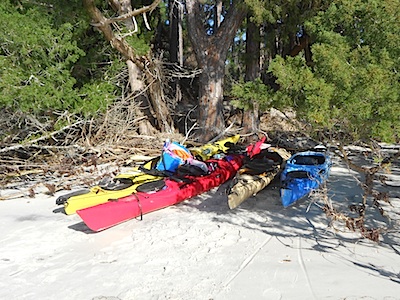
Could better oversight by the Park Service have led to a larger, single piece of wilderness, instead of four smaller parcels, at Cumberland Island National Seashore?/NPS
But we've heard all this before. Some of you might remember that in 1994 the NPS participated in a celebration in Santa Fe marking the 30th Anniversary of the Wilderness Act. All of the wilderness 'who's who' were in attendance': both of the Secretaries of the Interior and Agriculture, the directors of the four federal agencies charged by the Wilderness Act with the preservation of America's wilderness (the NPS, the U.S Forest Service, the Bureau of Land Management, and the U.S. Fish & Wildlife Service), representatives from prominent environmental groups, poets, entertainers, and dignitaries like former-Secretary of the Interior Stewart Udall and his son, then-Congressman Tom Udall. Everyone spoke glowingly (some even evangelically) about wilderness and its value to America.
In 1988, I had been transferred to the NPS regional office in Santa Fe and assigned responsibility for six different programs, including that of the Inter-Mountain Region's Wilderness Program Coordinator. But it didn't take long to realize that the reason I had been given the duties of the wilderness program coordinator was simple...nobody else was doing it, nobody wanted to do it, and nobody cared if anyone did it anyway. The historic attitude of the NPS was that wilderness just wasn't an important management issue to dedicate any time, funding, or manpower. In fact, it quickly became clear that the No. 1 threat to national park wilderness was'¦the National Park Service. Still, by 1994 I was glad to be part of an interagency steering committee putting together the 30th Anniversary celebration and hearing what I was hearing about the glories of wilderness from Washington office managers. Everyone had a swell time and we all went home happy. And then...nothing!
By the time I retired from a 40-year career with the National Park Service in 2004, it was more than obvious that the NPS had never been serious about applying either the letter, or spirit, of The Wilderness Act. And they weren't about to change just because they had someone like me reminding them that we were actually supposed to be preserving wilderness in keeping with this law, not just talking about it at conferences.
Ironically, wilderness, in one administrative category or the other, within 75 park areas, comprises almost 85 percent of the total land area administered by the NPS. The Wilderness Act, in addition to providing directions the agencies are supposed to follow if it has lands qualifying for the National Wilderness Preservation System, also prescribes management activities that are specifically prohibited within wilderness. All of which has been ignored by the NPS primarily because this agency does not like anyone, including the U.S. Congress, telling them what they can and cannot do with national park lands.
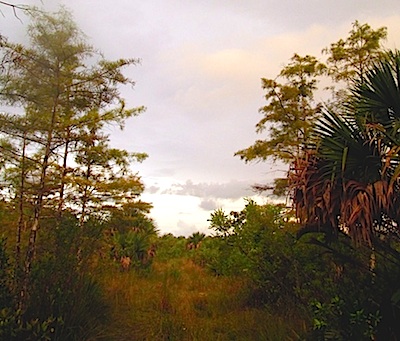
Should the National Park Service pushed for more, not less, wilderness in the Addition Lands of Big Cypress National Preserve/South Florida Wildlands Association
At the time I left the NPS, job announcements and the selection criteria to fill key management positions like superintendents, chief rangers, chief interpreters, etc., in wilderness parks most often never even mentioned the word 'wilderness.' The result was that people who knew nothing about wilderness, and some who were openly hostile to it, were selected to fill key positions in wilderness parks. It didn't really matter anyway, because the annual performance evaluations for these positions rarely mentioned wilderness in anything except the most ethereal terms. In short, you don't have to understand The Wilderness Act, or even like wilderness, to be a manager of an NPS wilderness park and still climb up the promotion ladder. Nobody gets in trouble in the National Park Service for ignoring wilderness; unless they get caught by the public.
Instead of having a robust program where wilderness preservation is integrated into all day-to-day and long-term management programs, today's NPS wilderness program consists of a thin facade of public relations gestures with an almost total lack of accountability, consistency, and continuity for the preservation of the resource itself. Chief among these shortcomings is the failure of most wilderness parks to have a comprehensive Wilderness Management Plan which spells out how wilderness is supposed to be preserved. A wilderness plan serves as a contract between the public and the NPS as how wilderness is to be preserved as well as identify who is responsible for this program. These plans provide the continuity for wilderness preservation through the turmoil of NPS staff changes and political trends. Without one, the preservation of wilderness is driven only by the whims of individual managers...both of which change often.
The public, especially the environmental community, is doing itself and wilderness a great disservice by not addressing this historic animosity towards The Wilderness Act and demanding from the NPS the answer to a basic question: After 50 years, what evidence can the NPS provide to show that national park wilderness resources have been protected in keeping with the requirements of The Wilderness Act and that wilderness is being protected differently from the other backcountry resources?
You will find that there is very little evidence to convict the NPS of the crime of actually protecting wilderness. Most of what they have is interpretive fluff intended to fool the public into believing that the agency is serious about wilderness while it continues to do things that fly directly in the face of the Wilderness Act. Sadly, evidence of the failings of the National Park Service in preserving wilderness is plentiful. During the 50-year-period since The Wilderness Act was passed the NPS has:
* Failed to complete the basic inventories and studies of lands suitable for wilderness;
* Failed to fulfill the requirements of wilderness legislation by submitting the legal descriptions of its wilderness resources to the Congress;
* Failed to abide by its own policies by not having approved wilderness management plans in parks which provide for the accountability, consistency and continuity of its wilderness program;
* Failed to monitor whether or not wilderness is actually being protected on national park lands;
* Failed to apply minimum requirement assessments for management activities conducted within wilderness;
* Failed to provide more than a token administrative organization responsible for wilderness preservation at the park, regional, and Washington level offices;
* Failed to account for the tens of thousands of dollars and man-hours spent sending NPS staff to wilderness training (which, ironically, is excellent) when it requires no quantifiable data showing that this training has benefitted park wilderness.
So, for the past 50 years, most of the National Park Service wilderness areas have none of the protections afforded by The Wilderness Act because the NPS does not make any significant effort to distinguish wilderness from its other backcountry areas. Wilderness continues to be treated as just another area of the park. The historic attitude towards The Wilderness Act has manifest itself in countless abuses of the Act itself:
In most wilderness parks, the use of motorized equipment and aircraft (especially helicopters), to conduct management activities has become basically routine. The decision to helicopter NPS archaeologist into and out of Bandelier National Monument because the superintendent decided that the 'the archaeologist's time was too valuable to be spent walking in and out of wilderness' (which is only about 23,000 acres) is not unusual. When the staff at Olympic National Park decided that the historic trail shelters in the park wilderness needed to be replaced (a questionable decision) and the only way they could do this was by building artificial shelters in the park maintenance yard and helicoptering these structures into the wilderness, the project continued even though the park was advised that this action violated both The Wilderness Act and NPS management policies. This project was only stopped when local environmental groups sued the Park Service. The judge hearing this case quickly ruled against the NPS.
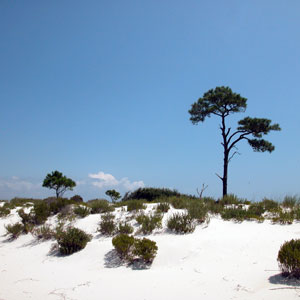
Horn Island in the Gulf Islands Wilderness is abundant with brilliant white sand dunes covered with fragrant rosemary shrubs/NPS, Gail Bishop.The wilderness of Gulf Islands National Seashore arguably exists as the worst administered wilderness in the National Park System through the misuse of personal water craft and motorboats. The superintendent at Devils Postpile National Monument didn't even realize she had designated wilderness within the monument. The designated wilderness at Cumberland Island National Seashore was legislatively divided into four small separate units because the NPS had failed to control the authorized and unauthorized motor vehicle use on the island. The Colorado River Corridor within Grand Canyon National Park, a potential wilderness area, has been essentially hijacked by the concession tour operators using motorized watercraft. Researchers and park managers routinely use helicopters to access the recommended wilderness areas of Yellowstone National Park.
However, most of the wilderness abuses within the NPS are not reported at all due to fear of retribution by park managers. So, NPS wilderness continues to die a slow death from neglect and the thousand cuts resulting from management actions which are specifically prohibited by the Act, or those that do not meet a reasonable test for being the 'minimum requirement.' This comes not from the threat of giant oil and gas companies or the timber and mining industry attempting to raid national park lands, but from the continued indifference of the NPS towards The Wilderness Act. The dilution of wilderness values within parks has become the norm and the negligence of wilderness by the NPS has provided fodder for those opposing further additions to the National Wilderness Preservation System. After all, why do we need more wildernesses if we aren't even taking care of what we have?
Today, as we lament the fact that over the past four decades 50 percent of the Earth's wildlife has disappeared, The Wilderness Act stands as one of our last and best hopes for protecting our remaining ecosystems. The Wilderness Act exists as one of the world's great pieces of environmental legislation and deserves to be celebrated. It also deserves much better than the institutional neglect it has been afforded by the National Park Service.
Story Categories:
A copy of National Parks Traveler's financial statements may be obtained by sending a stamped, self-addressed envelope to: National Parks Traveler, P.O. Box 980452, Park City, Utah 84098. National Parks Traveler was formed in the state of Utah for the purpose of informing and educating about national parks and protected areas.
Residents of the following states may obtain a copy of our financial and additional information as stated below:
- Florida: A COPY OF THE OFFICIAL REGISTRATION AND FINANCIAL INFORMATION FOR NATIONAL PARKS TRAVELER, (REGISTRATION NO. CH 51659), MAY BE OBTAINED FROM THE DIVISION OF CONSUMER SERVICES BY CALLING 800-435-7352 OR VISITING THEIR WEBSITE. REGISTRATION DOES NOT IMPLY ENDORSEMENT, APPROVAL, OR RECOMMENDATION BY THE STATE.
- Georgia: A full and fair description of the programs and financial statement summary of National Parks Traveler is available upon request at the office and phone number indicated above.
- Maryland: Documents and information submitted under the Maryland Solicitations Act are also available, for the cost of postage and copies, from the Secretary of State, State House, Annapolis, MD 21401 (410-974-5534).
- North Carolina: Financial information about this organization and a copy of its license are available from the State Solicitation Licensing Branch at 888-830-4989 or 919-807-2214. The license is not an endorsement by the State.
- Pennsylvania: The official registration and financial information of National Parks Traveler may be obtained from the Pennsylvania Department of State by calling 800-732-0999. Registration does not imply endorsement.
- Virginia: Financial statements are available from the Virginia Department of Agriculture and Consumer Services, 102 Governor Street, Richmond, Virginia 23219.
- Washington: National Parks Traveler is registered with Washington State’s Charities Program as required by law and additional information is available by calling 800-332-4483 or visiting www.sos.wa.gov/charities, or on file at Charities Division, Office of the Secretary of State, State of Washington, Olympia, WA 98504.

Comments
Thanks for this op-ed, Kurt. Wilderness management, or rather the lack thereof, is one of the best examples of the common divergence between NPS image and NPS reality.
"This confusing duplicity is nothing new. The National Park Service (NPS) did not support the inclusion of national parks in the Wilderness System when the Act was signed in 1964 and the agency has never demonstrated a commitment to the Act. NPS Historian Richard Sellers has written: 'Although many of the National Park Service’s rank and file enthusiastically supported the wilderness bill, the bureau’s leadership seems to have drifted from outright opposition to reluctant neutrality.' The NPS has made this shift by conveniently writing inordinate flexibility into its management standards."
http://wildernesswatch.wordpress.com/2011/06/29/at-glacier-national-park...
Indeed, an excellent piece. All of my research supports this essay, especially the research I did for Yosemite: The Embattled Wilderness. Now, what is the cultural problem within the NPS that has led to this result? But of course, it is the worship of Stephen T. Mather and Horace M. Albright, who believed that the parks needed more tourism to survive, i.e., the Park Service itself need more bodies to convince Congress it was doing its job.
History is a powerful thing. If an organization starts well, it generally matures well. The Park Service started magnificently in some respects, but not all, and therein lies the problem with changing it today. Wilderness preservation came late to the environmental movement itself, which also believed in attracting more tourism in the early years following Hetch Hetchy. Early environmentalists also worked with the railroads to get more visitation; they also applauded the automobile for more visitation, too. Then people like David Brower realized that wilderness was the victim, especially when the Bureau of Reclamation proposed dams in Dinosaur National Monument and Grand Canyon.
The bottom line here is this: It is not just the Park Service that has failed wilderness, nor is it just the Park Service failing wilderness today. Wilderness is everywhere on the chopping block over renewal energy, and most environmental groups are playing right along. It's downright appalling what they accept for the Mojave Desert, but hey, we need to save the earth from climate change!
As for all wilderness, we have academic license that Native Americans were in it first--and themselves believed in changing it. It is not Aldo Leopold at the University of Wisconsin today. Wilderness is the "wrong nature"; it is artificial. If academics are saying that, why not the Park Service?
Seventy-five years ago, the Park Service could still find enthusiastic supporters--and mentors for new hires--in places like UC Berkeley, the University of Washington, Harvard, Rutgers, and Yale. Most of that support is gone, now riddled with guilt over defending anything American lest their own careers come to a halt.
A great essay, but the problem runs deep, and indeed, far deeper than most of us know.
I have a friend who teaches a course that chronicles the fracturing of the conservation movement in the way Alfred Runte describes. (We had a long talk about it as we were backpacking through the old-growth Quinault rainforest in Olympic NP.) It does seem that wilderness has been marginalized. I still think, though, that there is an argument that can define American exceptionalism in terms of wilderness, which can be palatable to that aging segment of the academic left Alfred seems to be describing.
I don't see how it would help or would have helped the NPS or the public to virtually lock out the vast majority of people that currently visit the great parks like Yosemite, Yellowstone, Rocky Mountain, Smokies, et al.
For some of you that is OK because "Wilderness" is more important than humans. I'm not in that camp.
Wilderness designation is not, nor has it ever been, nor will it ever be a "lock out". In fact, the law specifically states that the purpose of designating wilderness is to preserve recreational access to land unaffected by development or motorized vehicles.
There are other regulations that may restrict people's access to public lands. None of them are grounded in provisions of the Wilderness Act, because the Wilderness Act does not do that.
Please go ahead and criticize the lack of access to public lands, but make sure you're blaming the right reasons. It isn't the Wilderness Act.
"The idea of wilderness needs no defense, it only needs defenders.”
― Edward Abbey
How would creating wilderness "lock out the vast majority of people" that visit parks? Backcountry travel is a very small segment of traffic in the national parks, and designating areas currently being managed as wilderness shouldn't lock out anyone who is interested in trekking into those regions under the current management. And it certainly won't affect front-country travelers, who constitute the vast majority of park visitors.
Areas in parks already threaded with roads and dotted with lodges and stores won't be impacted.
Wilderness designations will, however, prevent the growth of development in the parks. Are you suggesting we need more roads and lodges in the parks?
That is my point. If Yosemite, Yellowstone etc had been managed as Wilderness from day one, the only way to visit them would have been by backcountry travel.
It depends. But we don't need "Wilderness" designation or management to prevent it.
Then again, given the constant pressures to permit more and more "recreational" use of park lands, maybe wilderness designation is more important now than it ever has been.
This was an excellent piece. Kudos to Jim Walters for writing it.
EC, as anyone who reads me knows, I love the great lodges built by the railroads, i.e., the "front country" Kurt is talking about. However, I also love pure, untrammeled wilderness, and yes, believe that the Park Service should protect that, too. What concerns me is the growing notion that the nation has no need of both--either the front country or the backcountry if it is called a national park. In the 1980s, backcountry visitation in Yosemite was 50,000 annually--no small number, especially given the fact that in 1900 only 5,000 people saw the entire park. Yellowstone itself did not reach 50,000 total visitors annually until 1915.
Numbers are not what make a democracy. Choice is. If I lose the choice to enjoy pure wilderness, American democracy is eroded--or at least so once we thought. Right now, we could use a few more choices in the political arena, since the current choices seem to believe that wilderness is frivolous if it stands in the way of their pet bureaucracies.
Think of it this way. When wilderness is gone, the United States of America is gone, since it is wilderness that makes us unique. We have space to dream over; most other nations have lost that. Fine, pile millions of visitors into the front country, but we need the backcountry, too. Any other nation can have a democracy. Ours comes with the wonder of vacant land.
At least, so once we thought. How did we stop thinking that way--and why? Many of us still think it, to be sure, but I scratch my head every day when I see the environmental community lead the retreat from wilderness as if somehow it is now a sin. Must we have Ebola to prove to Africa that we care? Must we give up wilderness to prove to the world that we care? Care about what? Being just like them, it would appear. That is not America; it is rather something sinister, and we had better figure it out before we lose it all.
I can't agree that your statement that follows applies to Florida/Big Cypress " but I scratch my head every day when I see the environmental community lead the retreat from wilderness as if somehow it is now a sin."
Extreme enviros have fought hard to have wilderness declared even though it didn't meet the criteria and along their merry way they alleniated many including a Federal judge from the way it looks.
One big reason folks may not consider wilderness such a great thing may be the extremists that attempt to badger others into accepting it by using deception and misinformation as their tools.
Excellent comment, Dr. Runte.
May I submit that the sinister agenda behind the retreat from wilderness is very simple? It's something called MONEY.
Here's a link to a related article written by the son of David Brower, Kenneth Brower, for Outside Magazine, entitled, "Leave Wilderness Alone"
Along with an excerpt:
<<For eight years starting in 1955, my father and his closest colleague, Howard Zahniser of the Wilderness Society, worked together toward passage of the Wilderness Act. Zahniser was the bill’s author, and my father occasionally joined him at his favorite table at the Cosmos Club, in Washington, D.C., to help polish the language. My siblings and I got regular progress reports, and we were witness to the long, hard march of the legislation into law. My old man was the fieriest environmental evangelist of his generation, and he brought that evangelism home, practicing his powers of persuasion on us—as if those needed honing. During hikes in the Sierra Nevada, at the dinner table, and on the road, he drummed the poetry and logic of the wilderness idea into us. And he talked wilderness politics. One lesson, repeated often, had to do with the asymmetric warfare between exploiters and preservationists. “They only have to win once,” he would say. “We have to win every time.”
The price of wilderness is eternal vigilance by the people who love it.>>
Alfred (to whom I owe an apology for comments made sometime back),
I have no interest in destroying all the wilderness that exists. I just don't think you have to go as far as the Wilderness Act to establish its preservation. I don't lament the NPS reluctance going back 50 years to not endorse Wilderness management. Our parks would have far fewer visitors and far less support if that had been the case. Gary may like that but I don't.
Should the backcountry areas of Yellowstone or Yosemite (and others) be protected? Absolutely. But that can be done without the unyielding constraints of Wilderness designation.
While I can understand the comments, I lean with Dr. Runte. NPS did the required studies and endorsed legislative proposals...but probably not as strongly as some would have liked. In many respects this was because the Organic Act and its following management policies made backcountry management regimes much like established Wilderness would have accomplished. So we did not have as much concern as those who manage and support USFS and BLM lands where multiple use is part of the agency mandate.
I agree that there should be services for those who are unwilling or unable to get into park backcountry; but that has been managed carefully in trying to determine what services were needed to let people see and get a "feel" for a park (roads, facilities) versus keeping those levels lower and away from impacting resources when facilities are available adjacent to a park. That was a major reason why Mission 66 funding was used to buy out facilities within the boundaries of Rocky Mountain National Park since Estes Park and Grand Lake and other adjacent areas could handle a lot of folks.
But such actions do not "save" the rest of the very systems such parks were established to showcase and preserve for "future generations". Established Wilderness is protected from public development pressure in that it would take Congressional action to make a majoar developmental change. For a number of years there was a lot of local pressure to establish a second version of Trail Ridge Road through Rocky Mountain to help carry the increasing traffic. Without the protection of designated Wilderness such actions could have taken place more easily than with today's designation.
If you are going to protect and preserve ecosystem areas to meet the reason an area was established (and that admittedly is very difficult to achieve) then you need to protect the integrity of as much landscape as possible. And that is not a move against the visitor, but rather a move to preserve those areas for the very reasons they were nationally significant enough to set aside.
The National Park Service may well be guilty of neglecting Wilderness to some extent. However, the NPS record is far better than that of the other three federal land agencies. For example:
• The National Park System has far more Wilderness — in total acres and percentage of the land base — than the National Forests, Bureau of Land Management Lands, and National Wildlife Refuges. Over 52 percent (43.9 million acres) of National Park System lands are designated under the Wilderness Act and more than 80 percent of the park system is designated or recommended Wilderness. Just 19 percent of National Forest, 14 percent of National Wildlife Refuge, and 4 percent of BLM lands are designated as Wilderness areas.
• National Park System Wilderness areas tend to be significantly larger than those of the other three agencies. The average BLM Wilderness area is a mere 5 percent as large as the average National Park System Wilderness. This figure increases to only 11 percent for National Forest Wilderness and less than 40 percent for National Wildlife Refuge Wilderness.
• National Park System Wilderness areas have stronger protection than that provided by the other three land systems. The other agencies — particularly the Forest Service and BLM — often allow “nonconforming” uses that were incorporated in the Wilderness Act due to political compromises. These harmful uses may include livestock grazing, hunting and trapping of predators, artificial habitat manipulation, game fish stocking, and motorized access to support certain activities.With rare exceptions, these uses are not allowed in National Park Service Wilderness.
• National Park System Wilderness areas are generally surrounded by lands managed under the protective Organic Act. In a few places they are adjacent to intensively developed recreation areas. On “multiple-use” National Forest and BLM lands, Wilderness areas are usually scattered islands in a sea of industrial resource extraction and motorized development. National Wildlife Refuge lands may allow intensive wildlife management adjacent to Wilderness.
• Despite budget cuts in recent years, the National Park Service has far greater resources to protect and manage Wilderness than any of the other federal agencies. The National Park System budget dedicates $27.00 per acre per year to park preservation, education, and recreation programs. This, in contrast to just $7.50 per acre for comparable programs for the National Forest System, $5.00 per acre for the National Wildlife Refuge System, and $2.50 per acre for the BLM’s National Landscape Conservation System.
So, let’s have a vigorous debate about how to improve National Park System Wilderness programs. However, that debate should be in the context of what is happening on the rest of America's lands. In the case of the Forest Service and BLM, they are actively destroying potential Wilderness areas and fragmenting existing Wilderness areas with massive and widespread industrial exploitation. If is fair to hold the National Park Service to a higher standard. However, if we are worried about the degradation and loss of Wilderness, the National Park Service is the least offensive of the agencies.
Michael Kellett-
The majority of designated wilderness managed by the NPS was created by the Alaska National Interest Lands Conservation Act, or ANILCA, and that vast acreage is legislatively encumbered by the very uses that you bemoan in the BLM and USFS elsewhere, including Congressionally-mandated motorized access, varying artificial wildlife management actions by the state, and private-use structures. To compare acreage among agencies when attempting to put forward an argument of a more pure NPS approach to wilderness management requires a very large asterisk in the NPS column.
And I have to flag your claim that it is a "rare exception" that NPS wilderness contains "nonconforming uses." A park-by-park examination across the country would find plenty of noncomforming uses still present in wilderness - even accounting for loose or individual opinions of what a nonconforming use is.
As noted by an earlier comment, the boundary of Yellowstone NP does not contain a single acre of designated wilderness. That is a political issue as much as a technical one, partially wrapped up in the snowmobiling issue, but still very suprising to many. They manage around 2 million acres as "recommended wilderness" and have since 1972 which is an indication of how long these issues can drag on. Though those acres are putatively managed "as wilderness", mininimum requirement analyses performed there continue to allow helicopter access, chainsaw use, and mechanized trail repair among other things.
EC is right. Wilderness fanatics will never have enough. Federal agencies don't like Wilderness because it basically means that access to the backcountry reverts to 19th century means (woohoo, what a progress!!!). Trails can no longer be maintained in a cost effective manner (no chainsaw, ride a horse to the trail...).
We already have 100m acres of Wilderness, and millions more protected in some way, shape or form. Adding more does not solve anything. And when the world runs out of oil, we will drill in ANWR.
rdm24 - You don't need a fence, lock and key to "virtually lock out" people, which was the phrase I used. If the only way to get there is to walk 20 miles - the vast majority of people aren't going to go. They will be "virtually" locked out.
There are trails. Once upon a time, that was sufficient to provide access. That's kind of the point of Wilderness: The idea that not every place should be a drive-thru.
So we have to make everything easy for everybody? We'll become a nation of pansies.
Oh my! What extreme points of view. Most wilderness campsites I know of are merely a few miles from the trail head. One need not log on a 20 miles per day hike to enjoy a wilderness excursion. Sure, it requires exerting some effort to journey into wilderness, but that's all part of the fun! I say this while approaching 70 years of age, and having enjoyed a day's journey last month into the Black Elk Wilderness of Custer State Park of SD, where we met parties of all ages engaged in the one-half to a full day round trip trek to the summit of Harney Peak (the highest peak east of the Rockies). I can't say that anyone I met felt as if they or their family or friends felt as if they were "locked out." From the top of Harney Peak, there's a spectacular view of the natural, unmolested side of Mt. Rushmore.
In my youth and young adulthood I was in excellent condition and hiked into many places, from Banff to the Blue Ridge to the Sierra Nevada's and more. That was then. Now, at 65 and fairly well broken, I have cardiac and orthopedic problems holding me back from more than the mininal day hikes. That doesn't mean that I want to be heliported into the back country. It means that I want to heal myself and recondition myself and get into more strenuous hikes and remote country than I can at present. I figure it is all on a gradient. If something is essentially presented as "for everyone", like Old Faithful, I believe the NPS should make an effort to ensure that walkers and wheelchairs and suchlike can access it. Designated wilderness, on the other hand, is not for everyone and has never been presented as such.
Rick, it's always amazed me and believe it's part of the equasion about the effort that people commit to to get into these great places. Double amputees, heart transplant recipients, Downs kids and young adults that I've taken into the many places that only a few full bodied individuals venture have been such a fullfilling experience for me that I suggest crawling if that's the only way possible but use these places and adventures as motivation to reach for something that is so cool and rewarding. Little victories will get you there:)!
Is there an example of a park where people are trying to reverse a "wilderness" designation to allow more recreational access? Has this ever happened?
It would take an act of Congress. While designating a wilderness area can be contentions, reversing designation would be even harder. So I am pretty sure the answer is no.
There probably have been loopholes added to specifically allow activities that are normally prohibited. Again, these would have to be done by Congress, not by a federal agency, but this seems more plausible.
But more to the point, doing so would almost never change recreational access, because wilderness designations has never restricted access.
Well many of you continue to miss the point. Perhaps intentionally. Had Wilderness management been strictly enforced when park like Yosemite and Yellowstone were founded, their attendance then and today would be a minor fraction of what we see. It would be 20 miles (or more) of hiking to get to Old Faithful or other attractions. It would have been virtually shut off to the vast majority of citizens.
There are no designated wilderness areas within Yellowstone. Yosemite is almost entirely designated wilderness, except the valley. Neither park has a problem attracting tourists or connecting them with waterfalls, canyons, and other attractions. I'm not really sure what leson you'd think we should take from these two examples. More to the point, major attractions like geysers, mountain peaks, and popular waterfalls are typically excluded from wilderness designations so that people with limited mobility can still access them.
I can't think of an "Old Faithful" type of natural attraction that is within a wilderness area. If you can think of one, I'd like to know.
We all know that most hikers don't venture more than a mile or two from the trailheads. Not everybody has the time or fitness (especially these days...) to go trek for days on end.
Yes, I agree that many continue to miss the point. Perhaps intentionally.
But may I suggest that it's not on the side of those trying to defend wildness? (Note that I did not say "wilderness.")
Wilderness can be enjoyed even by visitors who never venture off of a road or tour boat. One good example is Glacier Bay National Park, where the incredible vistas of mountains and ocean and outstanding wildlife viewing—uninterrupted by human development—are enjoyed by thousands of people each year from either a cruise ship or a small boat trip. For those who wish to get up close and personal with the wilderness experience, those opportunities are available.
Similar long-range vistas are enjoyed by all visitors—and protected by wilderness designation—in places like Yosemite. Would these magnificent views in NPS areas be adequately protected without formal wilderness designation? Perhaps, but in today's world an extra measure of protection isn't a bad idea.
rdm24, I do believe Half Dome itself is within the designated boundaries of the Yosemite Wilderness, and the cables up the eastern flanks of the dome have been retained, despite official Wilderness designation, in order to provide hikers continued access to its summit.
Inspite of the difficulty and danger associated with climbing using the Half Dome cables, the hike to the summit has become so popular that it now must be regulated. Hiking to the top using the cables now requires a special permit and payment of a registration fee to avoid overcrowding.
My personal preference would be to take the cables down and manage Half Dome as a most sacred place. The worst view of Half Dome is from its summit. The terrain at the top of the dome is rather flat and arid, and the iconic features of the sheer north face and the polished pristine slopes of the dome are no longer in the field of view!
The best views of Half Dome are from the non-wilderness locations of Yosemite Valley, Tunnel View, and Glacier, Washburn, and Olmstead Points. No one is "locked out" from these iconic views of Yosemite's most famous monolith. The views from these locations into the Yosemite Wilderness, arouses one's curiosity and tempts one to take a hike.
Of course, one might also argue that Yosemite Valley would be best experienced if there would be no (or only limited) access granted to private vehicles. Previous articles in NPT by Barbara Moritsch and PJ Ryan have touched on that issue.
And the backcountry areas are non the worse for it - in fact they may be better.
"of" perhaps. But nobody climbs a mountain to look at the mountain. It is hard to beat the views "from" the top of half dome.
Your half dome example proves the point that wilderness designation hasn't hindered access at all. If you think accesss should be expanded by installing an escalator, well, then you might have a point.
"However, most of the wilderness abuses within the NPS are not reported at all due to fear of retribution by park managers."
Funny how pervasive that culture is in the NPS at high levels.
re: "We all know that most hikers don't venture more than a mile or two from the trailheads."
Based on that comment, just curious about how you think park managers should respond? Should most or all areas in a park be within "a mile or two" of a trailhead?
I disagree. I was on the trail to Scout's Lookout a couple of weeks ago in Zion and the trail was packed. At 67, I was hardly the oldest guy puffing up the 1,000 feet change in elevation, either, although I did not go on to Angel's Landing. Same with the Narrows--packed all summer. Thirty years ago as a Yosemite seasonal, I led hikes up to Glacier Point. No, there were not thousands of people on the trail but there were hundreds each and every day. The gain in elevation there is 3200 feet.
Who are we "enabling" here? Of course, managers who don't want to manage wilderness on the argument that no one goes there. No one? Few? What do these terms really mean? Five percent of 3 million people is 150,000 people. That is not a "few," unless you happen to believe that the majority of fat, out-of-shape, and just plain lazy Americans are the only people who deserve to see the national parks as they wish.
I am one of those fat and out-of-shape Americans that could use a good hike once in a while. At least I am not lazy, as so many park visitors are.
Wilderness is both a place and a state of mind. As I age, I love the thought that I went there once and that others still may, as well. I don't care if it's just "a few." Wilderness is the distinguishing trait of this country. When it's gone, the United States of America will be something else--an absolute majority, yes, but a majority composed of fools.
Excellent post, Dr. Runte!
I can't believe people are using the argument that if the Wilderness Act was in place in 1890 there would be different parks or no parks. Why not debate on the number of angels that can dance on the head of a pin?
Bunch of wimps needing help to get around? There are already too many concessions allowing people greater access to places, and those places are being impacted by too many people. We are supposed to keep the parks in good shape but we are loving them to death. Why do you think they just increased the entrance fee to Yellowstone and Yosemite? Get a clue.
I beleive there is a value in having a virtual lock out. It gives people something to wonder about and for those fit enough, places to explore where few have gone before. I would argue a vista with no roads is far more awe inspiring than one crisscrossed with highways. The world keeps getting smaller and I do see much value in desolate spaces. I think there are reasonable comprimises to all of this. Perhaps we don't need the wilderness act but I think we need something.
May I insert here what I think is one of the best wilderness essays I've read? It comes from Edward Abbey in his book Desert Solitare. He called it "Industrial Tourism."
He was writing about something called accessibilty and how people of all kinds seem to have no trouble finding their way into some wild places and why those wild places need to be there for them. " .. . most signifcant, these hordes of nonmotorized tourists, hungry for a taste of the difficult, the original, the real, do not consist solely of people young and athletic but also of old folks, fat folks, pale-faced office clerks who don't know a rucksack from a haversack and even children. The one thing they all have in common is the refusal to live always like sardines in a can -- they are determined to get outside of their motorcars for at least a few weeks each year.
"This being the case, why is the Park Service generally so anxious to accommodate that other crowd, the indolent millions born on wheels and suckled on gasoline, who expect and demand paved highways to lead them in comfort, ease and safety into every nook and corner of the national parks? For the answer to that we must consider the character of what I call Industrial Tourism and the quality of the mechanized tourists -- the Wheelchair Explorers -- who are at once the consumers, the raw material and the victims of Industrial Tourism.
"Industrial Tourism is a big business. It means money . . . . . "
He lists those businesses that depend upon Industrial Tourism and then adds: "These various interests are well organized, command more wealth than most modern nations and are represented in Congress with a strength far greater than is justified in any constitutional or democratic sense. (Modern politics is expensive -- power follows money.) Through Congress the tourism industry can bring enormous pressure to bear upon such a slender reed in the executive branch as the pool old Park Service, a pressure which is also exerted on every other possible level -- local, state, regional -- and through advertising and the well-established habits of a wasteful nation."
Later he adds: "The Natural Money-Mint. With supersensitive antennae these operatives from the [Chamber of Commerce] look into red canyons and see only green, stand among flowers snorting out the smell of money and hear, while thunderstorms rumble over mountains, the fall of a dollar bill on motel carpeting."
Only Ed Abbey could write something like that and as usual, Ed Abbey nailed it! It's as true now -- maybe even moreso -- than it was when he wrote it many years ago.
Interesting how everybody turned into an e-tough guy who can hike for days on end. :) Fact remains that most visitors don't have time or fitness to go hike for long periods of time. Besides the fact that I don't like hiking, I also don't have the time for it either. Cycling allows me to cover greater distances in a shorter period of time.
So, the wish for more wilderness usually comes from those who will benefit the most from it (hikers with plenty of time to go trek in the back country) while this conveniently ignores everybody else who will be negatively impacted by it.
Frankly, Zeb, more than your bike or my bad knees, I'm thinking of my grandkids and generations to come.
Zeb, I'm one of those who can no longer be hiking long distances with a full pack. It's not for me that I hope we'll have the good sense to keep wildernesses wild. When wilderness comprises something like less that 2% of our total landmass, the idea of opening everything to easy access is repugnant.
You don't like hiking. Okay. I don't care for biking. Yet it seems that you feel I and others like me should be conveniently ignored if we will be negatively impacted by your sport. Isn't there enough room in North America to provide some spaces for each of us?
Go back and read your post again. Doesn't it sound familiar?
Reminds me of my little grand daughters as they squabble over who got more ice cream in their cone. If we act like adults instead of four-year olds, we just might find that there are equitable solutions out there. All we have to do is have the wisdom to seek them without trampling one another.
I had the pleasure of being introduced to Ed Abbey while I worked in Zion National Park as a park ranger-naturalist. Here is one of my favorite Abbey quotes:
“Benedicto: May your trails be crooked, winding, lonesome, dangerous, leading to the most amazing view. May your mountains rise into and above the clouds. May your rivers flow without end, meandering through pastoral valleys tinkling with bells, past temples and castles and poets towers into a dark primeval forest where tigers belch and monkeys howl, through miasmal and mysterious swamps and down into a desert of red rock, blue mesas, domes and pinnacles and grottos of endless stone, and down again into a deep vast ancient unknown chasm where bars of sunlight blaze on profiled cliffs, where deer walk across the white sand beaches, where storms come and go as lightning clangs upon the high crags, where something strange and more beautiful and more full of wonder than your deepest dreams waits for you -- beyond that next turning of the canyon walls.”
― Edward Abbey
Lee, this is about sharing, not about your little inconvenience. 2% of landmass and around 20% of public open spaces. Wilderness management is unnecessarily restrictive, and could be improved.
In the late 1990's I co-founded Yosemite Campers Coalition. At the same time, NPS was sponsoring open houses around the state to explain their plans and to ask for public comments on the Yosemite Valley Plan. Then the 1997 flood occurred, and it was a godsend for the NPS and a tragedy for campers. Their objective to reduce campsites was completed by an act of nature. We made many arguments to restore camping and reduce "hard roof" accommodations. All the stores, pizza parlors, and other required services to accommodate hard roof lodging/hotel and day visitors are necessary to make national parks profit centers. You know, like a Wilderness Club Med for those who can afford it.
The disagreements on availability, affordabilty, who gets to enjoy the park, and how they experience the park are the same issues we talked about in the 90's. I started camping at age 5, I am now 73. Went in May, still camping. I've seen so many changes, but for campers life is pretty much the same. Equipment changes but to live a few days without modern convenience is a respite for the soul.