
National parks are overwhelmingly safe and well-managed public spaces for most visitors, according to a 2025 study. Between 2000 and 2023, less than 1 percent of national park visitors were issued a citation, and among those cited, 66 percent were for traffic-related incidents.
The study (attached), which looked at citation data from Badlands, Everglades, Shenandoah, and Yosemite national parks, combined insights from environmental management and criminology to explore how disorder manifests in national parks.
M. Dylan Spencer, a professor of criminology at Georgia Southern University and one of the researchers of the study, was interested in seeing how low-level crime and disorder carries over from urban spaces into national parks.
“This is kind of the first step in understanding these bigger issues that carry from other areas outside of the parks to inside the park boundaries,” said Spencer.
The researchers collected citation data from the Central Violations Bureau and organized citations into eight categories: Alcohol & Drug, Camping, Drone/Fireworks, Miscellaneous, Natural Resources, Payment, Traditional, and Traffic.
The high number of traffic-related citations weren’t surprising, explained Spencer, given that those kinds of citations also tend to be higher in urban areas. However, there are lessons to be learned from that data and the high number of vehicles entering the parks each year.
“Yes, you can drive to these parks, you can drive within many of the areas in these parks, but that does have a consequence for the larger ecosystem,” said Spencer.
The study points out that, in criminology, it is generally accepted that disorder tends to breed crime, particularly in densely populated urban areas. The researchers were interested to see if the same were apparent in national parks, where forms of disorder such as illegal parking, fee evasion, or camping violations can strain park resources, enforcement personnel, and visitor perceptions of safety and order.
Tourism to national parks has continually increased, making studies like this important in understanding how visitors are interacting with these public spaces and how park managers can support the preservation of park integrity.
Interestingly, the study demonstrated that disorder has been relatively stable since the turn of the century.
“The biggest finding is that there's consistency and stable trends over this 23-year period, at least for these four national parks,” explained Spencer. “The bigger picture is that, according to this data, incidents are exceedingly rare. There are millions of visitors per year, and that has only increased, but it roughly equals one citation for a few thousand individuals visiting each park.”
“While only using a sample of national parks, the study shows our national parks are safe places to enjoy the outdoors,” said Kristen Brengel, senior vice president of government affairs for the National Parks Conservation Association, in response to the findings. “We know the National Park Service works hard to enhance visitor safety and uses many strategies to prevent conflicts and incidents.”
Among the four parks analyzed, Yosemite had the highest number of citations, which isn’t surprising considering that it has significantly more visitors than the other three.
In Badlands and Shenandoah, the data indicated that prior visitation levels influenced the following year’s prevention strategies and staffing levels, though the same didn’t seem to apply to Everglades and Yosemite.
Interestingly, the researchers noted that while citations related to natural resources were relatively low overall (about 5.5 percent), Everglades saw a much higher percentage of natural resource-related citations (29.55 percent). These citations include the improper handling or possession of flora, fauna, or related resources, illegal hunting or fishing, destruction of natural resources, and any incident involving archaeological resources.
Spencer notes that this may be because of the location of Everglades, which sits next to a major metropolitan area in South Florida. It could also be a consequence of law enforcement focusing on those kinds of citations, though this information was outside the purview of the research.
“We do know there are a lot of protected species, particularly reptile species and also floral species, that do get taken from the Everglades, but also introduced to the Everglades,” noted Spencer. “I think that's a byproduct of the location and the amount of people visiting or living nearby, but also the resources that the Everglades offers compared to somewhere like the Badlands.”
Brengel noted that a reduction in staff may make it more difficult to combat this kind of disorder. “This study shows slightly higher than average camping incidents in Yosemite and higher natural resources incidents in Everglades,” she said. “We know these incidents can grow in parks if there are less staff. The [Trump] administration should heed this information and stop putting our parks in harm’s way. We need more stewardship, not less.”
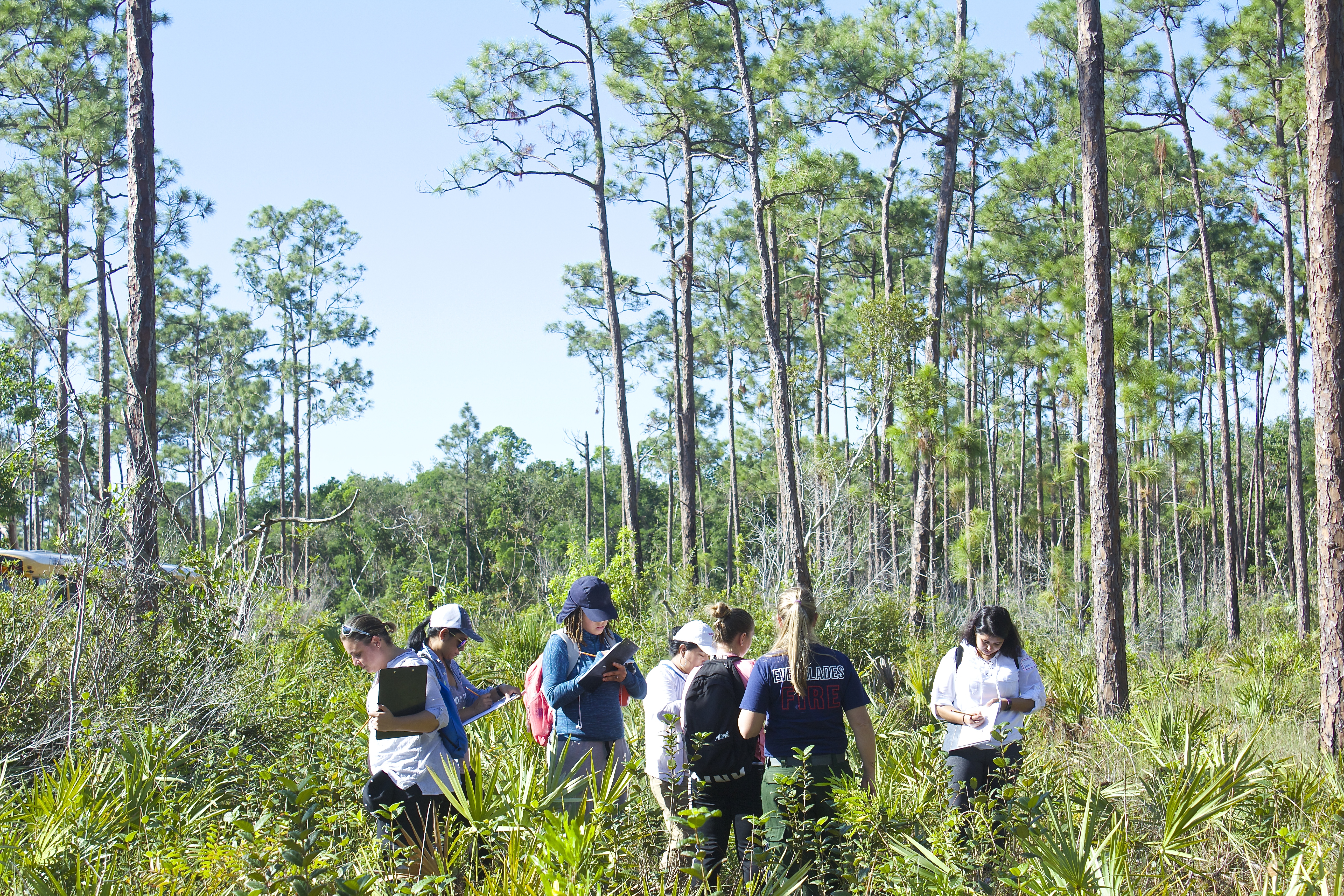
The findings underscore how local park characteristics shape the types of disorder observed, highlighting the need for site-specific rather than system-wide intervention strategies for park disorder.
“You do need a legitimate law enforcement presence, but also you need the non-law enforcement park rangers there, as well,” said Spencer. “A lot of it comes down to education and prevention. It's very small, oftentimes inexpensive steps like increasing signage, and making people more aware of these issues. And the National Park Service is well aware of this.”
Brengel echoed the emphasis placed on having a strong ranger presence in the parks. “Park rangers at entrance stations, on trails, at campgrounds and other locations throughout parks are critical to creating a safe environment for visitors,” she explained. “These are not just law enforcement, they are the ‘flat hats’ we see all over. Knowing the National Park Service has more than 25 percent fewer rangers and staff since January should alarm all of us. If the administration continues to pursue more staff terminations, they risk diminishing our world-class park system and visitor experiences.”
The study suggests several approaches national park management could take in responding to the findings. The researchers write that “from a park management perspective, early signs of disorder, particularly those occurring in high-traffic areas like parking lots, campgrounds, and trailheads should be prioritized for intervention.” Targeting these areas can help reduce low-level infractions before they escalate or affect visitor experience.
To combat traffic-related infractions, parks could consider adjusting lane markings, road width, speed bumps, and road surface texture, which have been shown to influence speed. Other minor infrastructure adjustments such as removing centerlines or narrowing lanes could passively reduce speeding without the need for increased patrols or radar enforcement, which can increase costs.

For natural resource violations, the researchers suggest community-based strategies, including establishing tip hotlines for anonymous reporting, partnering with local organizations and guides to educate the public on conservation and species protection, and creating outreach campaigns to highlight the long-term ecological and economic impacts of resource depletion.
Spencer also hopes to see improvements in the data collection system used by the parks. “There's not a clear national park data reporting system,” he explained. “That makes it very difficult when you want to do any type of system-wide analysis. As a researcher, you always want them to also make that data publicly available.”
Data from the most recent years in the national parks won’t be analyzed for some time, and it remains to be seen how the recent government shutdown and staff reductions may have affected disorder across the park system. With reports of illegal BASE jumping and squatting in Yosemite, a stone wall damaged at Gettysburg, and vandalism at Arches, it very well may be that disorder is a bigger issue when parks are understaffed and oversight is limited.
Spencer said that a future follow-up study hopes to focus more on qualitative data to understand the specific concerns and approaches of law enforcement in the parks.
“We're interested now to ask individuals across the spectrum, not just law enforcement, but also rangers on the interpretive side, to really understand their opinions on the issues,” said Spencer. “What are your concerns? If you have any, have you addressed this in any way? Is there any talk about this within the larger park system that you work in? And that's kind of what we're interested in understanding in our next study.”

Stories about:
Story Categories:
A copy of National Parks Traveler's financial statements may be obtained by sending a stamped, self-addressed envelope to: National Parks Traveler, P.O. Box 980452, Park City, Utah 84098. National Parks Traveler was formed in the state of Utah for the purpose of informing and educating about national parks and protected areas.
Residents of the following states may obtain a copy of our financial and additional information as stated below:
- Florida: A COPY OF THE OFFICIAL REGISTRATION AND FINANCIAL INFORMATION FOR NATIONAL PARKS TRAVELER, (REGISTRATION NO. CH 51659), MAY BE OBTAINED FROM THE DIVISION OF CONSUMER SERVICES BY CALLING 800-435-7352 OR VISITING THEIR WEBSITE. REGISTRATION DOES NOT IMPLY ENDORSEMENT, APPROVAL, OR RECOMMENDATION BY THE STATE.
- Georgia: A full and fair description of the programs and financial statement summary of National Parks Traveler is available upon request at the office and phone number indicated above.
- Maryland: Documents and information submitted under the Maryland Solicitations Act are also available, for the cost of postage and copies, from the Secretary of State, State House, Annapolis, MD 21401 (410-974-5534).
- North Carolina: Financial information about this organization and a copy of its license are available from the State Solicitation Licensing Branch at 888-830-4989 or 919-807-2214. The license is not an endorsement by the State.
- Pennsylvania: The official registration and financial information of National Parks Traveler may be obtained from the Pennsylvania Department of State by calling 800-732-0999. Registration does not imply endorsement.
- Virginia: Financial statements are available from the Virginia Department of Agriculture and Consumer Services, 102 Governor Street, Richmond, Virginia 23219.
- Washington: National Parks Traveler is registered with Washington State’s Charities Program as required by law and additional information is available by calling 800-332-4483 or visiting www.sos.wa.gov/charities, or on file at Charities Division, Office of the Secretary of State, State of Washington, Olympia, WA 98504.


