
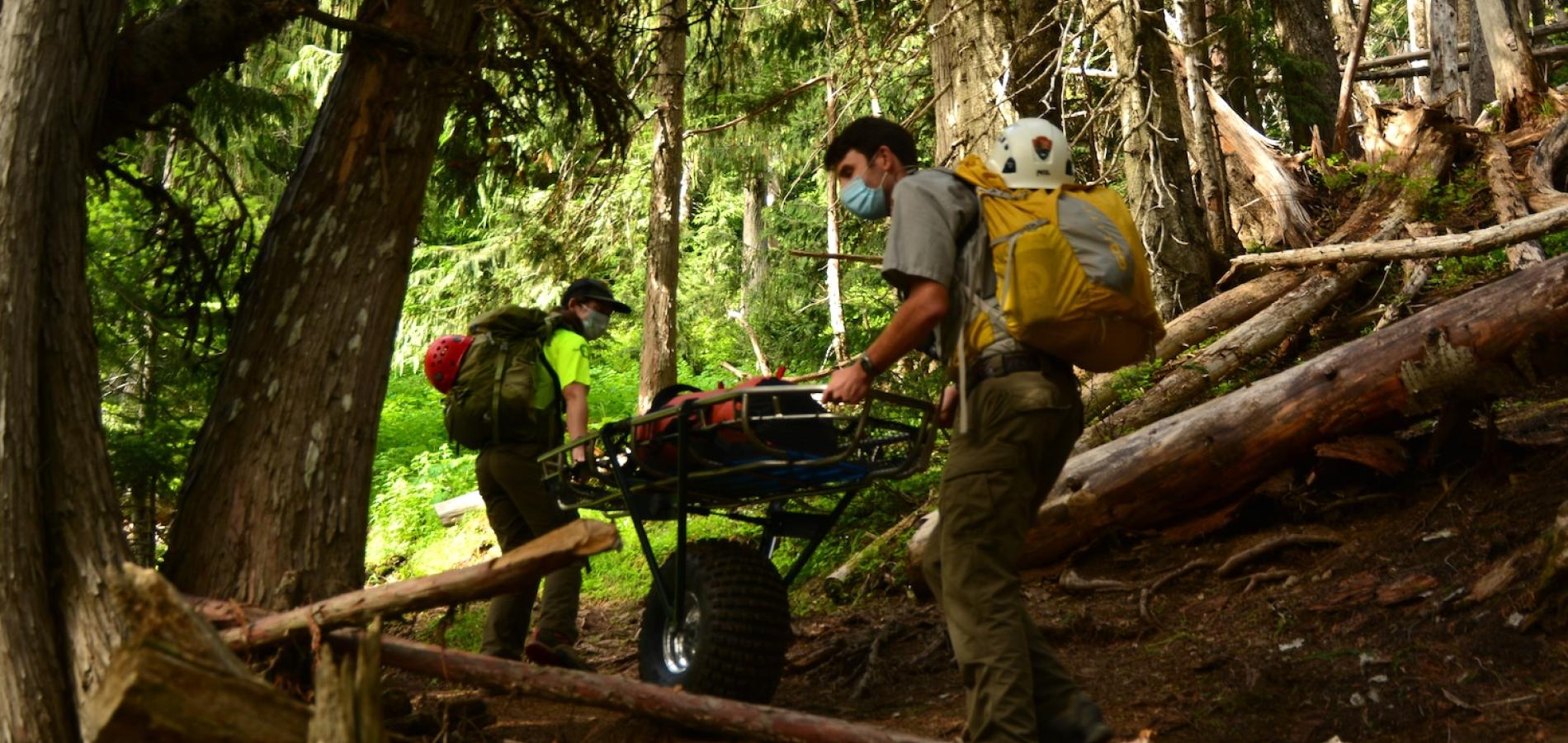
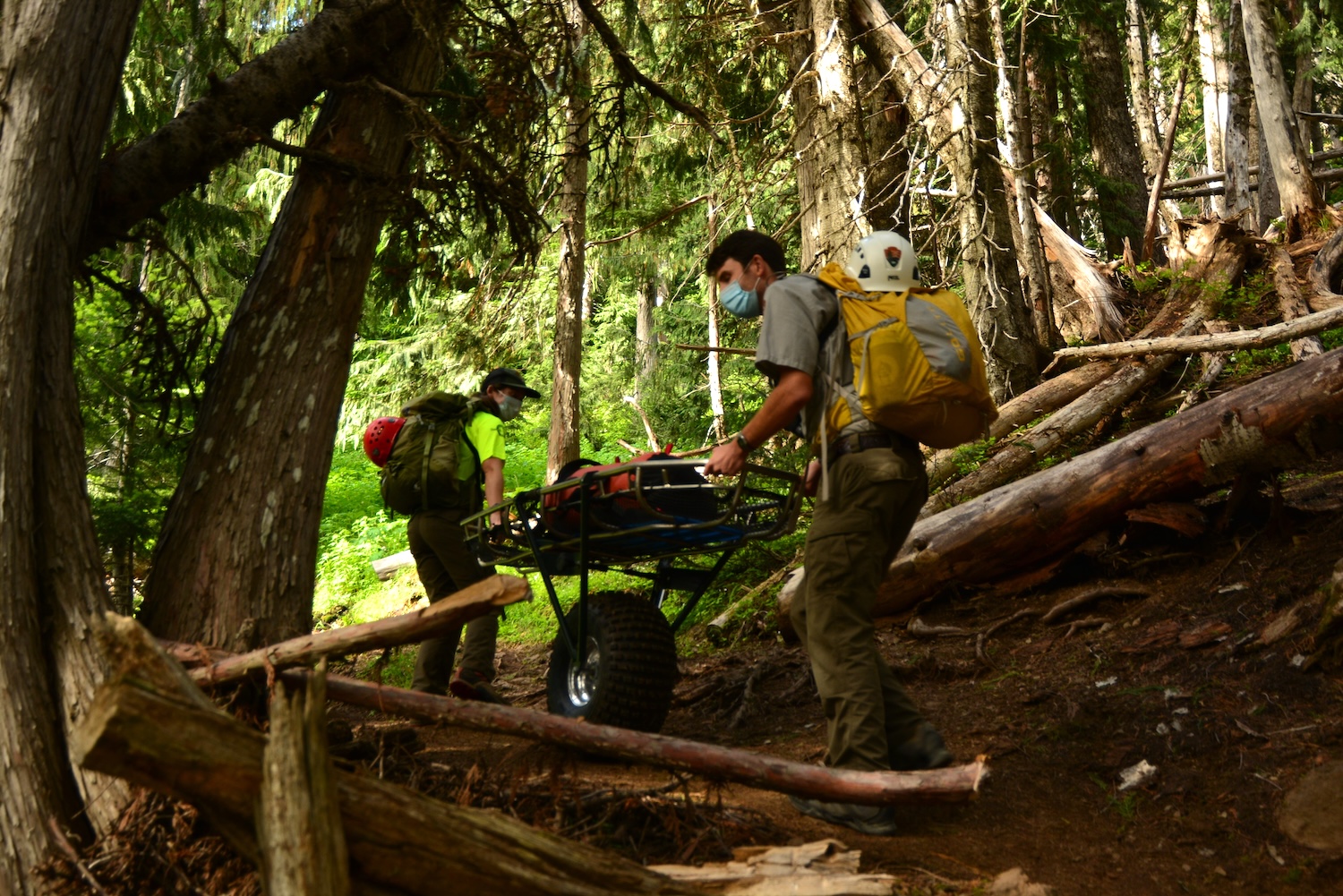
Nearly four million people visited Olympic National Park in 2024, many seeking adventure, beauty, and a connection to nature. But for some, a day of exploration can take an unexpected and dangerous turn.
Each year, Olympic’s rangers respond to around 150 emergency calls ranging from twisted ankles on the coast to life-threatening accidents deep in the wilderness. And when that call for help comes in, it’s critical that search-and-rescue (SAR) teams have the right training and equipment to respond quickly, efficiently, and safely.
That’s where Washington’s National Park Fund (WNPF) — the official philanthropic partner of Olympic National Park, as well as Mount Rainier and North Cascades national parks — steps in. Thanks to generous donors, Washington's National Park Fund provides funding for projects and programs that
improve the visitor experience at these parks each year, including critical search and rescue training and equipment at Olympic National Park.
Essential Gear, Funded with Donations
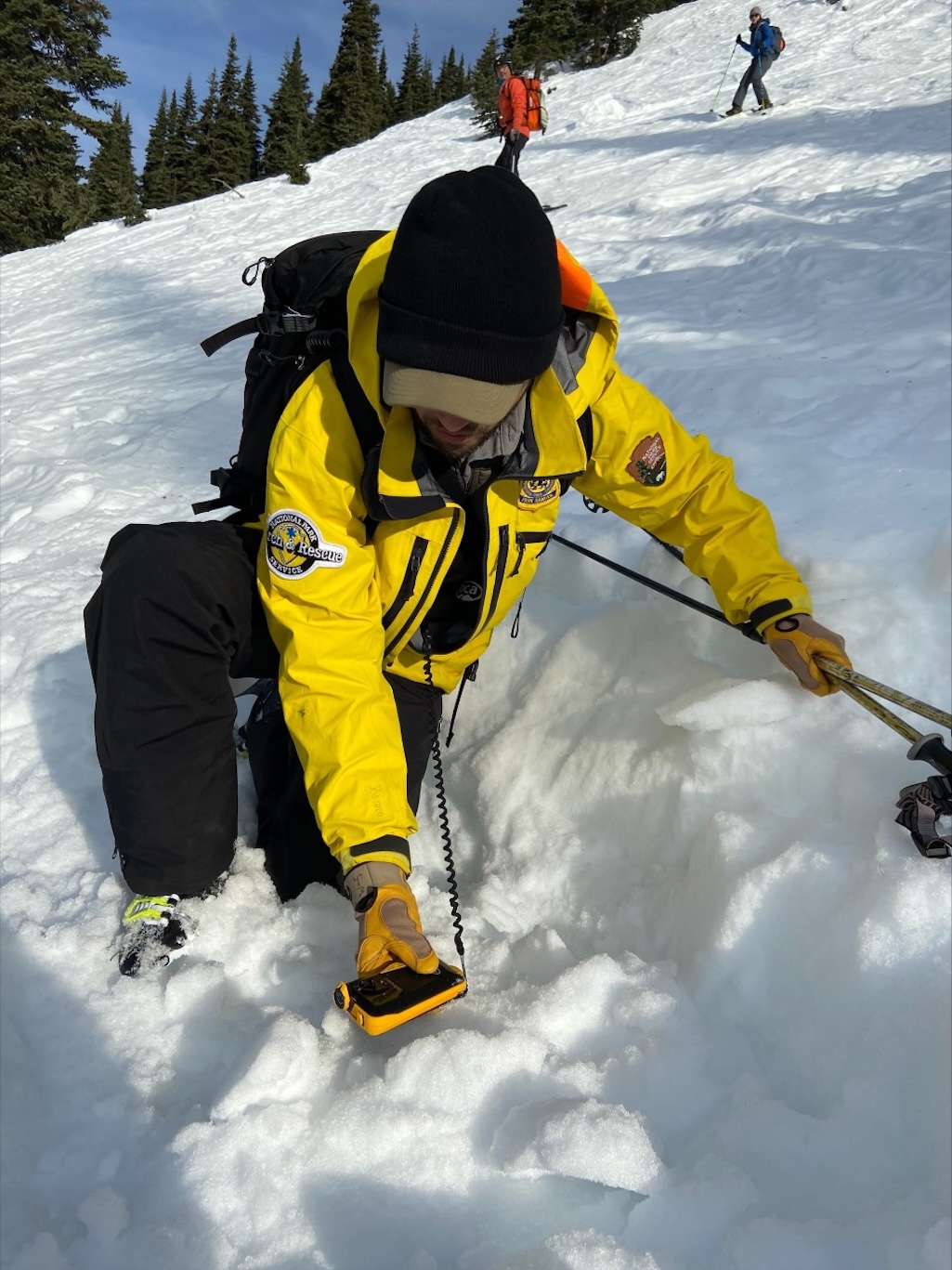
Chris Erickson, Olympic’s law enforcement supervisory park ranger, has spent his career in technical rescue. He arrived at Olympic National Park after serving at Denali National Park in Alaska and quickly realized the park’s search-and-rescue teams needed some essential winter equipment.
“We have a lot of winter recreation — skiing, sledding, snowshoeing — but we didn’t have a great way to move people who got injured in the snow,” he explains. Park rangers often had to rely on volunteer search and rescue groups to step in, resulting in long waits before an injured visitor could be helped.
One of the first game-changers was a high-tech rescue toboggan — lightweight, carbon fiber, and built for backcountry rescues in deep snow. At $5,000, it wasn’t an easy expense for the park to cover, but WNPF’s support made it possible. “That toboggan allows us to move injured visitors quickly and safely,” says Erickson. “It’s a huge shift in our ability to respond.”
Training That Saves Lives
WNPF has also funded ongoing technical rescue training with Rigging for Rescue, a technical ropework training seminar, ensuring that Olympic National Park’s rangers have the expertise to respond to complex emergencies.
Over the past two years, a select group of rangers has received advanced training, enabling the park to teach basic rescue techniques to additional rangers in-house. “That’s a huge win,” Erickson notes. “Instead of waiting for outside help, we’re able to respond immediately and professionally.”
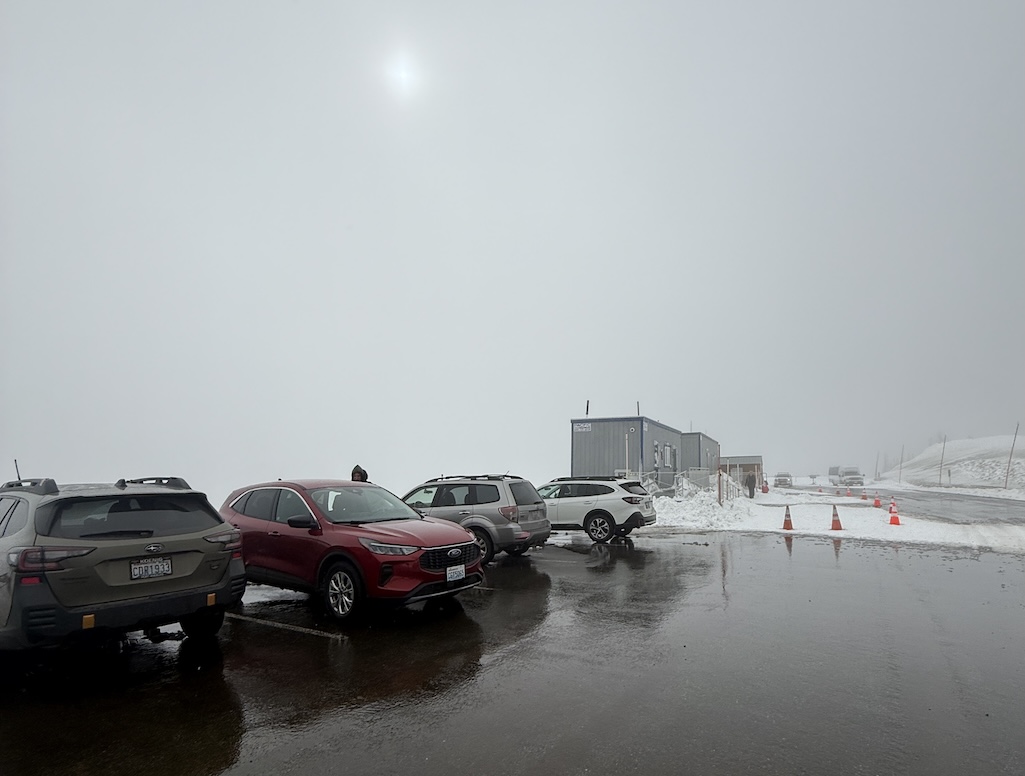
The park’s search-and-rescue training and equipment was put to the test one winter weekend when two vehicles went off the road at Hurricane Ridge within minutes of each other. Several people were injured, including two who were unable to walk. Four trained rangers split into two rescue teams, extricated the injured, and had them stabilized and warm at the roadside before ambulances arrived.
“A few years ago, we wouldn’t have been able to respond that fast,” says Erickson. “Now, we can get people out faster, safer, and with less suffering.”
A Rescue in the Wilderness
A perfect illustration of the dedication that search and rescue requires in a park as diverse as Olympic — and one of the most complex rescues in Erickson’s recent memory — involved a hiker with a severe compound leg fracture near Sol Duc Valley, nine miles deep into the wilderness.
A storm grounded helicopter operations, meaning the rescue would have to be done entirely on foot. A team of rangers, carrying only the most lightweight gear, trail-ran the nine miles to get to the visitor. There, they stabilized their injuries and set up an overnight camp to monitor them.
The next morning, when conditions remained unsafe for air rescue, a mule team was sent in — but the final mile proved too steep for the mules to navigate. That mile of the evacuation had to be done manually, lowering the visitor using ropes. Only then could they be transferred to the mules for the long journey out.
“That rescue took an incredible amount of coordination and teamwork,” says Erickson. “It’s a perfect example of how we have to be flexible, creative, and use every resource available.”
The Difference You Make
Olympic National Park’s search-and-rescue teams handle a staggering variety of emergencies — from lost hikers deep in the backcountry to flipped kayakers in Lake Crescent to climbers stranded on Mount Olympus.
The park’s diverse terrain, combined with its three million annual visitors, makes it one of the busiest and most challenging national parks for rescue operations. And through it all, generous donors are making a difference.
“Part of our role as first responders is to help ease the suffering of someone who came to the park expecting the best day of their life, only to have it end as one of the worst,” Erickson says. “The funding we receive for search and rescue equipment and training makes a huge difference in our ability to keep visitors safe and help them in those moments. It would be hard for me to pull out a single incident that didn’t tie back to WNPF’s support in some way.”
Your generous donations help ensure that when the worst happens — when a hiker falls, a skier crashes, or a kayaker overturns — Olympic’s rangers have the tools, training, and equipment to respond. Park supporters are quite literally helping save lives in one of the most beautiful and wild places in the country.
When adventure turns to emergency, every second — and every resource — matters. We are grateful to every donor who stands with us, and with park rangers, to help keep visitors safe.
Washington’s National Park Fund is the official philanthropic partner of Mount Rainier, North Cascades, and Olympic National Parks. Donations fund scientific research, youth and family experiences, and projects that will keep these parks strong and vital now and forever, for everyone. Join us in making an impact today.
Story Categories:
A copy of National Parks Traveler's financial statements may be obtained by sending a stamped, self-addressed envelope to: National Parks Traveler, P.O. Box 980452, Park City, Utah 84098. National Parks Traveler was formed in the state of Utah for the purpose of informing and educating about national parks and protected areas.
Residents of the following states may obtain a copy of our financial and additional information as stated below:
- Florida: A COPY OF THE OFFICIAL REGISTRATION AND FINANCIAL INFORMATION FOR NATIONAL PARKS TRAVELER, (REGISTRATION NO. CH 51659), MAY BE OBTAINED FROM THE DIVISION OF CONSUMER SERVICES BY CALLING 800-435-7352 OR VISITING THEIR WEBSITE. REGISTRATION DOES NOT IMPLY ENDORSEMENT, APPROVAL, OR RECOMMENDATION BY THE STATE.
- Georgia: A full and fair description of the programs and financial statement summary of National Parks Traveler is available upon request at the office and phone number indicated above.
- Maryland: Documents and information submitted under the Maryland Solicitations Act are also available, for the cost of postage and copies, from the Secretary of State, State House, Annapolis, MD 21401 (410-974-5534).
- North Carolina: Financial information about this organization and a copy of its license are available from the State Solicitation Licensing Branch at 888-830-4989 or 919-807-2214. The license is not an endorsement by the State.
- Pennsylvania: The official registration and financial information of National Parks Traveler may be obtained from the Pennsylvania Department of State by calling 800-732-0999. Registration does not imply endorsement.
- Virginia: Financial statements are available from the Virginia Department of Agriculture and Consumer Services, 102 Governor Street, Richmond, Virginia 23219.
- Washington: National Parks Traveler is registered with Washington State’s Charities Program as required by law and additional information is available by calling 800-332-4483 or visiting www.sos.wa.gov/charities, or on file at Charities Division, Office of the Secretary of State, State of Washington, Olympia, WA 98504.
