


The still-rampaging wildfire that painted a swath of destruction across the North Rim of Grand Canyon National Park has presented national park leadership with a rare and amazing opportunity for “rewilding” the landscape, according to a group of National Park Service veterans and scientists.
“Let’s consider a really wild idea whose time has come,” in lieu of the government’s pledge to rebuild the infrastructure that the lightning-sparked Dragon Bravo inferno gobbled up as fuel, the group writes in an opinion article for the National Parks Traveler.
The group’s suggestion: “not rebuilding the North Rim lodge, the surrounding cabins, the visitor center, and all the surrounding infrastructure of precious water pipelines, a wastewater treatment plant, a gas station, grocery and souvenir stores, paved roads, and all the traffic and congestion that comes with hotels and restaurants.”
Instead, the Park Service should consider that this national park is a unique “natural wonder” and let it return to its natural state, albeit with perhaps a “thoughtfully designed campground” and trails, they write.
The article is authored by Elaine F. Leslie, retired agency chief of biological resources in the Park Service, and four other scientists.
Their suggestion comes as global warming and drought conditions have ignited more frequent and severe conflagrations across the West, including in the greater Grand Canyon area, with extended wildfire seasons. Scientists predict only more of the same, as burned communities face questions about how much to rebuild, and how to do it given the costs and prospects of wildfire recurrence in these rural landscapes.
At the same time, the Trump administration’s budgetary freezes and slashing, along with diminished workforce, raises questions around whether and how the government will find resources needed for the cost of both rebuilding and protecting the North Rim.
Leslie and her colleagues argue for a rewilding that will leave the natural environment and wildlife to resume ancient ways.
Here is their full essay:
Mountain lions. Coyotes. Fox. Goshawks. Eagles. Bison. California condors. Mule deer.
Bobcats. Elk. Kaibab squirrels. Ringtail cats. And yes, even wolves.
It’s a place of grandeur, a place of refuge.
It’s a place of old growth forests of ponderosa and pinyon pine and primitive Utah junipers. And tasty cliff rose.
And they all tower over and roam this vast landscape-sometimes topped with snow where eagles
soar, and sometimes, blazing in the hot desert sun.
It’s a place of ancient footprints and sacred pathways for humans and wildlife alike. And the grandest of waterways runs, meanders, barrels, and carves its way through it.
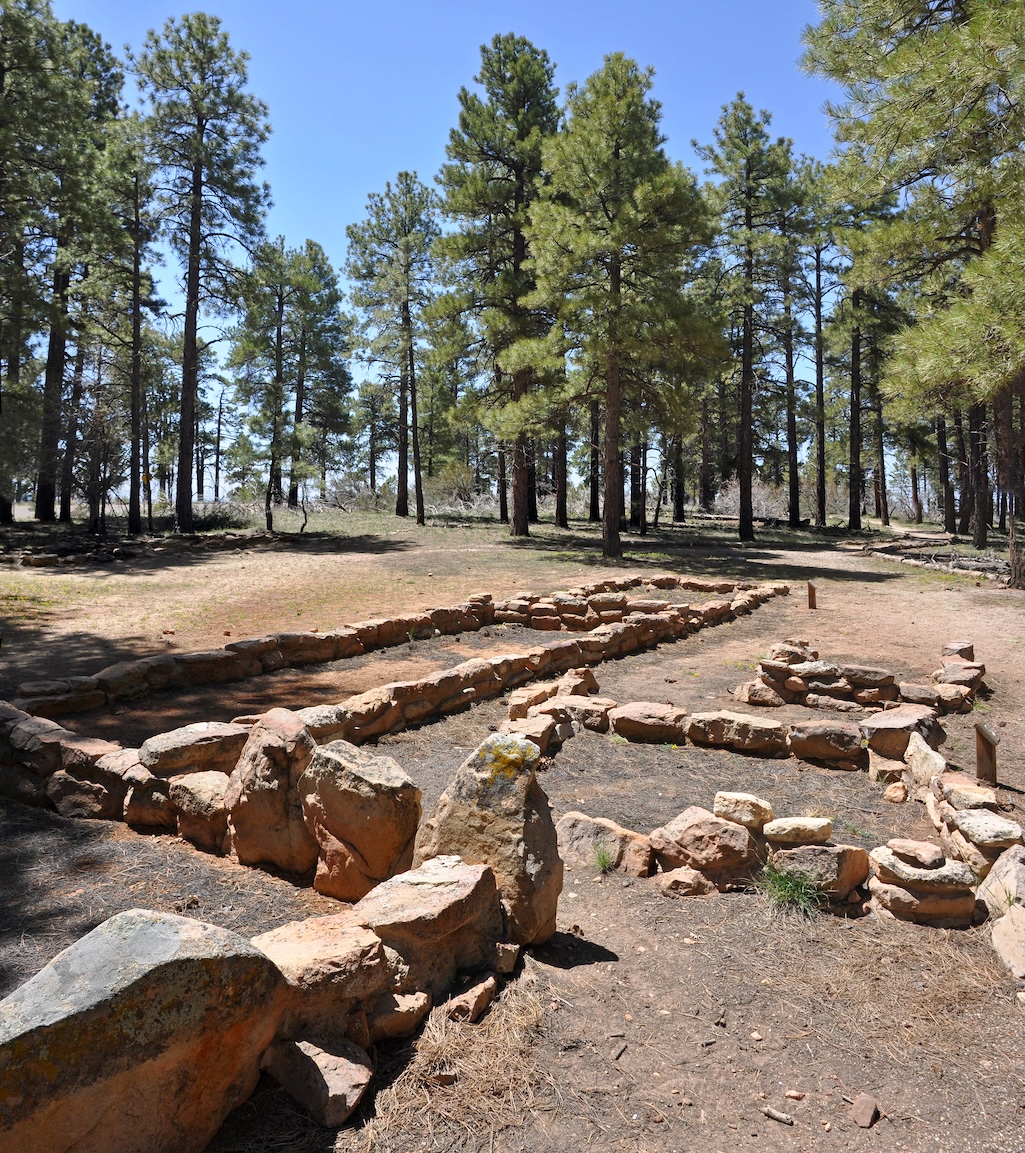
It’s a place that is held dear in the hearts and minds of all Americans and visitors from around the globe.
It sounds a lot like the great Yellowstone. But it’s not.
It’s the North Rim of Grand Canyon National Park.
Many of us, employees and visitors alike, who have enjoyed a cool beverage, a warm meal, and the most fantastic view ever created by rocks and water, are still mourning the loss of the grand lodge. And we will continue to do so for quite some time as the ashes are picked through, as blame is circulated, and as lessons are learned.
But maybe we can adopt a different perspective-one that looks forward but also takes a hard look at history and some wise words and a vision that perhaps we can now rectify.
Grand Canyon National Park is a natural wonder which is absolutely unparalleled throughout the rest of the world.
Theodore Roosevelt on Grand Canyon:
“I want to ask you to keep this great wonder of nature as it now is. I hope you will not have a building of any kind, not a summer cottage, a hotel or anything else, to mar the wonderful grandeur, the sublimity, the great loneliness and beauty of the canyon. Leave it as it is. You cannot improve on it. The ages have been at work on it, and man can only mar it."
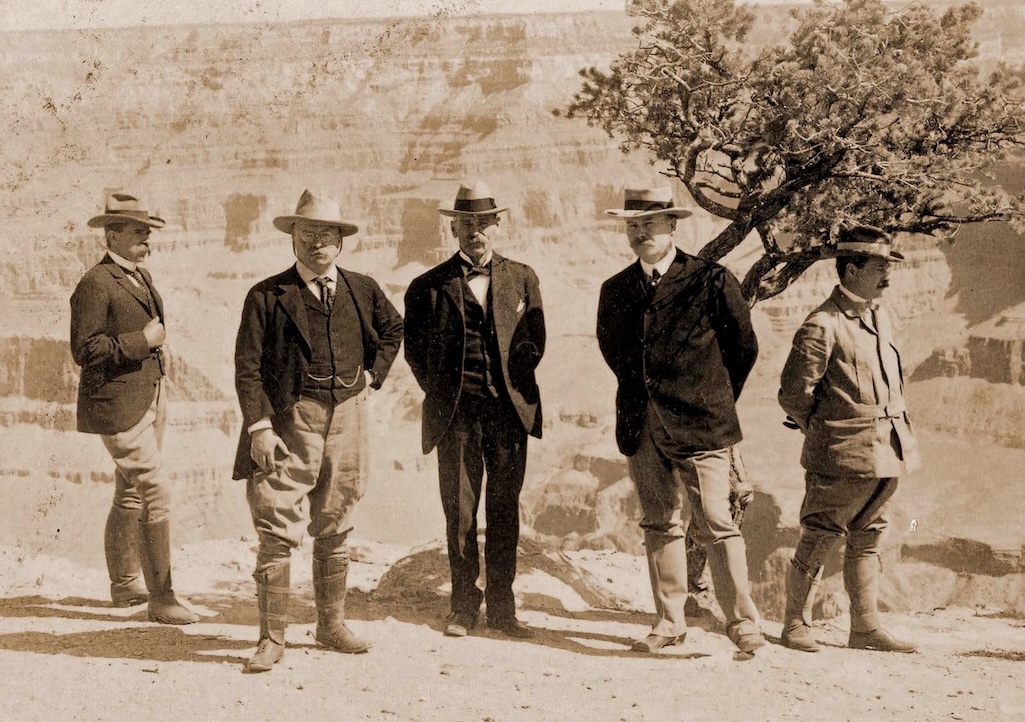
Well, it may be too late for the South Rim, but we have now been given an amazing opportunity to pay thoughtful attention to the words above. Let’s consider a really wild idea whose time has come. How about we seriously discuss NOT rebuilding the North Rim lodge, the surrounding cabins, the visitor center, and all the surrounding infrastructure of precious water pipelines, a waste water treatment plant, a gas station, grocery and souvenir stores, paved roads, and all the traffic and congestion that comes with hotels and restaurants.
How about we consider giving a boost to the Jacob Lake economy and consider their interest in expanding their services outside of the fragile park boundary. It is a gateway community that tends to be dismissed, yet it is chock full of good people and natural and cultural history of the Kaibab Plateau.
How about we consider gathering up the charred stones and create a small monument where the Grand Canyon Lodge stood after burning (for a second time), place Brighty’s remains here if you must, and ensure that there is a thoughtfully designed campground in the forest, off of the rim, and focuses on the interconnectedness of trails that leads the visitor to hike and find their own gorgeous slab of the earth for canyon-viewing along the rim.
The restoring of the North Rim of Grand Canyon National Park can be about rewilding. It can be about relieving over one hundred years of pressure that all of the infrastructure has put on the unique flora and fauna that calls this place home. It can be about connecting and reconnecting ancient migratory pathways for wildlife-in the air, in the water, and on the land. And it can restore a landscape and ecosystem steeped in culture. This can be our tribute to a bio-cultural heritage that predates us by thousands of years.
As we journey deeper into the impacts of climate change, fragmentation, invasive species, light and noise pollution, and the impacts we have inflicted upon this treasured landscape-perhaps we can now set aside this place to let the lion hunt, let the wolves complete their journeys as they desperately try to make their way back from the north and from east and from the south, all under the watchful wings of the condor soaring high above their heads as they move from the forest, to the rims, and beyond.
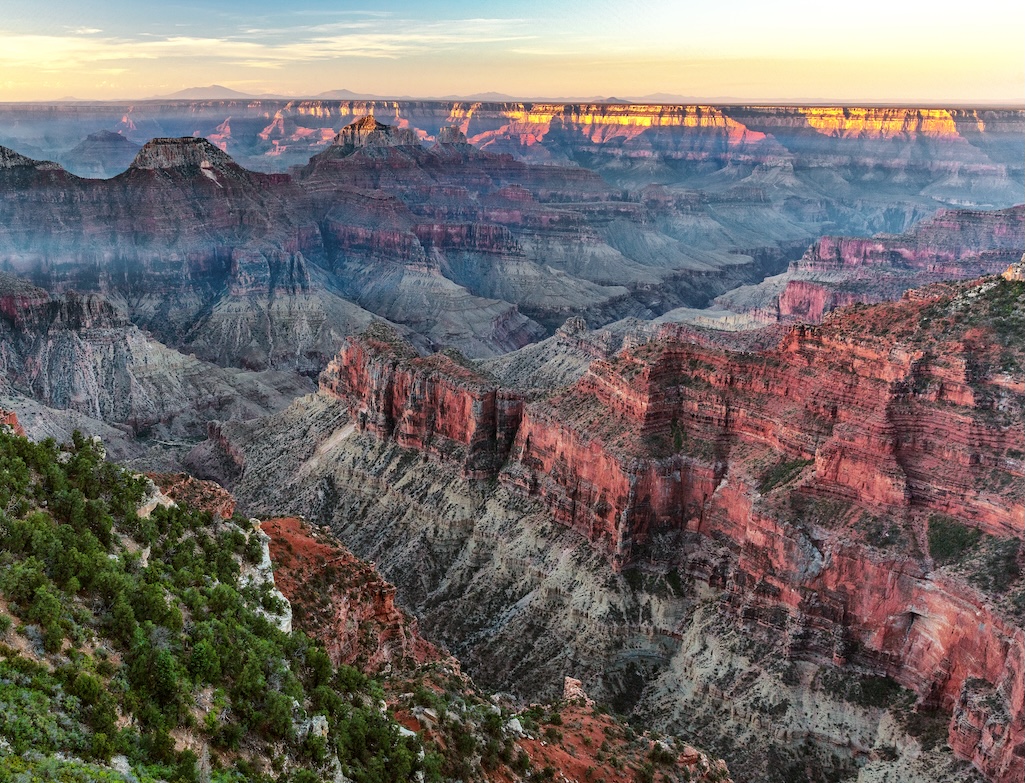
Decades ago, David Brower gave us lessons in CPR: Conserve-Protect-Restore. Restoring the ecological processes, the species, and the connectivity, can recover this landscape and rewild it back to what Roosevelt experienced when he gazed across the canyon, the rims, the grasslands, and the forest, and then declared it a National Monument.
As Roosevelt said in 1903: “Let this great wonder of nature remain as it now is.”
The North Rim of Grand Canyon National Park can really use some CPR! Let’s start the conversation and develop the strategy!
Author: Elaine F. Leslie, Retired, Agency Chief of Biological Resources-National Park Service
Contributors:
Dr. Joel Berger, Barbara Cox Anthony University Chair of Wildlife Conservation and professor at Colorado State University; Kelly Burke, Natural Allies; Dr. Kent Redford, Archipelago Consulting; Dr. Michael Soukup, Retired, Associate Director Natural Resource Stewardship and Science, National Park Service.
Stories about:
Story Categories:
A copy of National Parks Traveler's financial statements may be obtained by sending a stamped, self-addressed envelope to: National Parks Traveler, P.O. Box 980452, Park City, Utah 84098. National Parks Traveler was formed in the state of Utah for the purpose of informing and educating about national parks and protected areas.
Residents of the following states may obtain a copy of our financial and additional information as stated below:
- Florida: A COPY OF THE OFFICIAL REGISTRATION AND FINANCIAL INFORMATION FOR NATIONAL PARKS TRAVELER, (REGISTRATION NO. CH 51659), MAY BE OBTAINED FROM THE DIVISION OF CONSUMER SERVICES BY CALLING 800-435-7352 OR VISITING THEIR WEBSITE. REGISTRATION DOES NOT IMPLY ENDORSEMENT, APPROVAL, OR RECOMMENDATION BY THE STATE.
- Georgia: A full and fair description of the programs and financial statement summary of National Parks Traveler is available upon request at the office and phone number indicated above.
- Maryland: Documents and information submitted under the Maryland Solicitations Act are also available, for the cost of postage and copies, from the Secretary of State, State House, Annapolis, MD 21401 (410-974-5534).
- North Carolina: Financial information about this organization and a copy of its license are available from the State Solicitation Licensing Branch at 888-830-4989 or 919-807-2214. The license is not an endorsement by the State.
- Pennsylvania: The official registration and financial information of National Parks Traveler may be obtained from the Pennsylvania Department of State by calling 800-732-0999. Registration does not imply endorsement.
- Virginia: Financial statements are available from the Virginia Department of Agriculture and Consumer Services, 102 Governor Street, Richmond, Virginia 23219.
- Washington: National Parks Traveler is registered with Washington State’s Charities Program as required by law and additional information is available by calling 800-332-4483 or visiting www.sos.wa.gov/charities, or on file at Charities Division, Office of the Secretary of State, State of Washington, Olympia, WA 98504.


