
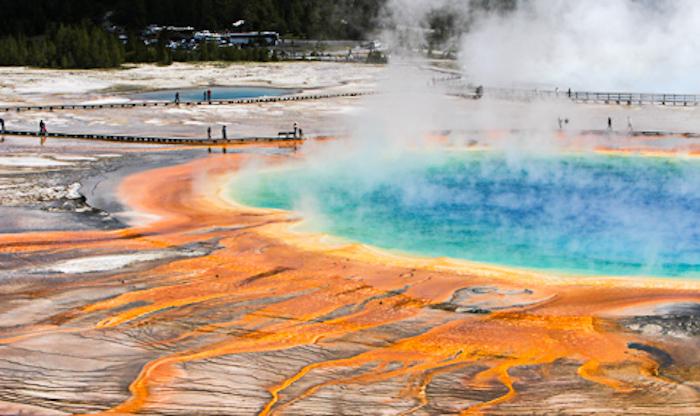
Editor's note: Which is the best national park out of the 59 in the National Park System? A very subjective question, but guest writer Sidney Chow, who writes about parks on his blog, Journey To All 59 National Parks, took out his calculator, park visitation figures, and the calendar to figure out rankings for all 59 national parks. Read on and see if you agree with his conclusions!
Which park is the best of the 59 official national parks in the U.S.? Would you believe my list is unbiased? Since each person enjoys different aspects of nature, lists like these are subjective and biased. Some people love mountain scenery and hiking, while others love the ocean or lakes. Some like majestic vistas while others love the intimacy of an island. Beauty is in the eyes of the beholder. But is there a way to objectively rank national parks?
All parks are not created equal. Some parks are better than others. I rate each park in my blog posts, but that is just my opinion, with all of my biases. So, how to rank national parks objectively?
Objectivity means using data. People vote with their feet, so do we use visitor count as THE measure of "best"? If that is the only criteria, this would be a short article. Great Smoky Mountains would be the best, end of debate. But not so fast! Is it fair to compare visitation of a park that is "easy" to visit to a park that is remote and hard to visit? While Great Smoky is a great park, most people would not rate it as the best national park.
The Most Popular National Parks
| Ten Most-Visited Parks | 2016 Visitation |
Population within 500 Miles (000) |
| Great Smoky Mountains National Park | 11,312,786 | 107,003 |
| Grand Canyon National Park | 5,969,811 | 44,726 |
| Yosemite National Park | 5,028,868 | 45,949 |
| Rocky Mountain National Park | 4,517,585 | 14,131 |
| Zion National Park | 4,295,127 | 50,320 |
| Yellowstone National Park | 4,257,177 | 12,135 |
| Olympic National Park | 3,390,221 | 12,123 |
| Acadia National Park | 3,303,393 | 58,279 |
| Grand Teton National Park | 3,270,076 | 12,559 |
| Glacier National Park | 2,946,681 | 11,808 |

| Ten Least-Visited Parks | 2016 Visitation |
Population Within 500 miles (000) |
| Gates of the Arctic National Park | 10,047 | 537 |
| Kobuk Valley National Park | 15,500 | 242 |
| Lake Clark National Park | 21,102 | 623 |
| Isle Royale National Park | 24,966 | 760 |
| North Cascades National Park | 28,646 | 12,196 |
| National Park of American Samoa | 28,892 | 280 |
| Katmai National Park | 37,818 | 588 |
| Dry Tortugas National Park | 73,661 | 20,066 |
| Wrangell-St. Elias National Park | 79,047 | 623 |
| Congaree National Park | 143,843 | 82,546 |
The 10 most-visited national parks have an average population of nearly 37 million within 500 miles (roughly a day's drive) while the 10 least-visited parks average just under 11 million people. The easier it is to get to a park, the more people will visit.
Distance from population centers is an important, but not the dominant, parameter to visitor count. Of the 10 most-visited parks, only three are in the top 10 of population within 500 miles. Closeness to people does not fully explain the popularity. Note that of the 10 least-visited parks, six do not have road access. A plane or a boat is required to visit, a big barrier for visitation. It doesn't mean these parks are necessarily less beautiful or attractive, but it takes more work and resources to visit.
There are clearly other factors at work. Visitor count by itself does not accurately reflect how "attractive" or how "great" a particular national park is. While every national park has its claim to fame, some are just "better" than others. When I mention "national parks," which parks do you think of first? Yellowstone? Yosemite? Grand Canyon? These parks are relatively remote and are not near population centers, yet they are famous and attract a lot of visitors.
The best parks should receive a lot of visitors adjusted for the effort required to visit. The more people willing to expend the effort to visit, the more attractive a park is. Visitor per population within 500 miles is a proxy for effort required. The higher the ratio, the more people think it's worthwhile to spend the effort to get there. This is the best proxy since we don't have data on the distance a visitor traveled to visit a park.
The Least Popular Parks?
| Ten Lowest Visitor-Per-Population Parks | 2016 Visitors |
Population Within 500 Miles (000) |
2016 Visitors/500 Mile |
| Congaree National Park | 143,843 | 82,546 | 0.002 |
| North Cascades National Park | 28,646 | 12,196 | 0.002 |
| Great Basin National Park | 144,846 | 51,657 | 0.003 |
| Dry Tortugas National Park | 73,661 | 20,066 | 0.004 |
| Pinnacles National Park | 215,555 | 41,140 | 0.005 |
| Mammoth Cave National Park | 586,514 | 105,990 | 0.006 |
| Guadalupe Mountains National Park | 181,839 | 24,731 | 0.007 |
| Channel Islands National Park | 364,807 | 44,848 | 0.008 |
| Black Canyon of the Gunnison National Park | 238,018 | 21,638 | 0.011 |
| Shenandoah National Park | 1,437,341 | 126,133 | 0.011 |
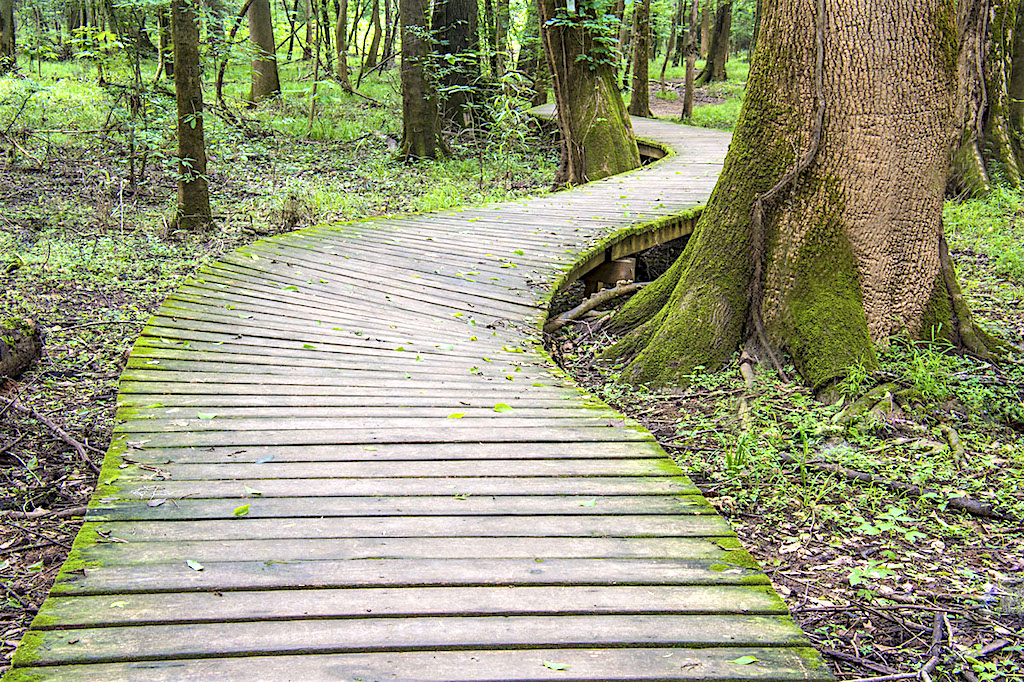
If we look at the ratio of visitors-to-population, these are the parks with the least number of visitors per population within a day's drive. Congaree, located in South Carolina, draws from a huge population of 82.5 million but only had 143,000 visitors in 2016, making it one of the least-visited. Perhaps not surprising since a large mosquito meter greets people at the visitor center. Dry Tortugas, despite being close to heavily populated South Florida, requires an expensive boat or plane ride, which discourages visitation. Channel Islands has the same problem, even though it's close to the megalopolis of Los Angeles.
Mammoth Cave is within a day's drive of 105 million people, yet draws less than 600,000 visitors. Perhaps the largest cave is not attractive enough.
Pinnacles is not far from San Jose, yet it's one of the least-visited parks, perhaps because it's also the newest and word has not gotten out yet, or is it because the spires are not dramatic enough?
Shenandoah is within a day's drive of more than one-third of the country, but ranked 17th in visitation, while nearby Great Smoky, with 19 million less people within 500 miles, is the most-visited park with nearly eight times the number of visitors. What explains the difference?
Great Basin has more people than Yosemite within 500 miles (50 million vs. 45 million), yet Yosemite has 35 times as many visitors. Perhaps it's because Yosemite is more spectacular.
When people think of national parks, these parks do not come to mind. They are just not as good.
The Most Popular Parks?
| Ten Highest Visitor-Per-Population Parks | 2016 Visitation |
Population Within 500 Miles (000) |
2016 Visitor/500 Mile |
| Hawai'i Volcanoes National Park | 1,887,580 | 1,360 | 1.388 |
| Denali National Park | 587,412 | 626 | 0.938 |
| Haleakala National Park | 1,263,558 | 1,360 | 0.929 |
| Glacier Bay National Park | 520,171 | 567 | 0.917 |
| Kenai Fjords National Park | 346,534 | 603 | 0.575 |
| Yellowstone National Park | 4,247,177 | 12,135 | 0.351 |
| Rocky Mountain National Park | 4,517,585 | 14,131 | 0.320 |
| Olympic National Park | 3,390,221 | 12,123 | 0.280 |
| Grand Teton National Park | 3,270,076 | 12,559 | 0.260 |
| Glacier National Park | 2,946,681 | 11,808 | 0.250 |
Let's look at the highest ratio of visitor-to-500-mile-population. Places with large tourist-to-resident ratio came out on top. Mega cruise ships bring tourists to Glacier Bay and they never set foot on the ground, while excursions bring visitors to Denali in the comfort of trains, buses, and hotels. Nearly 2 million tourists visit Alaska, compared with 742,000 residents.
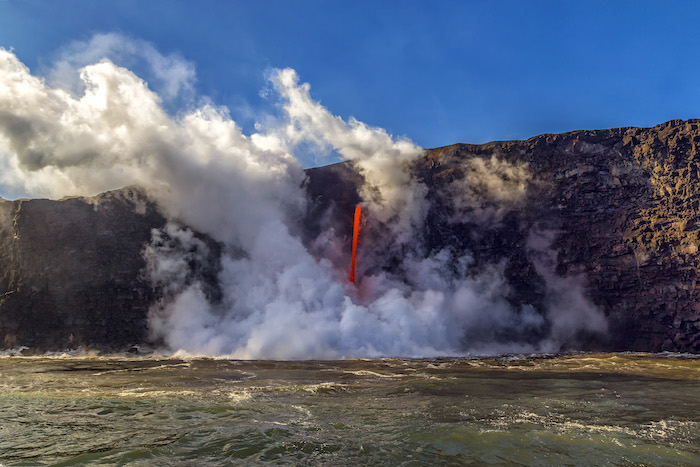
Even more dramatic, 7.6 million tourists visit Hawaii compared to 1.4 million residents. It's no surprise that the two national parks in Hawaii are included in the top three slots on the list. High tourist-to-resident ratio explains why Alaska and Hawaii dominate this list.
Yellowstone, the first and perhaps the best-known national park, is the top park after the Hawaii and Alaska parks. It's not close to any population center, has a short season, yet attracts more than 4 million visitors from all around the world. Clearly, a lot of people are willing to spend the time and money to visit. That should count a lot.
Rocky Mountain is another diverse park that is very popular, especially since it's in Denver's backyard, where the residents have a penchant for outdoor pursuits. Similarly, Olympic is diverse and close to Seattle.
I've heard many experienced national park visitors say Glacier is the best and most underrated national park. It's remote, a long day's drive from Seattle and Salt Lake City, the two closest big cities, and has a short season. Yet, it receives nearly 3 million visitors a year.
When to Visit to Avoid the Crowd
When is the best time to visit a particular park? I hate crowds in national parks. Crowds are for cities. I balance lack of crowds and weather when I plan our trips to the more popular parks.
National park visitation varies widely. The most-visited (Great Smoky, at more than 11 million) has 1,100 times the visitors as the least (Gates of the Arctic, at just 10,000). There are more visitors counted in eight hours to Great Smoky than Gates of the Arctic counts in a year!
Likewise, there are dramatic differences in visitation depending on the time of year for a particular park. As you would expect, the parks in the north, where the weather is harsh in the winter, have the biggest difference between peak month and the low month.

| Name |
Peak Visitation Month |
2016 Peak Month Visitation |
Low Month Visitation |
2016 Low Month Visitors |
High to Low Ratio |
| Kenai Fjords National Park | July | 107,851 | January | 5 | 21,570.2 |
| Wrangell-St. Elias National Park | July | 25,520 | Janaury | 25 | 1020.8 |
| Glacier Bay National Park | August | 120,251 | January | 173 | 695.1 |
| North Cascades National Park | August | 9,782 | February | 16 | 611.4 |
| Isle Royale National Park | August | 8,878 | January | 26 | 341.5 |
| Denali National Park | July | 160,357 | January | 500 | 320.7 |
| Voyageurs National Park | July | 54,668 | December | 196 | 278.9 |
| Gates of Arctic National Park | August | 3,137 | November | 18 | 174.3 |
| Katmai National Park | July | 16,678 | January | 100 | 166.8 |
| Theodore Roosevelt National Park | July | 162,933 | December | 2,141 | 76.1 |
The parks with the least variation are in the south. The data on Kobuk Valley is suspect, even though it came from the National Park Service. The numbers look too round and I find it hard to believe 800 people visited this park inside the Arctic Circle in February when the other park inside the Arctic Circle, Gates of the Arctic, only had 18 visitors.
| Name | Peak Month |
2016 Peak Month Visitation |
Low Month |
2016 Low Month Visitation |
High to Low Ratio |
| Hawai'i Volcanoes National Park | July | 182,278 | September | 126,474 | 1.4 |
| Kobuk Valley National Park | October | 1,800 | February | 800 | 2.3 |
| Pinnacles National Park | April | 27,035 | October | 10,663 | 2.5 |
| Hot Springs National Park | July | 190,199 | February | 70,611 | 2.7 |
| Guadalupe Mountains National Park | March | 23,426 | January | 8,499 | 2.8 |
| Biscayne National Park | July | 70,830 | October | 24,114 | 2.9 |
| Congaree National Park | March | 19,387 | February | 6,556 | 3.0 |
| Joshua Tree National Park | March | 327,072 | June | 110,505 | 3.0 |
| Everglades National Park | March | 134,815 | September | 44,750 | 3.0 |
| Channel Islands National Park | July | 49,119 | January | 15,710 | 3.1 |
The most popular parks by visitors during their peak month all have significant differences between their peak month and low month. The ones with the biggest disparity (largest high-to-low ratio) often have tolerable weather but sparse crowds during spring and fall. Even though ranger programs are curtailed during the off season, parks that accommodate large crowds in the peak season often feel empty in the shoulder seasons. By plan, we visited these park in late September and October, when the weather is nice but the crowds are mostly gone. I can't imagine visiting Zion in July!
|
Name |
Peak Month |
2016 Peak Month Visitation |
Low Month |
2016 Low Month Visitation |
High to Low Ratio |
| Great Smoky Mountains | July | 1,464,456 | February | 353,532 | 4.1 |
| Yellowstone National Park | July | 995,917 | December | 19,685 | 50.6 |
| Rocky Mountain National Park | July | 912,507 | December | 91,831 | 9.9 |
| Grand Canyon National Park | July | 839,086 | February | 214,361 | 3.9 |
| Glacier National Park | July | 818,481 | December | 12,877 | 63.6 |
| Olympic National Park | August | 813,267 | December | 72,439 | 11.2 |
| Yosemite National Park | July | 780,728 | January | 139.780 | 5.6 |
| Grand Teton National Park | July | 758,253 | December | 38,329 | 19.8 |
| Acadia National Park | August | 735,945 | December | 14,111 | 52.2 |
| Zion National Park | July | 599,961 | January | 84,145 | 7.1 |

The Best National Parks
National park preferences are intensely personal, but some are "better" than others. There is a reason why some parks are well-known while others live on in obscurity. As we travel to all national parks and blog about our journey, many have told us, "I have never heard of that national park before" when I wrote about the lesser-known parks.
Casting personal preferences aside, how do we objectively settle the question of which park is "best"? Let's use data.
The method is based on visitor count and proximity to population, adjusted for difficulty of access. The easier people can get to a park, the more people will visit, all else being equal. The difference in the ratio tells us how desirable a park is. The score is adjusted to account for road access and tourist count where tourist number is material to the calculation.
| Park | Final Score | Total Score Rank |
| Yellowstone National Park | 100 | 1 |
| Glacier National Park | 80 | 2 |
| Rocky Mountain National Park | 73 | 3 |
| Grand Teton National Park | 64 | 4 |
| Olympic National Park | 58 | 5 |
| Denali National Park | 45 | 6 |
| Hawai'i Volcanoes National Park | 42 | 7 |
| Glacier Bay National Park | 42 | 8 |
| Grand Canyon National Park | 39 | 9 |
| Theodore Roosevelt National Park | 38 | 10 |
| Zion National Park | 33 | 11 |
| Haleakala National Park | 28 | 12 |
| Badlands National Park | 27 | 13 |
| Kenai Fjords National Park | 27 | 14 |
| Great Smoky Mountains National Park | 26 | 15 |
| Yosemite National Park | 25 | 16 |
| National Park of America Samoa | 21 | 17 |
| Arches National Park | 21 | 18 |
| Bryce Canyon National Park | 17 | 19 |
| Wind Cave National Park | 16 | 20 |
| Mount Rainier National Park | 16 | 21 |
| Acadia National Park | 15 | 22 |
| Katmai National Park | 15 | 23 |
| Joshua Tree National Park | 11 | 24 |
| Big Bend National Park | 11 | 25 |
| Capitol Reef National Park | 10 | 26 |
| Canyonlands National Park | 10 | 27 |
| Everglades National Park | 9 | 28 |
| Channel Islands National Park | 9 | 29 |
| Lake Clark National Park | 8 | 30 |
| Crater Lake National Park | 8 | 31 |
| Mesa Verde National Park | 8 | 32 |
| Kobuk Valley National Park | 7 | 33 |
| Saguaro National Park | 7 | 34 |
| Hot Springs National Park | 6 | 35 |
| Wrangell-St. Elias National Park | 6 | 36 |
| Carlsbad Caverns National Park | 6 | 37 |
| Virgin Islands National Park | 6 | 38 |
| Death Valley National Park | 6 | 39 |
| Sequoia National Park | 5 | 40 |
| Biscayne National Park | 5 | 41 |
| Redwood National Park | 5 | 42 |
| Cuyahoga Valley National Park | 5 | 43 |
| Petrified Forest National Park | 4 | 44 |
| Great Sand Dunes National Park | 4 | 45 |
| Gates of the Arctic National Park | 4 | 46 |
| Dry Tortugas National Park | 4 | 47 |
| Voyageurs National Park | 3 | 48 |
| Lassen Volcanic National Park | 3 | 49 |
| Shenandoah National Park | 3 | 50 |
| Black Canyon of the Gunnison National Park | 3 | 51 |
| Kings Canyon National Park | 3 | 52 |
| Guadalupe Mountains National Park | 2 | 53 |
| Isle Royale National Park | 2 | 54 |
| Mammoth Cave National Park | 1 | 55 |
| Pinnacles National Park | 1 | 56 |
| Great Basin National Park | 1 | 57 |
| North Cascades National Park | 0 | 58 |
| Congaree National Park | 0 | 59 |
Is anyone surprised Yellowstone is at the top of the list? It is the most famous and near the top of most people's list of favorite parks.
Glacier is mentioned by many experienced national park visitors as one of the best. It received nearly 3 million visitors in 2016 even though it's far from any major city.
While Denali and Glacier Bay are in remote Alaska, they benefit from cruise ship tourism that makes it relatively easy to visit. The highlight of many Alaskan cruises is a visit to Glacier Bay, without ever leaving the comfort of the cruise ship.
On the other side of the list, Congaree is within a day's drive of 82 million people, yet it's one of the least-visited parks. Perhaps the large "mosquito meter" inside the visitor center is an indicator.
The top-ranked parks are the most famous. They are famous for a good reason: They have the best, most diverse attractions. The data supports the reputation. The high visitation despite the remoteness is people voting with their time and money. Do you agree with the result? If you've been to many national parks, how close is this to your personal favorite?
Do You Agree With The Method Used?
What data would you use to rank parks? Leave a comment below and share your best national parks.
Join us at our travelogue as we visit all 59 national parks.
Story Categories:
A copy of National Parks Traveler's financial statements may be obtained by sending a stamped, self-addressed envelope to: National Parks Traveler, P.O. Box 980452, Park City, Utah 84098. National Parks Traveler was formed in the state of Utah for the purpose of informing and educating about national parks and protected areas.
Residents of the following states may obtain a copy of our financial and additional information as stated below:
- Florida: A COPY OF THE OFFICIAL REGISTRATION AND FINANCIAL INFORMATION FOR NATIONAL PARKS TRAVELER, (REGISTRATION NO. CH 51659), MAY BE OBTAINED FROM THE DIVISION OF CONSUMER SERVICES BY CALLING 800-435-7352 OR VISITING THEIR WEBSITE. REGISTRATION DOES NOT IMPLY ENDORSEMENT, APPROVAL, OR RECOMMENDATION BY THE STATE.
- Georgia: A full and fair description of the programs and financial statement summary of National Parks Traveler is available upon request at the office and phone number indicated above.
- Maryland: Documents and information submitted under the Maryland Solicitations Act are also available, for the cost of postage and copies, from the Secretary of State, State House, Annapolis, MD 21401 (410-974-5534).
- North Carolina: Financial information about this organization and a copy of its license are available from the State Solicitation Licensing Branch at 888-830-4989 or 919-807-2214. The license is not an endorsement by the State.
- Pennsylvania: The official registration and financial information of National Parks Traveler may be obtained from the Pennsylvania Department of State by calling 800-732-0999. Registration does not imply endorsement.
- Virginia: Financial statements are available from the Virginia Department of Agriculture and Consumer Services, 102 Governor Street, Richmond, Virginia 23219.
- Washington: National Parks Traveler is registered with Washington State’s Charities Program as required by law and additional information is available by calling 800-332-4483 or visiting www.sos.wa.gov/charities, or on file at Charities Division, Office of the Secretary of State, State of Washington, Olympia, WA 98504.

Comments
This is a very interesting article, indeed. I like the fact that measurable data was used, rather than opinion (of which there are many). Having visited Big Bend National Park four different times, I, personally, would rank it higher except I can attest that it is one of the least-visited national parks, even though it is an amazing place with tons of photo ops. Big Bend is out in the middle of nowhere, a good distance from any real population center (woe betide the person who gets a flat tire out there). Regarding The Best National Parks list, I find it interesting that Theodore Roosevelt National Park edged out Zion National Park, since I hear so much more about Zion. I also find it interesting that Denali National Park ranks right up there in the top 10. Denali is a good 4-hour drive from Anchorage, and once you are there, you really are in the middle of nowhere. The beauty of this national park, however, is undeniably overwhelming. Hawai'i Volcanoes National Park is also a really cool park - except that you have to fly or cruise to get there. The lure of active geological forces coupled with the amazing diversity (rainforest, stark volcanic landscapes, wildlife species found nowhere else) must make up for that. Thanks, again, for such an interesting article.
Rebecca, Thank you for the comments. Zion benefits from proximity to Vegas, as well as the dramatic cliffs. Not as many venture on to Bryce, which I personally think is a more interesting park. Theodore Roosevelt is relatively remote but I was also a bit surprised how well it came out on the rankings. See link: http://wp.me/p8fKSg-U8
Denali benefits from organized tours, so even though it's remote to cities, it's "easier" than other parks that are similiarly remote, like Big Bend. I too, enjoyed Big Bend, but it takes a real effort to get there.
I understand that this article is just opinion like everything else but NOCA tied for least best NP is pretty LOL-able.
Ranking quality is subjective, for sure, but what other factors might drive popularity beside convenience and the herd instinct? For example, of the article's final 'Top Ten', the only park that does not contain at least 4000 vertical feet of topographic relief is Theodore Roosevelt. Perhaps this list partly results from the noted American obsession with 'bigness'?
I'd expect rather different lists with more factors included in the algorithm. How about the ratios of road miles to square miles in each park for a 'development / convenience' factor? Reverse that to fewest road miles plus trail miles per square mile for a sort of 'wilderness' index. Add each park's maintenance backlog and federal spending per visitor and the possibilities are endless, or maybe meaningless...
Perhaps you've heard about the statistician who drowned wading down a creek with an average depth of two feet ;o)
tahoma, Good point on the obsession with bigness. Many of the most enjoyable parks to me have the whole package and are more initmate. Big is not always better but it draws crowds. I actually enjoy Black Canyon better than Grand Canyon, because while the canyon is shallower, it's more verticle and more dramatic. Yes, you can go crazy with all kinds of measures like road miles but I tried to keep it relatively simple.
Interesting piece! This is very much an issue I've thought about a bunch.
I see two main issues with the analysis, though.
First, 500 miles is a huge radius. That's easily over 8 hours of driving. You don't do that for a weekend trip.
For example, the reason that Rocky Mountain National Park gets so many visitors is almost certainly in large part due to its proximity to the Denver metro area. It's only a 1.5-hour drive from Denver.
The reason the Smokies have so many visitors is almost certainly the number of people who live within a few hours' drive, not eight hours' drive. Atlanta, Nashville, Charlotte, and Columbia (plus other smaller cities) are all about three hours away. The fact that there are also tons of people within 500 miles isn't nearly as relevant. This screws up the ratios. For example, because Rocky Mountain National Park doesn't have nearly as many people within 3–8 hours' driving distance as the Smokies, it appears to have many more visitors per "nearby" (500-mile radius) resident than the Smokies. But it's the under-3-hours residents who are really important! I'd be very curious to see this analysis repeated with a narrower distance band, like 200 miles.
The second main issue is that this doesn't seem to take into account accessibility. For example, the reason North Cascades has so few visitors is simple: its boundaries are drawn to exclude almost all the road-accessible areas. (See map: https://www.nps.gov/noca/planyourvisit/maps.htm) Within the "North Cascades National Park Complex" all the easily accessible areas are part of Ross Lake National Recreation Area. Those visitors are *looking* at the North Cascades peaks, but usually not setting foot. So the numbers don't really do justice here. Imagine if we had Yosemite Valley National Recreation Area and Yosemite Peaks National Park — Yosemite Peaks would have significantly fewer visitors.
On this point, I did see the mention of "The score is adjusted to account for road access" but I'm not really sure what exactly that means / how the scores were adjusted.
Greg, Good points. I actually did take into account the "half day drive distance" a little. The 250 mile population is weighted 10% and the 500 mile population is weighted 90%. We can certainly arugue about the right percentage of the weight. What is interesting is to compare Smokey, Shenandoah, and Congree. All of them have a very large population even within 250 miles, and yet the visitator counts are far different.
In terms of accessibility, there is a 5x uplift for parks without any road access. The theory is that if you are willing to spend the time and money by boat or plane that costs more than $100 at the least, it must be very desirable. The 5x factor came from comparing "similiar parks" like Dry Torgugas and Biscayne. One has boat/plane only access and the other has road access.
I didn't take into account the situation like North Cascades where you don't have to enter the park to get the benefit of the scenery.
500 miles is indeed a long drive and, for many, a very impractical one, for just a weekend trip, even an extended weekend.
I have to agree that any judging criteria which puts NOCA on the least favorite list is a criteria composed by someone who has spent zero time in the Wilderness Information Center in Marblemount.
How is the population within 500 miles of Kenai Fjords only 603? Seward is 120 miles from Anchorage, which has a population of 300,000 people.
603,000 people.
Newfound Gap road is the shortest distance between North Carolina and TN. It runs through the Great Smoky Mtns National park. A good majority of the traffic is not visitor related to the Smokies at all. But they get to count it when time comes to ask for money. That road has held so much import that, in 1952, the TN state legislature placed a deed restriction on it before ceding that thoroughfare to the NPS. At that time, it was just a road through the mtns in a relatively new "National Park". A very important road, at that. Thank God for the shrewd and forward thinking Tennessee legislature. Monthly, I hear the NPS try to finagle some other way to get around the deed restriction so they can charge an entrance fee. Most recently, they have been trying to redesignate us 441 as some type of National scenic byway. NPS should stand for National Profit Service. If the postal service were as efficient at moneting their product, they might not be in the red perpetually.
Good points and perhaps entrance fee should be somehow included as a criteria and that may explain some of the difference in ranking between Smokey and Shenendoah. Congaree, one of the least visited parks located among a lot of people is also free.
It's been mentioned, but Great Smoky Mountains doesn't have a fee, and on top of that the visitation numbers may be skewed by a major road going through the park.
The most popular units in NPS are Golden Gate National Recreation Area and Blue Ridge Parkway. The latter's visitation numbers are boosted by it being free to enter as well as locals using parts of it like it's a city park.
Very true, but this was restricted to National Park designation sites. Cuyahoga Valley is also like that, more of a regional park (in my opinion) that is close to major cities.
Good article for members of Congress and the Administration to help them decide which parks to axe. Awesome job!
Great article!
I'll have to remind myself the next time I'm in Yosemite that it's only the 16th best park as I sit shoulder-to-shoulder with other vistors on the tram or hike single file from Happy Isles all the way to the top of Vernal Falls. Or, even worse, get turned away at the entrance because there is simply no more places to park. Don't these fools know there are better places they could go?
Sure. The methodology seems overly simple. Yosemite is a destination location and is actually quite remote. The population within 500 miles might be somewhat more likely to visit, but a lot of of people living within that radius aren't necessarily interested. Yellowstone happens to be surrounded by fewer major cities within 500 miles.
GSMNP gets some of its visitation from side trips from Pigeon Forge and Gatlinburg.
My wife and I have visited 50 of the National Parks. How about a category for "Most surprising visit". While not expecting much, we were highly surprised by our visit to Death Valley NP. It was much more than we expected.
Mickey - I agree with you on Death Valley. I was totally surprised with the diversity of the park (http://journey2allnationalparks.com/parks/death-valley-desolate-and-extr...) , when I expected just to experience the very hot temperatures and to check off being at the lowest point. TR NP (http://journey2allnationalparks.com/parks/theodore-roosevelt-national-pa...) was another one that I didn't know what to expect but enjoyed it very much.
Congaree National Park is easy to get to but hard to get around. Almost the whole park is a wilderness area. So once you park your car and go to the visitor center, you have to walk or canoe to explore the park.
That has to affect the score.
Danny Bernstein
www.hikertohiker.com
You do realize that your choice of what data to use is subjective, right? Don't the national parks have annual surveys they do that gives the level of satisfaction visitors have? What about rankings on the parks' social media sites (i.e. 3.3 stars out of 5 and the like). What about the likliehood of dying or serious injuries in a park (many of your "best" parks are also the more dangerous ones)? What about level of biodiversity? How about comparing diversity in the parks' visitation? What about social-economic factors (doubt many lower income familes are packing up for Yellowstone, Volcanoes or American Samoa). What about liklihood of personal service? (i.e. ratio of rangers to visitors...I have stood in cattle lines at some of your "best parks" and had amazing personal experiences at your "worst" ones). Just some thoughts.
William - No doubt any criteria has some subjectivity. There isn't much data on the type of visitors to the parks. The points you made have an impact on quality of visit. Some parks are better run than others for a variety of reasons (i.e. funding, specific challenges a park may have etc.). Rangers at the most-visited parks seem to be in more of a "process the people" mentality, probably because of necessity. Rangers at the least-crowded parks usually have more time to chat and share their joy.
There was a study done in 2014-5 time by NPS on visitor diversity and as you would expect, it's overwhelmingly white. An example the study pointed out is the difference of visitor diversity at Saguaro compared with nearby city/county parks. Hispanics were very underrepresented at Saguaro, which straddles Tucson and just as easy to get to as nearby county parks. The conclusion is Hispanics felt less welcome in NP and somewhat intimidated. There is work to be done for NPs to be more inviting to non-whites.
By the way, my personal "best parks" list is different than this list, as I'm sure your list is different than mine. Having said that, this list is trying to use the little data available to see how people vote with their feet, and give a general sense of collective preferences.
I don't have an issue with Yellowstone, Glacier and Olympic being at the top of the list, but the rest looks almost completely random. I'm not sure how a ranking should be completed, but any list without Yosemite in the top 10 isn't credible. I've been in 39 national parks and I would have a far different list.
Interesting study. But as many have pointed out it appears to be largely based on visitation relative to proximity to population centers. So more remote parks with relatively high visitation will aways top the list. That makes them more popular with the general public, not necessarily the "best" parks.
In my opinion, the less crowded parks tend to be "better" than the high visitation parks. This, of course, is a personal preference and relates to the visitor experience as other people have noted. Congaree, Big Bend, Isle Royale, and many others that scored low fall into this category.
On a meritorius level, Cuyahoga Valley should score higher (again my opinion). They have not just preserved the area but took a ravaged and polluted landscape and restored it to a beautiful park while also preserving many historical features. The same can be said of Indiana Dunes even though it's National Lakeshore, not a NP. No doubt there are others I'm not aware of.
The 500 mile arbitrary range to assess a population number is what really makes it seem random. 500 miles from Yosemite includes large population centers such as the San Francisco Bay Area, Sacramento, Las Vegas, Los Angeles/Orange County, and San Diego. There are a lot of people in that radius who may not be interested in visiting Yosemite. However, it's also a destination area, so the visitor in Virginia thinking of visiting Yellowstone might also be considering Yosemite as the costs may be similar.
The parks in Hawaii are skewed by the low populations of Maui or the Big Island. However, it's well known that Hawaii is a popular tourist destination, and many trips to Haleakala or Hawaii Volcanoes are side trips of a bigger journey.
Real fine article, I like the attempt to translate all the data into something coherent. But I am not sure sure visitation, even when normalized as you have tried to do, can be equated to 'good'. In my mind it more equals 'convenient.' Here's a few things that might already have been pointed out:
1. How a park stands up against the regional competion. If you moved GSMNP to Colorado or Utah or California it would suffer in comparison to other, better parks. Conversely, if you move the Grand Canyon to North Carolina, it would probably get 20 million visitors. This also helps explain why the Pinnacles is so under visited (Yosemeti and Kings Canyon are just 2 hours drive further. Put it in New Jersey, how many people do you think it would draw?)
2. Infrastructure, and particularly car friendly infrastructure, matter. North Cascades is a beloved park among serious wilderness hikers but doesn't have a well developed infrastructure (that is in fact why it is loved.) It just doesn't offer much to weekend car campers. Conversely, Yellowstone is the car-campers/RVer's mecca of the western world. I am not sure this makes it 'best'. It simply makes it very convenient for millions.
3. Some of the parks here, while seemingly remote, are close to the auto touring routes and thereofre act as stopping points for road trippers. When I drove from Boston to Glacier I stopped at Teddy Roosevelt, because it was conveniently near the highway. I am 100% certain i would not have driven 3 days to reach TR by itself. So you probably have TR, Badlands and perhaps some others ranked too high.
Love the attempt though. The Smokies get 350,000 people in February? Astonishing - Brian
Agreed, Brian Regan. In my experience, the terms good/bad, best/worst, all ultimately have to be viewed as subjective. Only. No matter how much raw data gets stacked up to attempt to justify such an opinion is only fancy window dressing.
Methods for counting visitors vary from park to park. The ability, diligence and replicability of employee performance, all which affects the counting, also are suspect. Plus, the parks count visits - not visitors. Olympic NP, in the back yard of Seattle, Tacoma, Olympia and near Portland has many many many repeat visits from individual visitors whereas Yellowstone is more likely to be a once-a-year or once-in-a-lifetime trip.
Many people familiar with the Olympic Peninsula feel that Olympic National Park's claim of over three million annual visitors is considerably inflated. My personal opinion is that actual visitation is about half that amount.
It would be no great logistical stretch to spend the night in Port Angeles and tag Hurricane Ridge, Elwha, Lake Crescent. Soleduck, Rialto Beach, Hoh rain forest and Kalaloch in one day. In such a case, traffic counters would record seven vehicle entries, each multiflied by an assumed 2.6 occupants, and a single visitor could be counted almost twenty times.
Some destination traffic counter totals are reduced by a few hundred per month to account for non-recreational visits, but surely administrative traffic alone is more than that. The assumption of as much as 80% 'recreational' traffic on US 101 along Lake Crescent seems ridiculous and there is no correction for the many multi-axle trucks that are double-counted.
I greatly appreciate this. One other metric I've wondered about is capacity. As a visitor to both channel islands and isle royals, there is only a limited amount spots on the boats that go there. Yet the campgrounds are almost always full in peak season And ita hard to get a spot on the boats
Similarly, I've seen data on length of stay before and there is a big difference between a two hour visit and a three day visit that should count for something.
north cascades has anyway a flawed measurement, the only true way to get into the park is through the hard to find roads on the edge. Most people take the scenery drive which isn't technically in the park so they don't count the visitors there. North cascades is extremely stunning and it's weird that "it's in the bottom 2", though as I said, I feel that's because of the flawed measurements.
Good point. I visited NOCA recently and understand the flaw in using official visitation data for the national park. I should include Ross NRA in the visitation data.