

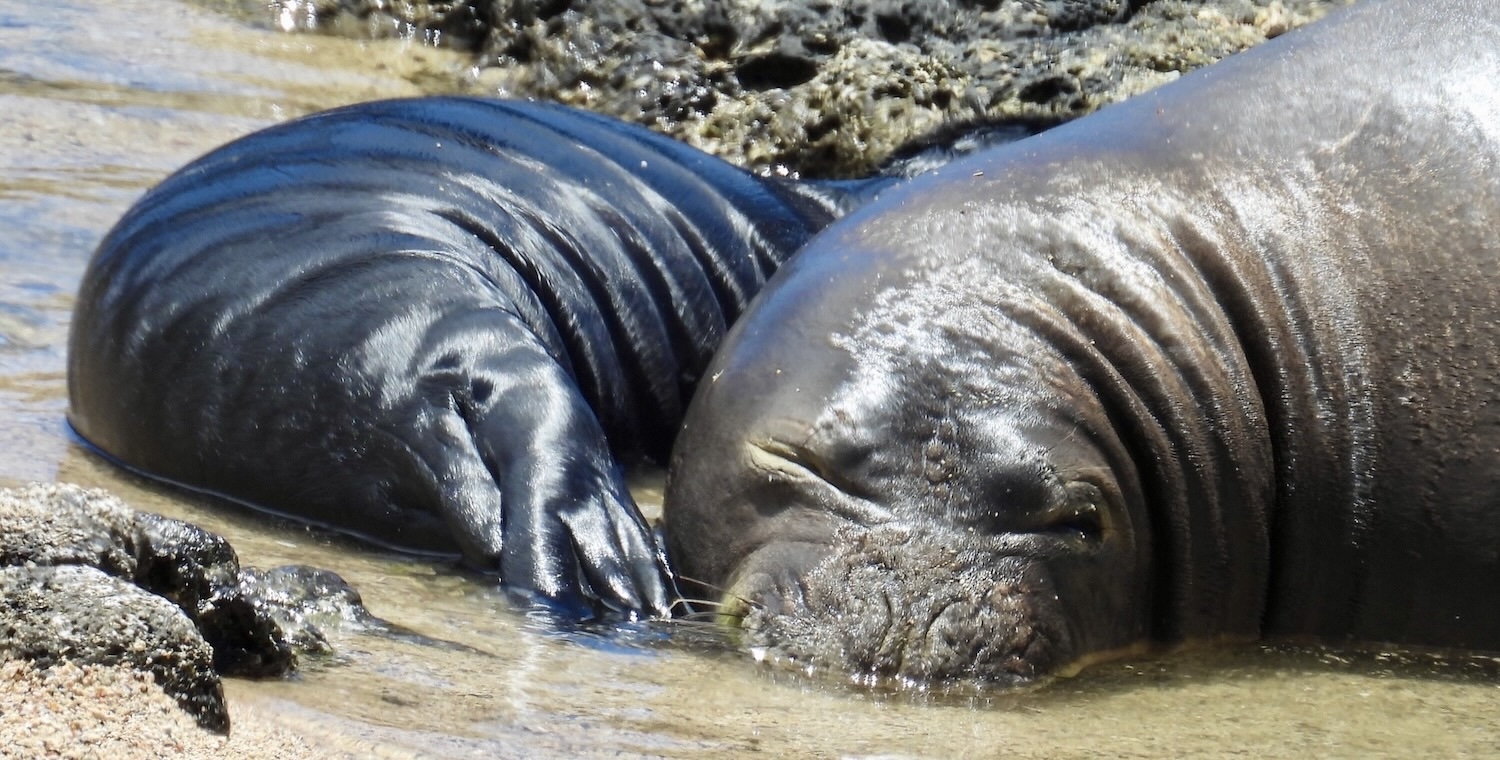
An endangered Hawaiian monk seal was the picture of bliss lolling about a shallow lava rock pool along Papaloa Beach with her slick black newborn pup. Snoozing in the sun, rolling over occasionally in the water, it’s as if she knew that she was safe in this sacred place. The normally solitary seal even tolerated a fellow mom and pup lounging nearby.
“SEAL PUPS 4,” said a chalkboard message on the community bulletin board that’s keeping track of how many are born here each spring.
Over at the commuter airport within Kalaupapa National Historical Park, a sign showed someone with a seal bite and warned to keep your distance from these seals that are protected by state and federal law. Disturb them and you could condition a pup to being around people or cause a mom to abandon her pup or become aggressive.
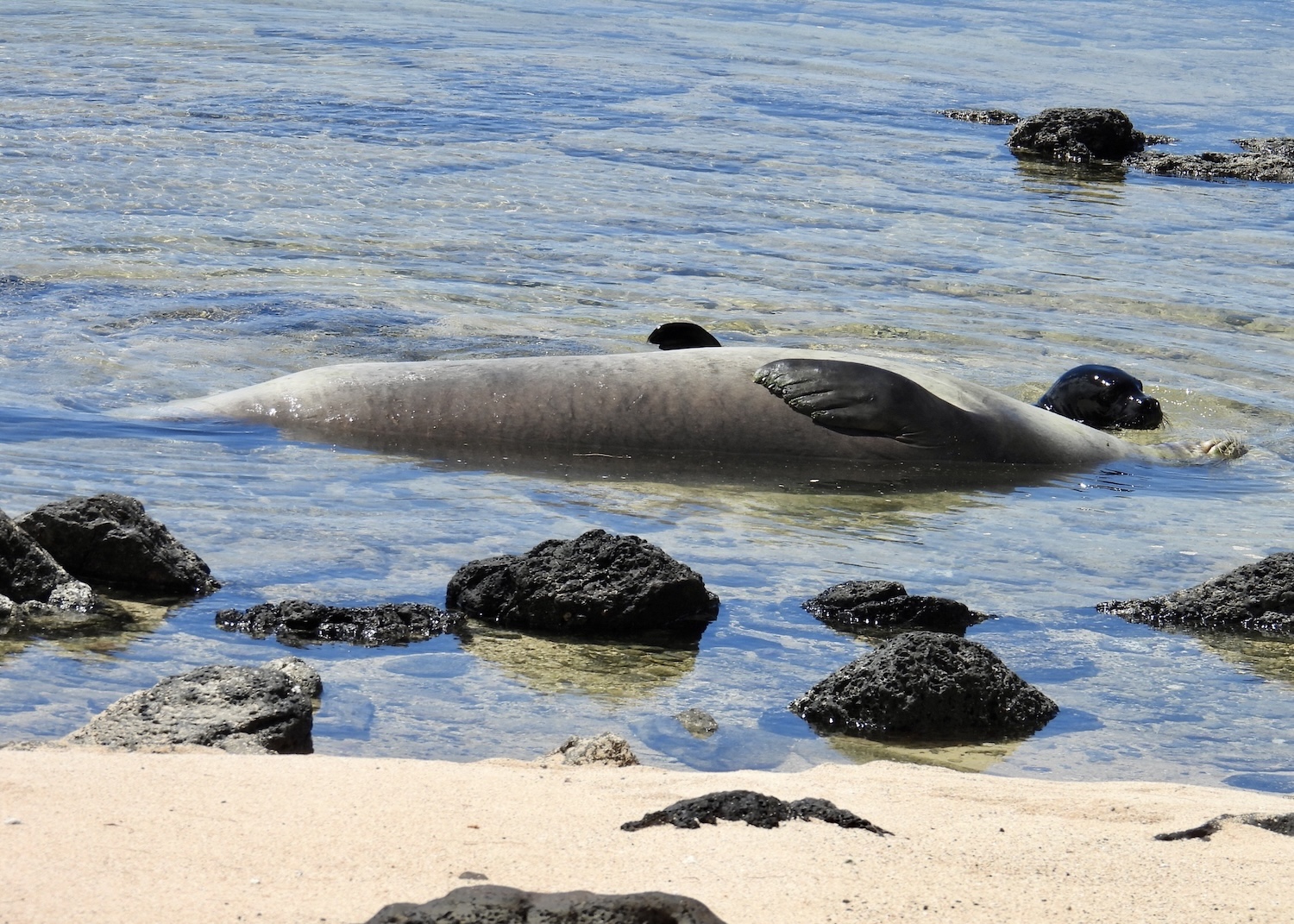
There are only about 1,600 of these rare seals — named for folds of neck skin that resemble a monk's robes — left in the world. They're threatned by everything from malnutrition and shark predation to being entangled in marine debris or being deliberately killed by people who don’t feel they belong.
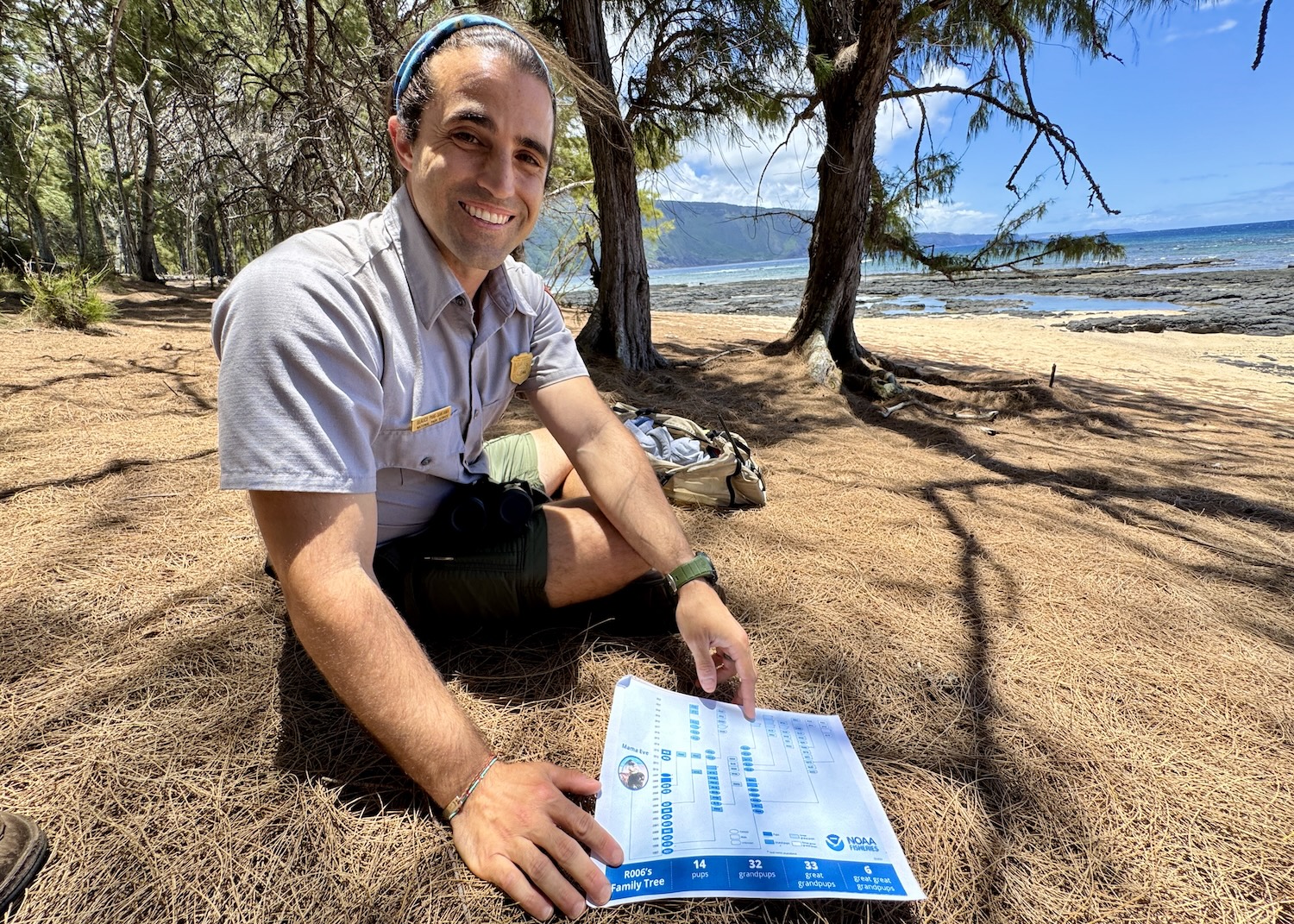
Sitting quietly on the beach, a respectful distance from the seals, aquatic biological science technician Glauco Puig-Santana mused about how protecting the stories of the human patients who live in this isolated place allows the park to protect the seals and so much more.
Besides, he said, the patient-residents who treat their pets like children adore the seals and “are a lover of all living things.” Last year, one seal was born on a resident's 100th birthday.
I had come to a place of contradictions, where medical exiles met astounding natural beauty, where extreme isolation bred a vibrant community, and where a national park can only welcome State of Hawaiʻi Board of Health-approved visitors.
Kalaupapa protects and preserves the history and stories of the people with Hansen's disease (formerly known as leprosy) who were banished to this remote peninsula on Molokaʻi in the Hawaiian Islands from 1866 to 1969, and who were guaranteed a home until they die even once they were freed to live anywhere.
Of the 8,000 people who have called this world-famous isolation colony home, seven remain who range from their mid-80s to 101. Another 60-odd government and ecclesiastical workers care for them and everything that’s here.
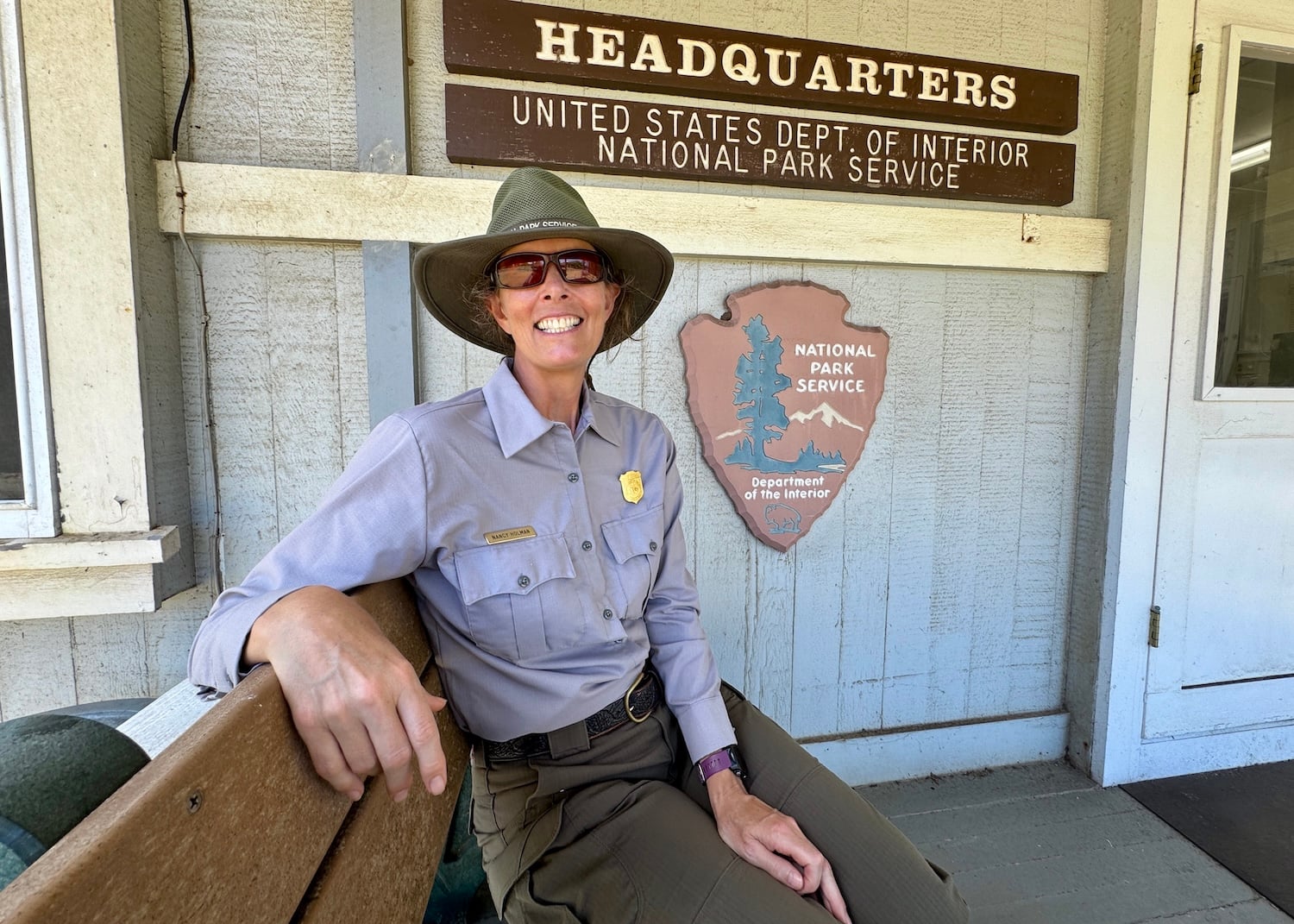
“The levels of complexity here are definitely amped up compared to other parks. They have one level and we have remote, isolated and restricted,” admitted Superintendent Nancy Holman. “We still have to meet the park service mission — it’s preservation and enjoyment. But we are doing that in a space that’s a living community, a cemetery and a national park. It’s a challenging management space to operate in.”
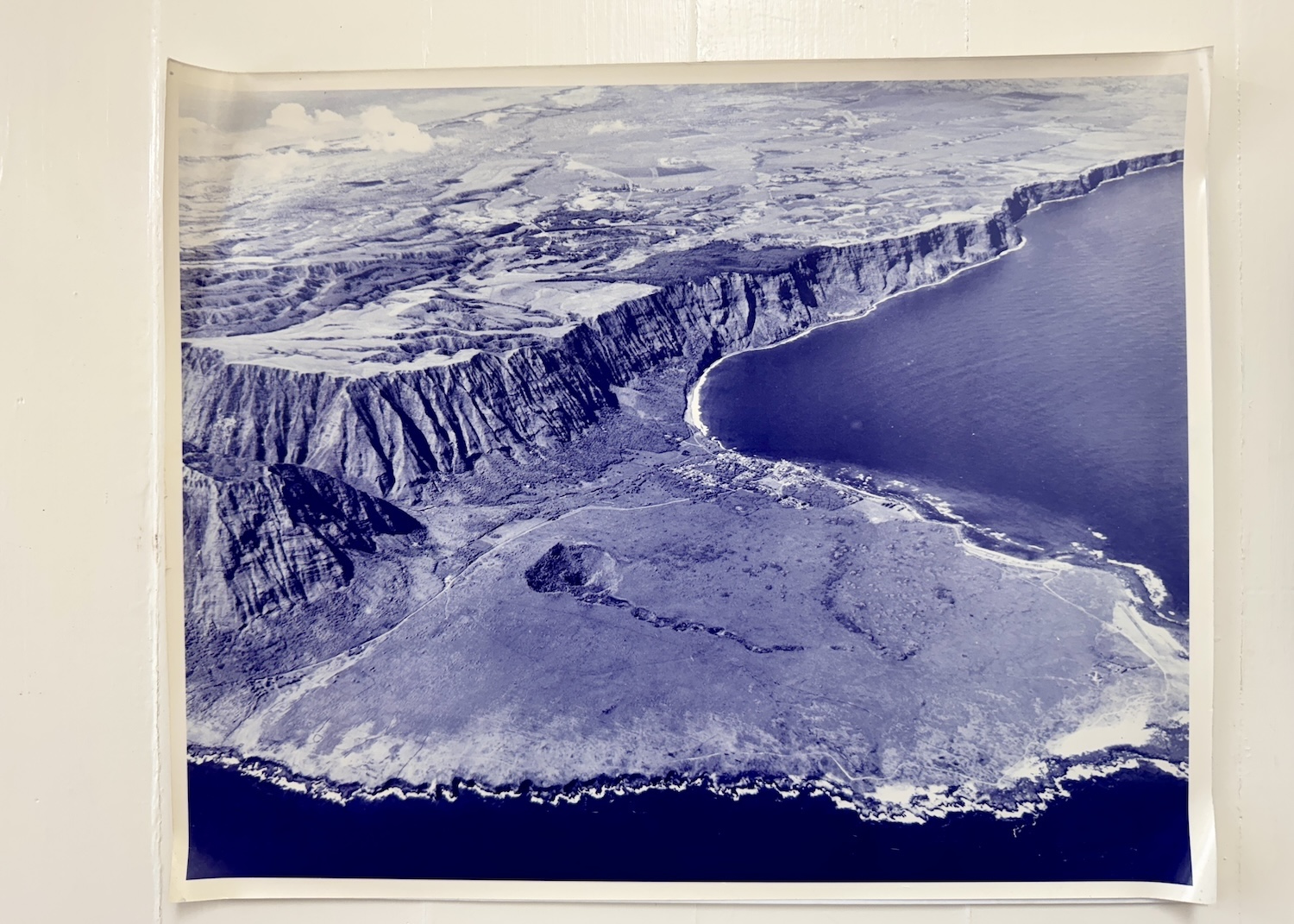
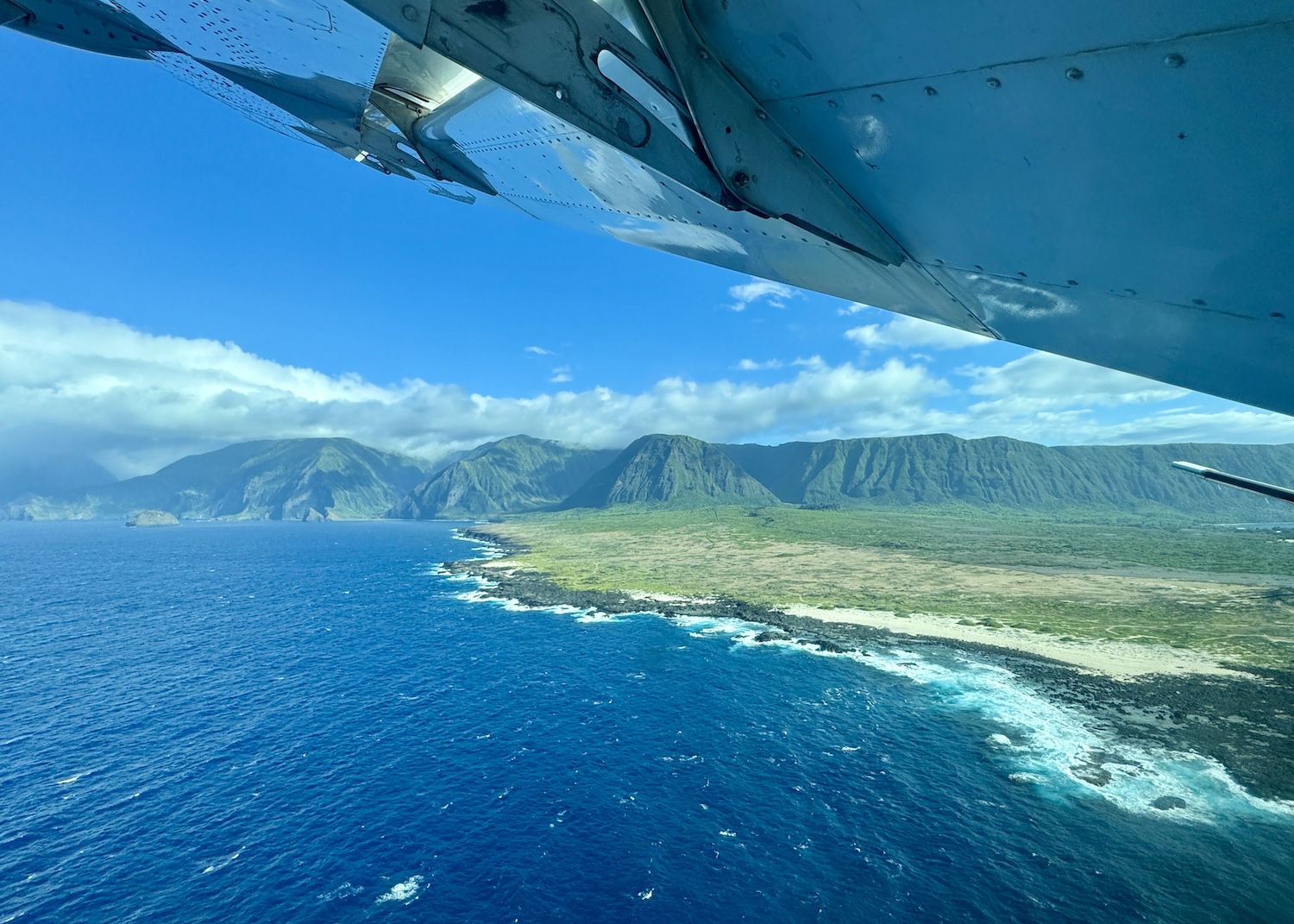
Flying into Kalaupapa that day in May, I saw the relatively flat triangular peninsula jut out of tiny Molokaʻi, flanked on three sides by the Pacific Ocean and on the fourth side by some of the world’s steepest sea cliffs. No wonder this “natural prison” was chosen as a place to quarantine people with a mysterious and dreaded disfiguring disease more than a century ago.
Hansen’s disease is a chronic infectious disease caused by Mycobacterium leprae that mainly affects the skin, peripheral nerves and eyes.
Named for Norwegian scientist Gerhard Armauer Hansen, the disease formerly known as leprosy reached epidemic proportions in the Hawaiian Islands in the late 1800s. Since nobody knew what caused it or how to treat it, the monarchy, under King Kamehameha V, passed An Act to Prevent the Spread of Leprosy and created an isolation colony.
The Native Hawaiians who had lived on the Kalaupapa Peninsula for nearly 1,000 years were pushed out. The first patients — nine men and three women — arrived in 1866 and struggled to make a home in an area called Kalawao. They were supposed to plant crops and become self-sufficient, but were too ill or traumatized to do so without help from those who came to serve as kokuas (helpers).
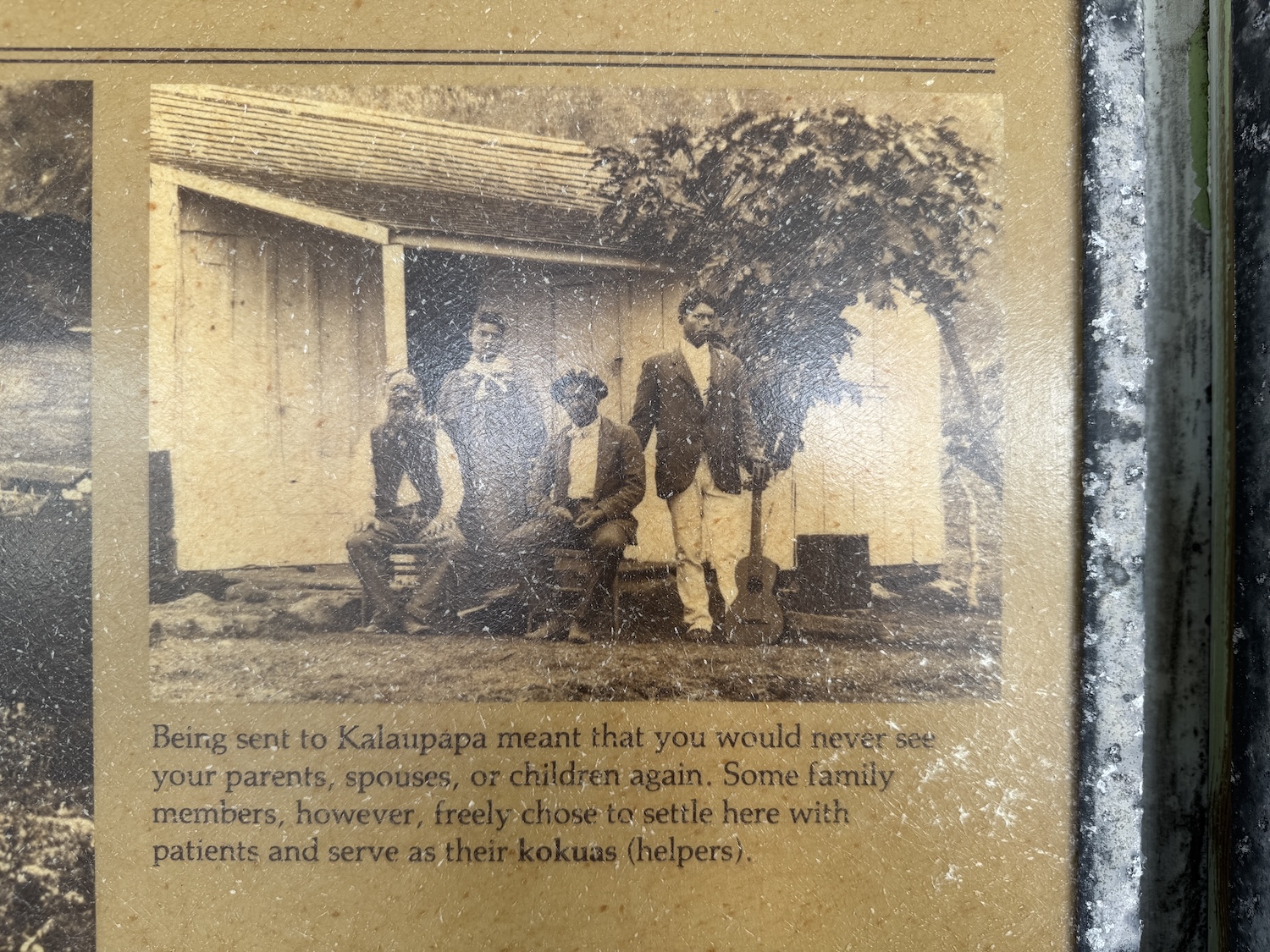
Kalawao slowly grew but by 1895, people began relocating to Kalaupapa for warmer, drier weather. At its peak, 1,200 patient-residents lived here.
Jump ahead to 1941 and Dr. Guy Faget used a sulfone drug to treat Hansen’s disease. Now thanks to three drugs, the disease is one of the least contagious of all communicable diseases and the stigma surrounding it has faded.
Hawaiʻi’s isolation laws were finally abolished in 1969.
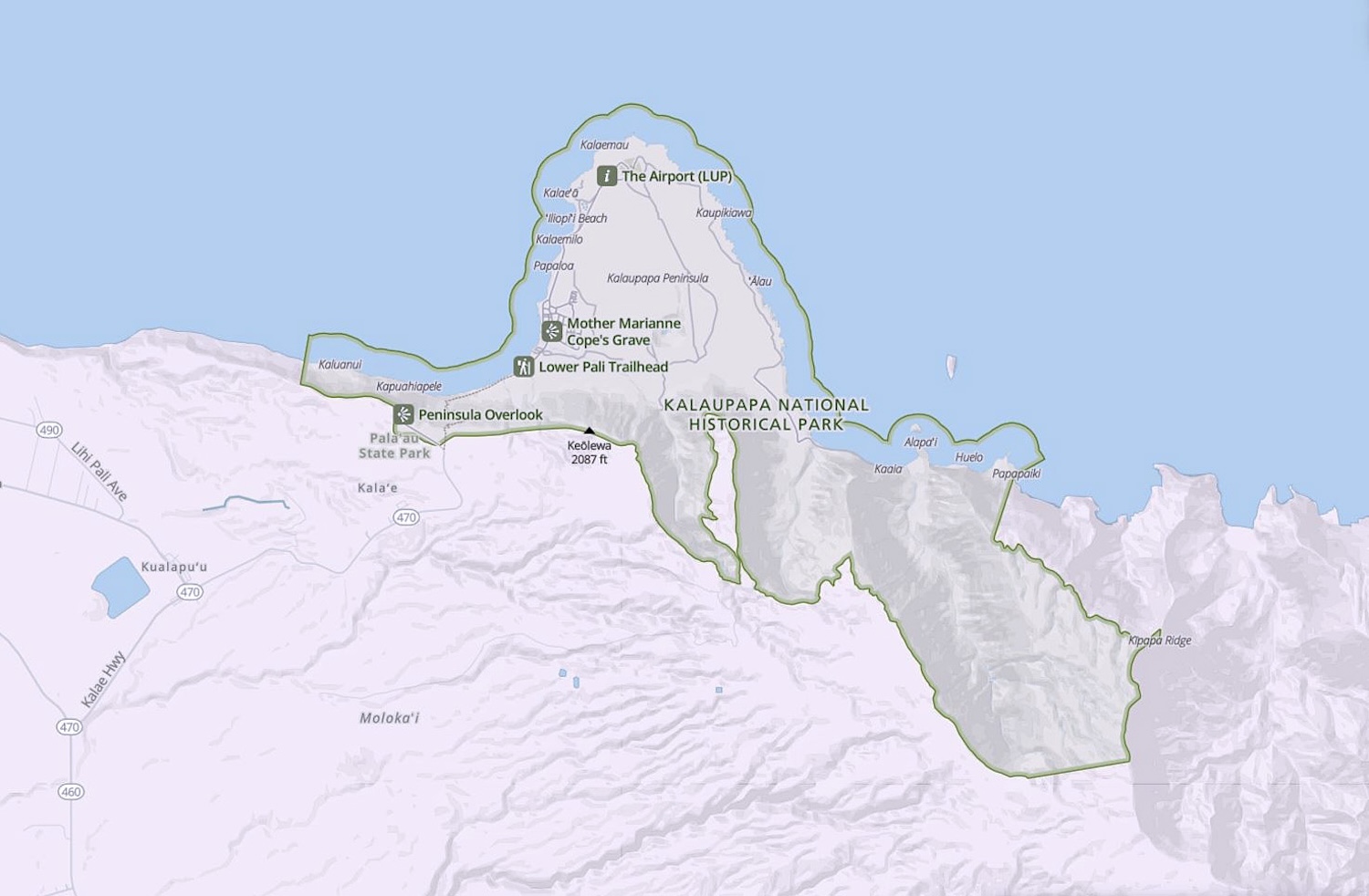
The national park story begins in 1980 when the people who were once banished from society picked the park service to carry their story forward. With that came the task of managing a remote and multi-jurisdictional parcel of land that is mainly state owned. The NPS owns 23 acres around the Moloka'i Light Station, but there 8,720 acres of land and 2,060 acres of submerged and offshore lands within a 1/4-mile offshore area, according to the 2021 General Management Plan.
Park Service statistics say 30,774 people visited Kalaupapa last year, but that figure is misleading. It counts those who viewed the peninsula from an easily accessible overlook in Pālāʻau State Park, up at what’s called “Topside” Molokaʻi but technically within the national park’s boundaries.
Traditionally, there have been tours into the community — day trips by either plane or a challenging 3.5-mile trail with nearly 2,000 feet of elevation and 26 switchbacks — but not for anyone under 16, not for more than 100 people a day and not since before the pandemic.
Would-be visitors have complained about the post-pandemic lack of access without understanding the nuances.
First dibs on providing revenue-generating experiences always goes to patients and one of them is promising to launch a business this summer. If the new tours are anything like the previous ones, they will run daily except Sundays for about 20 visitors a day or 6,200 a year.
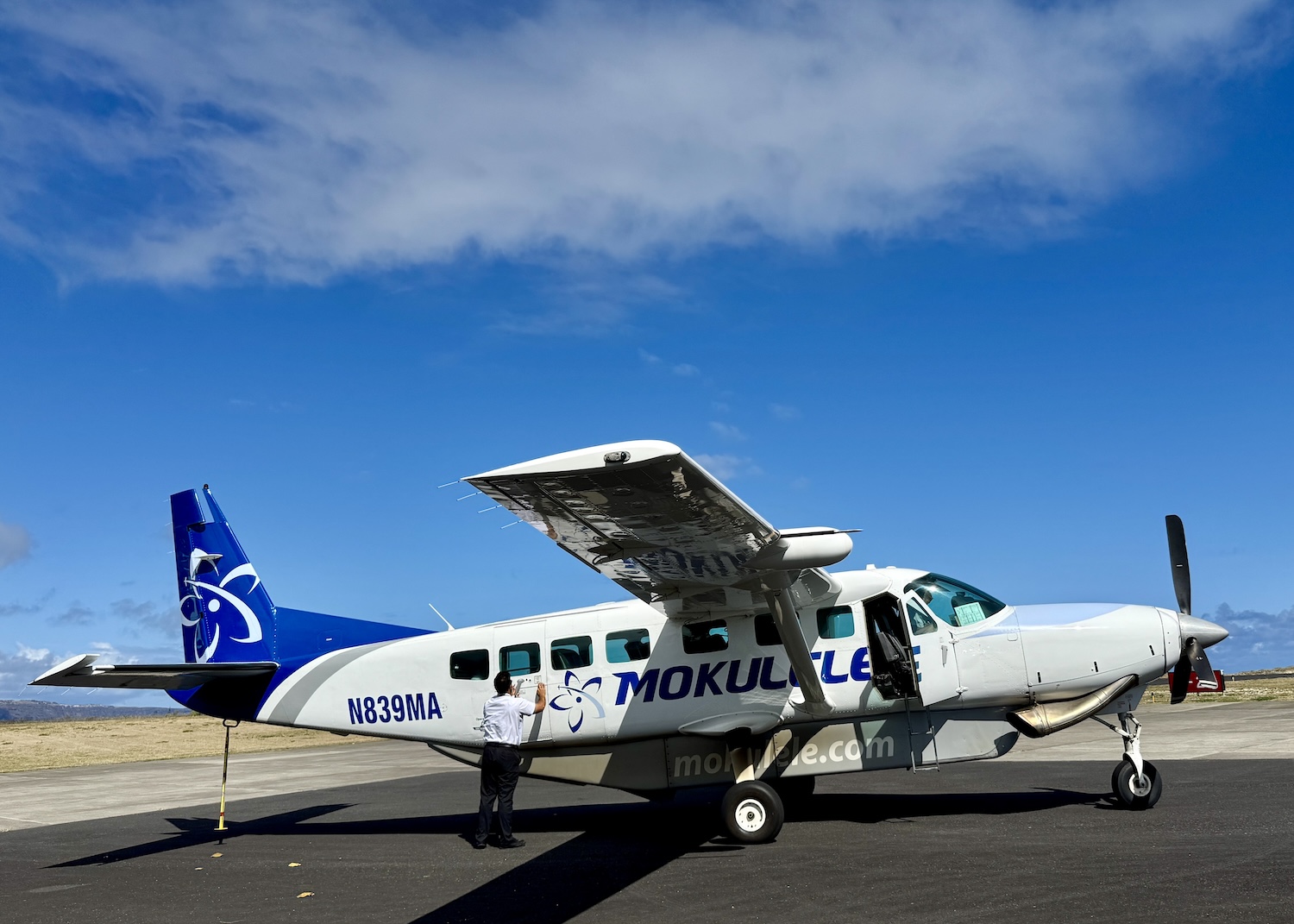
“It will be a really big deal to get the tours operating again,” said Holman, who arrived here in late 2021 from Rocky Mountain National Park and has never been in charge during public tours. She sponsored the Traveler’s visit, which allowed us to book one of nine seats on a commuter flight between Honolulu and Kalaupapa.
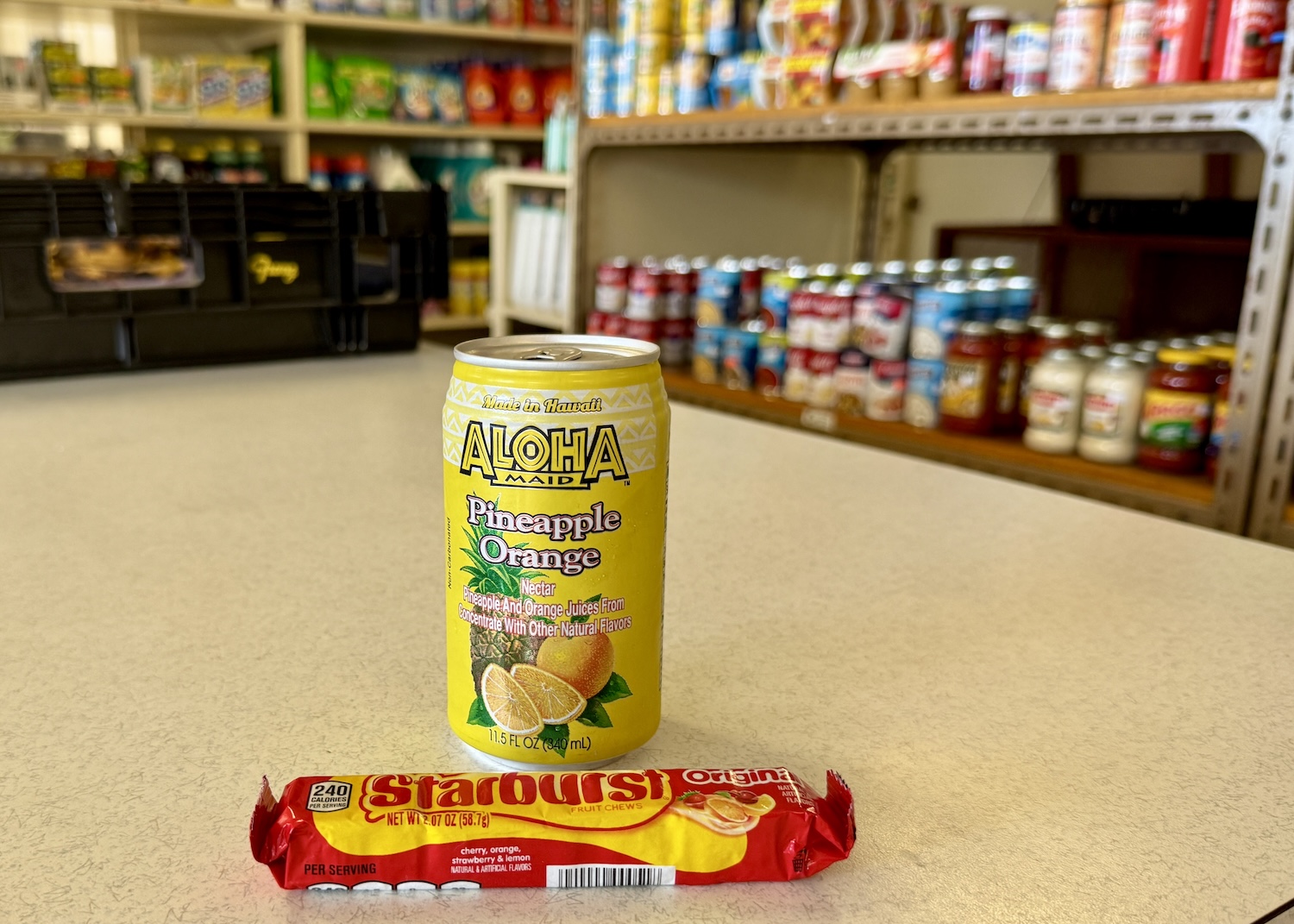
Landing at 9:30 a.m. with seven hours to explore before flying home, I knew that Kalaupapa wouldn’t have anywhere for me to eat, sleep or get medical care. I didn’t expect so many roads, cell service, 200-plus buildings, 1,200 graves, churches, a small grocery store with subsidized prices, a gas station that’s open twice a week and even a post office.
Interviewing, or photographing, any of the seven remaining patient-residents or their homes was understandably off-limits without written consent, and something I decided not to pursue. “That is so they don’t feel like they’re an exhibit in a national park,” explained Holman.
Many of the rules — like the cap on visitors and keeping children under 16 away — were initiated by the residents. Others were created to protect their privacy. Everyone is well aware that some day there won’t be any patients left here. The Department of Health and many of the state and religious workers will pack up and leave. A transition plan is in the works.

Showing me around that day reminded Holman that “most of the work of conservation and providing for enjoyment is slow, low-glamour, repetitive and non-flashy.”
“It's the seeking, the experimenting, the non-native removal, and the hopeful searching for the rare plant that may take hold and might not thrive,” she said. “It’s the trimming of grass, the cleaning of restrooms and the removal of dangerous tree limbs. It’s keeping the lights on and the safe drinking water flowing, and the thoughtful placement of a provocative question or statement that inspires a reader to think or feel about things in a new way.”
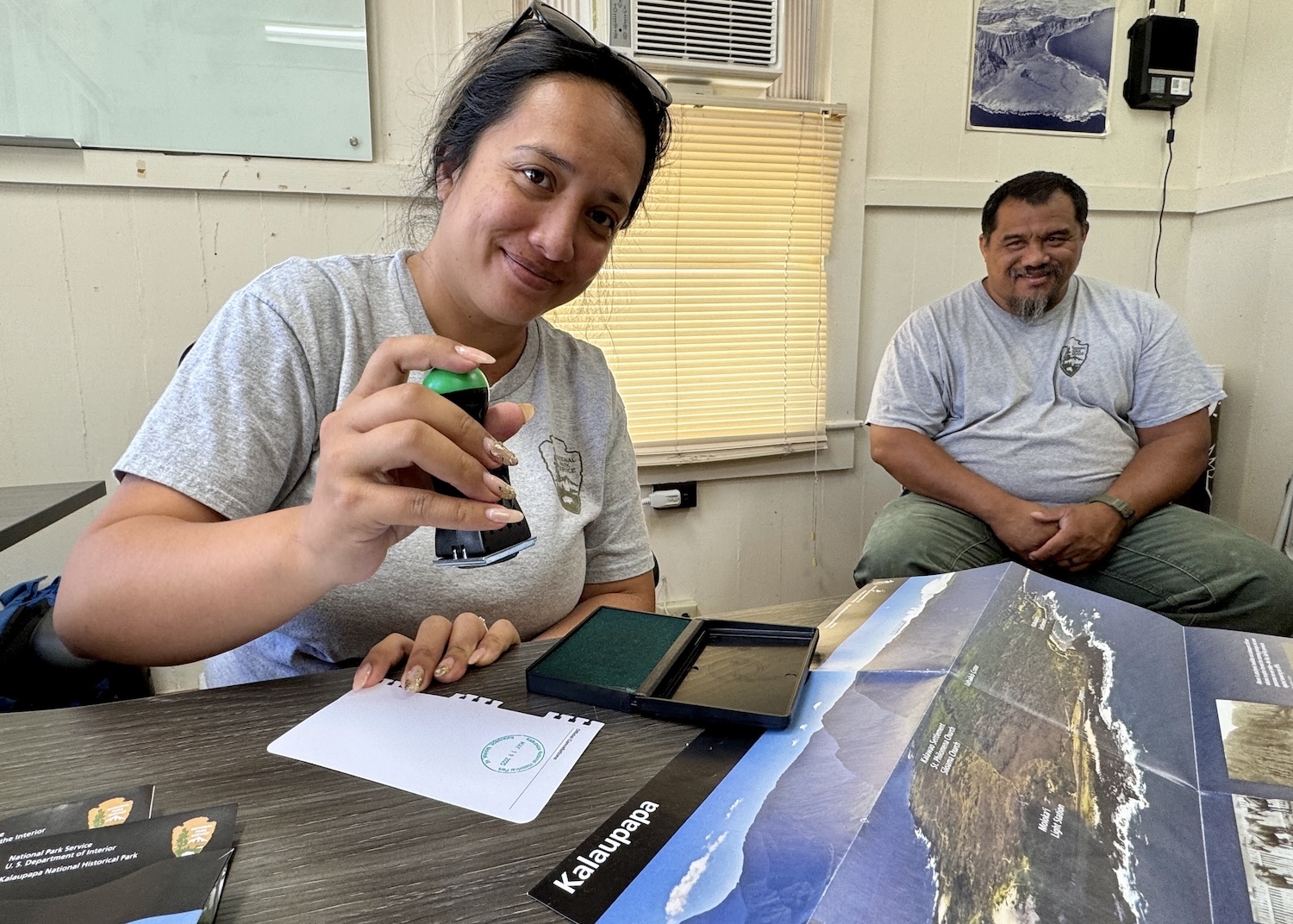
Heavily pregnant Jessica Espaniola picked me up at the airport, helped me collect my Board of Health permit tag and took me to park headquarters in what’s called “the Settlement.” The administrative support assistant stamped my NPS passport book and explained that not all of the seven patient-residents live here full-time — some also have homes elsewhere in Hawaiʻi.
Like many of the staff, she hikes to work each day from Topside — 90 minutes each way. Her grandparents were patients here and her husband Albert Espaniola also works here for the NPS, so she likes to say “Kalaupapa, bringing people together since 1866.”
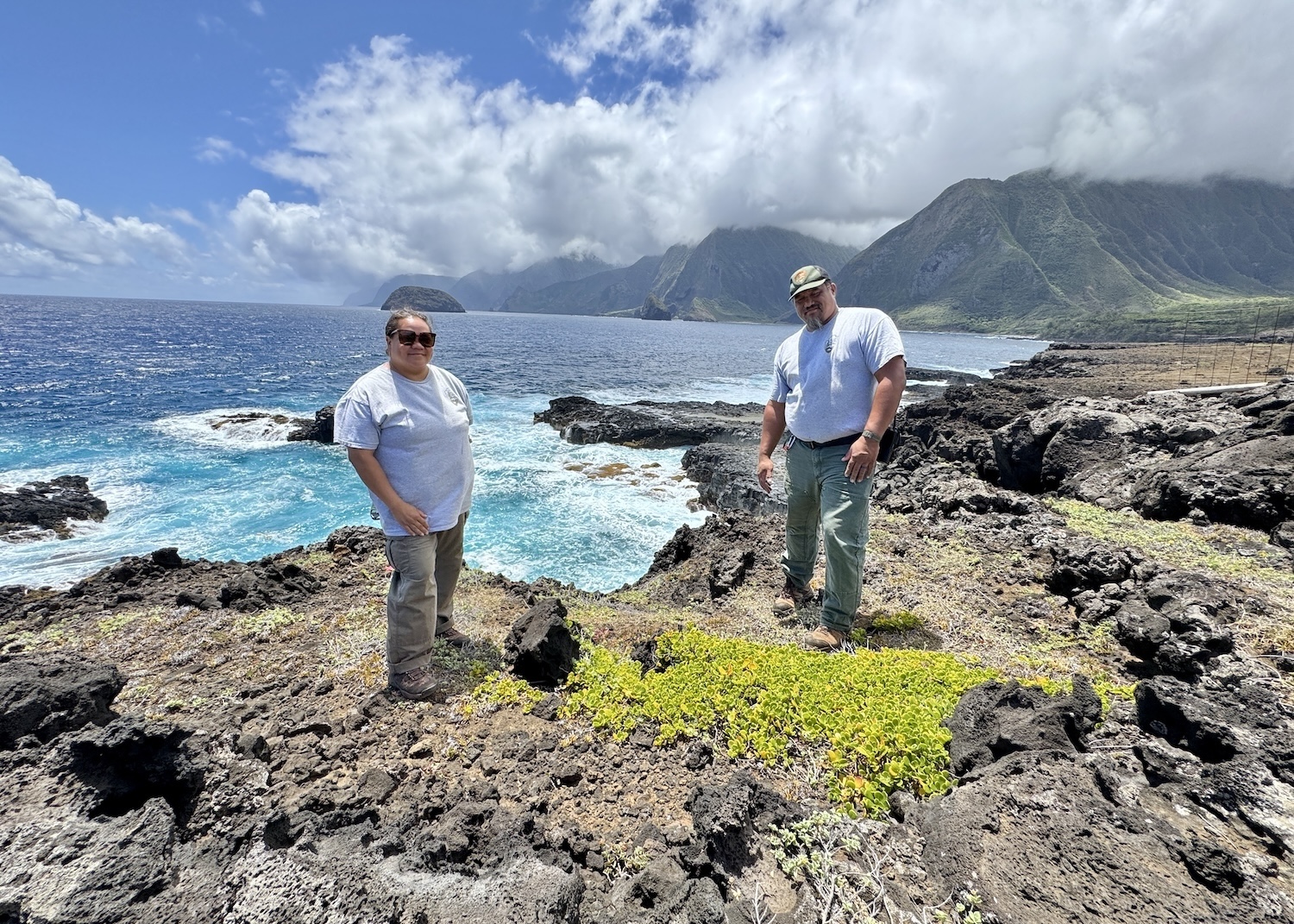
I got to meet Albert (a pest controller) as well as Mei-Lee Kaheʻe (a pest controller assistant) when they drove me out to the coastal spray zone to look for threatened and endangered plants and see how fencing protects the fragile land from feral ungulates and other invasive creatures.
We saw dozens of axis deer and I couldn’t help but fall for a couple of feral piglets, despite knowing how destructive they are.
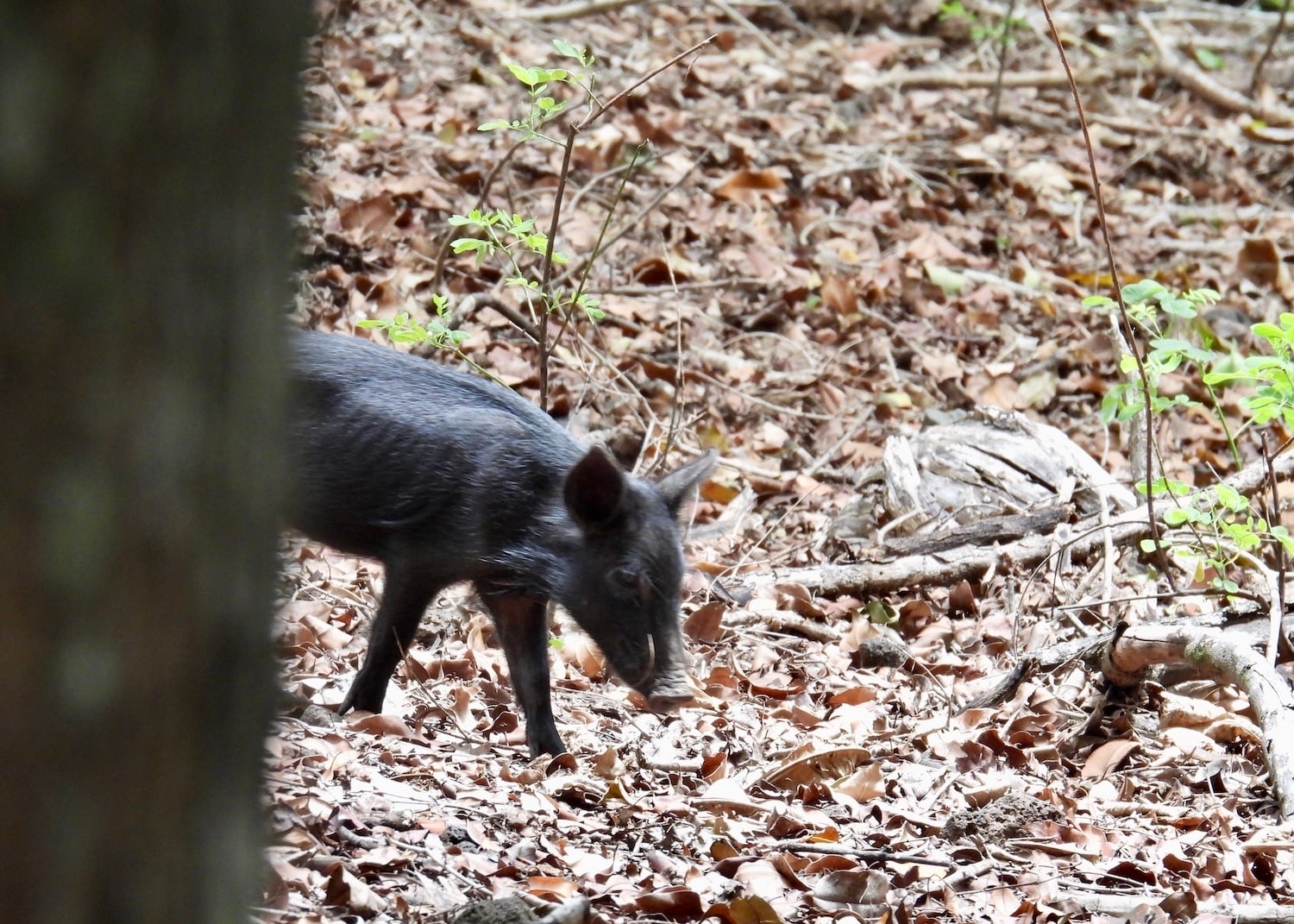
In their constant search for food, these invasive species destroy the land and disturb graves. Roughly 8,000 patients are buried throughout the peninsula, most in unmarked graves and some in the deep waters of the Kauhako Crater.
“Essentially, we have to think about all the land here as being sacred grounds,” said Holman.
She took me to a viewpoint over crater, stressing that it's such a sensitive place it will almost certainly stay off-limits to the public.

Religious and spiritual pilgrims do come here from around the world to visit two particular graves, both for people that were canonized by the Pope for the work they did in Kalaupapa.
Saint Damien (Joseph De Veuster from Belgium) turned Kalaupapa into “a place to live rather than a place to die” before dying himself of Hansen’s Disease. He was buried here, then his body was moved to Belgium and then a relic bone of his right hand was reinterred here beside St. Philomena Church. There's also a statue of him in Honolulu at the entrance to the Hawaiʻi State Capitol.

Saint Marianne (Sister Marianne Cope, born in Germany and raised in the United States) was another powerhouse who made a huge impact on the lives of the sick and outcast as one of the Sisters of St. Francis. She spent 30 years in Kalaupapa.
Today, people help in different ways. I met one of the current Sisters of St. Francis, Sister Barbara Jean Wajda, stocking shelves in the grocery store, and heard how she might do everything from attending medical appointments with the residents to tending to the grounds.

Then there's the Park Service’s preservation crew, led by Joseph Leihiwahiwa Kaiama Jr. They're currently restoring what was once a collection of dorm rooms with a dining hall, but have kept numerous other key buildings alive. Kaiama was honored for restoring the historic lightkeeper’s house and the citation noted how his relatives were former residents and how his job helps him honor his culture and preserve his family's history.
Kalaupapa really is, in the words of the NPS, “a place exhibiting the worst and the best of human responses to the challenge of sickness.”
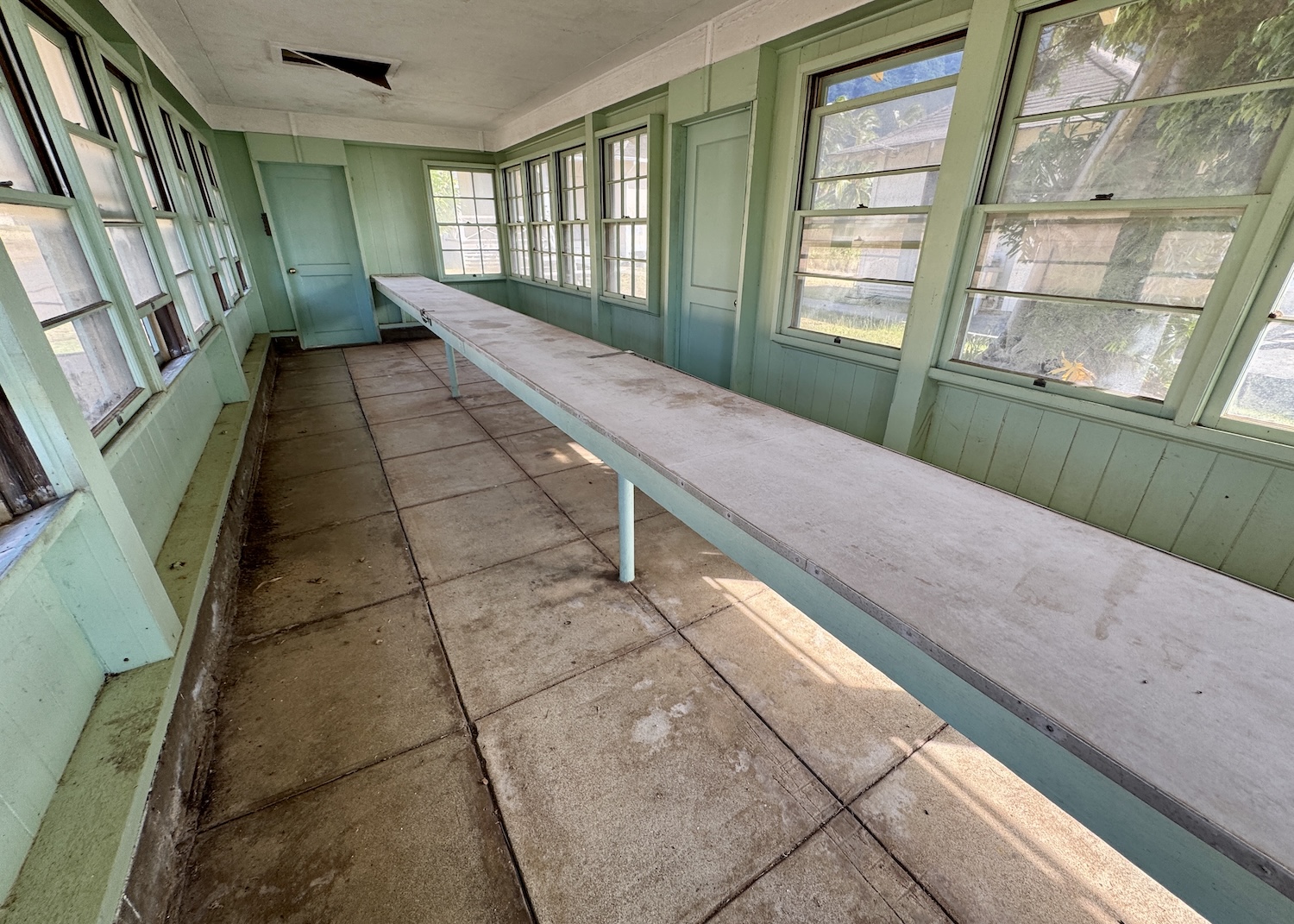
Perhaps the most sombre building I got to visit was the Longhouse in the Visitors Quarters Complex. That’s where isolated residents were once forced to see family through a heavy wire fence until one of the superintendents ordered it removed in 1947.
Perhaps the most joyful building I got to visit was the two-bedroom house where Kenso Seki once lived.
Seiki was banished here when he was 18, lived at the Baldwin Home for Single Men and Boys in Kalawao at first, and grew up to be one of the Settlement’s most significant leaders, He was a truck driver, pig farmer, fisherman, barber, inventor, craftsman and, above all, devout Catholic.

The boy who was told he had just seven years to live because there was no cure for leprosy lived to 88 and covered his walls with souvenir pennants from all of his global travels. Seki’s home has been chosen to be preserved and opened to visitors. For now there are photo-filled interpretive panels on the walls, but his possessions can’t be shown until the house is climate controlled and properly secured.
“I always like to tell people that 8,000 people came here,” said Holman. “Every single one of them has their own story and experience with the place.”
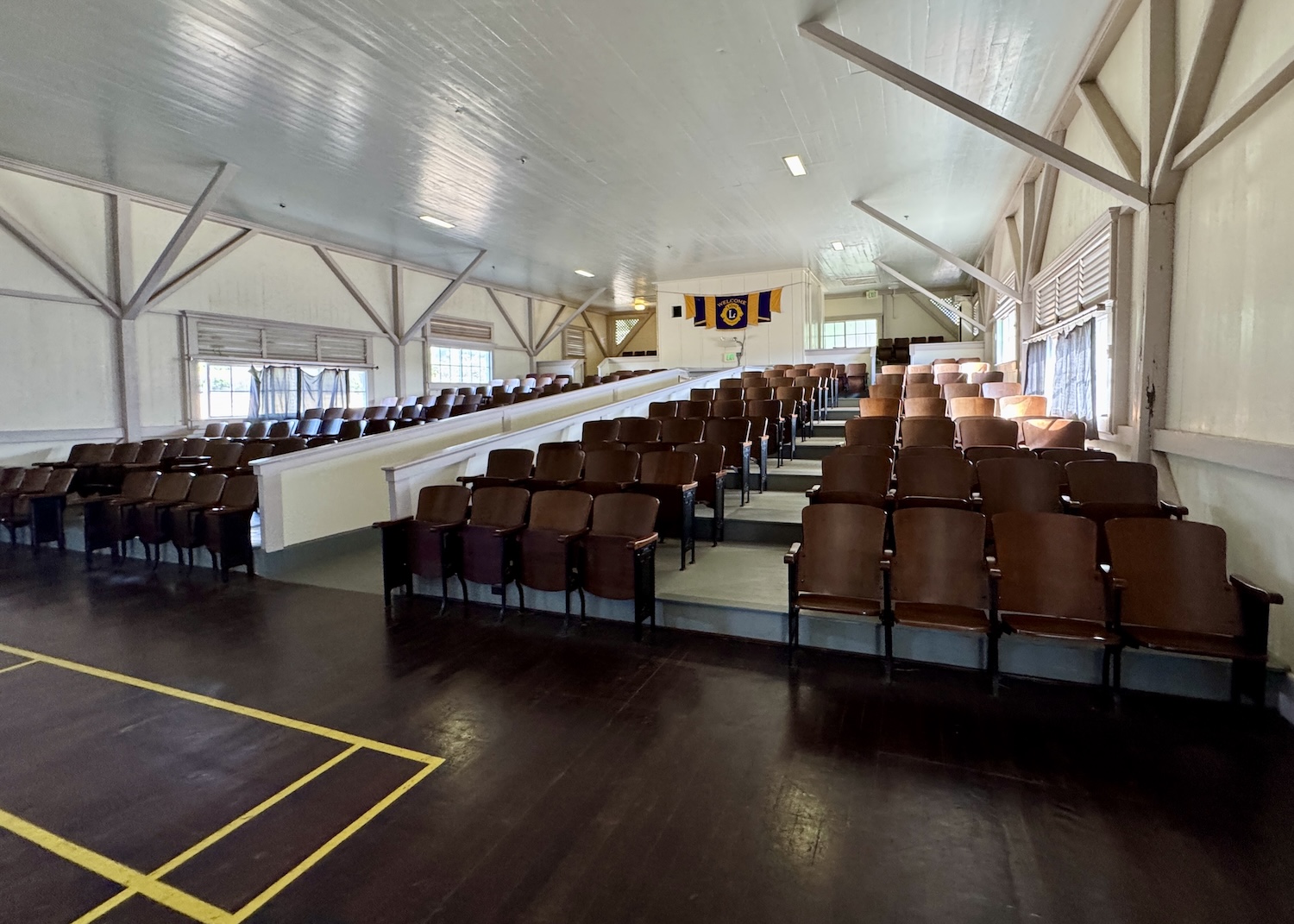
Driving around quiet Kalaupapa, we stopped and read some of the many waysides and popped into a social hall that was once the heart and soul of the community. The 350-seat Paschoal Hall — where patients and their caretakers were once segregated — held movies, dances, concerts and even political rallies.
Celebrities like Shirley Temple, John Wayne and Irving Berlin performed here for free. So did Paul Robeson, an American actor, singer and advocate of racial equality who famously said it was "the most inspiring audience" he had ever had.
Soaring over the peninsula once more on my way back to Honolulu, I thought about how this inspiring place shelters precious monk seals, resilient patient-residents and intrepid people that make tough commutes to meaningful jobs, and how its living things and sacred places make the story of Kalaupapa one that more people should know.
Stories about:
Story Categories:
A copy of National Parks Traveler's financial statements may be obtained by sending a stamped, self-addressed envelope to: National Parks Traveler, P.O. Box 980452, Park City, Utah 84098. National Parks Traveler was formed in the state of Utah for the purpose of informing and educating about national parks and protected areas.
Residents of the following states may obtain a copy of our financial and additional information as stated below:
- Florida: A COPY OF THE OFFICIAL REGISTRATION AND FINANCIAL INFORMATION FOR NATIONAL PARKS TRAVELER, (REGISTRATION NO. CH 51659), MAY BE OBTAINED FROM THE DIVISION OF CONSUMER SERVICES BY CALLING 800-435-7352 OR VISITING THEIR WEBSITE. REGISTRATION DOES NOT IMPLY ENDORSEMENT, APPROVAL, OR RECOMMENDATION BY THE STATE.
- Georgia: A full and fair description of the programs and financial statement summary of National Parks Traveler is available upon request at the office and phone number indicated above.
- Maryland: Documents and information submitted under the Maryland Solicitations Act are also available, for the cost of postage and copies, from the Secretary of State, State House, Annapolis, MD 21401 (410-974-5534).
- North Carolina: Financial information about this organization and a copy of its license are available from the State Solicitation Licensing Branch at 888-830-4989 or 919-807-2214. The license is not an endorsement by the State.
- Pennsylvania: The official registration and financial information of National Parks Traveler may be obtained from the Pennsylvania Department of State by calling 800-732-0999. Registration does not imply endorsement.
- Virginia: Financial statements are available from the Virginia Department of Agriculture and Consumer Services, 102 Governor Street, Richmond, Virginia 23219.
- Washington: National Parks Traveler is registered with Washington State’s Charities Program as required by law and additional information is available by calling 800-332-4483 or visiting www.sos.wa.gov/charities, or on file at Charities Division, Office of the Secretary of State, State of Washington, Olympia, WA 98504.
