
Did you hear the news? The more than 330 million people who visited the National Park System last year generated nearly $36 billion in economic activity. Good to know, but we're guessing folks don't visit a park to see how much they spend or how much a business makes. If that were the case, folks would be rooting for Burnett Oil Co. to strike it big in Big Cypress National Preserve in Florida.
No, odds are good, very good, that folks went to Yellowstone to see Old Faithful and bison and wolves, and that they visited Everglades to add to their bird list and see if they could tell the difference between an alligator and a crocodile. They no doubt went to Grand Canyon not with strong intentions to buy a commemorative water bottle, but rather to gaze into that incredible maw carved by the Colorado River, and headed to Yosemite to perhaps stand atop Half Dome or be mesmerized by Yosemite Falls.
New River Gorge National River attracts visitors who enjoy white-water rafting or climbing or mountain biking, and they head to Valley Forge to better understand the forging of the United States of America.
And yet, instead of focusing on these natural, cultural, and historic wonders and promoting the parks for what they protect, preserve, and provide for our country and its visitors, each year the Interior Department (no matter the administration) crunches the numbers and instructs park managers to promote how much economic activity their visitors generated. Congress, they say, responds to economics, and so we must measure the value of the National Park System with the parks' economic output.
Put another way, we've devalued the wonders of the parks and see them only as valuable if they are turbo-charged 8-cylinder economic engines.
“This report illustrates the incredible economic value of our national parks, and further shows the value in President Trump's plan to rebuild park infrastructure,” Interior Secretary Ryan Zinke said the other week when he released the economic report. “National parks provide us a gateway to the outdoors, family recreation opportunities, and connect us to our history and heritage, and they are extremely vital to local economies all across the nation. Parks provide jobs and fuel the outdoor recreation and tourism economy."
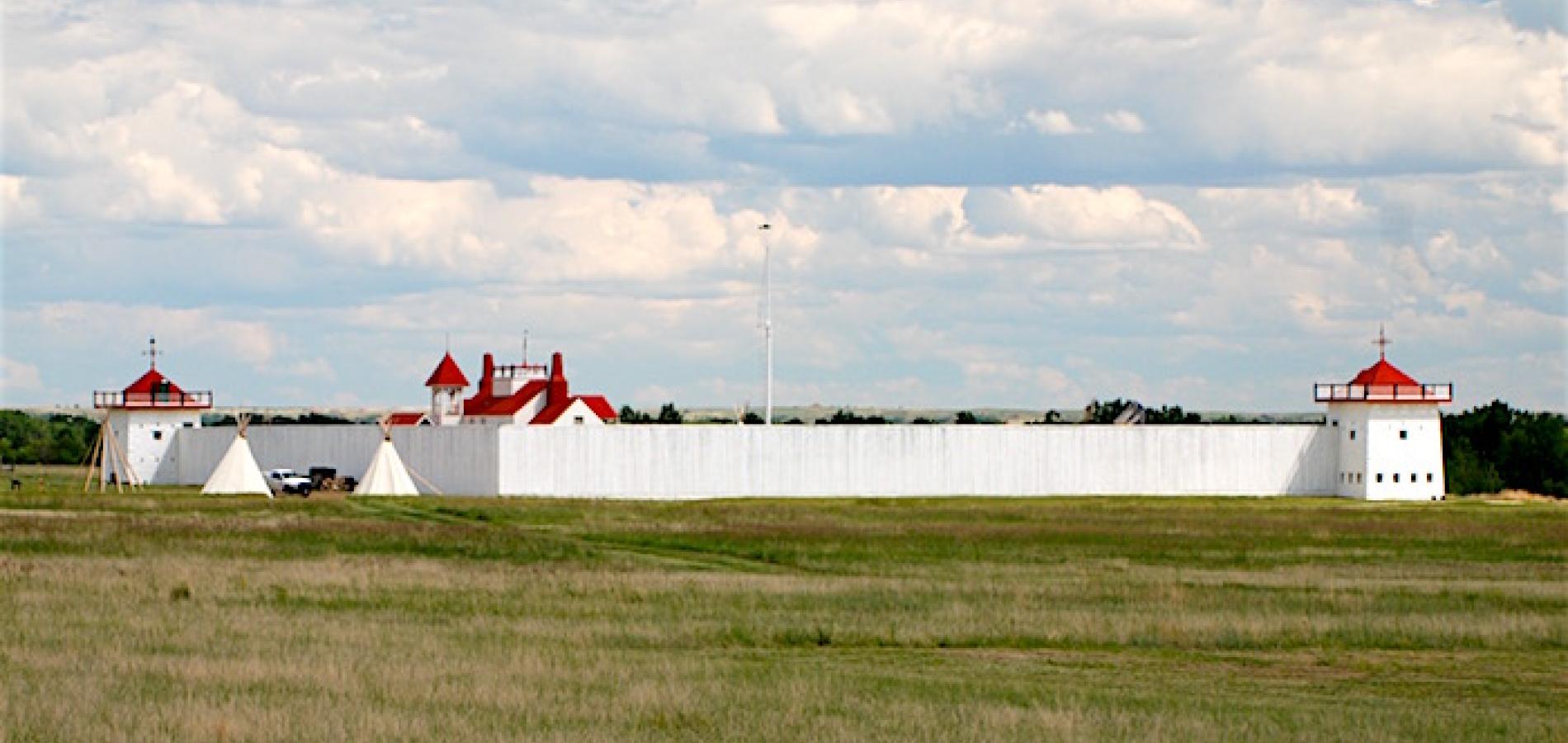
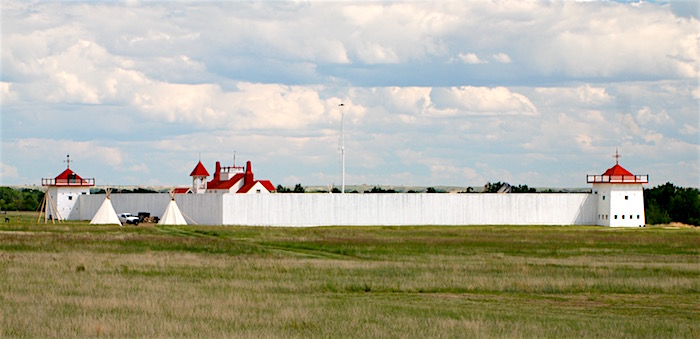
In compiling the report, Secretary Zinke's staff also put together the top 15 parks in terms of economic development. While Blue Ridge Parkway topped that list, with more than $1 billion in economic activity, Fort Union Trading Post National Historic Site generated just $1 million. Should we interpret that to mean Blue Ridge is 1,000 times better and of more value to the National Park System than Fort Union? If so, perhaps Interior should give Fort Union to North Dakota and save the annual budget of a bit more than $830,000.
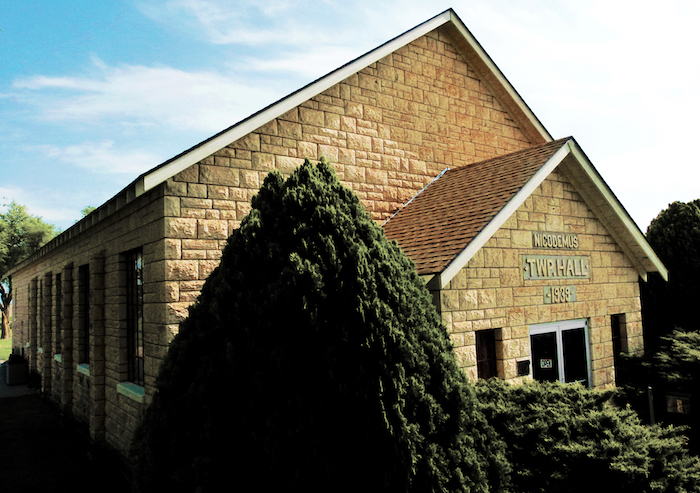
Tule Springs Fossil Beds National Monument didn't even register in Interior's economic generator, so why not just decommission the park and save a quarter-million dollars a year? Also missing was Valles Caldera National Preserve, which received more than $3.3 million for its FY17 budget. Can anyone explain why the federal government is supporting Nicodemus National Historic Site, which had an economic impact of but $160,000 last year, with a $682,000 budget?
If we're going to measure the value of our public lands, both inside and outside the National Park System, by how much economic activity they generate, then by all means either shrink Bears Ears and Grand Staircase-Escalante national monuments to put the valuable energy deposits outside them, or allow for energy development inside their borders. And don't fret about the rutting of Big Cypress, for think of the economic impact full field development would produce there (if there's a field to develop).
Never mind about the visitors who come to these places intent on spotting a bird they've never seen before, being awestruck by the hoodoos of Bryce Canyon National Park, paddling a river, climbing a mountain, angling for trout or salmon, better understanding our country's history, or simply relaxing and rejuvenating their bodies and their minds in a bucolic or historic setting.
Interior would have us believe that economic output equates with great value. If you believe that, then you're for energy exploration on these landscapes as well as more infrastructure to shoe-horn more paying/buying customers into these already crowded places to benefit not the parks, but more so the business interests, and leading to more degradation of these special places. And you could care less about the Fort Union Trading Posts and Nicodemuses of the system.
Don't forget John Muir's words: "Nothing dollarable is safe, however guarded."
If Congress only reacts to economic value, why, when the park system last year had an economic output roughly three times its deferred maintenance backlog, won't Congress make the necessary appropriations to wipe out that backlog and further increase the value of the parks?
We need to jettison the mindset that Congress will lose interest in the parks if they can't be seen as economic engines. It isn't working. Not only has the Park Service's budget been flat for too long, but the two pieces of legislation designed to address the maintenace backlog are mired in committee -- one for more than a year -- and that backlog has being growing steadily since the last century. Obviously, economics aren't motivators for the politicians when it comes to financially supporting the National Park System.
What needs to be pressed home to Congress is that they should invest in these places because of what they represent, what they protect, and what they afford us -- the Americans who own the park system -- as recreational outlets, cultural outposts, and history lessons, not cash registers.
The economic boost is nice and will still follow, but we can only hope, probably fruitlessly, that Interior a year from now will tout not dollar signs but the wonders that exist in the parks system.
Story Categories:
A copy of National Parks Traveler's financial statements may be obtained by sending a stamped, self-addressed envelope to: National Parks Traveler, P.O. Box 980452, Park City, Utah 84098. National Parks Traveler was formed in the state of Utah for the purpose of informing and educating about national parks and protected areas.
Residents of the following states may obtain a copy of our financial and additional information as stated below:
- Florida: A COPY OF THE OFFICIAL REGISTRATION AND FINANCIAL INFORMATION FOR NATIONAL PARKS TRAVELER, (REGISTRATION NO. CH 51659), MAY BE OBTAINED FROM THE DIVISION OF CONSUMER SERVICES BY CALLING 800-435-7352 OR VISITING THEIR WEBSITE. REGISTRATION DOES NOT IMPLY ENDORSEMENT, APPROVAL, OR RECOMMENDATION BY THE STATE.
- Georgia: A full and fair description of the programs and financial statement summary of National Parks Traveler is available upon request at the office and phone number indicated above.
- Maryland: Documents and information submitted under the Maryland Solicitations Act are also available, for the cost of postage and copies, from the Secretary of State, State House, Annapolis, MD 21401 (410-974-5534).
- North Carolina: Financial information about this organization and a copy of its license are available from the State Solicitation Licensing Branch at 888-830-4989 or 919-807-2214. The license is not an endorsement by the State.
- Pennsylvania: The official registration and financial information of National Parks Traveler may be obtained from the Pennsylvania Department of State by calling 800-732-0999. Registration does not imply endorsement.
- Virginia: Financial statements are available from the Virginia Department of Agriculture and Consumer Services, 102 Governor Street, Richmond, Virginia 23219.
- Washington: National Parks Traveler is registered with Washington State’s Charities Program as required by law and additional information is available by calling 800-332-4483 or visiting www.sos.wa.gov/charities, or on file at Charities Division, Office of the Secretary of State, State of Washington, Olympia, WA 98504.


Comments
I agree that hyping economic activity misses the whole point of the National Park idea and could be a double-edged sword to cut less profitable units. This supposed economic benefit of National Parks seems exaggerated in at least two ways.
It's based on visitation estimates with sometimes flawed mathematical assumptions. I believe parks like Smokies and Olympic, which contain major transportation corridors, greatly overestimate the true number of visitors.
Second, there would still be some economic activity, perhaps even more in the short term, if any given park had never existed.
Both very good points Tahoma. Particularly the second one. The Parks may change the location of economic activity to the benefit of those communities (and detriment of others) but they "create" far less than many so called studies claim.
Parks are not just economic engines. They are established to preserve and protect the unique natural and cultural resources they contain. Their value does not depend on the amount of money they generated for local communities. Their value depends on what they can teach us about America, our history and our natural resources. Lets not get into the numbers game and value parks according to the money they generate for local communities. This will only devalue many parks and lead to confusion. Let us prize every park for the unique resources it contains and what we can learn from these resources.
Harry - agreed
I agree with both Tahoma and Harry, just like ecbuck!
Yep, folks on NPT may argue up one side and down the other on politics or science or other topics, but pretty much everyone here values parks and wants parks unimpaired for future generations even beyond our kids & grandkids.
Please, Kurt -- BE CAREFUL. Don't give the idiots in Congress any ideas. They may not even ever have heard of places like Nicodemus, Ft. Union, and Tule Springs. Now they'll want to dump them.
Hi Kurt,
Great article! I totally agree that the policymakers should see the intrinsic value of our public lands. They represent the and protect the beautiful lands that inspire millions of Americans every year. BUT as I learned from Professor John Crompton, who helped Texas Parks and Wildlife effectively double their annual appropriations, the economic argument has to be made for lawmakers to get behind any idea. I have been working with NPCA to help convince our Texas delegates to sign onto the Legacy Act, and aside from sharing my experiences and my passion with them, the most effective way to get them behind a cause is to show how it can positively affect the economy. I wish it weren't so. Ideally, we wouldn't have to make the economic case for parks for them to see the value in them, but that seems to be the way it works when it comes to policymakers. It's very sad.
Thanks for your wonderful blog and for bringing these issues to our attention!
Chris Liu
But Chris, it's not working. If it were, there wouldn't be a nearly $12 billion backlog, would there?
You're right that the problem hasn't been addressed. A lot of our park infrastructure (facilities, trails, roads, and bridged) dates back to the 30's (CCC projects) or the 50's (Mission 66 days). With today's record number of visitors and the impacts of climate change on our parks, we have to really put the pressure on our elected officials to address the backlog. We need a larger operating budget to sustain a high level of service and dedicated funding for all the maintenance and capital projects that have been put off year after year.
We need our members of Congress to invest in our aging park infrastructure, but how do we go about that? I still believe that the most effective way to convince them to take action is to make the economic case because that's how they value projects, not based on ideals but based on dollar figures. As much as I hate to admit it, that seems to be what gets their attention.
Clearly, what we're doing isn't working, but I remain optimistic that we will secure funding in the near future. The House Committee on Natural Resources has been working on the Legacy Act and the Restoration Act (I think they are working on combining the two), and they have been thinking of out-of-the-box ways to help draw down the maintenance backlog (through public-private partnerships like the Centennial Challenge). As much as I despise Rep. Bishop's actions and his disdain for federally-owned public lands, I think that his House Committee on Natural Resources will work on getting something passed in either this legislative session or the next. And I hope that they decide to fully fund the LWCF for once. Hopefully, we see something come out of the committee soon.
Kurt - National Parks Traveler has not fully recognized the significant increases in funding in the Appropriations Bill that passed recently.
it has the largest increase in Deferred Maintenance since the Obama Stimulus Bill. So you cannot say “it’s not working.”
And all the attention was focused disproportionately on Deferred Maintenance!
Imagine if park supporters spent more time instead calling for funding for preservation! These gains could have been greater!
NP Traveler ran several articles saying new parks should not be created.
Harry and Traveler claimed inappropriately that the laws Authorizing parks should ALSO provide funding, even though Harry and these other opponents of new preservation, and Traveler, should know funding does nit come from Authorizing bills but Appropriations bills.
So WHY no articles by Traveler or Harry admitting that (despite no big media campaigns for anything but Deferred Maintenance) the recent Appropriations bill included $3,400,000 new dollars for the new park preservation you said would go unfunded?
Harry and Dr Runte wanted the new parks and Monuments stopped, and Traveler said delaying preservation by blocking new parks would create no risks !
So now, the NPS has its hands full trying to spend new money for “backlog.” And new parks received Appropriations. Instead of calling full time for ’backlog’ facilities money, what would have happened if we had more speaking out for money to preserve new parks and land inside boundaries as well ??
And, regarding your point on money responding to economic benefits of parks, you miss the point that the funding bill included more than $25 Million in money to MATCH partner spending.
Even if we may not, partners often list economic value as a reason for their contribution:
Witness the example of St Louis that raised over $100 million to enhance the St Louis Arch. Much of that to make it easier to get through the highway from the City to and from the Park/Arch.
i agree that the purpose of parks is not economic.
But it is wrong to ignore that well planned tourism can be a very sustainable industry for rural areas that could use the money, and have oodles of people who are alike ecbuck in their desire to undermine park management. Spliting people who would like to destroy National Par Service management from those who see the econ value of parks and thus reach out to park managers as partners is a good start. Eventuall, who knows ?! they may grow to appreciate environmental values as well.
And some commenters are wrong that eliminating the NPS would mean the same economic value would flow.
Park jobs and visitor information and appropriate facilities attract visitors (as we see from parks with way too many visits that should be limited). Compare BLM or Forest Service or Wildlife Refuges areas closed to multiple use that are comparable to parks as set aside for recreation and Interpretation: the comparable NPS areas draw in more economic value, government funding, partner funding and donor funding and school programs than other public lands.
The land itself would not bring those benefits.
Members of Congress when they support preservation over damaging economic development have the political need to include the argument that preservation makes economic sense.
Local government and local business groups supporting parks need to have the argument ready as well. Every voter does not start with Kurt’s level of sophistication about the value of conservation.
Now when will Traveler or especially Harry eat crow and admit they were wrong when they were cited by an anti-park, Right-wing Senator for support for his hostility to new park preservation? He exploited these comments as justification to condemn necessary preservation for new parks.
D-2, the maintenance backlog grew by $275 million in FY17. The numbers you cite won't get the job done.
Towards the end of 2016, the END of the National Park Service centennial year, Rep. Rob Bishop's House Natural Resources Committee took up legislation for the parks. The committee that December, with two weeks left in the centennial year, approved a huge increase in the senior pass (from $10 to $80, which is still a bargain, but still, they raised money not through appropriations but by taxing park users), and ignored Rep. Raul Grijalva's amendment to increase annual appropriations to the NPS by $300 million to eat away at the deferred maintenance.
Sen. Warner's and Sen. Portman's legislation to provide direct appropriations to address the deferred maintenance has been languishing in committee for more than a year.
I just don't see the economic argument making great headway. Congress as a whole is not being proactive to support or protect the National Park System.
No crow today.
Oh Kurt, you continue to evade the appropriations for new parks, something you explicitly denied would happen.
You and Harry literally called for appropriations in an authoriations bill !
And now that we have funds for new park preservation in an appropriations bill, you conveniently ignore it.
And for all your noise about no new preservation without payin off facilities "backlog," you should also note your past objection to preservation ignored the tiny cost of preservation compared to the large cost of Deferred Maintenance.
You made it seem that avoiding preservation would fund maintenance!
And for your ethical objection to calling to support parks as an economic driver, you had no trouble thinking that maintenance was a higher priority than preservation. What are parks for, preservation or facilities?
When America puts a boundary around a park — even with no new expenditures — you have blocked new development to save resources that needed saving. You and Harry’s answer was to defer preservation, and let them wait until the "backlog" is fully funded.
Yet faciliyou 'backlogs' are never fully funded, specifically to split environmentalists from managers, and get some park advocates to join the ranks of the barbarians who oppose preservation as their goal in life.
You take no notice that in this time of a regressive congress more funds have been appropriated than NPS can obligate.
Rather than seeing this as a remarkable turnaround at a time budgets cuts were recommended, we saw increases.
Trends mean nothing?
When Democratic candidates in recent special elections who ran ahead of the President's 2016 vote, everyone thought that trend was meaningful, even if all political problems in America were not instantly solved! When the NPS budget runs way ahead of the budget as proposed, it means nothing? No credit for the Members of Congress who fought for it? They could have spent their time on oil development projects, or cutting the park budget as President Trump proposed.
You also in citing your big number continue to ignore Deferred Maintenance in roads are covered by other accounts, and no infrastructure/transportation bill has yet been developed. Not from this Appropriations Bill. Again, that is HALF the Deferred Maintenance need, and it is not part of the general appropriation.
Yes, it is true we are not hearing much at all about this bill moving.
BUT:
- these bills are never passed every year, and the fact that it has been delayed does not close the door.
Unless you believe Republican Members of Congress will run on Tax Cuts alone, at some point political logic says there will be a transportation bill.
It really is surprising we have not had a bill, and this Administration has done weirder things.
But if you are going to get into the appropriations predictions business you really need some sense of timing. Almost all these transpo bills take several years to build and provide no-year money for several years into the future when they pass.
Only several months ago reporters were talking about massive cuts, now we have modest increases. What do YOU attribute that to?
Numbers and data are great to have and I find the economic data a wonderful addition to show the value of the NPS units. Our target audience is broad, not just preservation and conservation advocates so we must 'market' NPS support in all manners. I love the state summaries on economics and visitation on each state in NPS.GOV. I have used them in discussing park support to people. I have visited Tule Springs, Fort Union and Nicodemus should be NPS unit #203 (overall) on my trek scheduled for next month. I plan to visit all CO, KS & UT NPS units on my next trip. I found the comments regarding inflated numbers interesting and perhaps it is true for major parks, but I doubt they capture all the impact smaller parks have. Moreover, the economic impact on the Nicodemus area may actually be greater than that of a major park -- when we do it as a percentage of the local community economy. While I share your fear of data misuse, I value all the data I can use to promote National Park Service units. When I look at my travels, I find that the smaller parks have a greater impact. Knife River Villages, Sand Creek Massacre, Taft Home, Martin Luther King Jr., Weir Farm and so many more have been far more insightful to me than the major parks. Thanks for your efforts! We need to sell the NPS units for their value in communicating the American history and spirit, as well as preservation, conservation and economics. (By the way, the people parked at Tule Springs did not know where they were... I suspect we were the only ones...actually knowingly visiting the NPS unit...to them it was a great place to walk the dog, shoot or park the semi.) Thanks again!