
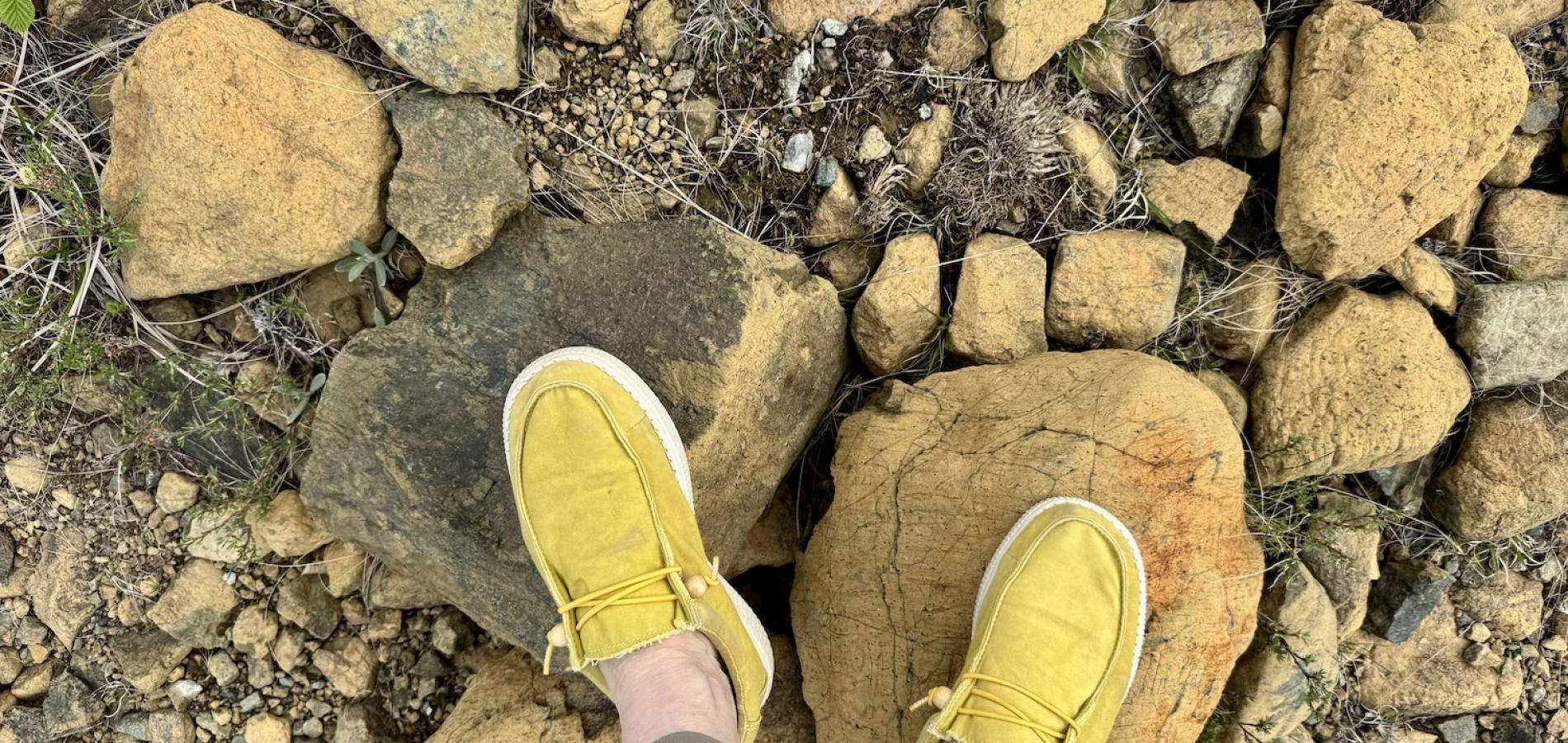
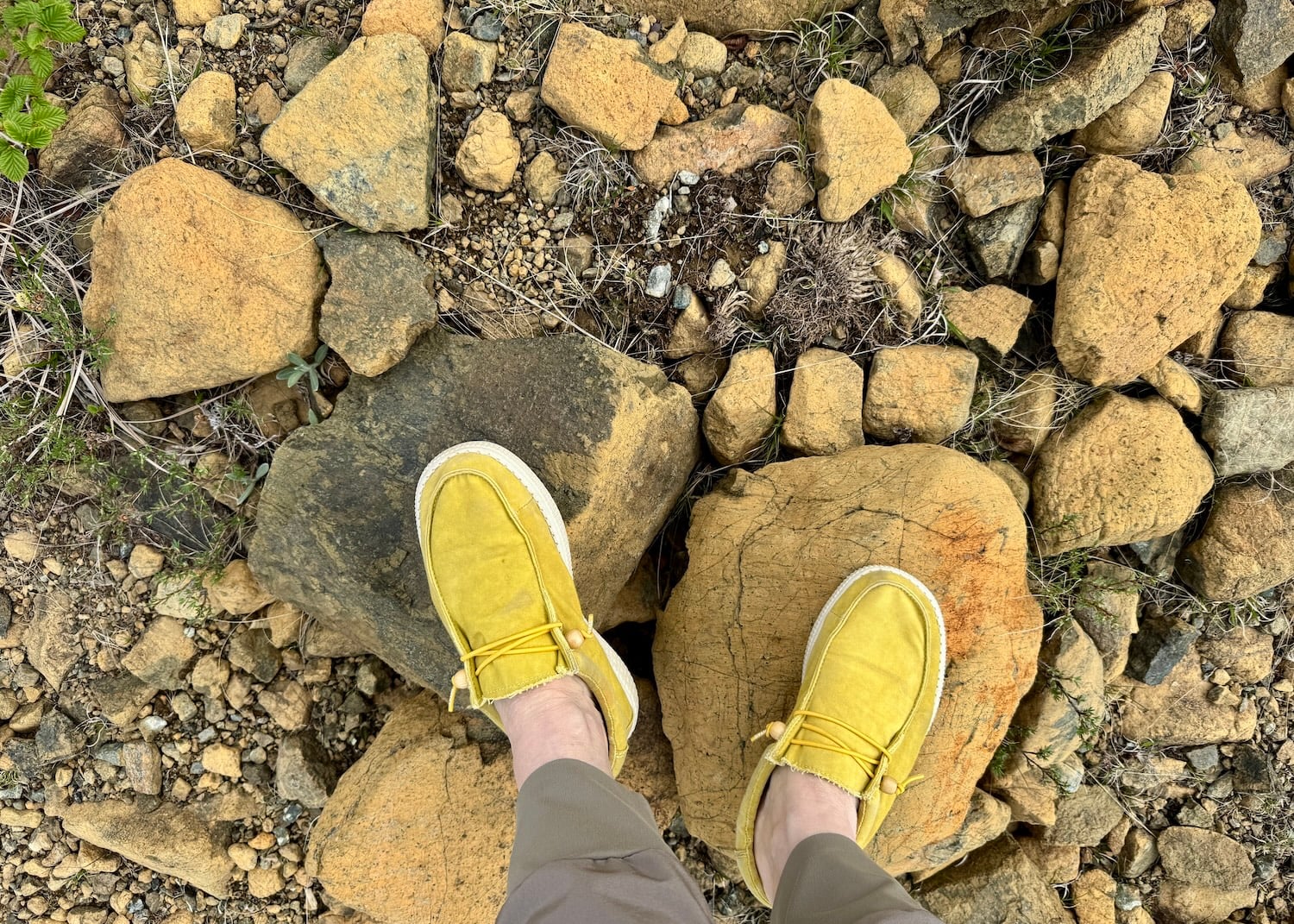
“So have you met our friends over there — even just knowing their names?” Yoga therapist Helena Butler’s question throws me for a loop as I stand barefoot on a mat looking out on Bonne Bay and the communities of Woody Point and Norris Point trying to imagine who she’s talking about.
“The big hill with the snow in the creases on this side, that’s Gros Morne,” she says. “And to the right of it, the one that looks taller but it’s not? Locals call that Crow Knob, which I find hysterical.”
Ah, she’s talking about mountains not people. Specifically, two beauties that are part of the Long Range Mountains, a subrange of the Appalachian Mountains here in western Newfoundland and Labrador. We’ll be using the iconic, flat-topped Gros Morne Mountain for inspiration.
“I like that,” I say. “It’s easier than climbing it.”

When people come to Gros Morne National Park, they don’t always tackle the daunting namesake hike but they usually walk on a rare exposed part of the Earth’s mantle and enjoy a boat trip through a glacier-carved freshwater fjord. They may swim in the ocean at Shallow Bay Beach, hike the easier trails, book dinner theatre with the Gros Morne Theatre Festival in Cow Head, and catch the Anchors Aweigh musical experience at the Anchor Pub in Rocky Harbour.
But yoga? Who goes to a national park for yoga? You’d be surprised how many people are working wellness experiences into park visits.

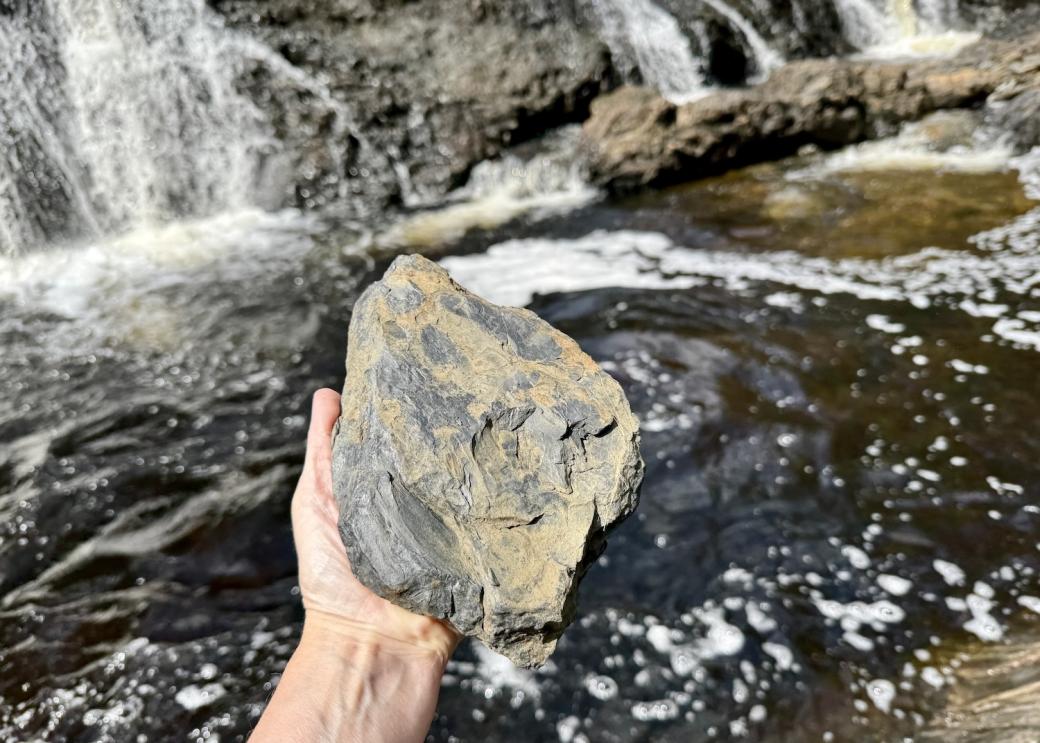
Standing on rocks in front of a hidden waterfall, my instructions are to pick up something that calls to me for a nature offering.
I choose a hefty rock, think of how I’ve been engulfed by anxiety lately, and imagine the unwanted emotion moving from my heart down my arm into the stone. Then I toss my offering into the waterfalls and picture my anxiety floating away down the creek, into Bonne Bay, then into the Gulf of St. Lawrence and out into the Atlantic Ocean.
“That emotion will be recycled by the ocean and taken away,” promises Transform Gros Morne co-founder/guide Tara Kroes.
She used to lead hikes for another company and watched people have these “big a-ha moments” and confess things that she wasn’t equipped to handle. Things like “my work-life balance is all wrong” and “I have to go back home and talk to my father who I haven’t talked to in 15 years.” She quickly realized how many of us live urban, digital lives disconnected from nature, and how that harms our health.
Kroes returned to school to study psychology and forest therapy and then in 2022 launched her own business to connect the four elements of nature (earth, air, fire and water) with the four bodies of people (physical, emotional, mental and spiritual). She partners with Butler plus a reiki master who teaches art therapy and leads medicine walks. Guests visit a bee farm and a sustainable family farm in Cormack near Deer Lake, but otherwise mainly stick to the sprawling park’s south side.
As she helps people reconnect to nature and its healing powers, she teaches them that it should be a reciprocal relationship and not just something to take from.

During yoga, I create a “backpack” with a long strap and imagine how I’ve gone through life filling it with rocks (a metaphor for troubles, difficulties and struggles). I start trying to unload them by connecting to the idea of “true north,” my inner self and “that mountain within.”
It's late May and as I do all this facing those beautiful mountains while listening to an avian symphony starring crows and chickadees. As we move from meditation to centering to movement, I’m told to notice the breeze on my skin, the heat of the sun, the background lullaby of the forest, and the birds chattering with each other.
“I feel this is a very special place,” says Butler. “There’s a lot of natural healing that the Earth offers, and it’s really hard not to pay attention to nature here because she reminds you constantly of your smallness. There’s nothing like standing at the base of a mountain or the top of a mountain, or surrounded by trees.”
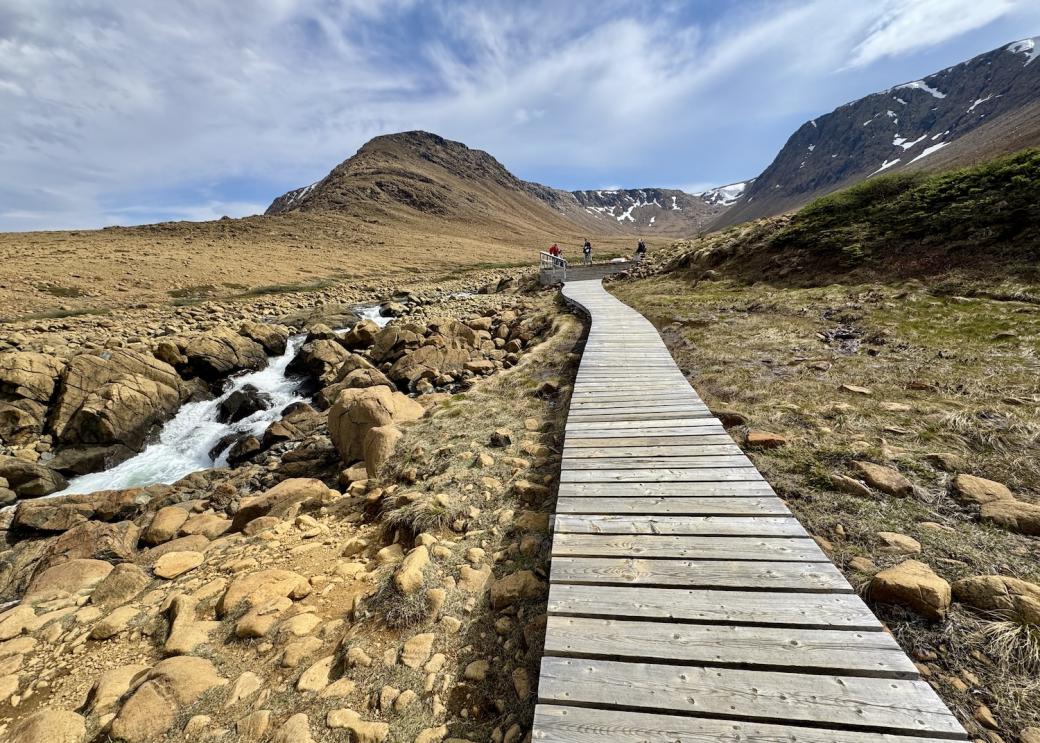
Insignificant is how I feel at the Tablelands, where I commune with the most alien of Gros Morne’s rocks — peridotite, a slab of the Earth’s upper mantle and crust. The rusty orange rocks with blackish-green centers helped prove the theory of plate tectonics (how moving plates destroy oceans and build mountains) and now attract a steady stream of global admirers.
And everyone feels small when cruising through Western Brook Pond, a massive gorge carved from the ancient rock of the Long Range Mountains. I love the landlocked, freshwater fjord, but this time I find equal enjoyment in mindfully walking 45 minutes to the boat launch and 45 minutes back to the parking lot across barrens, peat bogs and boreal forest patches.
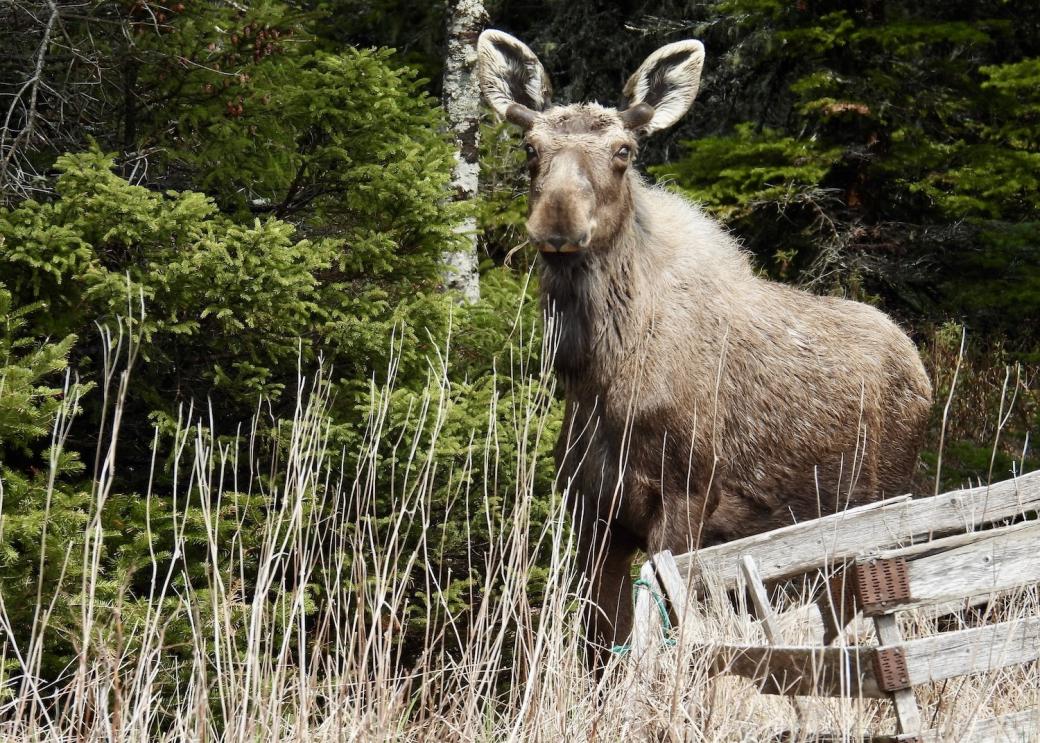
I don’t see any megafauna in the park this time, but do spot five moose and four caribou north of Gros Morne on the road between Port au Choix National Historic Site (home to fragile limestone barrens and pre-contact archaeological riches) and L’Anse Aux Meadows National Historic Site (home to North America’s only authenticated Viking site).
This time they stay still long enough for photos.
“People seem to want to protect what they love, so if I can get people to remember how much they love being in nature, then I feel that they will want to start to protect it more instead of looking at it as a resource,” Kroes confides. “But you have to bring people into nature to get them to remember their love.”

After doing yoga and visiting the waterfall, it's time for a forest therapy session.
Developed by the Japanese in the 1980s as shinrin-yoku, and often translated as forest bathing (a term that confuses people), forest therapy is the simple and therapeutic act of spending time in the forest to combat nature deficit disorder. We get to benefit from the airborne chemicals (phytoncides) that trees emit to protect themselves and insects.
It revolves around slow, mindful walks. “So you could do a forest therapy walk on a hike you’ve done a thousand times but you see it with really different, fresh eyes,” explains Kroes before taking me into a black spruce forest and guiding me through two “invitations.”
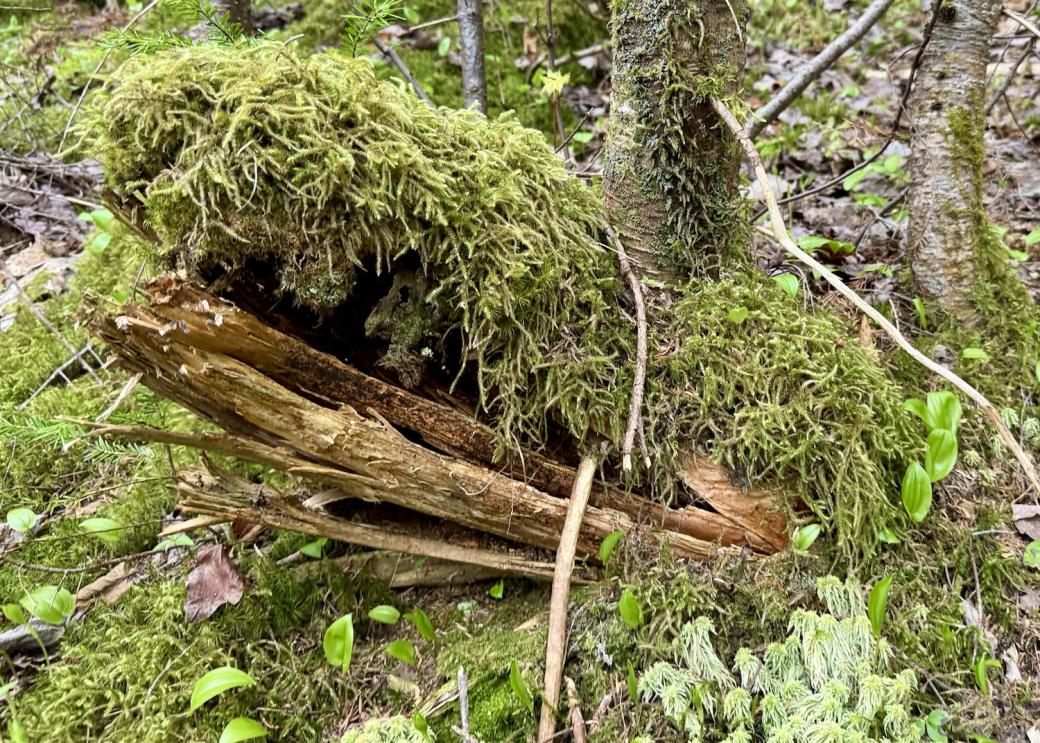
With one called “pleasures of presence,” I retrain myself to take deep breaths, imagine roots growing from my feet, close my eyes and take note of how the air feels on my skin. I stick out my tongue to taste the forest, and get down on my knees to smell it.
“What sounds do you hear in the forest?” Kroes quietly asks. “Which are from the natural world and which are man-made” Does your heat beat add to the rhythm of the forest?” When I’m allowed to open my eyes, it’s like I’m seeing this forest’s full vivid beauty for the first time.
With a second invitation called “what’s in motion,” I creep through the bush for 10 minutes, taking note of what’s in motion inside of me and in the forest. It’s eerily still at first, until a tiny plant starts quivering in the breeze and I start to notice micromovements.
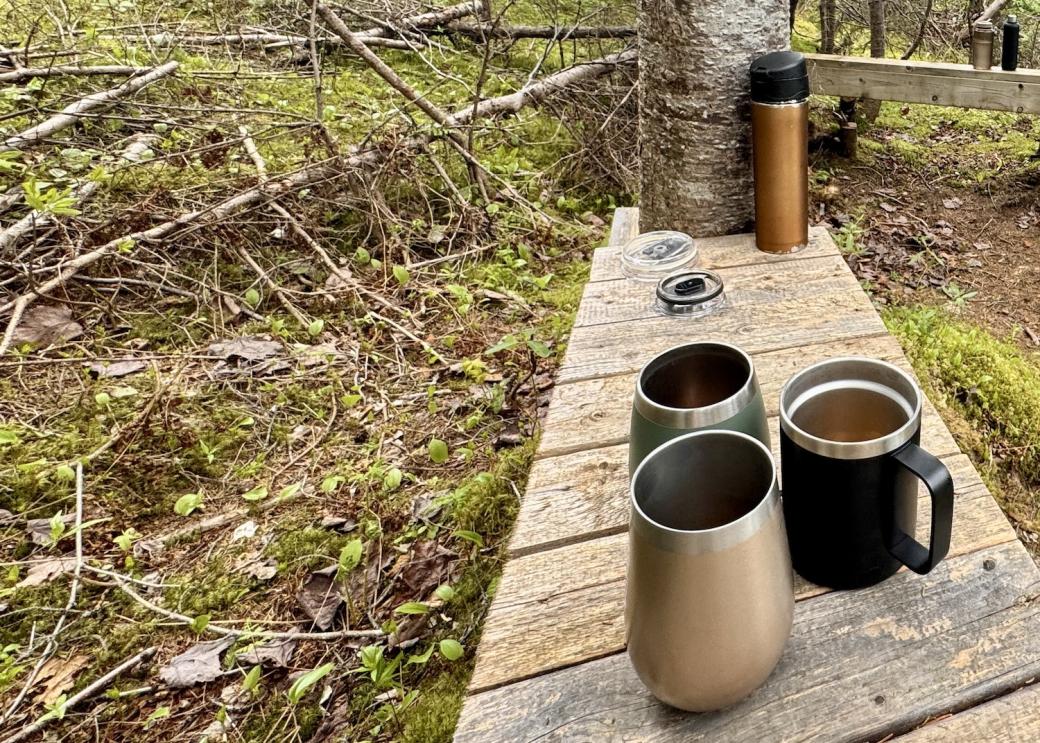
The session ends with mint tea, offering one cup to the forest along with a personal message.
“Wait — how do I put my message in?” I wonder. “Do I think it in?”
“You can think it in, hold it, whisper it,” Kroes instructs. “Whatever way feels good for you.”
Mindful of wildfires raging in other parts of Canada, I simply wish this forest well and splash the tea across the land.
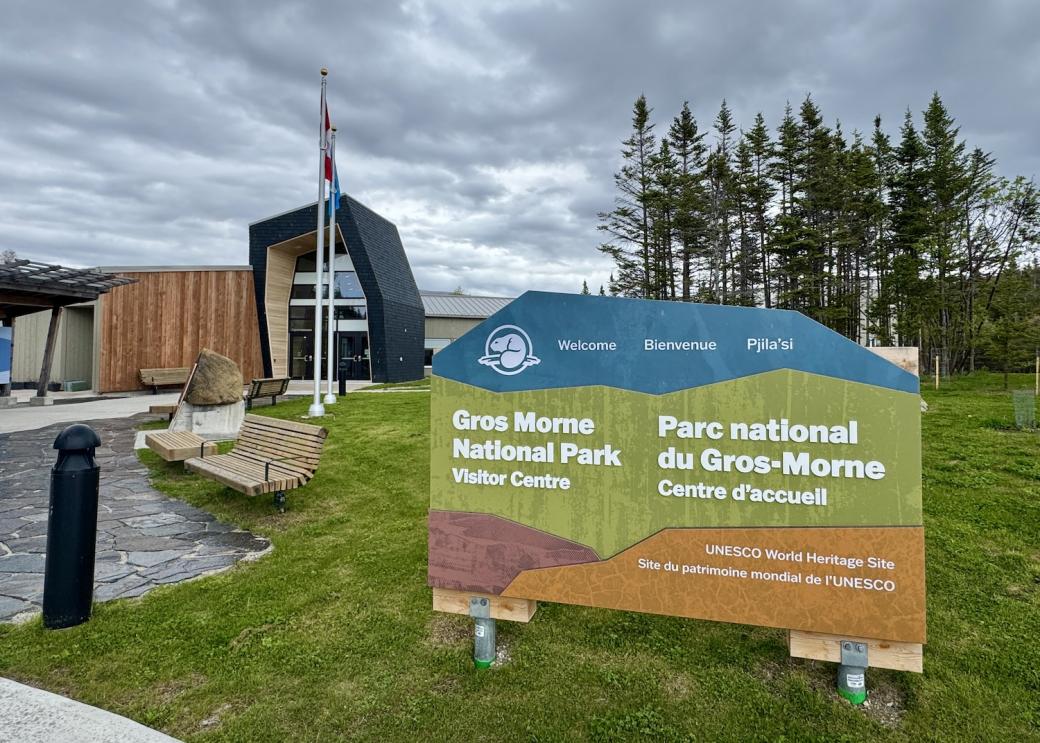
When I stop in at the park’s year-old visitor center, things come full circle with extensive signage warning hikers to take Gros Morne Mountain seriously.
The challenging Summit Trail, which descends on a long, boulder-strewn path, is actually closed to protect rock ptarmigan, caribou and other wildlife during critical weeks of growth and reproduction in May and June. The moderately difficult Approach Trail to the base of the 2,644-foot-tall mountain also seems ill-advised on this solo trip.
But a slow micro-stroll for more of those precious phytoncides? That’s something I can safely handle, so stop at the trailhead before leaving the park.
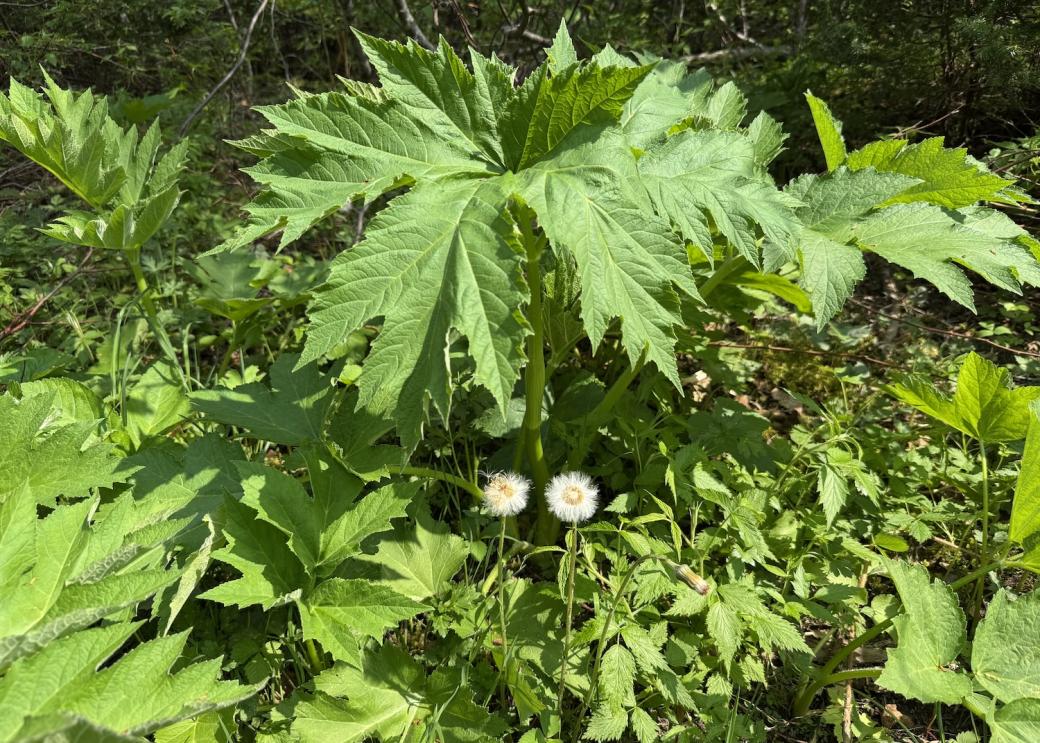
There is much to see, smell and hear on the first five minutes of the trail. What's most striking is how the much-maligned dandelions (and their lookalikes) are out in full force providing an early spring source of nectar to bees and other pollinators.
Some of the globe-shaped seed heads have already turned white and are waiting to be dispersed by the wind. I’m seized with the childlike desire to make a wish, but this is a national park so picking flowers isn't allowed. Besides, my wellness coaches have just reminded me to protect the natural world and not just take from it.
I imagine blowing the billowy seeds off the "puffballs," sending my wish out into the universe and thanking the mountain once again for inspiring so many people to love nature.
Stories about:
A copy of National Parks Traveler's financial statements may be obtained by sending a stamped, self-addressed envelope to: National Parks Traveler, P.O. Box 980452, Park City, Utah 84098. National Parks Traveler was formed in the state of Utah for the purpose of informing and educating about national parks and protected areas.
Residents of the following states may obtain a copy of our financial and additional information as stated below:
- Florida: A COPY OF THE OFFICIAL REGISTRATION AND FINANCIAL INFORMATION FOR NATIONAL PARKS TRAVELER, (REGISTRATION NO. CH 51659), MAY BE OBTAINED FROM THE DIVISION OF CONSUMER SERVICES BY CALLING 800-435-7352 OR VISITING THEIR WEBSITE. REGISTRATION DOES NOT IMPLY ENDORSEMENT, APPROVAL, OR RECOMMENDATION BY THE STATE.
- Georgia: A full and fair description of the programs and financial statement summary of National Parks Traveler is available upon request at the office and phone number indicated above.
- Maryland: Documents and information submitted under the Maryland Solicitations Act are also available, for the cost of postage and copies, from the Secretary of State, State House, Annapolis, MD 21401 (410-974-5534).
- North Carolina: Financial information about this organization and a copy of its license are available from the State Solicitation Licensing Branch at 888-830-4989 or 919-807-2214. The license is not an endorsement by the State.
- Pennsylvania: The official registration and financial information of National Parks Traveler may be obtained from the Pennsylvania Department of State by calling 800-732-0999. Registration does not imply endorsement.
- Virginia: Financial statements are available from the Virginia Department of Agriculture and Consumer Services, 102 Governor Street, Richmond, Virginia 23219.
- Washington: National Parks Traveler is registered with Washington State’s Charities Program as required by law and additional information is available by calling 800-332-4483 or visiting www.sos.wa.gov/charities, or on file at Charities Division, Office of the Secretary of State, State of Washington, Olympia, WA 98504.


