
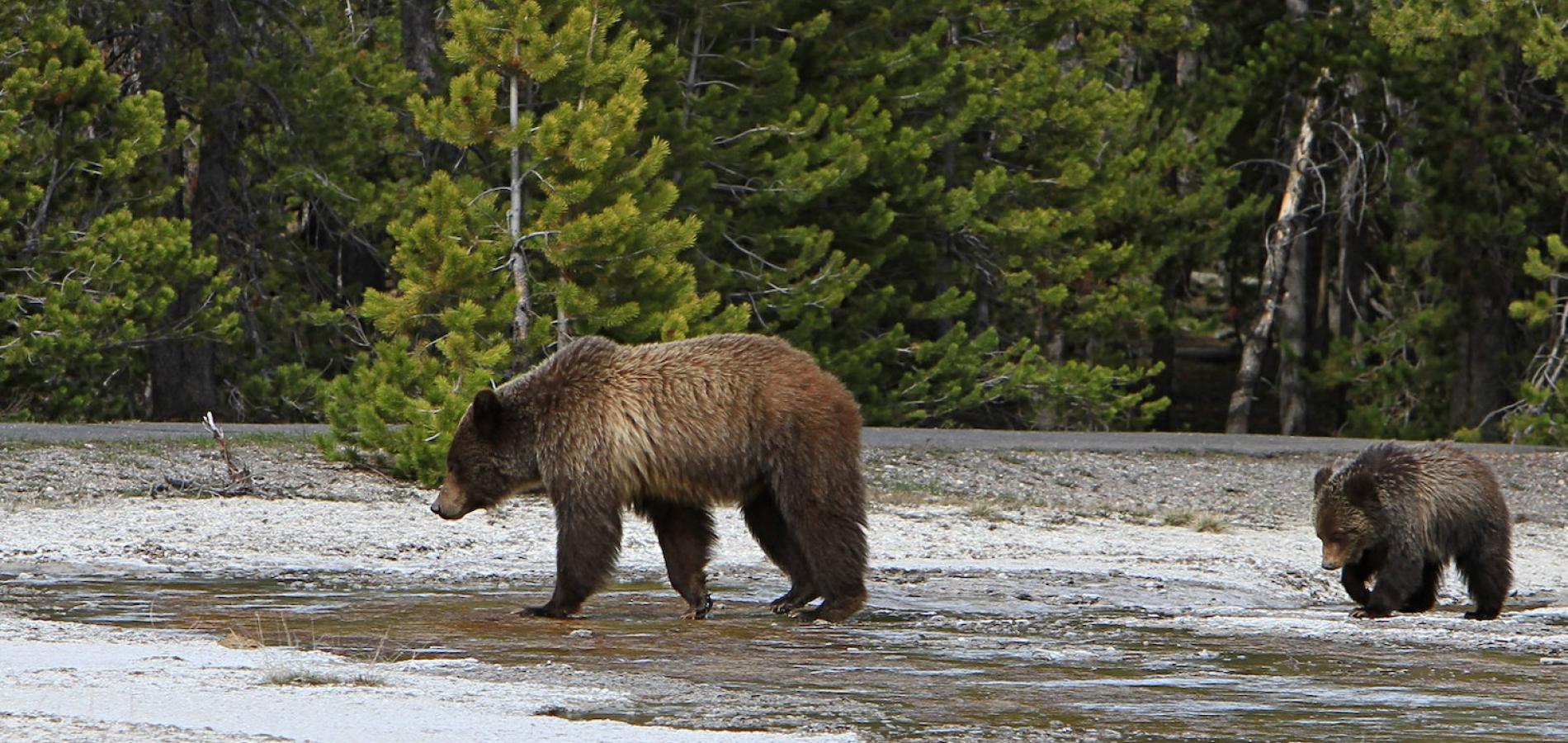
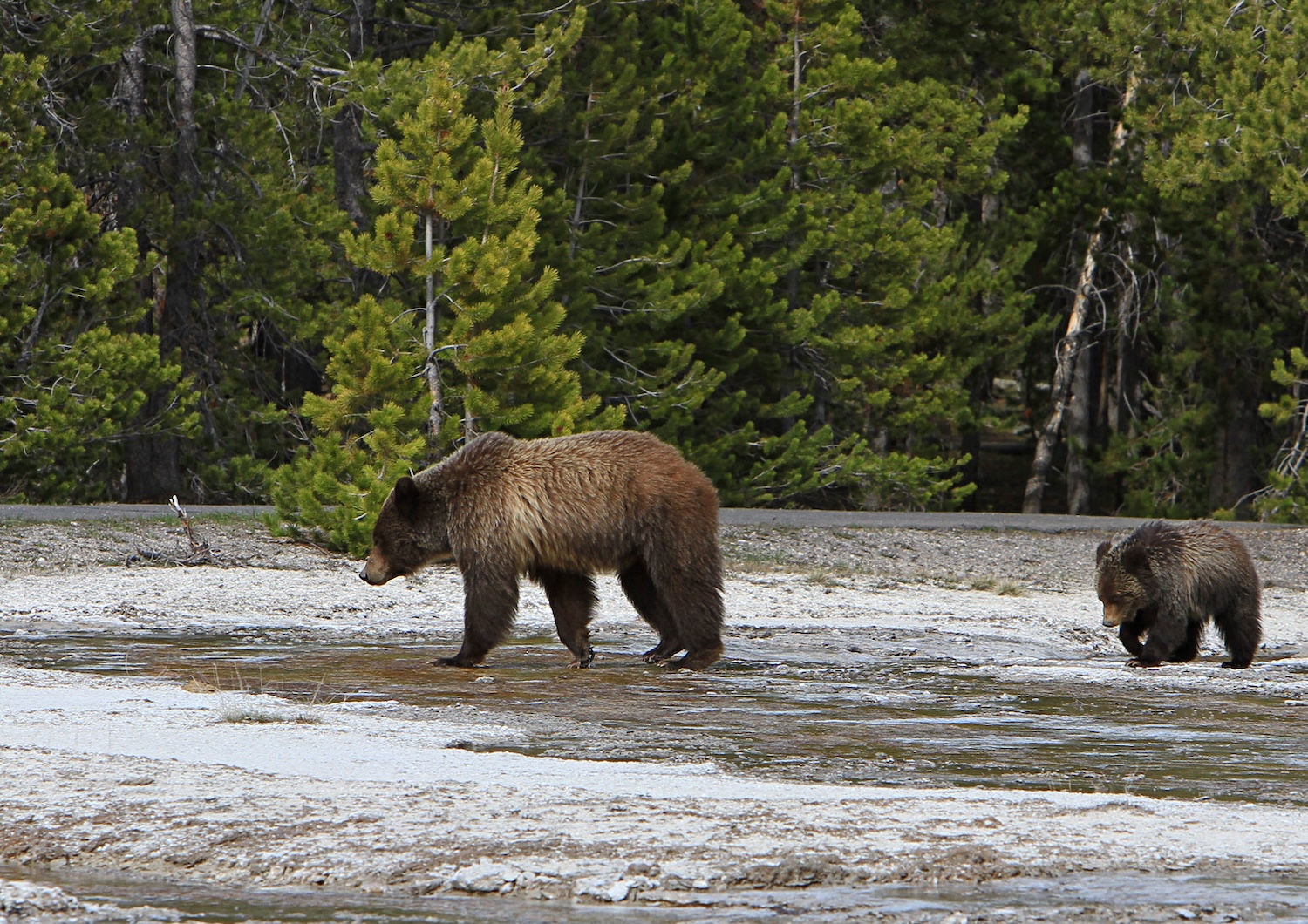
Decades of work that has steered grizzly bears away from extinction in the Greater Yellowstone region could be lost if House Republicans succeed in weakening the powerful law that protects them.
Progress by the iconic bruins under the Endangered Species Act is not yet enough to keep them safe, in the eyes of environmental advocates.
But Rep. Harriet Hageman, R-Wyo., says the grizzlies’ improved population numbers in the sprawling 22-million-acre ecosystem that surrounds Yellowstone National Park prove the species no longer needs help. She is pushing a bill to not only remove their ESA protection but also prevent any courts from considering challenges to that decision.
“The GYE [Greater Yellowstone Ecosystem] grizzly population has exceeded the U.S. Fish and Wildlife Service’s recovery goals for over two decades,” Hageman told a Natural Resources Committee hearing on her bill. While calling the bear “a success story,” she added that, in failing to be delisted, “The grizzly is, in fact, the poster child for how the ESA has failed in terms of what it was intended to do and how it has actually been implemented.”
Erin Edge, a bear expert with Defenders of Wildlife in Montana, does not disagree that the ESA has been "a success for grizzly bears, bringing them back from the brink of extinction." Still, she said, "We're not quite recovered yet. We don't have populations connected," meaning completely distinct grizzly habitat sections should be linked for the health of the species.
"That interconnectedness provides us long-term resiliency against changes to the environment or increased development," Edge told the National Parks Traveler in Sunday's podcast.
Competing Numbers
It's been estimated that prior to expansion of the United States there might have been 50,000 or more grizzly bears roaming the continent. Their presence benefited the environment in general, and many species took advantage of meals from the remains of bear kills. Today, it's been estimated that they occupy less than 2 percent of their historic range.
Large in the argument over the value of the Endangered Species Act are numbers tossed about pertaining to how successful the ESA has been in helping recover species. Hageman and other Republicans maintain that only 3 percent of listed species have been delisted. Meanwhile, ESA advocates — including the Interior Department in the past — emphasize a different success measure. They stress that 99 percent of listed species have been saved from extinction; in essence, that the world would be without those species if not for the protections through the ESA.
Regardless of the political prism used to view the grizzlies' success, their numbers have climbed significantly since 1975, when they first received ESA protections. Then their population was estimated to range between 130 and 300 in the coterminous states. Hageman puts today's number at about 1,100, which is close to the 1,000 figure Edge used while discussing grizzly bears and Hageman's legislation during this week's recording of the National Parks Traveler's podcast.
Part of the point Edge was driving at is while there are a number of areas in the country suitable for grizzlies, they are not connected by available habitat, and so could result in creation of genetic "islands" of bears that could eventually suffer from inbreeding.
"This is a positive story," said Edge, referring to the rebound of the Greater Yellowstone population. "I think what we're seeing is that bears are slowly getting closer to each other, from the Northern Continental Divide Ecosystem and from the Greater Yellowstone Ecosystem. So moving north and moving south, it's exciting. It's not there yet. They haven't shown that genetic connectivity."
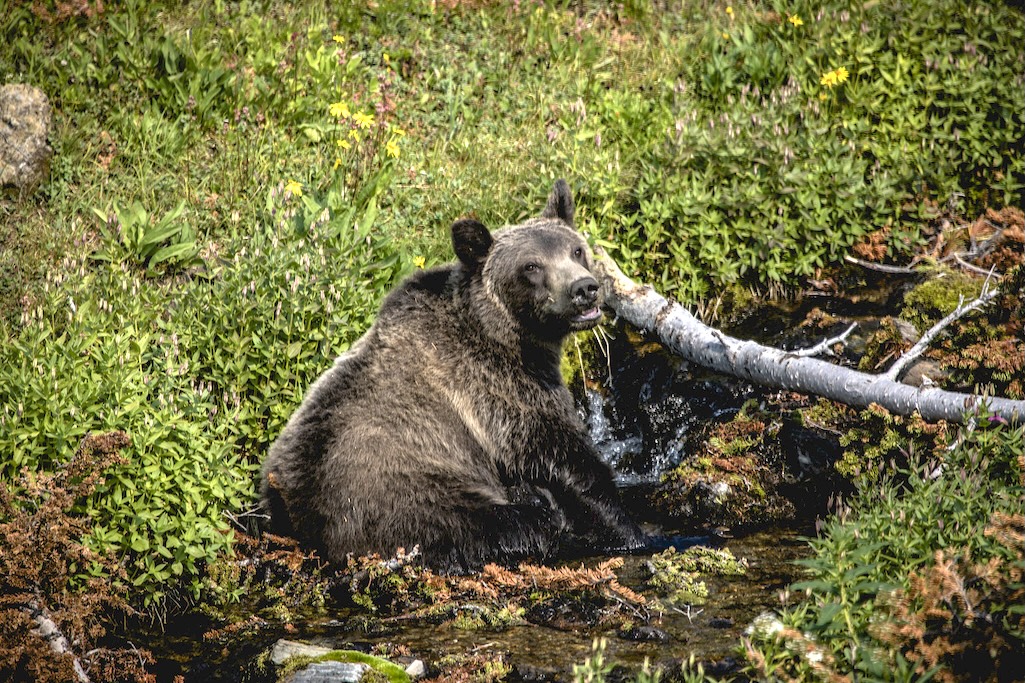
However, a federal biologist on the Interagency Grizzly Bear Committee for the Yellowstone ecosystem said two years ago that grizzly expansion into new habitat had ceased — and that their range has even retreated in places, according to Wyofile, a nonprofit media organization in Wyoming.
“I think it’s suggesting that we are reaching the limits of even marginal habitat,” Interagency Grizzly Bear Study Team Leader Frank van Manen told fellow members of the subcommittee. “There’s more human influence [on the ecosystem periphery], and so we have a lot more human-bear conflict and higher [grizzly] mortality.”
Lacking Connectivity
A map of the West illustrates the connectivity problems. Along with the Greater Yellowstone and Northern Continental Divide ecosystems that already have grizzlies, so, too, do the Cabinet-Yaak, Selkirk, and Bitterroot ecosystems. The North Cascades Ecosystem does not. All those ecosystems are largely, if not greatly, isolated from each other.
"Montana did move two bears south into the Yellowstone ecosystem to try and improve that connectivity, the genetic piece," Edge said. "But what we really want to see is connectivity that is natural, that bears are living and breeding with other ecosystems."
How that might occur is the troubling question. The Yellowstone to Yukon initiative launched in the early 1990s with a vision of establishing a 2,100-mile corridor from Yellowstone to the Yukon to protect wildlife habitat and enhance connectivity has worked with landowners and communities to make the vision a reality. To date, the nonprofit organization claims a "more than 80 percent increase in key protected area growth."
Joseph Vaile, who tracks grizzly bear issues in the Pacific Northwest for Defenders, said the North Cascades region "is probably a place where we've really backtracked on bears since they were listed. You know, we haven't seen a bear in the North Cascade since 1996; at least any confirmed."
Whether now is the time to fill that void remains to be seen. The first Trump administration both supported and then opposed a recovery proposal for the Pacific Northwest, and Trump’s bent this time around is not yet clear.
Back in 2017, during Trump's first term as president, Park Service staff at North Cascades National Park were evaluating public comment previously made on a recovery proposal launched during the Obama administration, but Interior officials told them to stop the work. But in March 2018 then-Interior Secretary Ryan Zinke told the agency to resume the work. Park Service and U.S. Fish and Wildlife Service staff continued working on a draft recovery plan until July 2020, when Zinke's successor, David Bernhardt, told community members in Omak, Washington, that the plan would be shelved.
In April 2024, however, the Biden administration restarted the effort. The recovery plan is set to play out in one of the largest wild areas remaining in the lower 48 states, an area that spans roughly 9,500 square miles in north-central Washington. All told, roughly 85 percent of the recovery area is under federal management. There are mountains that rise above 9,000 feet and, according to scientists, prime grizzly habitat that ranges from "temperate rainforests on the western side of the Cascade Range to dry Ponderosa pine forests and sage-steppe on the east side" that could support approximately 280 grizzly bears.
Much of the area is roadless, "so really high quality habitat," said Vaile. "There's some connectivity, too, into Canada, and Canadian folks have been working on grizzly bear issues just across the border as well."

Federal agencies have yet to fully explain how the recovery plan would be implemented, but it’s expected to involve bears from the Rocky Mountains or interior British Columbia.
Additionally, the bears would be designated a "nonessential experimental" population, the ESA designation used in the 1990s when wolves were returned to Yellowstone National Park. Such a designation gives federal agencies more leeway in managing the species that would not otherwise be available under existing ESA regulations.
The North Cascades plan calls for the Park Service and Fish and Wildlife Service to move three to seven grizzly bears per year for a period of five to 10 years to establish an initial population of 25 bears in the area. The long-term goal calls for 200 bears by the end of the century.
Vaile, during the podcast, said by using the "non-essential" designation for a North Cascades recovery operation there "would be quite a bit more management options for dealing with human safety or property or any sort of conflicts that arise with grizzly bears there."
"So that said," he continued, "there's a decision on the books to move forward. We have not seen the U.S. Fish and Wildlife Service taking any sort of affirmative action in that regard. We did see in the recent Interior Appropriations Bill that there was amendment to limit any funding going to reintroduce bears into the North Cascades."
An Icon Of Wild
"Grizzly bears are an icon of what's wild in our world. If a grizzly bear is thriving on the landscape, that landscape is likely providing habitat for species like elk, deer, wolverine, other species," said Edge. "It's actually a sign that our ecosystems are doing well, and we need those. You know, humans rely on the natural world as much as our wildlife does, even though sometimes we forget."

While no one is talking about pushing for an enormous recovery in the number of grizzly bears, advocates see value in having healthy pockets of bears where they fit. But that also won't happen quickly, even if political pressures against the bears relented. Getting grizzlies of any great number in the North Cascades Ecosystem, if the recovery effort advances, won't happen overnight. For one thing, they have a slow reproductive rate, with litters typically one one-to-three cubs, whereas wolves might have a litter of seven.
"Mind you, this would be just a few bears a year for up to 10 years. It would take a long time for this reintroduction to move forward even if we started putting bears there tomorrow," Vaile said. "It looks like there's not going to be funding for it this year. You know, I think it would be a dangerous precedent to defund the reintroduction effort, especially since it's something that is called for in recovery of the species. It's a recovery zone that is been designated in the recovery plan. So, without moving bears there, they're probably not going to naturally recover. It's going to be really unlikely that they'll move there without any sort of augmentation and movement of bears into the recovery zone."
Not everyone in the region relishes the prospect of grizzlies back on the landscape. The Sauk-Suiattle Indian Tribe has opposed the plan, fearing the safety of tribal members as well as impacts to salmon runs that bears might feast upon. But the Skagit and Snoqualmie tribes support the cultural significance of grizzlies to the area.
Adamantly opposed to the recovery plan is Republican Congressman Dan Newhouse, who has been vocal about safety concerns for area residents and visitors to the North Cascades Ecosystem. Others include local county and organizations across the West that represent farmers and cattle ranchers.
Against that backdrop, Vaile said there have been efforts to educate the public about the recovery proposal, and that Washington state officials have been active "doing quite a bit of work on conflict reduction for black bears."
"There's a lot of people that support it, as well, and there's a very robust political public process to get to the point where we have a decision to reintroduce bears in the North Cascades," he added.
Is The ESA Itself Endangered?
Rep. Hageman is not alone in challenging the effectiveness of the Endangered Species Act. House Republicans back in March considered a bill from Rep. Lauren Boebert, R-Colorado that would strip ESA protections from gray wolves, and another from Rep. Bruce Westerman, R-Arkansas, chairman of the House Natural Resources Committee, who said the ESA “has consistently failed to achieve its intended goals and has been warped by decades of radical environmental litigation into a weapon instead of a tool.”
He is sponsoring legislation to overhaul the ESA, “focusing on species recovery and streamlining the ESA permitting process,” and hindering “frivolous litigation,” among other provisions.
“Grizzly bears are one of the country’s most iconic species, and the Endangered Species Act is critical not just to their recovery, but to their survival as a species," said Bradley Williams, Sierra Club’s deputy legislative director for wildlife and lands protection. "We should be investing more resources into this critical law so it can achieve its full potential, but Donald Trump and his congressional allies are working to undermine it to benefit their corporate backers. If [Hageman's] bill becomes law, the effects on grizzlies and other imperiled species could be devastating and irreversible.”
Listen to our podcast conversation with Erin Edge and Joseph Vaile on the National Parks Traveler's Episode 333.
Stories about:
Story Categories:
A copy of National Parks Traveler's financial statements may be obtained by sending a stamped, self-addressed envelope to: National Parks Traveler, P.O. Box 980452, Park City, Utah 84098. National Parks Traveler was formed in the state of Utah for the purpose of informing and educating about national parks and protected areas.
Residents of the following states may obtain a copy of our financial and additional information as stated below:
- Florida: A COPY OF THE OFFICIAL REGISTRATION AND FINANCIAL INFORMATION FOR NATIONAL PARKS TRAVELER, (REGISTRATION NO. CH 51659), MAY BE OBTAINED FROM THE DIVISION OF CONSUMER SERVICES BY CALLING 800-435-7352 OR VISITING THEIR WEBSITE. REGISTRATION DOES NOT IMPLY ENDORSEMENT, APPROVAL, OR RECOMMENDATION BY THE STATE.
- Georgia: A full and fair description of the programs and financial statement summary of National Parks Traveler is available upon request at the office and phone number indicated above.
- Maryland: Documents and information submitted under the Maryland Solicitations Act are also available, for the cost of postage and copies, from the Secretary of State, State House, Annapolis, MD 21401 (410-974-5534).
- North Carolina: Financial information about this organization and a copy of its license are available from the State Solicitation Licensing Branch at 888-830-4989 or 919-807-2214. The license is not an endorsement by the State.
- Pennsylvania: The official registration and financial information of National Parks Traveler may be obtained from the Pennsylvania Department of State by calling 800-732-0999. Registration does not imply endorsement.
- Virginia: Financial statements are available from the Virginia Department of Agriculture and Consumer Services, 102 Governor Street, Richmond, Virginia 23219.
- Washington: National Parks Traveler is registered with Washington State’s Charities Program as required by law and additional information is available by calling 800-332-4483 or visiting www.sos.wa.gov/charities, or on file at Charities Division, Office of the Secretary of State, State of Washington, Olympia, WA 98504.


