


With the government’s 2.5-million-member civilian workforce under assault by a White House bent on shriveling it, the departure of five dozen employees habituated to the wilds of Alaska could seem but a blip of modest significance.
But that’s far from reality in the case of those who have walked out the doors of the state’s National Park Service regional office: Along with them went decades of expertise in monitoring, safeguarding, and managing roughly 60 percent of all lands that the Park Service manages: the 54 million national park acres in the largest and northernmost U.S. state.
Gone are the regional director for the entire Alaska region and the three associate regional directors; the chief ranger, who’s in charge of law enforcement; the longtime public information officer; and the regional geologist, wilderness coordinator, aviation manager, fire ecologist, archaeologist, and the program manager for Alaskan native affairs. Heading out the exits with them in recent weeks: the manager and a handful of scientists in a key program mandated by Congress to monitor the “vital signs” of ecosystem health, an undertaking that could hardly be more pressing as Alaska warms up at four times the global average.
All of them, 60 from the Alaska regional office — many government lifers with the know-how and commitment that make the parks work — were convinced to take early retirement options or financial incentives to resign under President Donald Trump’s government-shrinkage fusillade. Their departures account for about a third of the regional office, according to an NPS employee who spoke on condition of anonymity to confirm the estimate initially compiled by the nonprofit National Parks Conservation Association.
The loss slashes the bench of specialists that Alaska’s national park units rely on to meet their responsibilities in conservation, logistics, safety, science, communication, and other areas, including partnerships and consultation with tribal and community groups. Few parks typically have such specialists in house, so the Park Service centralizes experts in regional offices nationwide to support them.
The exodus comes alongside Trump’s ongoing funding squeeze and the congressional budget-slashing efforts and has deepened alarm that the very mission of the Park Service to protect natural and cultural resources is being undermined. A pall of anxiety hangs over employees, with most convinced they will inevitably lose their jobs to the “workforce reduction” ax, according to staff and retirees who spoke to the Traveler on condition that they not be identified for fear of retribution.
"I just didn't really want to be in a suspended state of animation as a pinata for them to whack,” said one scientist who opted to retire early. “It's just not really a situation that was conducive to making a positive contribution anymore.”
Business As Unusual
Field work, which has only a short weather window in Alaska parks, is being disrupted or canceled. Ecological data sets may be compromised as a result. Some field research is moving ahead, but with the season just starting, it’s unclear if additional projects may be squelched or delayed. Park Service workers and retirees foresee the staff crunch leading to less scientific research and scholarly publication going forward, as well as reduced bandwidth for areas like geohazard risk assessment, monitoring of threats to wildlife and plants, wilderness oversight, safety training, and analysis of climate change impacts in a state that is rapidly warming.
Trump’s hiring freeze means nobody is arriving to replace the retirees. Remaining staff are left to stretch themselves thinner and shoulder what they can of the work left behind.
“Employees are working themselves half to death in order to provide good service and to keep people safe. But in a good year, there weren't enough of them, and they were exhausted,” said Sarah Creachbaum, the recently retired director of the Alaska NPS region and former superintendent of Olympic National Park. She retired in March, earlier than she had planned, because she thought it “best for myself and my family and my peace of mind to have no part of what was coming.”
“And it's terrifying to me to think of reduced capacity from what we had in what we call now a 'good year,' and what that does to people, and how that affects their decision-making and their ability to take care of the parks, and moreover, to take care of themselves and the visitors,” she said.
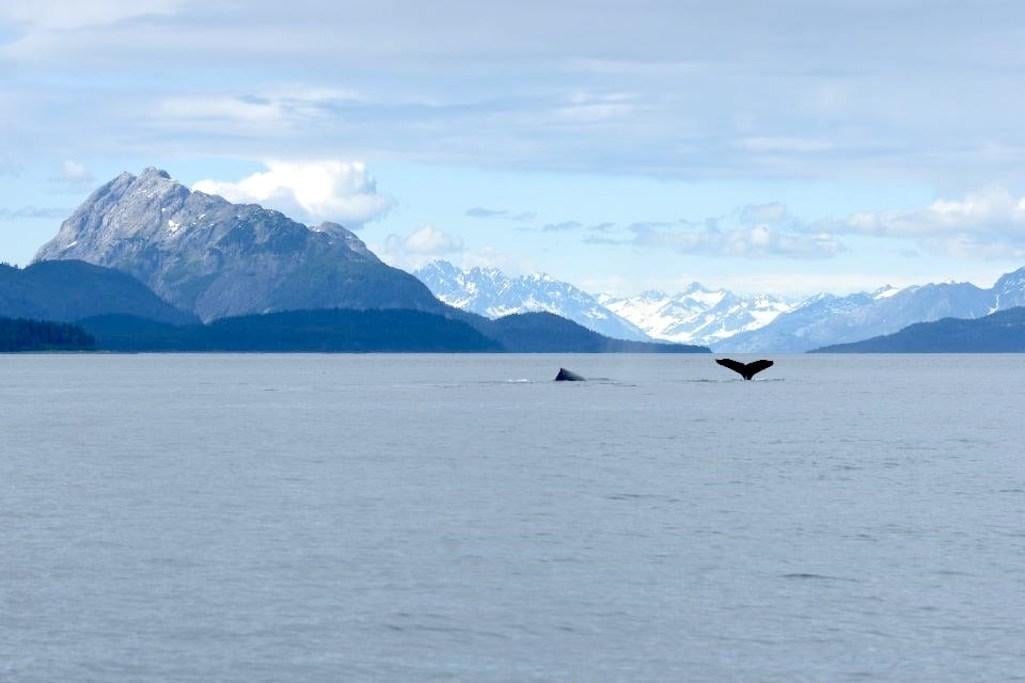
The Park Service workforce has shrunk in recent years even as visitor numbers have climbed to record levels.
Impacts of the downsized regional office extend well beyond what the 3.3 million annual visitors might see on their trips to Alaska’s suite of national parks, preserves and monuments, according to employees and retirees who foresee the super-slim staff levels leading to erosion of conservation efforts and visitor experience over time.
The NPS staff in Alaska relayed the Traveler’s request for comment about details and impact of the Alaska regional office departures to the Washington headquarters, which did not respond.
Dark Days In Scenic Parks
At least four national parks in Alaska are without replacements for superintendents who left: Lake Clark, Kenai Fjords, Glacier Bay, and Wrangell-St. Elias, whose 13.2 million acres make it the nation’s largest national park.
Current and retired staff describe an anxiety-ridden workplace suffused in turmoil and uncertainty, amid indications their work is no longer valued and a sense they will inevitably lose their jobs. A federal appeals court has so far saved them from Trump’s planned “reduction in force” boot, but the administration on Monday appealed that decision to the Supreme Court.
Meantime, projects in Alaska face obstacles and delays, with new levels of approval required for spending on park travel, equipment, and basic supplies, the Traveler was told.
“Some funding sources are frozen. Some are just taking longer to approve. It’s all over the place now. It's hard to think beyond a day or two ahead for any sort of planning,” said an NPS staff member with years of experience in Alaska. That’s especially problematic in the far-flung state where air travel, partnership arrangements, and fieldwork can require months of advance planning.
Employees say they are spending much of their time wrapping up their projects, making sure data is saved and secured for the future, “not knowing are we going to have a job… trying to plan for the end,” in the words of one. Amid the tumult is day to day confusion about who’s gone and who’s still on staff, making it difficult to get basic administrative tasks handled.
Just one of four staff members remains in the regional commercial services branch, which manages concession contracts and commercial use authorizations, an employee told the Traveler. The crunch will likely come when next year’s contract renewals and permit issuance demands overwhelm the regional office capacity, the person said.
“So many of my counterparts are the ones who left … because we saw that the writing is on the wall,” said a longtime Alaska employee who had intended to remain for several additional years out of commitment to their work, but took Interior Department’s resignation incentive offer.
“It is an extremely toxic environment and one where you're threatened that you're going to be fired anyway, and or be forced to work toward values and projects that are the antithesis of what you've been doing and what you believe in,” the person said, adding that regional staff who left “are the current and future leaders who have all the institutional knowledge. It’s just a massive, massive loss.”
Remaining staff are tasked with retirees’ duties on top of their own full-time work. “It crushes my heart,” said one who left. “I did create a transition plan, and the people that I was giving parts of my plan to ended up leaving.” An employee best-positioned to take on the retiree’s work had already assumed duties of two other colleagues who left. “I want to, but there’s just no way,” that person told the retiree.
The National Parks Traveler Is Interested In Hearing From National Park Service And Interior Department Employees On Changes To Their Agencies
Reach Editor Kurt Repanshek at [email protected] or via Signal at ParksTraveler.52
Beyond The Parks’ Workforce
What’s happening in Alaska appears to be a tip of Trump’s hoped-for iceberg as he seeks to cut $1 billion from the Park Service budget. Regional offices and the Washington, D.C. headquarters are expected to be major targets for staff cuts as the administration vows to keep parks themselves open and prioritize visitor experience.
New details of the president’s 2026 budget wish list released by the White House on Friday include a proposed reduction of the operational workforce in parks nationwide, down 5,500 employees from the 2024 roster of 13,648.
The disruption also extends to Park Service partners and contractors.
An important research trip this month to the Brooks Range was cancelled, following months of logistical planning, thwarting plans to gain information on the toxicity and impacts of metals and ions that have turned rivers and waterways orange as permafrost melts, said Brett Poulin, a University of California at Davis expert in environmental chemistry of metals.
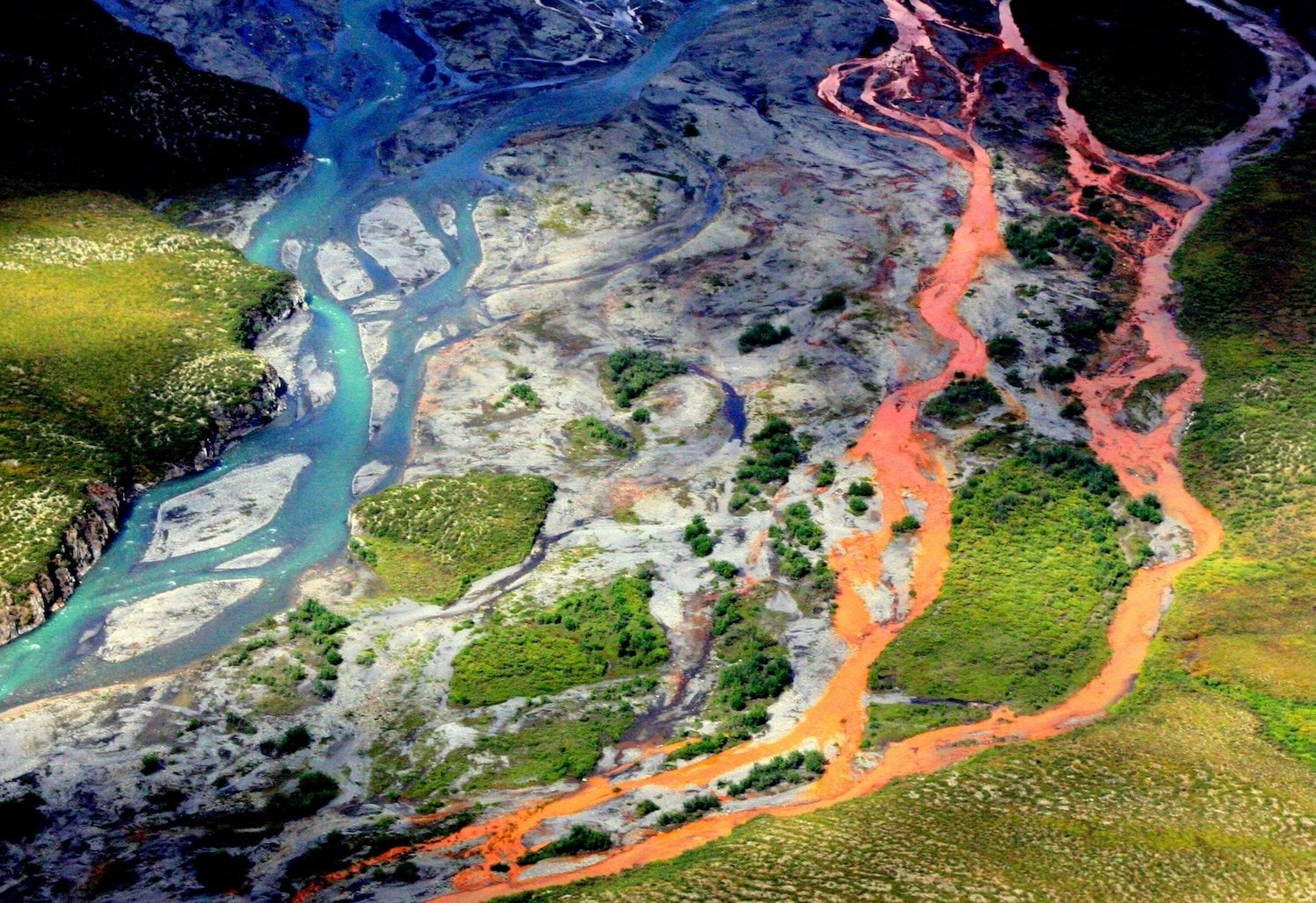
In the third year of his contract from the Park Service and U.S. Geological Survey, Poulin was set to join Park Service scientists traveling about 300 miles for 12 days across Gates of the Arctic and Kobuk Valley national parks and Noatak National Preserve. They planned to set up monitoring devices that over the summer would collect water samples and daily data from rivers and streams.
“We don't have the resources to be out there all summer,” so the battery-operated collection devices are key, Poulin said. “The big question we have is: how is the input of metals from rusting rivers affecting water quality for humans and for fish?” The devices would shed light on timing, flow and impacts of the toxins.
“We're losing the entire summer record without being there in June,” Poulin told the Traveler after the trip was cancelled due to budget uncertainty and the unknowability of whether the federal researchers would be fired before they could make a return trip to collect the data in August.
In addition to urging regional staff to retire, the administration curtailed the Scientists in Parks program that engages early career and student scientists as Park Service natural resource interns. Interns last year were credited with new perspectives on Alaska fire science datasets that ended up informing fuels management and more productive monitoring efforts. But this year, the contracts were canceled for interns who were to monitor the northward expansion of destructive spruce bark beetles — a climate-driven threat to forests — and to analyze hazardous trees that might endanger people and infrastructure.
Who Will Keep Track?
The congressionally mandated Inventory and Monitoring team in the Alaska regional office lost more than half of its staff to retirements, leaving just four people, a Park Service employee told the Traveler. As part of a nationwide Park Service network, program scientists track and study abundance and changes in key vital-sign resources, including water, vegetation, climate and wildlife in parks.
In Creachbaum’s view, the departures likely point to less monitoring of already declining caribou, salmon, dall sheep, and other subsistence species in a state where subsistence communities get most of their diet from rural and federal lands.
“The public doesn't often see the purpose of the regional offices,” she said.
Ninety percent of national park lands in Alaska are officially designated as wilderness, the most restrictive of land-use categories, and the loss of the regional wilderness coordinator raises questions about how the agency will ensure compliance with environmental laws and other standards for activities in wilderness. Without that regional role, one employee predicted, there may be “less vetting and analysis in decision making” and likely degradation of the wilderness over time.
Safety oversight by the regional office includes ensuring consistent standards across the parks in how things are done, ranging from fire suppression systems and bridge engineering, to health inspections of concessionaire hotels and water and sewage infrastructure, as well as oversight of aviation, a critical mode of getting to Alaska’s remote parks, said Creachbaum.
The recent departure of the highly respected aviation manager was a huge blow, especially after budget constraints and Trump’s hiring freeze already had stymied “urgent” efforts to fill two needed aviation positions, Creachbaum said. The workload for things like ensuring pilot training is up to date and overseeing safety protocols, flight planning and aircraft maintenance already “was too much for two people to handle,” and now just one is left, she said.
Similarly, the departure of the regional geologist, along with other Alaska park physical scientists, leaves a void in managing mines that remain in the parks from earlier times, and also in analysis of landslide and tsunami risks, a growing problem in Alaska. Identifying and studying landslides helps inform park management about road stability and protecting people and infrastructure.
“Alaska is changing rapidly. Tundra land is now becoming forested,” with permafrost and glacier melt making it prone to shifting earth and tsunamis, noted Kristen Brengel, NPCA’s senior vice president for governmental affairs. “So for Alaska, that's life and death. If you stop studying landslides, if you stop studying the effects of climate change in those national parks, you can start putting people in danger.”

The regional office “carries the weight of so much natural and cultural resource protection, as well as basics of aviation management, fire management, concessions management,” Brengel said. “They do so much for all of the park units out in Alaska." She added, “It was amazing to see the amount of people who had left because they were pushed out over the last four months,” and the weight of responsibility now on those who remain.
The heavy-thumb approach to downsizing frustrates current and former workers who see a mismatch between Washington’s messaging around efficiency and what seems to be the opposite outcome on the ground.
“It's like the purpose is destruction, not anything else,” said a recent retiree. “It's really kind of appalling to be faced with that sort of mentality of no actual care or thought or value into things that individuals and groups of individuals have spent a lot of time thinking about, a lot of time executing, and a lot of time using that information. … There's no rhyme or reason to the deconstruction of it. It’s like the floor has fallen out.”
Additional reporting by Kurt Repanshek
Stories about:
Story Categories:
A copy of National Parks Traveler's financial statements may be obtained by sending a stamped, self-addressed envelope to: National Parks Traveler, P.O. Box 980452, Park City, Utah 84098. National Parks Traveler was formed in the state of Utah for the purpose of informing and educating about national parks and protected areas.
Residents of the following states may obtain a copy of our financial and additional information as stated below:
- Florida: A COPY OF THE OFFICIAL REGISTRATION AND FINANCIAL INFORMATION FOR NATIONAL PARKS TRAVELER, (REGISTRATION NO. CH 51659), MAY BE OBTAINED FROM THE DIVISION OF CONSUMER SERVICES BY CALLING 800-435-7352 OR VISITING THEIR WEBSITE. REGISTRATION DOES NOT IMPLY ENDORSEMENT, APPROVAL, OR RECOMMENDATION BY THE STATE.
- Georgia: A full and fair description of the programs and financial statement summary of National Parks Traveler is available upon request at the office and phone number indicated above.
- Maryland: Documents and information submitted under the Maryland Solicitations Act are also available, for the cost of postage and copies, from the Secretary of State, State House, Annapolis, MD 21401 (410-974-5534).
- North Carolina: Financial information about this organization and a copy of its license are available from the State Solicitation Licensing Branch at 888-830-4989 or 919-807-2214. The license is not an endorsement by the State.
- Pennsylvania: The official registration and financial information of National Parks Traveler may be obtained from the Pennsylvania Department of State by calling 800-732-0999. Registration does not imply endorsement.
- Virginia: Financial statements are available from the Virginia Department of Agriculture and Consumer Services, 102 Governor Street, Richmond, Virginia 23219.
- Washington: National Parks Traveler is registered with Washington State’s Charities Program as required by law and additional information is available by calling 800-332-4483 or visiting www.sos.wa.gov/charities, or on file at Charities Division, Office of the Secretary of State, State of Washington, Olympia, WA 98504.
