


Peering over a fence into concrete pens, I watch baby Cuban crocodiles doing one of three things — lounging on top of each other in the shade, basking in piles in the sun or floating in shallow water with only the tops of their wee horned heads exposed.
They’re organized by age so get a little older and bigger with each pen. The first pens are covered with wire to prevent predators from swooping in. One clever young escapee has made its way to the end of the first pathway between pens and quickly disappears into a stream. Older crocodiles live in less crowded pens with deeper water preparing to breed and lay eggs in their grass and sand enclosures.
It’s not feeding time, but twice a week there will be meals of turtles, fish and birds. These pampered reptiles don’t know it, but they’re critically endangered, part of a captive breeding program here in Ciénaga de Zapata National Park and destined to be released into the wild.

“It’s a symbol,” Frank Medina says of the apex predator. “It’s an endemic and we need to protect it.”
Until recently, Medina was the park director but now he oversees 40 specialists like marine biologists and zoologists. When he arrived in Matanzas province decades ago, he was afraid of these rare crocodiles that only live in this part of the mainland, but now he respects them.

I’ve come to Ciénaga de Zapata (Zapata Swamp) from Havana to see how Cuba protects nature. People are drawn to this national park to snorkel the coral reefs of the Bay of Pigs, swim in a cenote (a water-filled sinkhole formed from the collapse of limestone), spot the world’s smallest bird and safely commune with crocodiles.
It’s my fifth trip to Cuba, this time on a Canadian media visa attending an international travel fair. Americans, of course, can only visit under 12 specific purposes defined by the U.S. Treasury Department like “support of the Cuban people.” That’s actually how I find Medina — he’s often invited to speak to American groups (like Idaho-based Cuba Unbound) on educational tours and I read about him online.
Do enough people visit Cuba’s national parks, I ask. “Enough,” says Medina, before quickly adding “but we need more. This year is less.”

Cuba has been grappling with blackouts and food shortages on top of the U.S. trade embargo put in place after the 1961 Bay of Pigs invasion and the Cuban Missile Crisis of 1962 that effectively bans Americans from visiting as tourists. An ongoing cruise ship ban and new sanctions from the Trump administration have impacted international travelers.
Undaunted, I’m able to revisit Havana and devote a day to Zapata Swamp — a six-hour round-trip drive from the capital with Ecotur guide Luis Alberto Lorenzo Puertas.
The first thing I notice is that while there’s someone standing on the road keeping an eye on traffic, there’s no entry fee and nobody staffing the park entrance kiosk. A welcome sign does show tourists snorkeling in a cenote and by the sea. The second thing I notice are Russian and Chinese tourists learning about crocodiles, which isn’t surprising because Cuba is courting visitors from these countries.
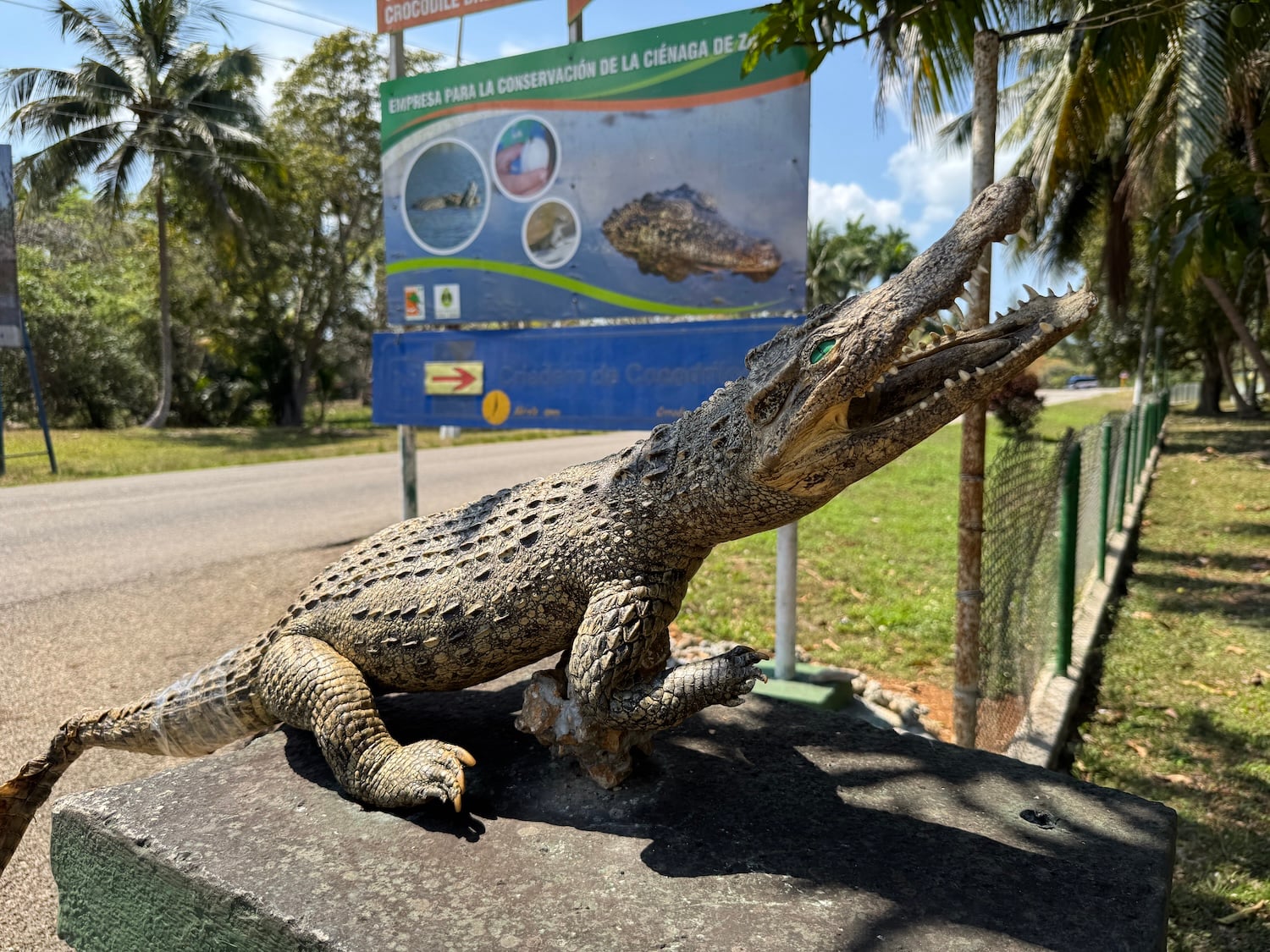
There are fees, however, to tour the park’s Crocodile Breeding Farm — which is marked by a taxidermied crocodile — and the private Criadero de Cocodrilos across the road. It passes on educational messages about the endangered species and gives its eggs to the park for the breeding program.
“The local baseball team of this region is called the Crocodiles — the Crocodiles from Matanzas (Cocodrilos de Matanzas),” points out Puertas, who was a baker and teacher before becoming a tour guide who focuses on the outdoors.

With just over one-million acres, Zapata Swamp is the largest and best-preserved wetland in the Caribbean. It’s also a UNESCO Biosphere Reserve and RAMSAR site (a wetland of international importance) known for its diversity of bird species.
Part of a large karst watershed, the park boasts rivers, lakes, marshes and pools, swamp forests, intertidal flats, estuarine waters and human-made wetlands.
About 10,000 people live within the park in various communities. The park has 172 staff and its headquarters is marked by a roadside sign showing real flamingos and a cartoon crocodile. Rangers advise on archaeological sites, snorkelling, scuba diving, beaches, swimming, fishing, birdwatching and kayaking.
“Proteger, Producir, Conservar,” says a mural. “Protect, produce, conserve.”

From Medina, I learn how the largely terrestrial, agile and intelligent Cuban crocodile — which serves as an emblem of the swamp and has distinctive “horns” (bony plates) behind its eyes — is being poached for meat, losing its habitat and facing hybridization with the American crocodile.
Human-made canals and rising sea levels have allowed American crocodiles to swim from the coastal and brackish waters into the Cuban crocodile’s interior freshwater marsh turf.
Association of Zoos and Aquariums-accredited facilities, the Wildlife Conservation Society and the American Museum of Natural History have contributed to decades of crocodile breeding and genetic work being done here.

The Zapata farm manages up to 4,000 genetically pure Cuban crocodiles of different ages at any given time, Medina says, and has released just as many into the wild. Some have been sent to a swamp on the Isle of Youth.
The apex predator is listed as critically endangered by the International Union for the Conservation of Nature (IUCN) and is included on Appendix I of the Convention on International Trade in Endangered Species of Wild Fauna and Flora (CITES), which regulates international trade in wild animals and plants to prevent their extinction.
On a tour with Medina, we pause by a black-and-white photo of the late Cuban revolutionary and politician Fidel Castro talking to a local in 1960. “It is true that crocodiles have been disappearing in the swamp, but it is no less true that by building a hatchery we could save this Cuban species, make a profit from it for tourism and also use its skin,” Castro is quoted as saying.

Medina remembers when crocodiles were openly hunted and their skins turned into leather belts, shoes and bags that were sold from a shop in Havana. That store is gone, but poaching for meat still happens.
Now, as signs detailing conservation work explain, park staff handle environmental education, water management, invasive species control, reforestation and forest fire management. They collect and study plants and protect endangered fauna like the Cuban crocodile.
“Ecotourism as a byproduct of conservation actions,” outdoor interpretive signage says in Spanish.
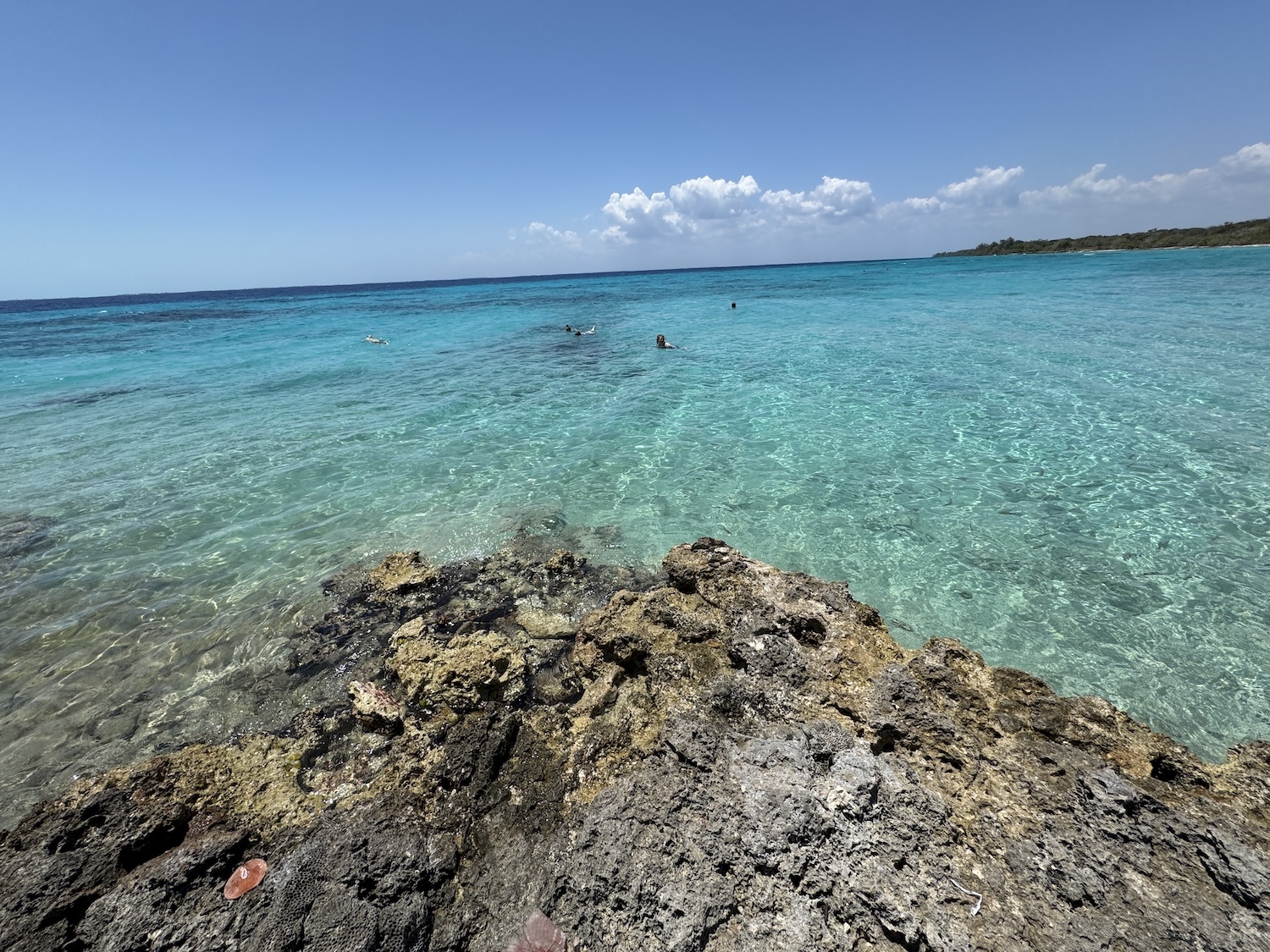
I don’t get to see how staff are manipulating incubation temperatures to rectify an overabundance of female hatchlings. But I do pass through the village of Playa Larga — home to the infamous beach at the head of the Bay of Pigs where the 1961 CIA-sponsored invasion took place — and lunch at Punta Perdiz where snorkelers enjoy the turquoise water and coral reefs.
The rest of my time is devoted to birding.
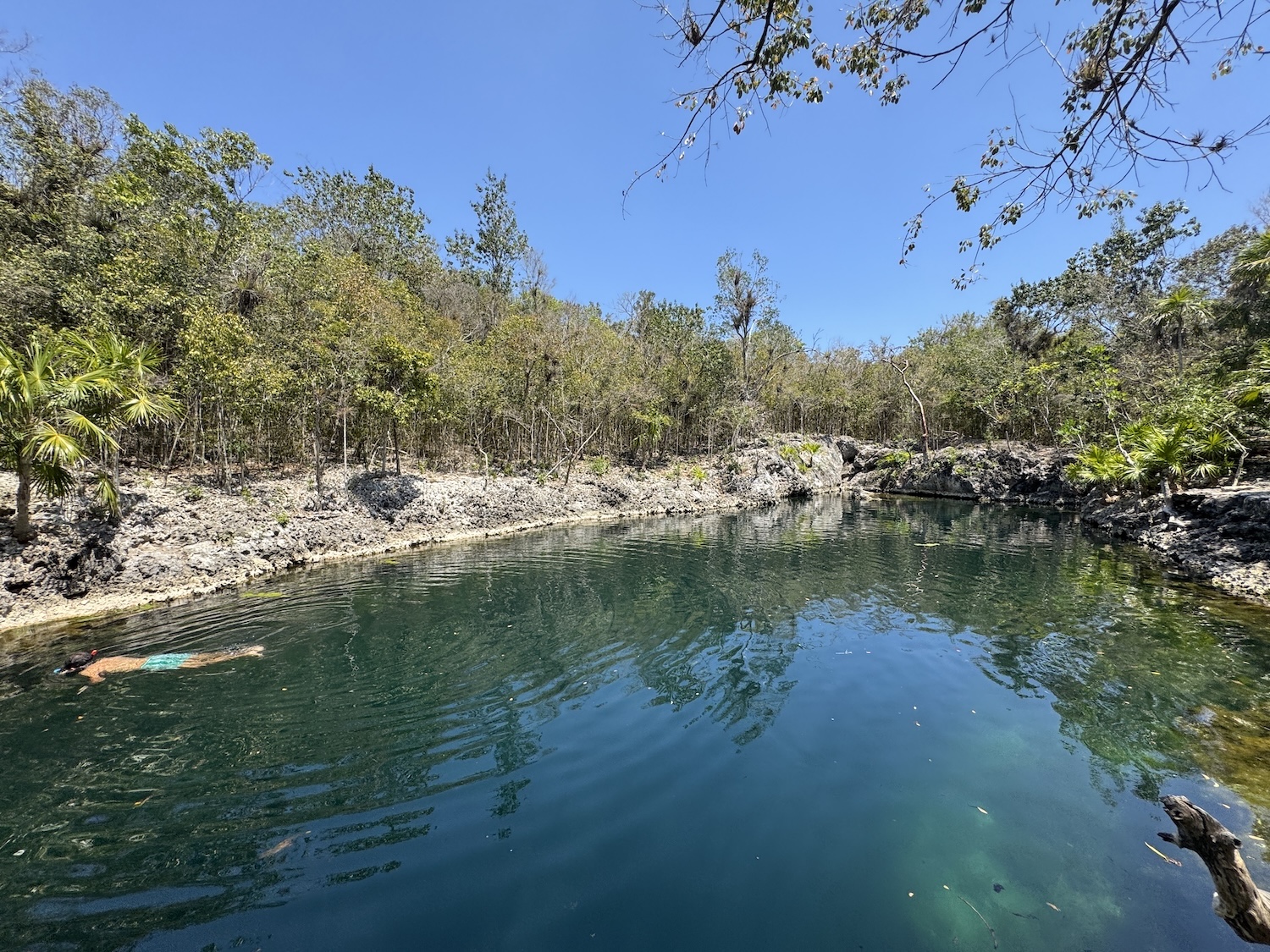
Cuba’s gorgeous tri-colored national bird makes an appearance on the forested path to the Cueva de los Peces — the "Fish Cave" that's actually a cenote connected to the Caribbean Sea that people love to swim and snorkel in.
Known in Spanish as the Tocororo, the Cuban trogon has a blue crown, white chest and red lower half that match the nation’s flag. When kept in a cage, it often dies.

Crocodiles and trogons aside, the real reason I’ve come to Zapata Swamp is to see the Bee hummingbird.
The world’s smallest bird is just over two inches long, weighs less than a dime, feeds on woodland flowers and can only be found in Cuba. Males have iridescent red heads and turquoise upperparts, while females are turquoise on top and dingy below. They look and sound like flying bumblebees.
You need to be a devoted birder on a multi-day trip to luck into a Bee hummingbird in the wild. That’s why Puertas brings me to a famous private garden instead.

Bernabé Hernández lived in the forest until a hurricane destroyed his home and the government relocated him to the village of Pálpite. He planted ponasi (fireweed) for fruit. But when hummingbirds started coming for the nectar in the flowers, he transformed his home into La Casa de Los Colibries Bernabé (Bernabé's House of Hummingbirds) with more flowering shrubs, fruit trees and feeders full of sugar water.
Hernández gestures excitedly every time he spots a trogon, Cuban emerald or Bee hummingbird that moves so fast I can’t get a good shot. “They don’t sleep here,” he says. “They just come to feed.”
He typically gets 20 to 60 visitors a day and lives on donations for the use of his washroom (something that’s common in Cuba) and sales of trinkets and drinks. The birds rely on this sanctuary for nourishment. Birders are grateful to have an easy way to see such a rare endemic species while chatting with such a lovely man and accidental conservationist.

Grateful for such a fauna-filled day, we start heading back to Havana and get permission from the traffic patrol to stop by the park gateway for photos.
While the welcome billboard featured snorkelers, the farewell billboard showcases birds. Perhaps because the Bee hummingbird is too tiny and obscure to show up well, ibises and other wading birds star in one photo while a tourist peering into Zapata Swamp with binoculars stars in the other.
“Hasta pronto,” says the exit sign. “See you soon. Au revoir.”

Stories about:
Story Categories:
A copy of National Parks Traveler's financial statements may be obtained by sending a stamped, self-addressed envelope to: National Parks Traveler, P.O. Box 980452, Park City, Utah 84098. National Parks Traveler was formed in the state of Utah for the purpose of informing and educating about national parks and protected areas.
Residents of the following states may obtain a copy of our financial and additional information as stated below:
- Florida: A COPY OF THE OFFICIAL REGISTRATION AND FINANCIAL INFORMATION FOR NATIONAL PARKS TRAVELER, (REGISTRATION NO. CH 51659), MAY BE OBTAINED FROM THE DIVISION OF CONSUMER SERVICES BY CALLING 800-435-7352 OR VISITING THEIR WEBSITE. REGISTRATION DOES NOT IMPLY ENDORSEMENT, APPROVAL, OR RECOMMENDATION BY THE STATE.
- Georgia: A full and fair description of the programs and financial statement summary of National Parks Traveler is available upon request at the office and phone number indicated above.
- Maryland: Documents and information submitted under the Maryland Solicitations Act are also available, for the cost of postage and copies, from the Secretary of State, State House, Annapolis, MD 21401 (410-974-5534).
- North Carolina: Financial information about this organization and a copy of its license are available from the State Solicitation Licensing Branch at 888-830-4989 or 919-807-2214. The license is not an endorsement by the State.
- Pennsylvania: The official registration and financial information of National Parks Traveler may be obtained from the Pennsylvania Department of State by calling 800-732-0999. Registration does not imply endorsement.
- Virginia: Financial statements are available from the Virginia Department of Agriculture and Consumer Services, 102 Governor Street, Richmond, Virginia 23219.
- Washington: National Parks Traveler is registered with Washington State’s Charities Program as required by law and additional information is available by calling 800-332-4483 or visiting www.sos.wa.gov/charities, or on file at Charities Division, Office of the Secretary of State, State of Washington, Olympia, WA 98504.
