


In this newest sanctuary, NOAA partners with an Indigenous tribe to protect vital marine habitat and sacred places.
My kayak paddle steadily dips into the calm morning waters of San Luis Obispo Bay as I smile at the noisy harbor seals ahead. They leap playfully out of the water near a buoy, as if jockeying for position. The misty skies are dense with moisture, known as the “marine layer”—a typical morning on the Central California coastline. The Indigenous Chumash who lived on this coast and the Channel Islands for thousands of years before Europeans arrived, called the Avila Beach area “hole in the sky,” because the sun usually breaks through later and here before elsewhere along this coast.
Known to the Chumash as Tsipxatu, this protected bay was once one of their largest villages and is now partly covered by sea-level rise. The area—like much of the coastline, the Channel Islands, and several inland sites—is sacred to them. Over three generations, they’ve been fighting to protect these spaces since the 1969 Santa Barbara Union Oil spill, which spread three million gallons over 35 miles. That spill is widely credited with launching Earth Day.
In 2013, Chief Fred Collins of the Northern Chumash Tribal Council started campaigning for the marine sanctuary nomination, the equivalent of a national park in the water. His daughter, Violet Sage Walker, who became the council’s chairwoman on his death, continued his efforts to prevent future oil damage and preserve the tribe’s sacred sites through sanctuary designation.
The Chumash have lived hereabouts “since the beginning of our story,” says Walker, possibly up to 18,000 years ago. “We're protecting our homeland. We’re protecting our waters, our food sources, our creation stories. We're preserving our identity … what’s left of us. [My father] wanted people to know us like people knew other tribes, such as the Navajo.”
With their seaworthy tomol, or plank canoes, Chumash had a vibrant history of plying these coastal waters and the Channel Islands for both fishing and trade. Their efforts to protect the area—along with other supporters, including the Sierra Club and Surfrider Foundation—came to fruition last November when Chumash Heritage National Marine Sanctuary (CHNMS) became the first Indigenous-nominated U.S. marine sanctuary.
Extending up to 60 miles offshore, the sanctuary includes 4,543 square miles of ocean and stretches 116 miles along the coast from San Luis Obispo County to the Gaviota Coast in Santa Barbara County. CHNMS is also the first sanctuary for which NOAA partnered with an Indigenous group on the Sanctuary Advisory Council to “provide important community input and feedback on sanctuary management,” says Paul E. Michel, senior advisor for NOAA Sanctuaries West Coast Region and interim community and government affairs coordinator of Chumash Heritage National Marine Sanctuary. “We envision significant participation from the Chumash through a collaborative co-stewardship approach.”
This partnership is key, says the sanctuary’s final management plan: “One of the principal objectives of designating this new sanctuary is to bring Indigenous Knowledge together with Western approaches and science to guide sanctuary management.”
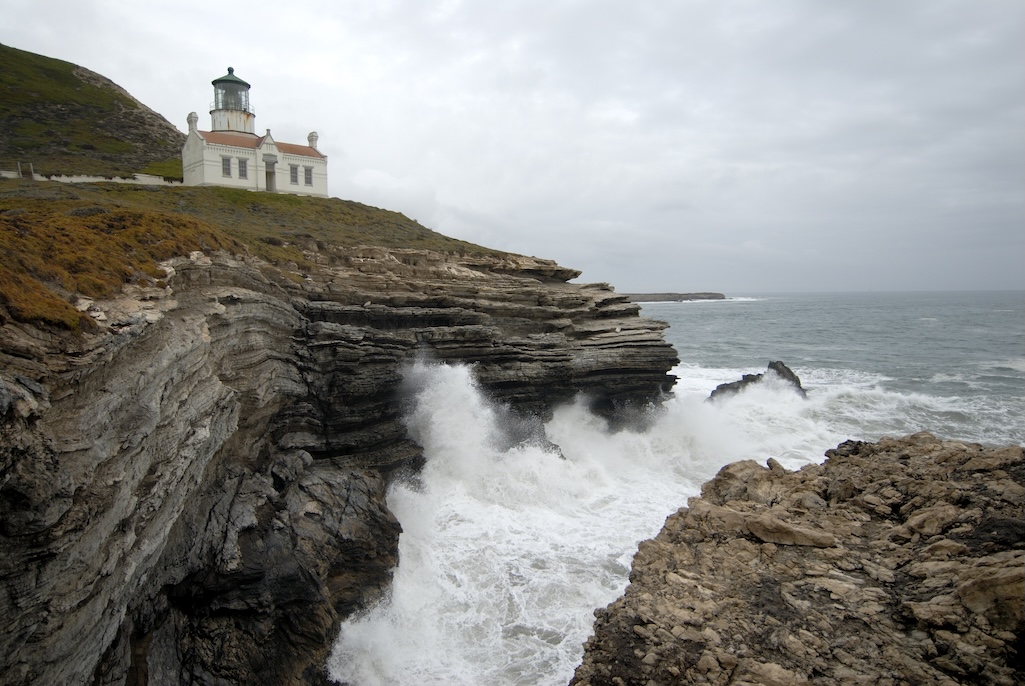
“We are protecting hundreds of village sites and secret places and underwater villages,” says Walker, who was taught by her mother to scuba dive. That includes Point Conception, (Humqaq) the tribe’s Western Gate “where the souls of our dead start on their voyage into the celestial world and paradise,” according to the Chumash website.
In my two-hour kayak rental from Avila Beach, I observed much of the sanctuary’s marine riches. The wide eyes of harbor seals and their pups watched me stroke by. I also spied a raft of chill otters, sea lions lounging on a dock, cormorants, whimbrels, and a pigeon guillemot. The latter is an eye-catching auk that, when breeding, is all black with distinctive white patterns on its wings and the brightest red legs. Many at-risk species, including snowy plovers, leatherback sea turtles, abalone, southern sea otters, and blue whales also call this sanctuary home.
Due to its positioning, “the sanctuary has special, nationally significant ecological qualities, shaped by important offshore geologic features,” explains Michel. “Seasonal upwelling caused by the California Current drives the area’s high biological productivity, supporting dense aggregations of marine life. The presence of a biogeographic transition zone, where temperate waters from the north meet warmer southern currents, adds to the sanctuary’s significance in terms of biodiversity.”
No new oil drilling or mining will be allowed, according to sanctuary guidelines, and proponents also hope to boost offshore kelp forests, which store carbon and provide habitat. The Chumash had advocated for a larger sanctuary area to include other sacred areas including Lisamu' (Morro Rock) and also connect to the north with the Monterey Bay National Marine Sanctuary. The current designation is a compromise worked out by the Biden administration to exclude a section above Avila Beach that’s likely to become a wind farm. However, that area may be included in a future phase, according to management plans.

To advance both cultural and environmental knowledge, the Chumash had hoped to lead tourist excursions along the coastline and into the sanctuary, but there’s uncertainty ahead with the Trump administration reducing funding for NOAA and lifting federal restrictions on commercial fishing in the Pacific Islands Heritage Marine National Monument, reported to be one of the most pristine marine areas in the world. There’s even talk of resuming oil drilling on the California coastline not far from the sanctuary.
“We're going to keep doing the work that we were doing before, and we're going to keep protecting it—whatever it looks like,” says Walker. “In our lifetime, we never thought that national parks and stuff would ever be in jeopardy.”
A few years ago when Walker was coming home from a conference on a plane, she fortuitously sat next to Dr. Sylvia Earle, the founder of Mission Blue. That meeting led to an in-depth conversation about ocean conservation and the then-proposed designation. Ultimately, CHNMS was named a Mission Blue Hope Spot. Earlier this May, Walker received the Peter Benchley Ocean Award for Excellence in Action, which she describes as the “Grammy Awards of ocean conservation,” from the Aquarium Conservation Partnership, a coalition of 29 U.S. aquariums.
Earle happened to the master of ceremonies for the event.
Along the Central Coast, many protected land areas abut or overlook the CHNMS, so visitors have ample opportunities to enjoy the sanctuary’s beauty from land. Above Avila, the 2.8-mile Ontario Ridge Loop Trail has stunning sanctuary views, and you might even spot whales in season. Pismo Preserve’s 11 miles of trails overlook both the town of Pismo Beach and the sanctuary. In April, a range of wildflowers—including orange California poppies—brightened my vista over this blue expanse that’s undoubtedly worth protecting.
“As long as I breathe, I can't relax,” says Walker. “I'll never be comfortable, because I was told by my elders, who are no longer here, that it's my responsibility to protect them.”
She graciously widens her outreach and support to other groups battling the current administration’s environmental and scientific pullbacks. “We want to stand with all of our brothers and sisters
around the nation that are feeling isolated and vulnerable. We do, too,” Walker says. “But if we stick together, we can get through this.”
Amy Brecount White lives outside Washington, D.C., and loves to explore land, sea, sky, and river. Observing—and supporting—wildlife and their vital habitats along the way is always a goal and a bonus.
Stories about:
Story Categories:
A copy of National Parks Traveler's financial statements may be obtained by sending a stamped, self-addressed envelope to: National Parks Traveler, P.O. Box 980452, Park City, Utah 84098. National Parks Traveler was formed in the state of Utah for the purpose of informing and educating about national parks and protected areas.
Residents of the following states may obtain a copy of our financial and additional information as stated below:
- Florida: A COPY OF THE OFFICIAL REGISTRATION AND FINANCIAL INFORMATION FOR NATIONAL PARKS TRAVELER, (REGISTRATION NO. CH 51659), MAY BE OBTAINED FROM THE DIVISION OF CONSUMER SERVICES BY CALLING 800-435-7352 OR VISITING THEIR WEBSITE. REGISTRATION DOES NOT IMPLY ENDORSEMENT, APPROVAL, OR RECOMMENDATION BY THE STATE.
- Georgia: A full and fair description of the programs and financial statement summary of National Parks Traveler is available upon request at the office and phone number indicated above.
- Maryland: Documents and information submitted under the Maryland Solicitations Act are also available, for the cost of postage and copies, from the Secretary of State, State House, Annapolis, MD 21401 (410-974-5534).
- North Carolina: Financial information about this organization and a copy of its license are available from the State Solicitation Licensing Branch at 888-830-4989 or 919-807-2214. The license is not an endorsement by the State.
- Pennsylvania: The official registration and financial information of National Parks Traveler may be obtained from the Pennsylvania Department of State by calling 800-732-0999. Registration does not imply endorsement.
- Virginia: Financial statements are available from the Virginia Department of Agriculture and Consumer Services, 102 Governor Street, Richmond, Virginia 23219.
- Washington: National Parks Traveler is registered with Washington State’s Charities Program as required by law and additional information is available by calling 800-332-4483 or visiting www.sos.wa.gov/charities, or on file at Charities Division, Office of the Secretary of State, State of Washington, Olympia, WA 98504.
