

National Park Service funding and morale in decline. Will President Donald Trump downsize, or erase, national monuments? What is the administration's plan for the National Park System? How will the Park Service maintain historic structures without sufficient funding? Will the "Ambler Road" be built across pristine lands in Alaska, including part of Gates of the Arctic National Park and Preserve?
Those are some of the most obvious issues confronting the parks and the agency charged with stewarding them for future generations, with an emphasis on conserving wildlife and natural resources and "historic objects."
In the 5th Annual Threatened and Endangered Parks series the National Parks Traveler's editors and writers take a look at some key issues that not only threaten the health of the parks and the very qualities that made them part of the National Park system, but which even place the future of the parks in question. As we noted a year ago, it's a mix of on-the-ground realities and political agendas that today present challenges that put the parks, and even their overseeing agency, at great harm.
In the coming weeks we'll delve into issues reflective, but not exhaustive, of the challenges confronting the Park Service across the park system.
Editor Kurt Repanshek examines the state of both funding and morale across the agency, tracking the decline of dollars and the workforce, with input from rangers across the system. He recounts that the long-held notion that working in the Park Service was a promising, even noble, career has been shaken to its core in less than one year. That promise under the Trump administration has been thrown into question, raising uncertainty over the durability of both the role of rangers and the innate value of nature, say employees.
Contributing Editor Kim O'Connell checks the status of national monuments under Trump by exploring what can be done to protect public lands when landmark conservation actions and longstanding precedent become political footballs.
One of the first Trump administration’s major Interior Department actions was to shrink Bears Ears’ boundaries by 85 percent and those of Grand Staircase-Escalante National Monument, designated by President Clinton, by 47 percent. Four years later, President Joe Biden immediately restored the original boundaries.
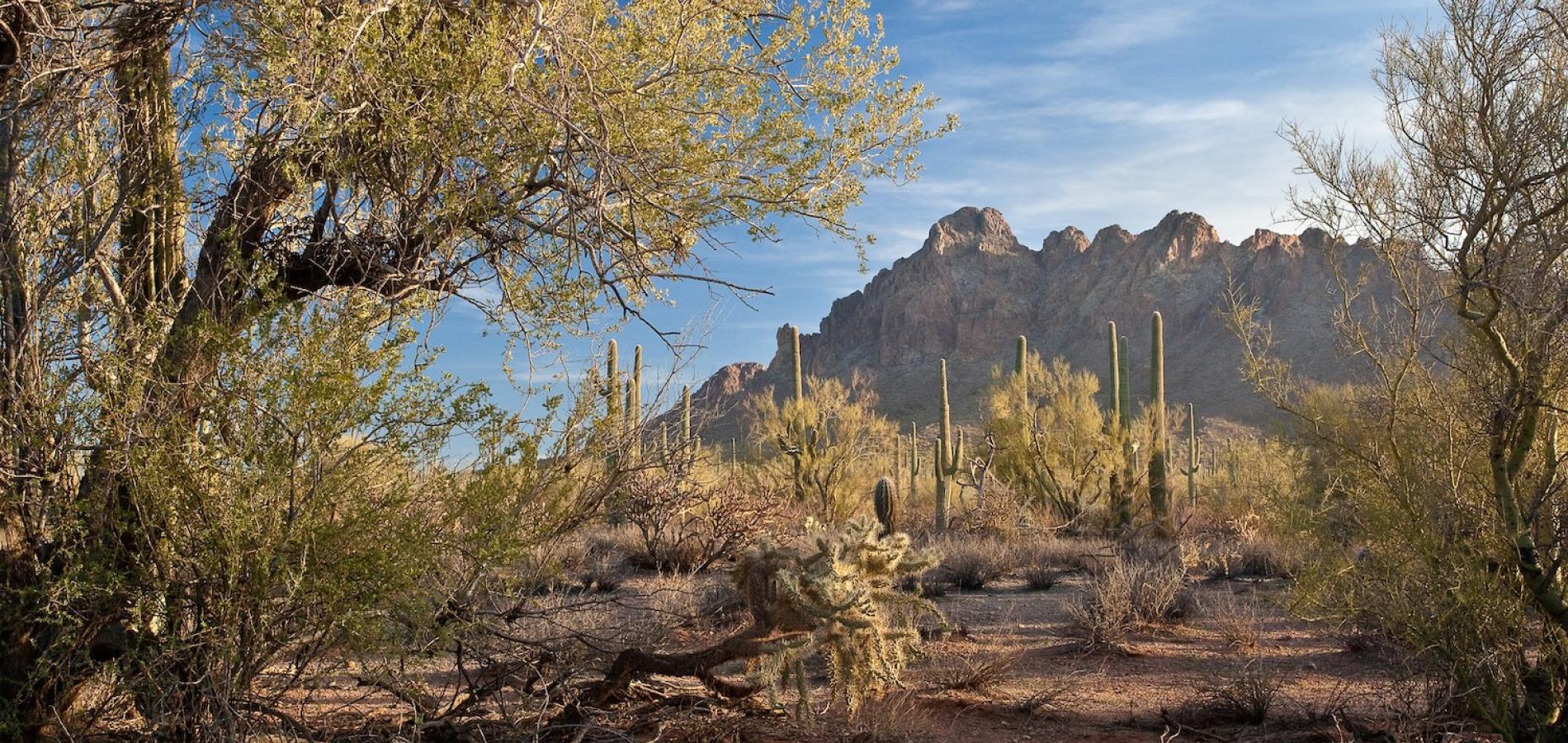
Now, efforts to decommission national monuments have continued in the second Trump administration, including legislation to nullify two Arizona national monuments, Ironwood Forest and Baaj Nwaavjo I’tah Kukveni–Ancestral Footprints of the Grand Canyon. Park advocates and legal scholars alike say that the ongoing back-and-forth is detrimental to the future of these large public lands, opening them up for potential resource extraction and desecration.
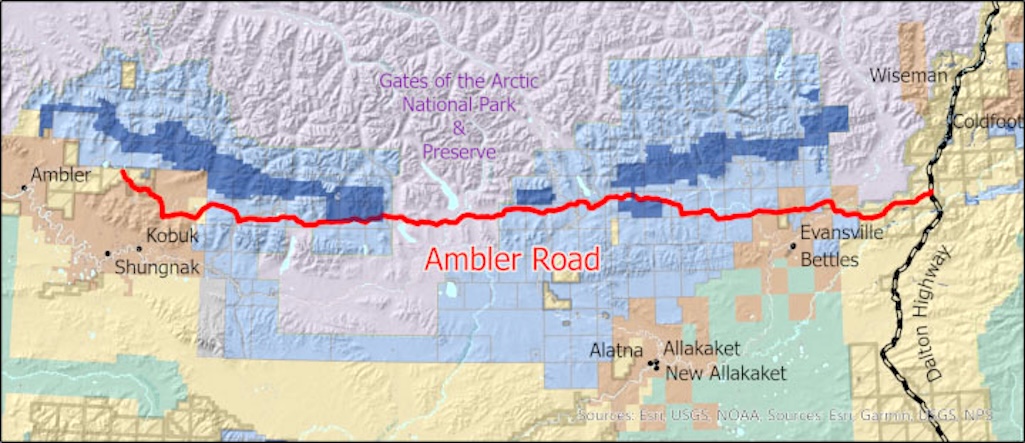
Associate Editor Rita Beamish revisits the years-long saga over whether a 211-mile access road should be built across pristine lands in Alaska, including part of Gates of the Arctic National Park and Preserve, to reach the site of a proposed copper mine.
The new momentum caps years of controversy, with the landmark 1980 law that created Gates of the Arctic, the sweeping Alaska National Interest and Lands Conservation Act — a statute as multilayered as the far-north state itself — still roiling political, environmental, cultural and economic debate today.
After being derailed last year by the Biden administration, and buoyed by Trump’s penchant for resource extraction, the mining road appears finally on its way to carving across the mountains and waterways of the southern Brooks Range. Implications reverberate well beyond the 1,261 acres that the Park Service is granting the road in Gates of the Arctic’s 8.5-million-acre landscape.
But will it happen this time? Will Gates of the Arctic bear a new industrial role where, as a Park Service webpage rhapsodizes, “wild rivers meander through glacier-carved valleys, caribou migrate along age-old trails, endless summer light fades into aurora-lit night skies of winter"?
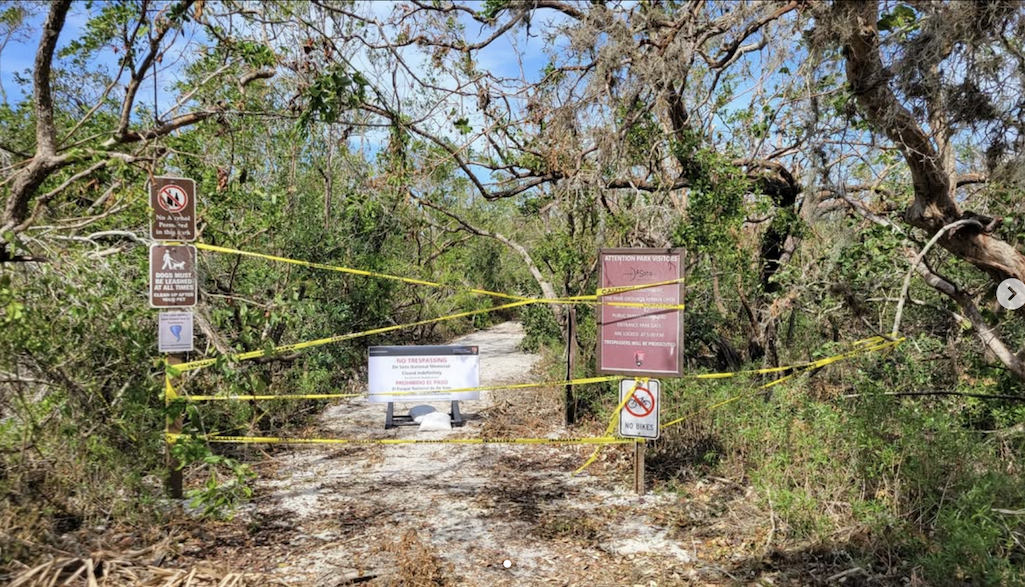
Jan Wesner Childs visits De Soto National Memorial in Florida to peer into the Trump administration's visions for a National Park System containing only the crown jewels, the 63 units officially known as "national parks."
De Soto is a theoretical example of what Interior Secretary Doug Burgum calls “cost centers,” park system units that cost more to operate than they bring in. Childs explains why De Soto was added to the park system and shows how it has suffered since being battered by hurricanes Helene and Milton.
Repanshek also explores the question of how the Park Service can possibly afford to maintain the thousands of historic structures dotting the park system.
"The historic structures are among the thousands, tens of thousands, of assets, as they call them, that [the Park Service is] struggling to maintain," explains John Garder, senior director for budget and appropriations at the National Parks Conservation Association. "The Park Service has more than 75,000 —not just the historic structures— assets. Trails, rivers, bridges, roads, buildings, campgrounds, etc. It's a lot of stuff to maintain."
The state of deterioration in historic structures across the National Park System often means "the public can no longer enjoy those spaces," said Pam Bowron, senior director for government relations at the National Trust for Historic Preservation.
One example is the Chateau at Oregon Caves National Monument and Preserve in Oregon, an historic, and once charming, lodge with just 23 rooms that has been closed since 2018 due to structural issues and a lack of funding to address them. The rundown condition of the Oregon Caves Chateau landed it on the National Trust for Historic Preservation's most endangered list last May. The six-story Chateau, a National Historic Landmark, was built in 1934. Planning for the Chateau's repair and rehabilitation project began more than 15 years ago, and while that planning has continued, delays have continually pushed things back.
Over the coming weeks the Traveler will roll out these stories that point to some of the many needs, threats, and challenges that can be found across the National Park System.
Story Categories:
A copy of National Parks Traveler's financial statements may be obtained by sending a stamped, self-addressed envelope to: National Parks Traveler, P.O. Box 980452, Park City, Utah 84098. National Parks Traveler was formed in the state of Utah for the purpose of informing and educating about national parks and protected areas.
Residents of the following states may obtain a copy of our financial and additional information as stated below:
- Florida: A COPY OF THE OFFICIAL REGISTRATION AND FINANCIAL INFORMATION FOR NATIONAL PARKS TRAVELER, (REGISTRATION NO. CH 51659), MAY BE OBTAINED FROM THE DIVISION OF CONSUMER SERVICES BY CALLING 800-435-7352 OR VISITING THEIR WEBSITE. REGISTRATION DOES NOT IMPLY ENDORSEMENT, APPROVAL, OR RECOMMENDATION BY THE STATE.
- Georgia: A full and fair description of the programs and financial statement summary of National Parks Traveler is available upon request at the office and phone number indicated above.
- Maryland: Documents and information submitted under the Maryland Solicitations Act are also available, for the cost of postage and copies, from the Secretary of State, State House, Annapolis, MD 21401 (410-974-5534).
- North Carolina: Financial information about this organization and a copy of its license are available from the State Solicitation Licensing Branch at 888-830-4989 or 919-807-2214. The license is not an endorsement by the State.
- Pennsylvania: The official registration and financial information of National Parks Traveler may be obtained from the Pennsylvania Department of State by calling 800-732-0999. Registration does not imply endorsement.
- Virginia: Financial statements are available from the Virginia Department of Agriculture and Consumer Services, 102 Governor Street, Richmond, Virginia 23219.
- Washington: National Parks Traveler is registered with Washington State’s Charities Program as required by law and additional information is available by calling 800-332-4483 or visiting www.sos.wa.gov/charities, or on file at Charities Division, Office of the Secretary of State, State of Washington, Olympia, WA 98504.


