


Nature that abounds within the National Park System attracts more than 320 million visitors a year from all corners of the country, from blue states, red states, and purple states.
So why has nature become a partisan issue? That is a question Caleb Scoville is trying to answer as a Tufts University researcher on partisanship and nature. And it is a question driving Benji Backer to lead a national campaign seeking to bridge the fiercely partisan divide in Congress.
Separately, the two have made it their mission to understand a conundrum that has only recently emerged — what has driven lawmakers in Washington to split on a mom-and-apple-pie issue — national parks — that used to find plenty of room for agreement across party lines as they also battle over environmental issues and laws that have always been more controversial but did not draw the level of divisiveness we see today. In two separate podcast interviews with the National Parks Traveler, the two explained the challenges they face and the goals they hope to achieve.
“I grew up at a young age knowing that the boxes that we put ourselves in politically aren't necessarily true, and that if we're going to get good solutions on the environment, we need to have both sides at the table,” says Backer, the 27-year-old driver behind Nature is Nonpartisan, a national campaign to get the public to demand Congressional bipartisanship when it comes to the environment.
“The best solutions for the environment throughout American history came when both sides worked together,” he says, acknowledging that Democrats and Republicans in Congress today are not working in a bipartisan fashion when it comes to the federal landscape and the environment.
What stands in the way of those sides working together on environmental policies is what Scoville, a Tufts University professor who landed an Andrew Carnegie Fellowship to study partisanship when it comes to nature, wants to understand.
Legislation tied to endangered species, clean air and water, and logging weren’t always as divisive as they’ve become. From passage of The Wilderness Act in 1964 to that of the Endangered Species Act in 1973, Congress practically marched in lockstep to approve environmental laws.
Today they are “sharply divisive issue areas,” Scoville told the Traveler recently in a podcast. “I want to understand how that happened.”

So does Backer.
“You can argue about the efficacy of these policies in today's terms, but the Clean Air Act, the Clean Water Act, the Endangered Species Act, the EPA, all these things were supported in the Senate with votes that looked like 95-5,” he says in today’s podcast. “Nearly 100 percent of senators voted together to protect our air, our water and our environment. And we've lost those days in our country.
“And part of the reason that Nature is Nonpartisan exists is to re-instill the cultural side of this. We need America's heritage and the environment to come back,” Backer said. “We need our conservation heritage to come back. But it won't come back if we only have half the aisle standing up.”
Their work comes at a time when many Republicans in Congress want to water down both the Endangered Species Act and the National Environmental Policy Act. At the same time, there were efforts this year — unsuccessful in the end — to put federal lands up for sale.
Additionally, the Trump administration wants to repeal a determination reached in 2009 during the Obama administration that climate change is a detriment to human health and safety.
Environmental History
Historically, said Scoville, some of the divisions between people and nature can be traced back to the late 19th century, if not farther back. Pointing to Jack Farrell’s 2015 book, The Battle For Yellowstone, the professor said the “question of what is Yellowstone and what is nature is something that has divided people for a very long time, and that goes back to the dispossession of Indigenous people in the Americas.”
“But it also represents conflict among different waves of settlers that came after,” he said. “Conflict and environment are tied up partly because we're talking about natural resources, we're talking about land, we're talking about belonging and citizenship, and political freedom.”
Backer’s goal is to use public support to move Congress beyond that divisiveness, at least when it comes to nature.
“We need to just make this a shared identity. We need to focus on outcomes instead of ideology,” he said. “And right now on the environment, we're focused more on ideology than outcomes. My goal is to build a cultural movement with Nature Is Nonpartisan that will be the future of the environmental movement and really use a grassroots push to show politicians that when they do the right thing on the environment, they'll be rewarded by both sides, by America as a whole.”
There are moments, though, when there is a bipartisan mood in Congress.
“Congress will vote for a new national park unit or new national monument because their constituents like the outdoors, like to visit these places,” said Kristen Brengel, senior vice president for government affairs at the National Parks Conservation Association who has lobbied Congress for many years. “It's popular to say I'm protecting this salmon stream, or this trout stream, or a historic site, and to say I'm protecting part of our history and heritage.”
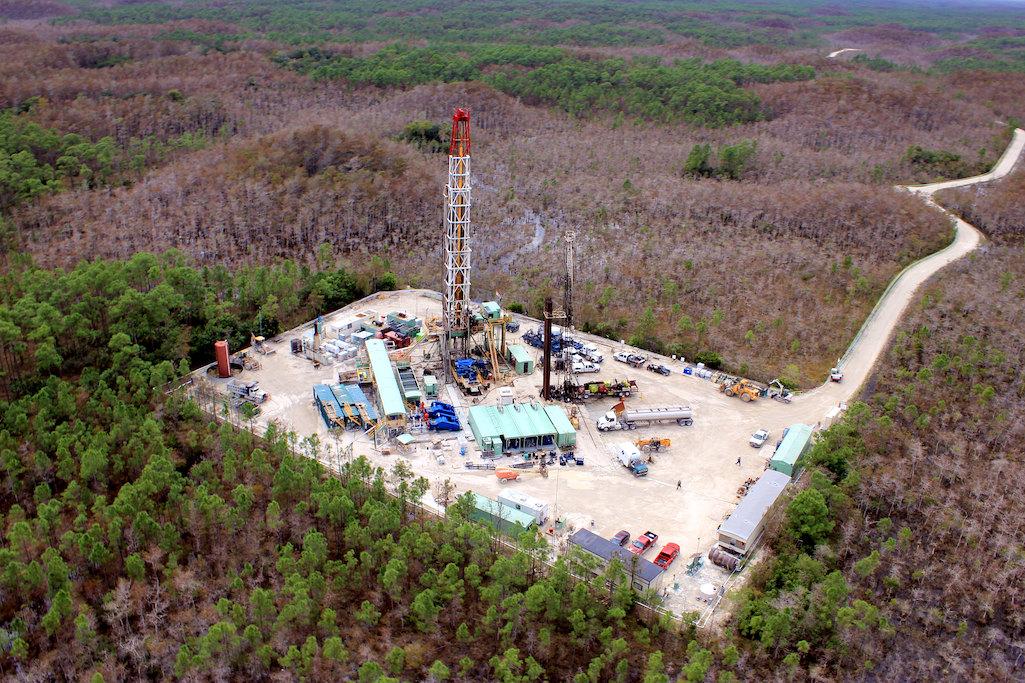
But at the same time, there are other issues politicians must address for their districts or their states, she added.
"You may have a member of Congress who will fight like hell for the coal industry, but they'll also fight like hell to get a new national park established in their state,” Brengel said during a phone call.
That said there definitely is the appearance of a contradiction in supporting both a national park and a coal operation that might be polluting the air or water, she acknowledged.
“I think a lot of times a member of Congress is sort of like, well, ‘That's our biggest employer in my state, so I need to protect that industry, because they employ so many people. But I do care about the rivers, and I care about the streams, and I care about the open spaces, and my constituents want those, too,” Brengel explained. “There's no thread that runs through that puts all of these things together all the time when it comes to these issues.”
Media Wedges
Driving a wedge between the public is today’s media, maintains Backer. Fox News will pander to the right-wing, while CNN and MSNBC will throw political red meat to the left-wing.
“The (media) incentive is when (President Joe) Biden announces an environmental policy for Fox News to go and say, ‘This is a socialist policy that is coming for your livelihood,’” he said. “It's also the incentive for CNN and MSNBC when Trump does something to say, ‘This is just going to ruin everyone's environmental quality in their life.’
“…We've got to get out of that, because behind that noise is an underbelly of America that wants to protect the environment in a sensible way, across partisan boundaries,” believes Backer.
How to reach that middle ground, to provide incentives for landowners to be good stewards instead of dictating to them and to have barriers that protect the environment, is the dilemma.
“I don't think either side has figured that out yet, because they're so busy trying to undo” either what Biden did or what Trump is doing, Backer said.
Backer hopes his organization and the work it’s been doing can lead to solutions.
“I just convened 30 CEOs of different conservation groups, from the most hunting and fishing kind of advocate groups to the traditional environmentalist NGOs. And the first question I got was, ‘Why are you even trying this? And how did you get this to happen?” he said. “We got 30 CEOs to show up, all in about a month's time, to discuss a roadmap on conservation.
“…I think we need to expect as Americans better from our politicians and from our leaders, that we don't want them to sit in their silos.”
Part of the problem just might be that the public has its own silos.
“People genuinely care about addressing climate change. They genuinely care about environmental quality,” said Scoville. “But ultimately, because things have become so tightly sorted, that where you stand on the environment may just kind of be downstream of what your partisan affiliation is.
“But the reality is I think more complex when you get to really concrete issues. And so I think when you have a national park next door, it doesn't really matter what your abstract position is on the various environmental laws at the federal level if you enjoy using that place,” he added. “I guess what it comes down to is to the extent that we are divided on environmental issues we do need to approach these things where people already are, and and what they already value and what they already do.”
Listen to our entire conversation with Benji Backer in National Parks Traveler's Episode 336.
A copy of National Parks Traveler's financial statements may be obtained by sending a stamped, self-addressed envelope to: National Parks Traveler, P.O. Box 980452, Park City, Utah 84098. National Parks Traveler was formed in the state of Utah for the purpose of informing and educating about national parks and protected areas.
Residents of the following states may obtain a copy of our financial and additional information as stated below:
- Florida: A COPY OF THE OFFICIAL REGISTRATION AND FINANCIAL INFORMATION FOR NATIONAL PARKS TRAVELER, (REGISTRATION NO. CH 51659), MAY BE OBTAINED FROM THE DIVISION OF CONSUMER SERVICES BY CALLING 800-435-7352 OR VISITING THEIR WEBSITE. REGISTRATION DOES NOT IMPLY ENDORSEMENT, APPROVAL, OR RECOMMENDATION BY THE STATE.
- Georgia: A full and fair description of the programs and financial statement summary of National Parks Traveler is available upon request at the office and phone number indicated above.
- Maryland: Documents and information submitted under the Maryland Solicitations Act are also available, for the cost of postage and copies, from the Secretary of State, State House, Annapolis, MD 21401 (410-974-5534).
- North Carolina: Financial information about this organization and a copy of its license are available from the State Solicitation Licensing Branch at 888-830-4989 or 919-807-2214. The license is not an endorsement by the State.
- Pennsylvania: The official registration and financial information of National Parks Traveler may be obtained from the Pennsylvania Department of State by calling 800-732-0999. Registration does not imply endorsement.
- Virginia: Financial statements are available from the Virginia Department of Agriculture and Consumer Services, 102 Governor Street, Richmond, Virginia 23219.
- Washington: National Parks Traveler is registered with Washington State’s Charities Program as required by law and additional information is available by calling 800-332-4483 or visiting www.sos.wa.gov/charities, or on file at Charities Division, Office of the Secretary of State, State of Washington, Olympia, WA 98504.
