

Featured Photographer
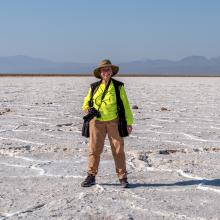
Contributing photographer and writer for the National Parks Traveler since 2012, Rebecca Latson has ventured out to units of the U.S. National Park System, as well as national parks within Canada, on behalf of the Traveler. With her writing and photography, Rebecca authors the Traveler's monthly Photography In The National Parks column as well as various other national park-related articles (hiking, itineraries, photography guides, quizzes) for the Traveler.
Sure, there’s a Kings Canyon National Park and a Sequoia National Park, both in California, but the National Park Service only has a single webpage combining these two national parks. After all, when you visit one, you ought to go ahead and visit the other right next door, since both share a border witih each other, are connected to each other by the winding Generals Highway, and are home to some of the world’s largest trees. Of course, while it is mainly about the trees in these parks, it’s not just about the trees. In addition to groves of these giant sequoias, you can also explore a landscape of foothills, canyons, high country mountains towering over pristine lakes, and even caves (more than 200 of them, although only one is currently open to the public).
Giant sequoia trees are old, ranging up to 3,400 years. They are also wide. The circumference of the General Sherman tree – the world’s largest living tree – is 102.6 feet (31.1 meters) wide when measured at the ground. Considering these giant trees begin as tiny seeds the size of an oat grain, this is pretty phenomenal.
According to park staff:
Sequoia cones retain their seeds – unlike other trees in their forest environs – in closed cones for perhaps 20 years. When fire burns through the forest the hot air dries out older cones. They open up and, within one to two weeks, begin to rain down their seeds loads onto fire-swept, bare soil. [Because of their tiny size,] 91,000 sequoia seeds weigh just 1 pound [0.45 kilogram]! To germinate and survive, sequoia seeds must fall on the mineral soil left bare by fire – without it, seeds will not successfully grow into new sequoia seedlings. Both Douglas squirrels and cone-boring beetles can also release seeds, but if they don’t fall on bare soil cleared by fire, they cannot germinate.
While you can visit special single trees, like the General Sherman or the General Grant trees, or larger groves of sequoias, including Grant Grove, Muir Grove, and Giant Forest for close-up views of these natural skyscrapers, you can also engage in other outdoor activities within the almost 900,000 acres (>360,000 hectares) of these twinned national parks. You can’t go wrong attending a ranger-led program to learn about the trees and your surroundings. Eight hundred miles (1,287.5 kilometers) of combined hiking trails allow for day hikes of varying difficulty levels, as well as multi-day backpacking adventures (for which you will need a wilderness permit). You can horseback ride, rock climb, fish, and even explore Crystal Cave, the only cave currently open to the public. If you enjoy scenic driving, there’s the 32.5-mile (52.3-kilometer) General Sherman’s Highway connecting these two parks.
Because there’s so little light pollution in these parks, the night skies are perfect for casting your eyes up to the inky sky bedazzled with brilliant stars. There’s even an annual Dark Sky Festival, which for 2025 is scheduled to be held September 12-14. This largest night sky festival in Central California takes place in various locations, including the Foothills, Mineral King, Giant Forest, Lodgepole, Grant Grove, Cedar Grove, as well as Lake Kaweah in Three Rivers.
Kings Canyon and Sequoia National Parks are open year-round, but some park roads are closed during the winter months and other park roads may be temporarily closed while awaiting snow plows to clear the accumulation. Does this mean there is nothing to do when those thick layers of snow blanket the landscape? There’s plenty of winter fun, if you enjoy cross-country skiing, snowshoeing, and sledding. Just remember to bring along your tire chains and know how to use them.
These two national parks have a plethora of lodging options, all of which are so popular you need to reserve your room months - even a year - ahead of your stay.
If pitching a tent or parking your RV beneath the stars is more your style, these parks offer 14 campgrounds, two of which are open year-round.
Speaking of stars, these national parks are great places for a little stargazing on a clear night, while silhouettes of giant sequoias point up toward the glittering constellations. Sequoia Parks Conservancy holds an annual Dark Sky Festival.
Be aware, some of the places you wish to visit within Sequoia and Kings Canyon National Parks might be closed due to ongoing recovery from wildfires – particularly the 2021 KNP Complex fire. According to a November 2021 Traveler article, these fires “claimed between 3 percent and 5 percent of the world's giant sequoias. In simple numbers, the losses fall between 2,261 and 3,637 mature sequoias with a diameter of at least four feet.” Check with the park’s Alerts as well as specific park pages for those areas you intend to visit.
Note: Sequoia and Kings Canyon National Parks are now cashless for fees, including entrance fees, backcountry permits, and campgrounds, as of May 21, 2025. Only credit/debit cards are accepted. The gift shops and dining establishments are self-checkout which also only accept credit/debit cards.
Traveler’s Choice For: Giant sequoia trees, high country vistas, hiking, photography, night skies, fall colors
- By Rebecca Latson - November 12th, 2025 5:04am



