
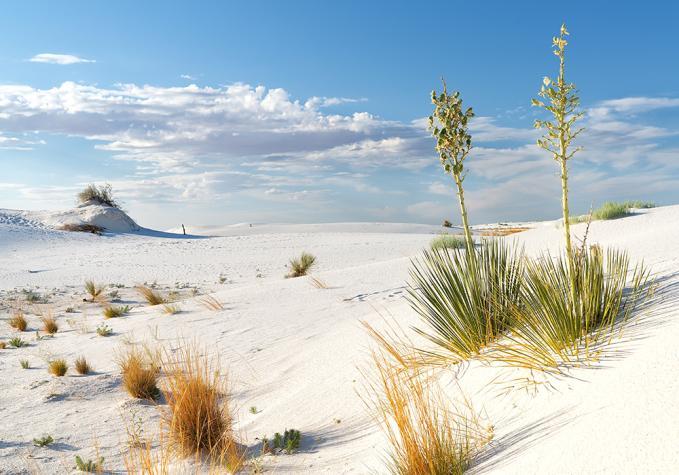
Early morning landscape at White Sands National Park / Rebecca Latson
Featured Photographer
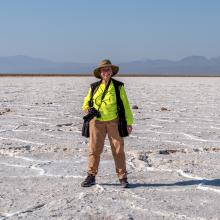
Contributing photographer and writer for the National Parks Traveler since 2012, Rebecca Latson has ventured out to units of the U.S. National Park System, as well as national parks within Canada, on behalf of the Traveler. With her writing and photography, Rebecca authors the Traveler's monthly Photography In The National Parks column as well as various other national park-related articles (hiking, itineraries, photography guides, quizzes) for the Traveler.
Picture 275 square miles (712 square kilometers) of sparkly, sugar-white, undulating sand dunes perfect for hiking, sledding, photography, or simply reflecting on a unique environment that is brilliantly bright, stark, and desolate to the general view, yet teeming with plant, animal, and insect life exclusive to the Chihuahuan Desert and White Sands National Park, in New Mexico, home to the largest gypsum dunefield in the world.
Sharing a border with Holloman Airforce Base and surrounded by the White Sands Missile Range, this landscape has been traveled for thousands of years by ancient humans and now-extinct wildlife. Fossilized footprints known as trace fossils were left by both wildlife and people and indicate a cooler, wetter environment from what we see now in the Tularosa Basin.
This landscape’s unique geology begins some 280-250 million years ago, when what is now the state of New Mexico was covered in a warm, shallow sea within which layers of gypsum and other dissolved minerals were deposited. Over the tens of millions of years, the sea disappeared, mountains were formed, and the climate eventually became warmer and drier.
Ten thousand years ago, formation of the Chihuahuan Desert occurred and most of ancient Lake Otero dried up.
According to Park Staff:
As Lake Otero’s water disappeared selenite crystals formed on Alkali Flat. Strong 17 mph winds carried the smaller pieces, further breaking down the crystals into small grains and polishing them into a brilliant white color.
Constantly pushed to the northeast by strong winds, the sand accumulated into larger dunes, which moved several feet over a windy day or night eventually forming the famous white dune field visitors see today. Selenite gypsum continues to form within Lake Lucero, the remnant of the larger Lake Otero. A playa (intermittent lake), Lake Lucero dries, leaving these crystals to weather from the elements and replenish the park’s bright, white sand dunes.
Located 16 miles (25.7 kilometers) southwest of Alamogordo, New Mexico, White Sands is open daily year-round, from 7 a.m. until sunset, with gates closing one hour after sunset. During the full moon, the park remains open a couple of hours after sunset and there are ranger-led full-moon dune tours and other entertainment events on tap during those days.
If you are looking for solitude in this national park, early mornings are your best bet, at least until around 8:30 a.m. when the first roar of the fighter jets reverberates into the airspace above White Sands.
One of the most popular activities for the entire family is sledding down the dunes, the soft sand of which remains cool to the touch even on hot days. Waxed plastic snow saucers work best and can be rented or purchased at the park's gift shop.
Picnicking is another great activity at White Sands, offering a break from sledding or hiking. There are three different picnic areas located just off Dunes Drive, complete with vault toilets, a total of 62 sheltered picnic tables offering shade from the bright sun, and even elevated grills.
In addition to sledding and picnicking, bring your camera for some photography of the sensuously-curved white sands and all the life you see (including tracks indicating life that may not emerge until long after the park closes for the day).
If hiking is a favorite activity, there are only five established trails at White Sands, since you basically have the entire dunelands to explore within park boundaries. To ensure you remain on track, you’ll see tall, bright orange trail markers keeping you moving in the right direction.
The wildlife you see is well adapted for the Chihuahuan Desert ecosystem. You might spot a pure white bleached earless lizard scuttling along the Dune Life Nature Trail, so perfectly camouflaged against the packed white gypsum trail that you’ll need to watch your step. You definitely will see small black darkling beetles puttering around. Arrive in the park early in the morning and you’ll discover these beetles’ tracks all over the sand, crisscrossing each other for destinations unknown. You might also notice tracks left by snakes, lizards, or sand scorpions emerging from their burrows onto the sandy surface at night to hunt for prey.
Take your camera with you to photograph not only the sensuous curves of the white dunes themselves, but also the iconic soaptree yucca perhaps still in bloom, along with other unique flora and fauna that call White Sands home.
As you prepare for a day in the dunes, remember to take along at least a gallon of water per person, sunscreen, and sunglasses. The sand may be cool to the touch, even on hot summer days, but it’s still hot, hot, hot in this national park. It’s also extremely bright from the white sand and that sun reflecting off the sand.
There’s no in-park lodging or frontcountry camping, and currently, backcountry camping at the park is closed. The town of Alamogordo, however, is less than 20 minutes away, providing lodging and dining options for all budgets.
Don’t be misled into thinking White Sands National Park is a one-and-done deal after a day of sledding. Stick around and observe your surroundings. Look closely at the tracks on the sand, keep an eye out for a speedy lizard or scuttling beetle intent upon their survival routines, observe the unique plant life and geology around you.
Traveler’s Choice For: Sand dunes, sledding, photography, desert life, picnicking, family fun, geology
- By Rebecca Latson - July 3rd, 2025 5:43am





