

Late afternoon sun over El Capitan, Guadalupe Mountains National Park / Rebecca Latson
Featured Photographer
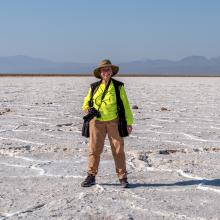
Contributing photographer and writer for the National Parks Traveler since 2012, Rebecca Latson has ventured out to units of the U.S. National Park System, as well as national parks within Canada, on behalf of the Traveler. With her writing and photography, Rebecca authors the Traveler's monthly Photography In The National Parks column as well as various other national park-related articles (hiking, itineraries, photography guides, quizzes) for the Traveler.
As you approach Guadalupe Mountains National Park in Texas from the south, one of the first things catching your eye after an hour of driving up from El Paso, Texas, is the southernmost point of the Guadalupe Mountains known as El Capitan (“The Captain,” or “The Chief”). This hunk of ancient Permian fossil reef juts high above the atmospheric haze, heralding your approach to this national park, home to the four highest points in Texas, extremes in habitats ranging from gypsum dunes to forests of Douglas fir and ponderosa pine, one of the finest examples of an ancient reef complex on earth, and a history of settlers and ranchers, bloodshed and politics.
Located within the Chihuahuan Desert - one of the most diverse deserts in the Northern Hemisphere - this park offers 80 miles (128.7 kilometers) of hiking trails ranging from an easy paved walk near the Pine Springs Visitor Center to a challenging ascent to the summit of the highest natural point in Texas. You can explore the gypsum sand dunes at Salt Basin Dunes, wonder over the rich diversity of McKittrick Canyon’s riparian oasis, and wander the museum at historic Frijole Ranch. If you really want to get away from it all, you can hike into the backcountry for a few days of solitude and stunning landscape. Bring your binoculars and camera to capture one or more of the 275 confirmed bird species known within the park. You might also spy a coyote, jackrabbit, mule deer, lizard, or rattlesnake (be careful out there).
For thousands of years, the landscape both inside and out of Guadalupe Mountains National Park's boundaries have been the domain of Native Americans. In the 1690s, Spanish explorers passed through, and in 1858 the Butterfield Overland Stage Line began carrying mail and passengers through the Guadalupe Mountains on the nation’s first transcontinental mail route.
While there is no in-park lodging, there are three developed campgrounds open year-round where you can pitch your tent or park your RV directly beneath the stars. There's even a campground that can be used by groups with horses.
This national park is one of the most unique in the United States, allowing visitors to explore different environments within the underrated desert of West Texas. The pages below will help you with your preparations and explorations.
Traveler's Choice For: Rugged backcountry, geology, photography, birding, history
- By Consuelo Martinez - July 8th, 2025 3:46pm



