

Featured Photographer
Square Tower House, the tallest ruin at Mesa Verde, copyright QT Luong.
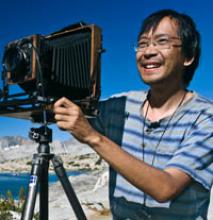
I celebrate the splendor and variety of the natural and human heritage with my photography. For the past twenty-five years, I have been privileged to travel, trek, and climb in some of the most remote and beautiful corners of the earth. Laying down in a colorful meadow dense with wildflowers, clinging precariously to a vertical icy mountain face, listening to the silence of desert sand dunes or to the calls of a bustling floating market might seem like very different experiences, however, I feel that they share the same life-affirming benefits.
For more of Tuan's national park images, visit www.terragalleria.com/parks
Eight centuries ago, for reasons still not fully understood, they got up and left. After roughly 700 years of living around and atop two slender mesas now recognized as part of southwestern Colorado, a society simply got up and left.
Behind them they left irrigation systems that helped their gardens flourish, stone dwellings nudged into alcoves on cliff faces and, within some of those dwellings, items of every day life, even a string of mugs. These Ancestral Puebloans were largely an agrarian culture, and on these mesas today called Chapin and Wetherill they tended their crops and, at day's end, felt safety in their cliffside castles.
As with any society, they had gone through a series of evolutions, from Basketmakers who lived in pithouses to "Puebloans," Spanish for village dwellers. During the last 200 or 300 years of their stay on the mesas they perfected their stylistic cliff dwellings, raising them two, three, and more stories high. The largest, today called Cliff Palace, claimed more than 150 rooms and nearly two dozen "kivas," round, stone-lined ceremonial rooms sunk into the ground. At one point, the populations clinging to these mesas were thought to number 5,000.
Today Chapin Mesa is the center of the park, in terms of visitation activities. Here you'll find not only the park's visitor center, but also three of the five cliff dwellings in the park regularly opened to visitors: Cliff Palace, Balcony House, and Spruce Tree House.
Wetherill Mesa contains the second-largest concentration of ruins in the area. A 1958 archaeological survey "documented close to 900 sites, ranging in age from Modified Basketmaker pithouses (A.D. 450-750) to the Classic Pueblo cliff dwellings (A.D. 120--1300). During its occupation, this excellent location could have accommodated approximately 1000 to 2000 Anasazi people."
Today we're left to marvel at these dwellings tucked into cliff faces and wonder where their makers went.
Mesa Verde is an incredible park, one that challenges your imagination as you struggle to envision life 800 years ago. Your imagination gets help during a visit to Balcony House, which requires climbing up a wooden ladder to reach the dwelling. Once upon a time in Spruce House you could descend into a darkened kiva to, for a moment or two at least, try to envision the spiritual aspects these subterranean chambers were thought to offer the cliff dwellers. Unfortunately, issues with the stability of the site's roof led to Spruce Tree House being closed to the public in 2015 and it remains closed until further notice. You can, however, still view this cliff dwelling from several vantage points.
A visit to Mesa Verde provides keen insights into how the ancestral Puebloans lived; how they built their homes high in alcoves for protection and yet farmed on the surrounding plateaus, for instance. In some cases they would climb down to the canyon floor and then go up the other canyon wall to reach their gardens. They also were masters at irrigating their gardens, and remnants of check dams can still be found on Wetherill Mesa.
Touring Mesa Verde, you can peer into kivas and and climb up into rooms, see the smoke stains that cling to the sandstone alcove ceilings, gaze out over the surrounding canyons, and simply stand in the quiet, envisioning the sounds of laughing children and adults at work building fires or making pottery.
Traveler's Choice For: History, photography, archaeology, anthropology.
- By Kurt Repanshek - July 31st, 2025 8:59am



