Long before the first settlers of European descent moved into the area, American Indians frequented the area now known as Hot Springs National Park in Arkansas to bathe in the naturally-heated water for medicinal and ceremonial purposes. When settlers of European descent inhabited this same landscape around 1807, they realized the economic value a resort would have utilizing these thermal waters.

The United States purchased the area from France as part of the Louisiana Purchase in 1803, and President Thomas Jefferson sent an expedition to explore these hot springs flowing within the Washita (Ouachita) Mountains. Widely-publicized information resulting from this exploration encouraged settlers to put down roots around what they believed would be a profitable venture.
By the 1830s, makeshift structures of canvas and lumber – essentially huts and tents – were later replaced by all-wood structures to accommodate the needs of visitors seeking the hot waters’ benefits for their aches and pains including arthritis, migraines, and even venereal disease. Fires were common, rudimentary bathhouse construction was shoddy, and the wood tended to rot due to humidity and moisture from the hot springs themselves.
In 1832, the federal government set aside four sections of land as the first U.S. reservation created to protect a natural resource. Boundaries were not marked, and by the mid-1800s individuals had filed claims and counterclaims on the springs and surrounding land. Everybody wanted a piece of the action.
According to Park Staff:
The government took active control of the springs and reservation for the first time after all the private claims on reservation land were settled in 1877.
In 1884 the federal government put the creek into a channel, roofed it over, and laid a road above it. Much of it runs beneath Central Avenue today.
[The federal government] approved blueprints for private bathhouses ranging from simple to luxurious [and] even operated a free bathhouse and public health facility for those unable to pay for baths recommended by their physician. Gradually Hot Springs came to be called "The American Spa." Such slogans as " Uncle Sam Bathes the World" and "The Nation's Health Sanitarium" were used to promote the city. Because minorities did not have equal access to the bathhouses on Bathhouse Row, African Americans opened their own facilities nearby beginning in 1905.
By 1921 the Hot Springs Reservation had become popular with vacationers and health remedy seekers. The new National Park Service's first director, Stephen Mather, convinced Congress to declare the reservation the 18th national park. Monumental bathhouses built along Bathhouse Row about that time catered to crowds of health-seekers. These new establishments, full of the latest equipment, pampered the bather in artful surroundings. The most expensive decorated their walls, floors, and partitions in marble and tile. Some rooms sported polished brass, murals, fountains, statues, and even stained glass. Gymnasiums and beauty shops helped cure-seekers in their efforts to feel and look better.

After Hot Springs Creek was enclosed within a tunnel and buried by a road. Today, Hot Springs Creek tunnel runs beneath Central Avenue alongside Bathhouse Row and empties into the Ouachita River. Eight luxurious Victorian bathhouses were between 1880 – 1888, with underground pipes replacing the rough wooden troughs that had carried the hot water to various structures during past decades.
Bathhouse Row was the culmination of land disputes, management changes, new construction, and fires. The original eight bathhouses along this promenade have been remodeled over the years and still stand today. Buckstaff Bathhouse and Quapaw Bathhouse still offer spa services ranging anywhere from $116 to $650, depending upon which bathhouse and spa package you choose. The Fordyce Bathhouse houses the park’s visitor center and museum, Superior Bathhouse is home to the only brewery within a U.S. national park, Hale Bathhouse is now a boutique hotel, Lamar Bathhouse is home to Park administrative offices, a small research library, and the park store, the Ozark Bathhouse is currently unoccupied, as is the Maurice Bathhouse, which is being restored thanks to a grant of nearly $32 million from the Great American Outdoors Act's Legacy Restoration Fund.

Bathhouse Attendants
The people “taking the waters” at the bathhouses of Hot Springs were predominantly wealthy and white. They came there to enjoy a little spa/relaxation time, or to relieve chronic afflictions like arthritis, migraines, and even venereal disease. But they didn’t just walk in and serve themselves. Bathhouse attendants assisted these guests.
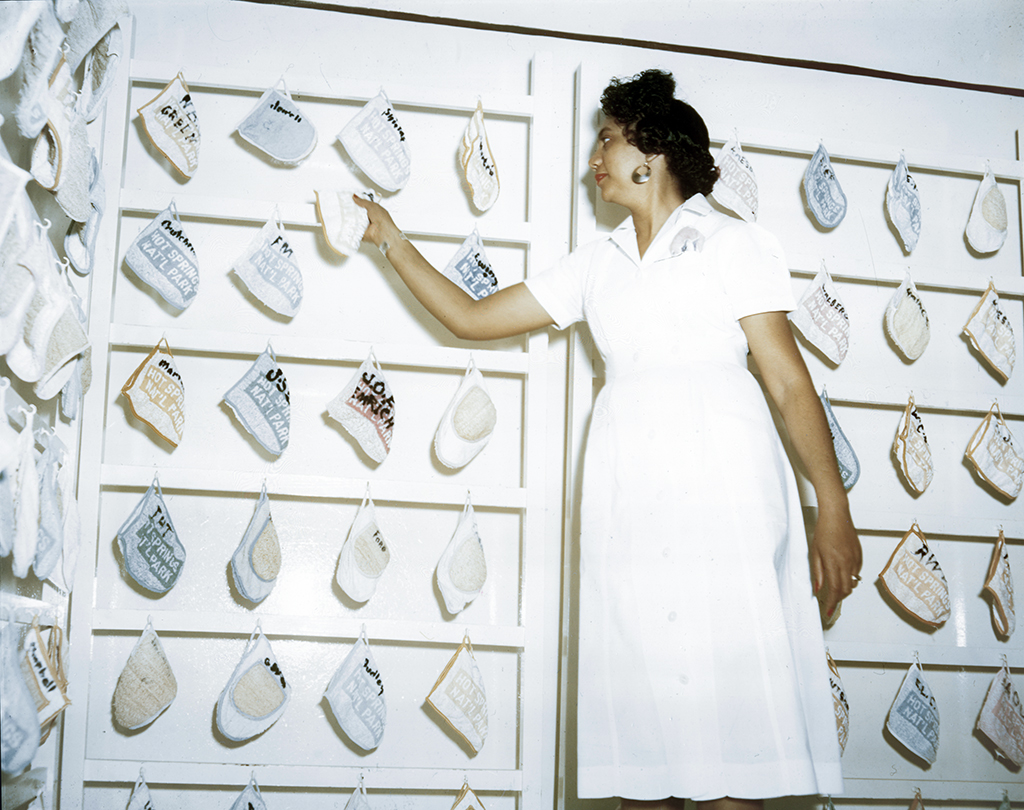
According to Park Staff:
Bathhouse attendants bathed visitors and performed hydrotherapy treatments prescribed by a physician who was licensed by the Department of the Interior. They worked long hours in hot and humid conditions in the bathhouse. Services in the bathhouses expanded and diversified throughout the twentieth century with roles like attendant assistants (known as a helpers), pack room employees, and massage therapists populating Hot Springs' busy bathhouses. For most of Hot Springs' history, many of these men and women were African American. These men and women were well-trained and highly respected in the bathhouses and within their community.
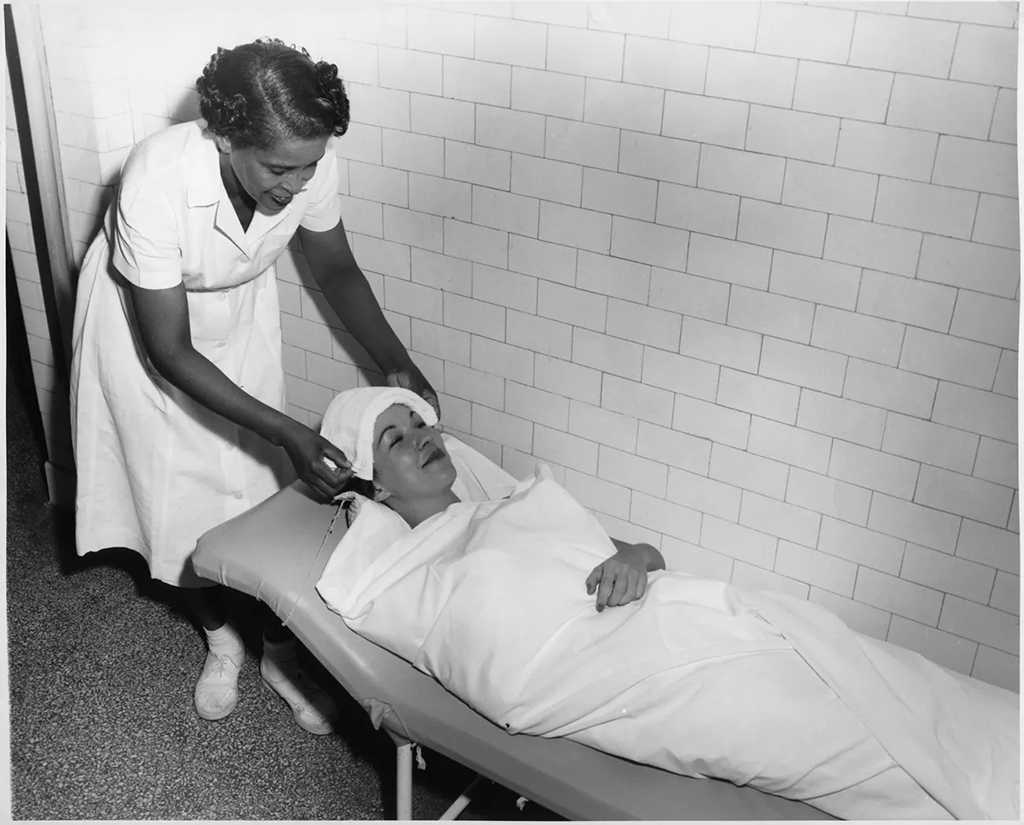
To learn more about the work bathhouse employees did, click here.
Major Leage Baseball
The history of Hot Springs doesn’t stop with the bathhouses. Major league baseball spring training is said to have originated at Hot Springs in 1886, when according to Wikipedia:
Spring training by major league teams in sites other than their regular season game sites first became popular in the 1890s and by 1910 was in wide use. Hot Springs, Arkansas, has been called the original "birthplace" of spring training baseball. The location of Hot Springs and the concept of getting the players ready for the upcoming season was the brainchild of Chicago White Stockings (today's Chicago Cubs) team President Albert Spalding and Cap Anson. In 1886, the White Stockings traveled to Hot Springs to prepare for the upcoming season. After holding spring training at the Hot Springs Baseball Grounds, the White Stockings went on to have a successful season and other teams took notice. In subsequent years other teams joined Chicago and began holding spring training in Hot Springs, leading to the first spring training games. The Cleveland Spiders, Detroit Tigers, Pittsburgh Pirates, Cincinnati Reds, Brooklyn Dodgers, and Boston Red Sox followed the White Stockings to Hot Springs. Whittington Field/Ban Johnson Park (1894), Majestic Park (1909), and Fogel Field (1912) were all built in Hot Springs to host Major League teams.
It's a sure bet the players soaked their aches in the thermal springs at the bathhouses after a long day of training.

- By Rebecca Latson - August 20th, 2025 5:23am