
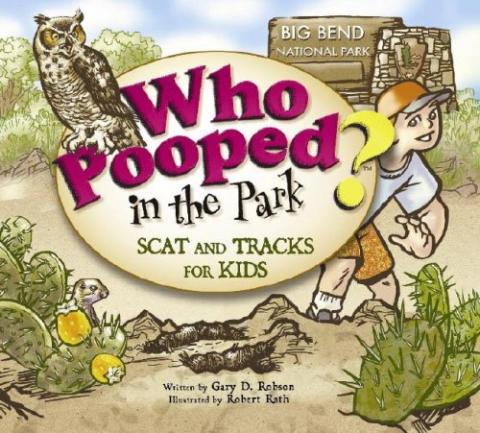
Who Pooped In The Park? Scat And Tracks For Kids
Author : Gary D. Robson
Published : 2006-10-01
Support National Parks Traveler, and purchase this product at Amazon.com

Scatalogically speaked, this book delivers all the poop on Big Bend National Park. So to speak.
Who would have known critter poop was so big with kids? There's a whole franchise out there, with "Who Pooped in the Park" books for Yellowstone, Grand Canyon, Glacier, Rocky Mountain, Shenandoah and many more parks.
This book, on what pooped in Big Bend National Park, is aimed at kids age 8 and above. Part of the motivation in writing the book stems from the fact that wildlife in Big Bend is not always easy to spot. But scat and tracks often can be found.
Robert Rath illustrated the book with full-page, full-color cartoon-style pictures based around a family of four -- mom and dad and two young kids -- who are on vacation in Big Bend. Through the narrative writer Gary D. Robson intersperses details about the park, discussing its size and landscape and wildlife, while focusing on wildlife tracks and scat.
"The animals are here," said Dad. "We just need to look for their sign."
"Sign?" said Michael. "Like a sign at a zoo?"
Dad smiled. "In this case, a sign is a clue that an animal left behind. Look under that mesquite bush. An animal has been nibbling on the grass."
"All of these signs tell a story," added Mom. "See the little tracks the animal left in the dirt? You can count four toes in each footprint."
"Look over here! I found bunny poop, just like in Velvet's case back home," yelled Michael.
"We came all the way to Big Bend National Park for rabbit poop?" Emily moaned. "Michael's bunny makes plenty of poop at home."
"Scientists and rangers call it scat instead of poop, kids," Mom said with a grin. "But you're right. This is from a rabbit or hare."
As the family's vacation continues, they find other evidence of wildlife -- from scat to tracks and even antlers. While Mr. Rath points out the differences of some animals, such as mule deer and white-tailed deer, with his drawings, Mr. Robson drops in "The Straight Poop," little wildlife factoids such as that female deer don't grow antlers, that rabbits eat their own scat to maximize the nutritional value of their forage, and that roadrunners can run up to 15 miles per hour.
Though aimed at a youthful audience, this book and others in the series can be fun for families visiting national parks and help kids, and even their parents, learn some natural history on their vacations.


National parks and their natural resources belong to you. The National Parks Traveler works to ensure you know how these essential places are being cared for.
Sign Up For Our Weekly Newsletter
Unsubscribe at any time.
INN Member

The easiest way to explore RV-friendly National Park campgrounds.

Here’s the definitive guide to National Park System campgrounds where RVers can park their rigs.
Our app is packed with RVing- specific details on more than 250 campgrounds in more than 70 national parks.
You’ll also find stories about RVing in the parks, tips helpful if you’ve just recently become an RVer, and useful planning suggestions.

