
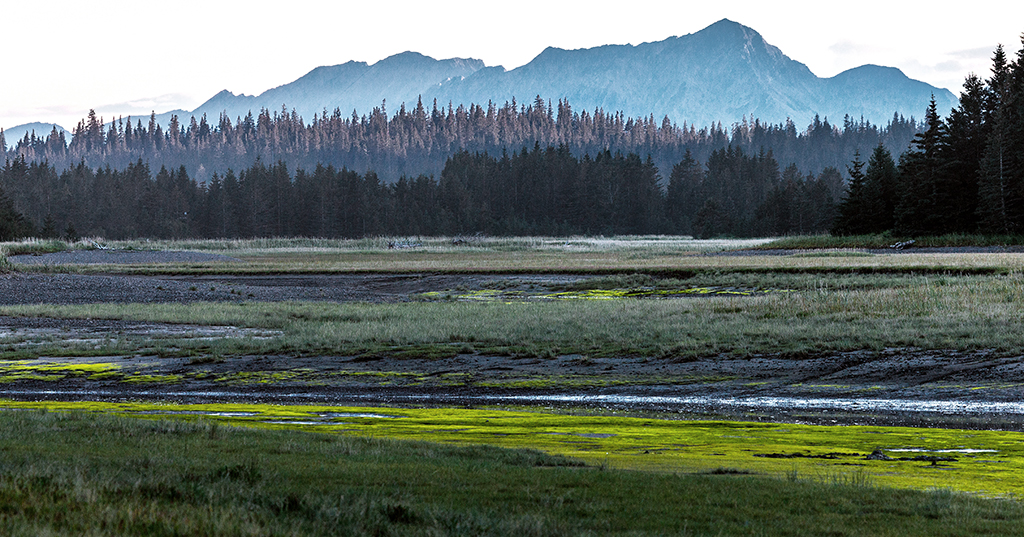
What is the first thing that comes to mind when someone mentions Lake Clark National Park and Preserve in Alaska? Bears? Mountains? Salmon? Untamed wilderness? All these apply to this national park and preserve located in southwest Alaska, “…Where the Alaska Range intersects the Aleutian Range, [and] you’ll find a complex of jagged mountains, lakes, river valleys, tundra, and ocean coastline,” according to the beginning words of a National Park Service video about this pristine national park. Home to the Dena’ina people for thousands of years, this 4-million-acre landscape born of fire and sculpted by glacial ice is host to world-class bear viewing opportunities created by the over 350,000 sockeye salmon who return to Lake Clark to spawn. The park is rich in history as well as cultural and natural resources. It’s a place you should put on your national park bucket list.
While the saying “you can’t get there from here,” is not entirely accurate, it does take a bit of planning and preparation to travel to Lake Clark. There are no roads there. You can’t drive from someplace like Anchorage to get to the park. Traveling requires a plane or a boat.
Many come to fish the pristine waters, particularly during the salmon runs in July and August. Others come to hunt, which can only be done in the national preserve portion of the park. Others toting cameras with huge telephoto lenses travel there to watch and photograph the Alaskan brown bears that make their way from inland habitats to the coast to feed on and fatten up from clams and salmon before battening down the hatches for their long winter’s rest.
While the only developed and maintained trails in the park are part of the Tanalian Trails network near park headquarters in Port Alsworth, hiking is allowed anywhere not otherwise closed to public use. Visitors may travel and camp where they like in this trail-free environment. Lake shores, coastal beaches, and high tundra are excellent areas for that activity. It’s important to arrive with a plan and be prepared since adventurers in Lake Clark will need to rely upon their way-finding and hiking skills, or hire a guide who can help them.
There are a variety of lodging options within and around the park, ranging from B&Bs to all-inclusive lodges offering guided excursions. These are independent businesses operating on private land within the park.
If you are considering pitching a tent and camping beneath the stars, all camping is primitive. There are no frontcountry campgrounds except for a privately-owned campground at Port Alsworth.
If you are contemplating a trip to Lake Clark National Park and Preserve to photograph the brown bears, an internet search will pull up operators offering one-day and multi-day all-inclusive tours handling everything from travel logistics to meals to guides. The only thing you are responsible for is your plane flight and camera gear. For a taste of what you and your cameras might see while in the park, check out this 2014 Traveler article about photographing these mighty bruins.
Bears are not the only wildlife to be found in the park and preserve. Of the 37 species of terrestrial mammals, you might also spot caribou, wolves, Dall sheep, moose, and perhaps a wily wolverine. Along the park’s coast are seals, sea otters, and whales. Bald eagles, kittiwakes, trumpeter swans, and pine grosbeaks are a sampling of the birds living and feeding near water, perched high up on tree branches, and soaring the sky.
To get a sense of Lake Clark’s wildlands, pick up the book One Man’s Wilderness: An Alaskan Odyssey, by author Sam Keith, about Richard (Dick) Proenneke, who traveled to Twin Lakes, now a part of this national park and preserve. Proenneke built his own cabin from the surrounding trees and lived off the grid, without any of the modern conveniences we may take for granted (electricity, running water). For 30 years, Proenneke honed his observational skills, filming and photographing the natural world around him while recording his daily life and experiences in the journals which are the essence of the book.
Traveler’s Choice For: photography, bear viewing, fishing, hiking
Stories about:
Story Categories:
A copy of National Parks Traveler's financial statements may be obtained by sending a stamped, self-addressed envelope to: National Parks Traveler, P.O. Box 980452, Park City, Utah 84098. National Parks Traveler was formed in the state of Utah for the purpose of informing and educating about national parks and protected areas.
Residents of the following states may obtain a copy of our financial and additional information as stated below:
- Florida: A COPY OF THE OFFICIAL REGISTRATION AND FINANCIAL INFORMATION FOR NATIONAL PARKS TRAVELER, (REGISTRATION NO. CH 51659), MAY BE OBTAINED FROM THE DIVISION OF CONSUMER SERVICES BY CALLING 800-435-7352 OR VISITING THEIR WEBSITE. REGISTRATION DOES NOT IMPLY ENDORSEMENT, APPROVAL, OR RECOMMENDATION BY THE STATE.
- Georgia: A full and fair description of the programs and financial statement summary of National Parks Traveler is available upon request at the office and phone number indicated above.
- Maryland: Documents and information submitted under the Maryland Solicitations Act are also available, for the cost of postage and copies, from the Secretary of State, State House, Annapolis, MD 21401 (410-974-5534).
- North Carolina: Financial information about this organization and a copy of its license are available from the State Solicitation Licensing Branch at 888-830-4989 or 919-807-2214. The license is not an endorsement by the State.
- Pennsylvania: The official registration and financial information of National Parks Traveler may be obtained from the Pennsylvania Department of State by calling 800-732-0999. Registration does not imply endorsement.
- Virginia: Financial statements are available from the Virginia Department of Agriculture and Consumer Services, 102 Governor Street, Richmond, Virginia 23219.
- Washington: National Parks Traveler is registered with Washington State’s Charities Program as required by law and additional information is available by calling 800-332-4483 or visiting www.sos.wa.gov/charities, or on file at Charities Division, Office of the Secretary of State, State of Washington, Olympia, WA 98504.


National parks and their natural resources belong to you. The National Parks Traveler works to ensure you know how these essential places are being cared for.
Sign Up For Our Weekly Newsletter
Unsubscribe at any time.
INN Member

The easiest way to explore RV-friendly National Park campgrounds.

Here’s the definitive guide to National Park System campgrounds where RVers can park their rigs.
Our app is packed with RVing- specific details on more than 250 campgrounds in more than 70 national parks.
You’ll also find stories about RVing in the parks, tips helpful if you’ve just recently become an RVer, and useful planning suggestions.

